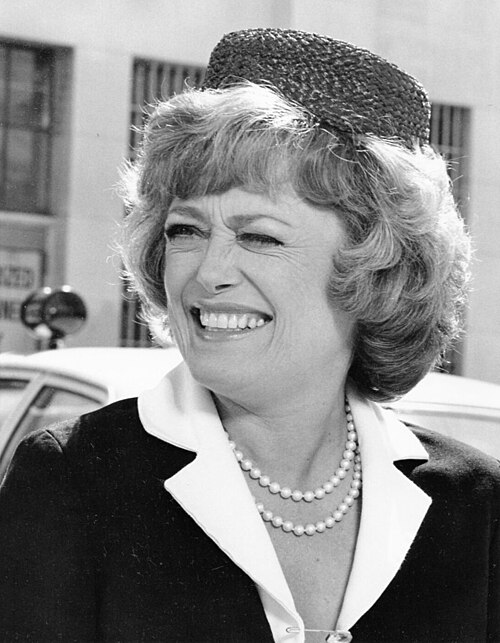
Rue McClanahan was raised Methodist, according to biographical accounts. That is the clearest documented religious background for the actress who played Blanche Devereaux on The Golden Girls. A detailed public statement of her adult beliefs is harder to find, so her childhood background should not be presented as a complete account of her faith.
What is known about Rue McClanahan’s religion?
McClanahan’s biography describes a Methodist upbringing in Oklahoma. It places that detail within her early family life, education, and interest in performing. See the biographical account. This is reported background, not a new interview in which she explains a personal creed.
A line linking her love of animals, The Golden Girls, and Methodism appears on some informal websites. This research did not establish its original source, so it is not being treated as a verified quotation. Repeating an attractive sentence is easier than checking it, but checking matters when describing another person’s beliefs.
The responsible answer is therefore limited: her reported upbringing was Methodist, within Christianity, while the reviewed material does not establish every belief she held later. It would be unfair either to invent a detailed testimony or to assume that the lack of an interview means she had no faith.
The performer behind Blanche
McClanahan was born in Healdton, Oklahoma, in 1934 and studied at the University of Tulsa. Her television career included Another World, Maude, and Mama’s Family before she became widely known as Blanche on The Golden Girls. She earned an Emmy for that performance. McClanahan died in June 2010.
Her 2006 Television Academy interview provides a direct look at her career. She discussed working with Bea Arthur, the casting of The Golden Girls, Blanche’s accent and wardrobe, and the transition to The Golden Palace. The interview is useful evidence about her craft and professional memories. Its career material should not be converted into a religious confession.
Blanche was a larger-than-life comic creation. Her confidence, insecurity, and storytelling gave the other women much to react to. McClanahan could make the character theatrical while still allowing moments of vulnerability. That ability helped keep the comedy from becoming only a collection of punch lines.
Blanche’s choices do not tell us what McClanahan believed about God. A role is developed through scripts, direction, and performance. An actor can portray behavior she would not recommend in ordinary life. The distinction protects both accurate research and a fair appreciation of the work.
Was Rue McClanahan a Christian?
Methodism is a Christian tradition, so her documented religious upbringing was Christian. A childhood affiliation and a personal adult profession are different kinds of evidence. The sources reviewed here do not justify a more detailed claim about her private relationship with God. That question should not be answered by guessing from Blanche.
Growing up in church and choosing faith personally
Many readers know what it is like to grow up hearing Bible stories, attending church, and learning prayers. Those experiences can be valuable. They can give a child a language for gratitude and introduce the idea that life has a purpose beyond personal success.
The Bible encourages passing truth from one generation to the next. Yet it also calls people to respond personally. In John 3, Jesus speaks to Nicodemus, a religious teacher with knowledge and standing. Jesus still tells him about the need for new birth. The lesson reaches people from every denomination: familiarity with religion is not the same as the life God gives.
This comparison is directed toward the reader, not offered as a claim about McClanahan’s hidden thoughts. We can recognize a Methodist background without using it to settle questions that the public record leaves open. The important question for each of us is what we believe and whom we trust.
The gospel: God’s grace for real people
Christianity begins with the truth that God made us and that we are accountable to Him. His commands call us to love Him and our neighbors. We have fallen short. Romans 3:23 says that all have sinned. That includes people who grew up in church as well as people who did not.
Sin is serious because God is holy and just. It reaches our actions, words, and thoughts: selfishness, dishonesty, pride, and the good we refuse to do. A charming personality, a good reputation, or a religious family cannot remove guilt. We need mercy rather than a better comparison with someone else.
God has provided that mercy in Jesus Christ. Jesus is the Son of God. He lived without sin, died on the cross for sinners, and rose bodily from the dead. First Corinthians 15:3–4 places those events at the center of the gospel. His saving work is the reason Christians can offer hope beyond guilt and death.
Ephesians 2:8–9 teaches that salvation is by grace through faith, not earned by works. Repentance means turning from sin toward God. Faith means trusting Jesus to save you. Good works are the fruit of the new life He gives, rather than a price paid for it.
If McClanahan’s background has made you think about your own, consider reading John 3 and Romans 5. Seek a Bible-teaching church and bring your questions honestly. The invitation is not to borrow a celebrity’s identity or rely on a childhood label. It is to come personally to Christ for forgiveness and eternal life.
Photo credit: Studio Publicity, circa 1972, via Wikimedia Commons. Listed as public domain in the United States. No endorsement implied.
