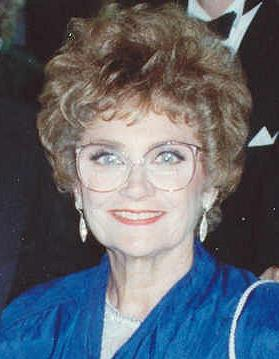
Estelle Getty came from a Jewish family and built part of her early performing life in Jewish cultural settings. That background is well documented, while a detailed first-person explanation of her religious beliefs is much harder to locate. The actress behind Sophia Petrillo should be understood through her own life, rather than through Sophia’s fictional Catholic identity.
Estelle Getty’s Jewish background
Getty was born Estelle Scher in New York in 1923 to Jewish immigrant parents. Biographical accounts describe the family’s glass business and her childhood on the Lower East Side. Her burial is also associated with a Star of David on her headstone. These details support a Jewish background, but they are not a complete statement about how she practiced religion. See her biography.
The Jewish Women’s Archive account of Getty’s life places her ambitions within that cultural setting. It describes her interest in vaudeville, attempts to work in Yiddish theater and the Catskills, and years of balancing ordinary work, family, and auditions.
This research did not locate a reliable, detailed interview in which Getty explains her views of God, prayer, or salvation. It would therefore be unwise to assign her a specific level of religious observance. Jewish family life, cultural work, and personal belief are related subjects, but one does not automatically answer every question about the others.
Success after years of persistence
Getty did not become a television star early in life. She married Arthur Gettleman in 1947, raised two sons, and worked as a secretary while continuing to pursue acting. The Jewish Women’s Archive profile describes a long path before the familiar fame. That history makes her success more than a simple story of someone being discovered overnight.
Her breakthrough stage work included Torch Song Trilogy, followed by the role of Sophia on The Golden Girls. She earned an Emmy for the television performance and continued the character in related series. Getty died in July 2008. The biography linked above documents those career details.
Sophia’s blunt remarks could quickly change the energy of a scene. Getty made a small character physically command attention, often through timing and the contrast between a sweet appearance and a sharp reply. Behind that performance were the ordinary skills of learning, rehearsing, listening, and trying again.
For viewers who discovered the show through reruns, that long history can be easy to miss. The finished scene hides much of the effort that made it possible. Appreciating the craft is worthwhile, but it still does not allow us to treat an actor’s script as her religious testimony.
Was Estelle Getty a Christian?
The available accounts identify a Jewish background, and this research did not find a verified public profession of Christian faith. That is a statement about the evidence. It is not a verdict about Getty’s private thoughts or eternal condition. It also avoids the mistake of transferring Sophia’s religion to the actress.
Why a person’s background deserves care
Religion can be connected to family memory, community, language, and history. For that reason, a respectful discussion should not turn a whole life into a simple label. Nor should it assume that people with the same ancestry hold identical beliefs. Honest research needs room for what is known and what remains unclear.
The Bible teaches that people are made in God’s image (Genesis 1:27). That gives Christians a reason to treat the subject of a profile with dignity. Jesus also commands love for our neighbors. Those teachings should shape how an article is written, not only what it says in a final religious paragraph.
Christianity has Jewish roots. Jesus and His first followers were Jewish, and Christians read the Jewish Scriptures as part of their Bible. The central difference concerns Jesus’ identity and saving work. Christians believe He is the promised Messiah and the Son of God. That claim can be presented clearly without contempt toward Jewish people or a guess about Getty’s response to it.
The gospel for a reader of any age
Getty’s long road to recognition may encourage someone who feels overlooked. Yet Christian hope is not tied to finally becoming successful. The gospel addresses a need that belongs to the famous and the unnoticed alike: our need for forgiveness and peace with God.
Romans 3:23 teaches that all have sinned. We have failed to love God and our neighbors as we should. Our actions, words, and thoughts reveal selfishness and dishonesty that a good reputation cannot erase. God is holy and just, so our guilt matters. We cannot make ourselves right with Him through persistence, talent, or religious activity.
God has provided mercy through Jesus Christ. Jesus lived without sin, died on the cross for sinners, and rose bodily from the dead. First Corinthians 15:3–4 presents His death and resurrection as the foundation of Christian faith. He offers a rescue we cannot provide for ourselves.
Salvation is by grace through faith, not earned through works (Ephesians 2:8–9). Repentance means turning from sin toward God. Faith means relying on Jesus to save you. The invitation reaches people at every stage of life, with every kind of background.
If you want to explore that hope, read Luke’s Gospel and Romans 5. Bring honest questions to God and seek a Bible-teaching church. You do not have to wait for recognition or a perfect life to respond. The gospel invites you to receive forgiveness and eternal life through Christ.
Photo credit: Alan Light, via Wikimedia Commons, CC BY 2.0. Existing Commons head-and-shoulders crop. No endorsement implied.
.jpg)