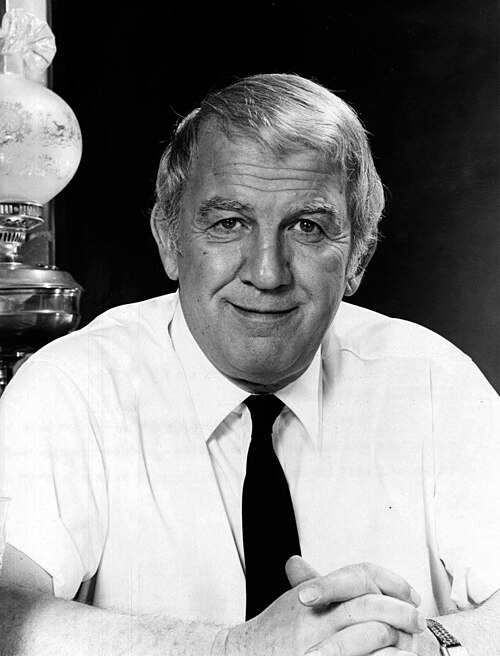
Nicholas Colasanto’s public religious record is limited. Contemporary reporting documents a Catholic funeral Mass, but this research did not locate a detailed first-person statement explaining his beliefs. That is the clearest starting point for readers wondering about the faith of the actor who played Coach on Cheers.
What the public record actually shows
Colasanto died in February 1985. A United Press International report described his funeral Mass in Providence, Rhode Island, where mourners remembered him with a standing ovation. His biography identifies Holy Cross Church as the funeral location and Saint Ann Cemetery in Cranston as his burial place. See the contemporary UPI report.
A Catholic funeral is meaningful evidence of the setting in which his family and community said goodbye. It is not the same as a recorded personal testimony. It does not establish precisely what he believed about prayer, salvation, or the afterlife throughout his life. Those questions should remain open where the sources do not answer them.
There is a temptation to fill gaps in an older actor’s story with familiar assumptions. A surname, hometown, or cultural background may make a religious label seem likely. Likelihood is not a substitute for evidence. This article reports the documented funeral context and clearly marks the limits of what was found.
The career behind Coach
Born in Providence in 1924, Colasanto served in the U.S. Navy during World War II. He worked as both an actor and a television director. His directing credits included episodes of familiar series, and his film roles included Raging Bull. He became especially loved for Ernie “Coach” Pantusso during the first three seasons of Cheers. His biography documents this background.
Coach gave the bar a different kind of warmth. His misunderstandings could become jokes, yet the character often seemed ready to believe the best about another person. Colasanto made that tone fit within a cast whose other characters could be quick, competitive, and sharp. It was a memorable contribution to an ensemble.
That is an appreciation of the performance, not proof of the actor’s theology. A gentle fictional character can be played by someone with many different beliefs. Here, the sources about the man are more limited than the affection viewers may feel for Coach.
Was Nicholas Colasanto a Christian?
The documented funeral was Catholic, within a Christian tradition. The available sources reviewed here do not provide enough first-person material to confidently describe his personal profession of faith. We should distinguish those two statements instead of turning the funeral into a complete spiritual biography.
Writing about someone who has died calls for particular care. We can remember a career, name a documented religious setting, and explain Christian hope. We cannot pronounce a judgment about a person’s heart or pretend to know an unrecorded final conversation with God.
Remembering people with dignity
The Bible teaches that every person is made in God’s image (Genesis 1:27). That dignity does not depend on fame or on sharing the writer’s beliefs. It gives Christians a reason to handle other people’s stories honestly and to speak about their lives with respect.
Death also brings questions that entertainment cannot answer for us. We may remember a familiar face with affection while realizing that our own lives are brief. Psalm 90:12 asks God to teach us to number our days so that we gain wisdom. That is an invitation to live thoughtfully, rather than a reason to become fearful or cold.
Christian comfort does not require us to invent certainty about another person’s private faith. It rests on what Scripture says about God and His promises. We can leave unanswered questions in His hands while taking seriously the questions He asks of us.
The gospel and the hope of resurrection
The Bible’s good news begins with a need shared by all people. Romans 3:23 teaches that all have sinned. We were made to love God and other people, yet we have failed in our words, thoughts, and actions. Being kind in some areas does not erase guilt in others. God’s holiness means sin matters, and His justice means we cannot simply wave it away.
Yet God has acted in mercy. Jesus Christ, the Son of God, lived without sin and died on the cross for sinners. He rose bodily from the dead. First Corinthians 15:3–4 presents His death and resurrection as the foundation of the gospel. The Christian promise of life beyond death is tied to the living Christ.
Salvation is by grace through faith, not earned through good works (Ephesians 2:8–9). A family tradition, a funeral service, or an admired reputation cannot replace a personal response to Jesus. Repentance means turning from sin toward God, and faith means relying on Christ to save you.
If remembering Colasanto has made you think about your own life, consider reading John 11 and First Corinthians 15. Bring honest questions to God and seek a Bible-teaching church. The gospel is offered to the living reader with both seriousness and hope: forgiveness, reconciliation with God, and eternal life are found in Jesus Christ.
Photo credit: NBC Television, 1982 publicity portrait, via Wikimedia Commons. Listed as public domain in the United States. No endorsement implied.
.jpg)