
What Is Brandon Routh’s Religion? Is He a Christian?

AI-Generated portrait of Brandon Routh

Brandon Routh described a Methodist upbringing and a broader personal spirituality in an archived 2007 question-and-answer session. That historical statement does not establish current Methodist membership or a verified present Christian testimony.

The person behind the performance

Routh is an actor known for Superman Returns, Scott Pilgrim vs. the World, and his work as Ray Palmer in the Arrowverse. His career biography records film and television roles that extend beyond superhero characters.

A familiar heroic image can make it tempting to attach spiritual significance to the performer. Yet Superman’s fictional qualities cannot establish Routh’s beliefs. His own statements are more relevant, and an older statement should be identified by date rather than presented as though it were a complete, newly verified account of his current religious life.

Their part in Arrow

Routh introduces Ray Palmer in Arrow before the character becomes a central part of Legends of Tomorrow. Ray is associated with technological ambition and the Atom identity. His optimism gives the wider ensemble a different tone from some of its more guarded figures.

That fictional combination of intelligence and generosity can encourage a discussion about service. It does not make the character a Christian teacher or turn the actor’s performance into a confession of faith. The article considers themes raised by the work while keeping Routh’s actual statements distinct.

What the public record says about faith

An unofficial fan-site archive of a May 2007 Q&A attributed to Routh records him describing Methodist upbringing while declining to define himself strictly by that label. His answer discusses religious and spiritual openness.

Because this is an older archived account, it should be used with that limitation visible. It supports a historical description of his background and expressed outlook, rather than an assertion about current church attendance or conversion. Famous Faith has not verified a more recent personal statement sufficient to settle those questions. The Christian reflection below expresses this site’s beliefs, not a theological position attributed to him.

Kind intentions do not make anyone a savior

We can appreciate optimism and practical help without asking them to carry more weight than they can bear. An encouraging person may still make serious mistakes. A brilliant invention may solve one problem while leaving pride, guilt, and broken relationships untouched. Human ability has real value, but it has limits.

Psalm 146:3 warns against placing ultimate trust in human rulers. First Timothy 2:5 identifies Jesus Christ as the mediator between God and humanity. The Christian claim is therefore more specific than admiration for admirable people or the hope that progress will eventually make the human heart whole.

Famous Faith’s reflection is that service is healthiest when it is joined to humility. We should help our neighbors, welcome useful knowledge, and admit what our efforts cannot accomplish. The gospel does not ask us to invent a flawless public identity. It directs us to Christ, whose saving work addresses a need that popularity, technological skill, and generous intentions cannot finally resolve.

The gospel and the hope of grace

The Bible says that all have sinned and fall short of God’s glory (Romans 3:23). Our need is deeper than an imperfect public image: we have failed to love God and our neighbors as we should. Jesus Christ, God’s Son, lived without sin, died for sinners, and rose bodily from the dead. His death and resurrection are central to the gospel (1 Corinthians 15:3–4). Salvation is God’s gift, received through faith in Christ rather than earned through good deeds, church membership, or personal achievement (Ephesians 2:8–10). Jesus calls us to repent and believe. A changed life follows his grace; it does not purchase forgiveness.

The reflection above expresses Famous Faith’s Christian perspective. It is not attributed to the actor or presented as a claim to know anyone’s heart.

Sources and image credit

Original AI-generated editorial portrait of Brandon Routh, created for Famous Faith. Artistic interpretation, not a photograph. No endorsement by the performer or production is implied.

What Is Matt Nable’s Religion? Is He a Christian?

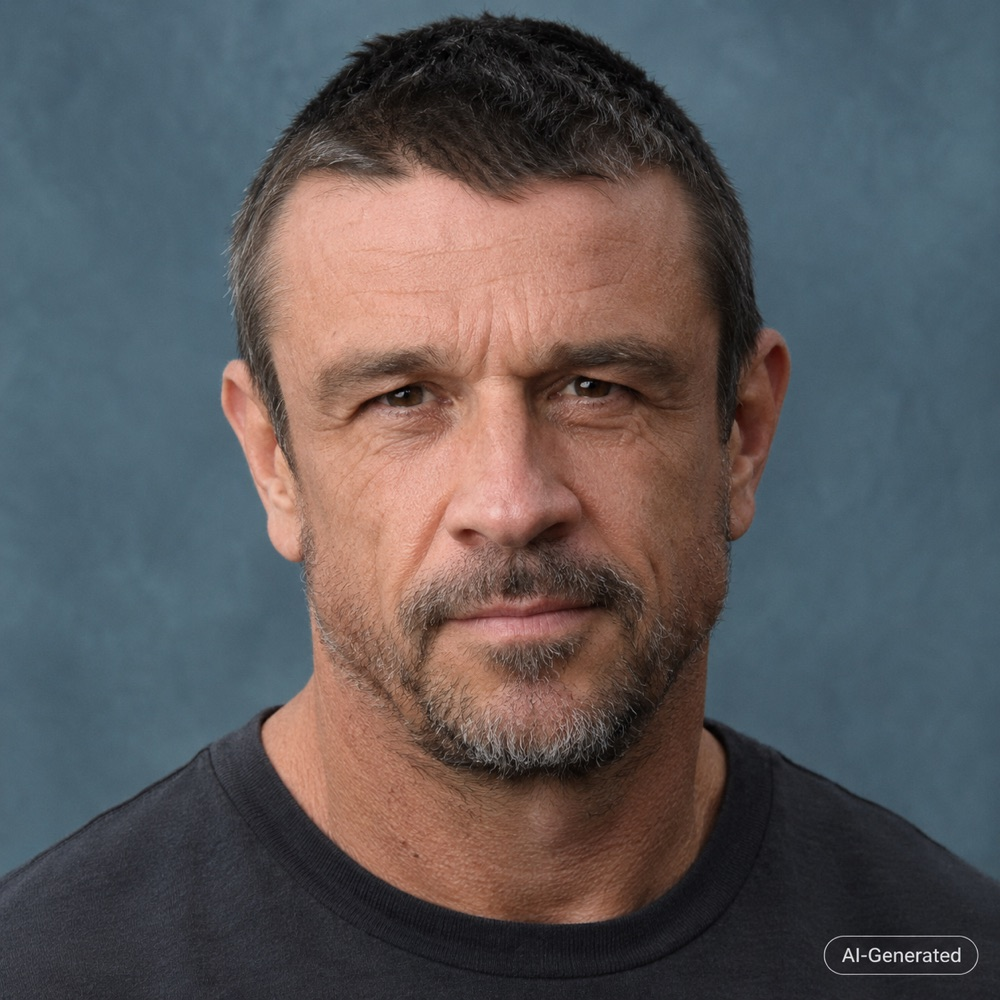
AI-Generated portrait of Matt Nable

Matt Nable’s current religious affiliation is unconfirmed in the sources reviewed. His education and his role as Ra’s al Ghul in Arrow do not establish a present Christian profession or any other religious commitment.

The person behind the performance

Nable is an Australian actor, writer, and former professional rugby league player. He wrote and starred in The Final Winter and has appeared in Killer Elite, Riddick, and Mr Inbetween. His agency biography also describes work as a novelist and director.

A 2023 interview republished by his agency discusses the movement from sport into creative work. His background is broader than the forceful authority figures audiences may recognize. A performer’s appearance or repeated casting does not provide a reliable measure of his character or religious convictions.

Their part in Arrow

Nable portrays Ra’s al Ghul in Arrow, the leader associated with the League of Assassins. The character’s ideas about succession, loyalty, and authority bring him into conflict with Oliver Queen and others.

This is a particular television portrayal, distinct from other actors’ versions of the character. Its rituals and claims about power belong to the fictional narrative. They should not be treated as a description of Nable’s own spiritual practices. A discussion of the character’s leadership can be useful while maintaining that clear distinction.

What the public record says about faith

The reviewed interview mentions education at a Christian Brothers school, but schooling does not establish a present denomination, conversion, or belief about Jesus Christ. The sources reviewed here do not supply a direct current religious statement that would justify a firmer label.

Famous Faith therefore leaves Nable’s affiliation unconfirmed. The conclusion does not mean that he has no beliefs or that his schooling had no influence. It means that background and present profession are different questions. The biblical observations below are the site’s own reflection on power and leadership, not an account of what Nable intended to teach through the role.

Leadership is accountable to more than its own survival

A leader can confuse the continuity of an organization with the highest possible good. Once that happens, criticism becomes betrayal and people become tools for protecting a legacy. Experience and discipline may then be used to preserve control rather than serve those who depend on the leader.

Jesus describes a different pattern in Mark 10:42–45. Greatness among his followers is connected with service, and he points to his own self-giving mission. First Peter 5:2–3 likewise warns spiritual leaders against domineering conduct. Authority does not make humility unnecessary; it increases the need for it.

Famous Faith’s reflection is that impressive command should never be confused with moral wisdom. A healthy leader can receive correction and acknowledge limits. A worthy purpose does not demand blind obedience to every person who claims to represent it. Christians should examine both the ends and the means of leadership, remembering that no institution’s reputation can excuse contempt for the people it is supposed to serve.

The gospel and the hope of grace

The Bible says that all have sinned and fall short of God’s glory (Romans 3:23). Our need is deeper than an imperfect public image: we have failed to love God and our neighbors as we should. Jesus Christ, God’s Son, lived without sin, died for sinners, and rose bodily from the dead. His death and resurrection are central to the gospel (1 Corinthians 15:3–4). Salvation is God’s gift, received through faith in Christ rather than earned through good deeds, church membership, or personal achievement (Ephesians 2:8–10). Jesus calls us to repent and believe. A changed life follows his grace; it does not purchase forgiveness.

The reflection above expresses Famous Faith’s Christian perspective. It is not attributed to the actor or presented as a claim to know anyone’s heart.

Sources and image credit

Original AI-generated editorial portrait of Matt Nable, created for Famous Faith. Artistic interpretation, not a photograph. No endorsement by the performer or production is implied.

What Is Katrina Law’s Religion? Is She a Christian?

AI-Generated portrait of Katrina Law

Katrina Law has a documented family background involving a Catholic father and a Buddhist mother. Her own current religious affiliation and a personal Christian conversion testimony remain unconfirmed in the sources reviewed here.

The person behind the performance

Law is an actress known for Nyssa al Ghul in Arrow, Mira in Spartacus, Quinn Liu in Hawaii Five-0, and Jessica Knight in NCIS. Her work also includes Hallmark films such as Snow Bride and 12 Gifts of Christmas.

Her Hallmark cast biography discusses her acting and charitable interests. Christmas entertainment can provide a setting for themes of generosity and family, but accepting such a role is not enough to establish the actor’s personal beliefs. The same caution applies to dramatic roles in stories with very different moral settings.

Their part in Arrow

Law portrays Nyssa al Ghul, associated with the League of Assassins and with Sara Lance’s story in Arrow. Her relationships involve inherited power, conflicting obligations, and difficult decisions about loyalty.

A character’s family position can make obedience look inevitable, even when a command is morally troubling. The role gives viewers a way to consider that tension. It does not mean that Law endorses the League’s conduct or that Nyssa’s attitudes are a statement of the actress’s religion. Performance and personal profession remain different forms of evidence.

What the public record says about faith

A Hallmark press biography for 12 Gifts of Christmas describes Law’s father as Catholic and her Taiwanese mother as Buddhist. That documents her family background, rather than a present statement of church membership or personal conversion.

It would be inaccurate to choose one parent’s affiliation and assign it to her without further evidence. This profile therefore leaves her current affiliation unconfirmed. A mixed religious upbringing can be significant in someone’s life without answering every question about what that person now believes. The biblical reflection below belongs to Famous Faith and is not presented as Law’s own explanation.

An inherited identity cannot make our choices for us

Family histories can offer affection, instruction, and a sense of belonging. They can also bring expectations that make honest examination difficult. Someone may fear that questioning an inherited belief is disloyal, or assume that being raised around a religious tradition removes the need to understand it personally.

Scripture treats faith as more than possession of a family label. John 1:12–13 connects becoming God’s children with receiving Christ, rather than ancestry. Acts 17:11 commends careful examination of the message against Scripture. Respect for parents and relatives does not require treating every inherited claim as beyond investigation.

Famous Faith’s reflection is that truth and love belong together. We should speak respectfully about family members while asking what is actually true about God, sin, and salvation. Social belonging cannot answer those questions for us. The gospel calls each hearer to respond to Christ, and Christian love should make room for thoughtful questions instead of relying on pressure or inherited status.

The gospel and the hope of grace

The Bible says that all have sinned and fall short of God’s glory (Romans 3:23). Our need is deeper than an imperfect public image: we have failed to love God and our neighbors as we should. Jesus Christ, God’s Son, lived without sin, died for sinners, and rose bodily from the dead. His death and resurrection are central to the gospel (1 Corinthians 15:3–4). Salvation is God’s gift, received through faith in Christ rather than earned through good deeds, church membership, or personal achievement (Ephesians 2:8–10). Jesus calls us to repent and believe. A changed life follows his grace; it does not purchase forgiveness.

The reflection above expresses Famous Faith’s Christian perspective. It is not attributed to the actor or presented as a claim to know anyone’s heart.

Sources and image credit

Original AI-generated editorial portrait of Katrina Law, created for Famous Faith. Artistic interpretation, not a photograph. No endorsement by the performer or production is implied.

What Is Celina Jade’s Religion? Is She a Christian?

AI-Generated portrait of Celina Jade

Celina Jade publicly described her family as Buddhist in a 2017 interview and discussed Buddhist practices and beliefs about death. That is documented historical evidence; this profile has not verified a later Christian conversion or a current change of affiliation.

The person behind the performance

Jade is an actress, singer, and martial artist whose work includes Legendary Assassin, Wolf Warrior 2, and Arrow. Her career biography identifies her birth name as Celina Horan. She is the daughter of actor and martial artist Roy Horan.

Her screen work crosses languages and genres. That breadth is useful context for recognizing the real performer behind Shado. It does not, by itself, establish a religious identity. In this case there is stronger evidence than an inference from her birthplace or ancestry: an interview in which she directly addressed her family’s spiritual background.

Their part in Arrow

Jade plays Shado in Arrow, a significant figure in the island flashbacks involving Oliver Queen and Slade Wilson. Those relationships help shape later loyalties and grievances. She also portrays Shado’s twin sister, Mei.

The role places affection, grief, and the consequences of violence close together. It can invite reflection on how people respond to loss without requiring us to treat a fictional death or relationship as a description of the actress’s own life. Her personal religious statements need to be considered on their own terms.

What the public record says about faith

In a February 2017 Esquire Singapore interview, Jade described her family as Buddhist. She recalled chanting with her sister at their grandmother’s deathbed and spoke about her understanding of death and reunion. These are direct, dated statements about a Buddhist family background and spiritual outlook.

They should not be rewritten as a Christian testimony. Nor does an older interview prove that every detail of her beliefs is unchanged today. Famous Faith has not verified a later public profession of Christian faith. The Christian discussion that follows expresses this site’s convictions rather than attributing them to Jade.

Hope in grief needs more than a comforting possibility

Grief exposes how little control we have over the people and relationships we treasure. A comforting thought can feel precious in that moment, but sincerity alone cannot establish what happens after death. Different accounts of the afterlife make different claims, and the differences deserve honest attention.

Christian hope rests on Christ’s death and bodily resurrection. First Corinthians 15 connects the believer’s future resurrection to that historical claim. John 11:25–26 places life and hope in Jesus himself. This is distinct from an expectation of repeated earthly lives or an eventual loss of personal identity.

Famous Faith’s reflection is that compassion should accompany clarity. We can listen carefully to someone’s experience of bereavement while explaining why the gospel offers a particular hope. A grieving person needs more than an argument, but kindness does not require pretending that all spiritual explanations say the same thing. Christians are called to weep with those who weep and point to the Savior who has conquered death.

The gospel and the hope of grace

The Bible says that all have sinned and fall short of God’s glory (Romans 3:23). Our need is deeper than an imperfect public image: we have failed to love God and our neighbors as we should. Jesus Christ, God’s Son, lived without sin, died for sinners, and rose bodily from the dead. His death and resurrection are central to the gospel (1 Corinthians 15:3–4). Salvation is God’s gift, received through faith in Christ rather than earned through good deeds, church membership, or personal achievement (Ephesians 2:8–10). Jesus calls us to repent and believe. A changed life follows his grace; it does not purchase forgiveness.

The reflection above expresses Famous Faith’s Christian perspective. It is not attributed to the actor or presented as a claim to know anyone’s heart.

Sources and image credit

Original AI-generated editorial portrait of Celina Jade, created for Famous Faith. Artistic interpretation, not a photograph. No endorsement by the performer or production is implied.

What Is Cynthia Addai-Robinson’s Religion? Is She a Christian?

AI-Generated portrait of Cynthia Addai-Robinson

Cynthia Addai-Robinson’s current religious affiliation is unconfirmed in the sources reviewed. Her work as Amanda Waller in Arrow and Tar-Míriel in The Rings of Power does not establish a personal Christian profession.

The person behind the performance

Addai-Robinson is an actress whose credits include Spartacus, Arrow, Shooter, and The Lord of the Rings: The Rings of Power. Her career reference records training and work across television and film.

In a Mary Sue interview about The Rings of Power, she discussed performing within a large fictional world. An interview about a character’s fate or leadership helps explain the work, but it is not automatically a personal statement about religion. This profile keeps those different kinds of evidence separate.

Their part in Arrow

In Arrow, she portrays Amanda Waller, a powerful figure associated with A.R.G.U.S. Her methods raise questions about national security, coercion, and the willingness to treat individuals as expendable for a larger objective. That makes the role morally consequential even when the character is not the central figure in an episode.

The conduct belongs to a fictional official. It should not be attributed to Addai-Robinson. Neither a ruthless part nor a noble part establishes what an actress believes or how she behaves outside the production.

What the public record says about faith

The reviewed material does not establish a present denomination or a direct personal account of trusting Christ for salvation. The religious imagination behind an adaptation, including a work associated with a religious author, does not settle the beliefs of every performer involved.

Famous Faith therefore leaves Addai-Robinson’s current affiliation unconfirmed. The conclusion concerns the limits of the evidence, not a judgment that she is indifferent to spiritual questions. The biblical reflection below is the site’s own assessment of the moral issues raised by institutional power and should not be presented as her stated interpretation.

A greater objective cannot make people disposable

Arguments about necessity can become persuasive when a danger is frightening enough. Someone may claim that ordinary moral limits must be set aside because the stakes are extraordinary. The question then becomes whether the people bearing the cost have been reduced to instruments of another person’s plan.

Genesis 1:27 grounds human dignity in being made in God’s image. Romans 3:8 rejects the argument that evil is justified by a hoped-for good result. These principles do not remove the difficulty of protecting a community. They insist that difficulty cannot make moral accountability disappear.

Famous Faith’s reflection is that powerful institutions need truthful oversight precisely when their work is important. A leader’s confidence or access to information does not place that leader beyond scrutiny. The lives affected by a policy remain human lives, and the language of sacrifice should be examined especially carefully when someone else is deciding who will be sacrificed.

The gospel and the hope of grace

The Bible says that all have sinned and fall short of God’s glory (Romans 3:23). Our need is deeper than an imperfect public image: we have failed to love God and our neighbors as we should. Jesus Christ, God’s Son, lived without sin, died for sinners, and rose bodily from the dead. His death and resurrection are central to the gospel (1 Corinthians 15:3–4). Salvation is God’s gift, received through faith in Christ rather than earned through good deeds, church membership, or personal achievement (Ephesians 2:8–10). Jesus calls us to repent and believe. A changed life follows his grace; it does not purchase forgiveness.

The reflection above expresses Famous Faith’s Christian perspective. It is not attributed to the actor or presented as a claim to know anyone’s heart.

Sources and image credit

Original AI-generated editorial portrait of Cynthia Addai-Robinson, created for Famous Faith. Artistic interpretation, not a photograph. No endorsement by the performer or production is implied.

What Is Audrey Marie Anderson’s Religion? Is She a Christian?

AI-Generated portrait of Audrey Marie Anderson

Audrey Marie Anderson’s present religious affiliation is unconfirmed in the sources reviewed. Her work as Lyla Michaels on Arrow, including the Harbinger storyline, should not be mistaken for a statement of Christian faith.

The person behind the performance

Anderson is an actress and model whose television work includes The Unit, Arrow, and The Walking Dead. Her career biography records professional work before and beyond the Arrowverse. Her roles place family relationships and demanding public responsibilities in several different dramatic settings.

A character’s profession, loyalty, or supernatural identity cannot establish the performer’s religious convictions. That principle remains important even when a production uses names that sound spiritually suggestive. The relevant personal evidence would be Anderson’s own statements or dependable reporting directly addressing her beliefs.

Their part in Arrow

In Arrow, Anderson portrays Lyla Michaels, connected with A.R.G.U.S. and with John Diggle’s family. In the final-season crisis storyline, Lyla also becomes Harbinger. The role brings private relationships into contact with institutional authority and, later, the series’ cosmic mythology.

These fictional responsibilities can prompt questions about loyalty and the use of power. They do not make Lyla a biblical figure or reveal Anderson’s own understanding of God. The article distinguishes the real performer from the narrative before offering its Christian reflection.

What the public record says about faith

The reviewed sources do not establish Anderson’s current denomination, church affiliation, or an explicit personal confession of faith in Christ. The proper conclusion is therefore that the present affiliation is unconfirmed here.

It would be misleading to replace that limit with an assumption based on geography, family roles, or the word Harbinger. It would be equally misleading to infer unbelief because a verified testimony was not found. Famous Faith’s biblical discussion belongs to the site and is not presented as an explanation Anderson has given for accepting or interpreting the part.

Institutions still depend on personal moral responsibility

An organization can make a decision appear less personal. Procedures, commands, and a larger mission may create the impression that the individual no longer needs to ask whether an action is right. Yet carrying out a policy still affects real people.

Micah 6:8 describes justice, mercy, and humility as obligations before God. Acts 5:29 establishes that human authority is not absolute. These principles challenge the temptation to treat a professional role as a moral hiding place. Good intentions at an institutional level do not automatically justify every means.

Famous Faith’s reflection is that responsibility should not disappear into a chain of command. A person can value service and expertise while remaining attentive to the dignity of those affected by decisions. Sometimes integrity involves giving difficult counsel or acknowledging that a policy has caused harm. Loyalty is most trustworthy when it serves truth rather than protecting the organization from every uncomfortable question.

The gospel and the hope of grace

The Bible says that all have sinned and fall short of God’s glory (Romans 3:23). Our need is deeper than an imperfect public image: we have failed to love God and our neighbors as we should. Jesus Christ, God’s Son, lived without sin, died for sinners, and rose bodily from the dead. His death and resurrection are central to the gospel (1 Corinthians 15:3–4). Salvation is God’s gift, received through faith in Christ rather than earned through good deeds, church membership, or personal achievement (Ephesians 2:8–10). Jesus calls us to repent and believe. A changed life follows his grace; it does not purchase forgiveness.

The reflection above expresses Famous Faith’s Christian perspective. It is not attributed to the actor or presented as a claim to know anyone’s heart.

Sources and image credit

Original AI-generated editorial portrait of Audrey Marie Anderson, created for Famous Faith. Artistic interpretation, not a photograph. No endorsement by the performer or production is implied.

What Is Caity Lotz’s Religion? Is She a Christian?

AI-Generated portrait of Caity Lotz

Caity Lotz described herself in a 2012 interview as spiritual without following organized religion. That is a documented historical statement; this profile has not verified a more recent religious affiliation or a Christian conversion testimony.

The person behind the performance

Lotz is an actress, dancer, and martial artist known for Sara Lance in Arrow and Legends of Tomorrow. Her career reference records performance work that began before those television roles. The action characters draw on an already developed movement background.

A 2012 Hot Press interview discussed her work in The Pact and included direct remarks about spiritual matters. Because that interview concerns an earlier period, the statements should be dated rather than silently presented as a complete account of every belief she holds today.

Their part in Arrow

Sara Lance becomes associated with the Canary identity in Arrow before taking a central role as White Canary in Legends of Tomorrow. Her story includes loss, return, and the search for a direction beyond past violence.

The supernatural mechanisms used by the series are fictional. They are not accounts of Christian resurrection, and a performer’s participation does not establish personal acceptance of them. The role can be examined as storytelling while the question of Lotz’s own faith remains tied to her public statements.

What the public record says about faith

In the Hot Press interview, Lotz said, “I don’t follow any organised religion. I’m definitely spiritual.” She also expressed unease about the occult elements involved in filming a horror story. Those remarks establish what she said in that conversation without proving a Christian profession.

Famous Faith does not use spiritual as a synonym for Christian, nor does it assume that an older statement settles a person’s entire future. This profile has not verified a later affiliation that would justify replacing that carefully dated account with a more definite current religious label.

Spiritual curiosity needs a trustworthy foundation

Interest in the unseen can arise from fear, wonder, grief, or a desire to know that life has meaning beyond what we can measure. Christianity takes spiritual reality seriously, but it does not teach that every spiritual claim is equally true or safe.

First John 4:1 calls believers to test spiritual claims. Deuteronomy 18:10–12 warns against divination and attempts to consult the dead. Famous Faith therefore does not recommend occult experimentation as a route to truth or comfort. This is a biblical conviction, not a claim that an actor who performs a scripted scene personally practices what the scene depicts.

Our hope rests in the person and work of Jesus Christ rather than an undefined energy or a technique for controlling the unseen. The call is to seek truth with humility, take Scripture seriously, and distinguish an emotionally powerful experience from a reliable foundation for faith.

The gospel and the hope of grace

The Bible says that all have sinned and fall short of God’s glory (Romans 3:23). Our need is deeper than an imperfect public image: we have failed to love God and our neighbors as we should. Jesus Christ, God’s Son, lived without sin, died for sinners, and rose bodily from the dead. His death and resurrection are central to the gospel (1 Corinthians 15:3–4). Salvation is God’s gift, received through faith in Christ rather than earned through good deeds, church membership, or personal achievement (Ephesians 2:8–10). Jesus calls us to repent and believe. A changed life follows his grace; it does not purchase forgiveness.

The reflection above expresses Famous Faith’s Christian perspective. It is not attributed to the actor or presented as a claim to know anyone’s heart.

Sources and image credit

Original AI-generated editorial portrait of Caity Lotz, created for Famous Faith. Artistic interpretation, not a photograph. No endorsement by the performer or production is implied.

What Is Charlie Barnett’s Religion? Is He a Christian?

AI-Generated portrait of Charlie Barnett

Charlie Barnett’s current religious affiliation is unconfirmed in the sources reviewed. His role as John Diggle Jr. in Arrow and his other performances do not establish a personal Christian confession.

The person behind the performance

Barnett is an actor known for Chicago Fire, Russian Doll, Tales of the City, and The Acolyte. His career biography records training at Juilliard and work across several very different fictional settings. This is the actor born in 1988, rather than the late comedian of the same name.

In a Vanity Teen interview, he discussed life and creative work with an emphasis on change and awareness. Such language can be thoughtful and significant without amounting to a statement of church membership or a detailed account of Christian belief.

Their part in Arrow

In Arrow, Barnett portrays John Diggle Jr., often called JJ, in the future-generation story. The character is associated with Deathstroke and stands in a different moral position from his father’s more familiar role in Oliver’s team. The show does not present every member of a family as making the same choices.

A character’s name and inherited relationships can invite reflection about expectations. They are not evidence about Barnett’s own family or faith. The distinction matters especially in an interconnected television universe with alternate histories.

What the public record says about faith

The sources reviewed do not establish a current denomination or a clear personal testimony of trust in Christ. General celebrity pages attach differing labels without making the evidence sufficiently clear. This profile does not rely on those labels.

Barnett’s religious affiliation therefore remains unconfirmed here. That answer should not be enlarged into a claim that he has no spiritual interests or rejects Christianity. It simply recognizes the limits of the reviewed public record. The biblical observations below are Famous Faith’s own response to themes raised by the role, not claims about the performer’s intentions.

A family’s example does not remove the need to choose wisely

People sometimes assume that a good background guarantees a good direction, or that a troubled background makes a different future impossible. Both assumptions give too little weight to personal responsibility and to the need for grace. A family can influence a life without becoming its moral substitute.

Ezekiel 18 rejects the idea that moral accountability can simply be transferred from parent to child. Proverbs repeatedly presents wisdom as something to receive and practice, not merely an inheritance to possess. Hearing good counsel and obeying it remain different things.

Famous Faith’s reflection is that we should neither congratulate ourselves on borrowed virtue nor treat a difficult history as permission to harm others. The choices available now matter. So do the people who offer patient correction and practical help. Christian hope is not that an impressive lineage will save us, but that Christ can forgive sinners and call them into a changed direction.

The gospel and the hope of grace

The Bible says that all have sinned and fall short of God’s glory (Romans 3:23). Our need is deeper than an imperfect public image: we have failed to love God and our neighbors as we should. Jesus Christ, God’s Son, lived without sin, died for sinners, and rose bodily from the dead. His death and resurrection are central to the gospel (1 Corinthians 15:3–4). Salvation is God’s gift, received through faith in Christ rather than earned through good deeds, church membership, or personal achievement (Ephesians 2:8–10). Jesus calls us to repent and believe. A changed life follows his grace; it does not purchase forgiveness.

The reflection above expresses Famous Faith’s Christian perspective. It is not attributed to the actor or presented as a claim to know anyone’s heart.

Sources and image credit

Original AI-generated editorial portrait of Charlie Barnett, created for Famous Faith. Artistic interpretation, not a photograph. No endorsement by the performer or production is implied.

What Is Ben Lewis’s Religion? Is He a Christian?

AI-Generated portrait of Ben Lewis

Ben Lewis, the Canadian actor who plays adult William Clayton in Arrow, has no confirmed present religious affiliation in the sources reviewed. This profile does not confuse him with other performers who share his name.

The person behind the performance

Lewis is a Canadian actor whose screen work includes Arrow, Scott Pilgrim vs. the World, and Degrassi: The Next Generation. His biographical reference identifies the actor and records training at the National Theatre School of Canada.

Name accuracy matters here. Other people named Ben Lewis have worked in theatre, music, film, and other professions. Their interviews and religious statements cannot be attached to the Arrow actor merely because a search result uses the same name. A reliable profile begins by establishing which person the evidence actually concerns.

Their part in Arrow

In Arrow, Lewis portrays the adult version of William Clayton, Oliver Queen’s son. His role belongs to the later-generation story and is distinct from the younger version played by another actor. Keeping that distinction clear helps avoid combining the performers’ biographies.

William’s experiences connect family history, trust, and questions of belonging. The relationships can be considered through a Christian lens without assuming that a character’s family or identity establishes the performer’s beliefs. A scripted future is not a personal religious testimony.

What the public record says about faith

The reviewed sources do not establish a current church affiliation, denomination, or explicit confession of faith in Christ by this Ben Lewis. This profile therefore leaves the question unconfirmed. It does not replace missing evidence with a statement by a namesake or an inference from personal relationships.

That standard applies to both faith and unbelief. An unverified Christian label would be misleading, but so would an unsupported declaration that he rejects God. Famous Faith reports what the sources establish and clearly identifies its own moral and theological reflection rather than attributing it to the actor.

Belonging asks more of us than possessing the right name

Families can be complicated places to seek security. A person may share a name or a history and still feel excluded from the decisions that shape life. Others may have little formal standing yet provide the most faithful daily care. Belonging therefore deserves more attention than a label can supply.

Romans 12:10 calls believers to honor one another with brotherly affection. James 2:1–4 warns against ranking people by outward status. These principles challenge communities to notice the person who seems less impressive, less familiar, or less useful.

Famous Faith’s reflection is that dignity should not depend on whether someone fits easily into an inherited story. Care involves truthful relationships, practical faithfulness, and the willingness to listen. At the same time, a welcoming community is not a substitute for reconciliation with God. The gospel offers a deeper hope than social acceptance alone, while calling those who receive grace to treat their neighbors with love.

The gospel and the hope of grace

The Bible says that all have sinned and fall short of God’s glory (Romans 3:23). Our need is deeper than an imperfect public image: we have failed to love God and our neighbors as we should. Jesus Christ, God’s Son, lived without sin, died for sinners, and rose bodily from the dead. His death and resurrection are central to the gospel (1 Corinthians 15:3–4). Salvation is God’s gift, received through faith in Christ rather than earned through good deeds, church membership, or personal achievement (Ephesians 2:8–10). Jesus calls us to repent and believe. A changed life follows his grace; it does not purchase forgiveness.

The reflection above expresses Famous Faith’s Christian perspective. It is not attributed to the actor or presented as a claim to know anyone’s heart.

Sources and image credit

Original AI-generated editorial portrait of Ben Lewis, created for Famous Faith. Artistic interpretation, not a photograph. No endorsement by the performer or production is implied.

What Is Joseph David-Jones’s Religion? Is He a Christian?

AI-Generated portrait of Joseph David-Jones

Joseph David-Jones’s present religious affiliation is unconfirmed in the sources reviewed here. His work as Connor Hawke in Arrow and his other screen credits do not establish a personal profession of Christian faith.

The person behind the performance

David-Jones is an American actor whose work includes Nashville, Arrow, and The Divergent Series: Allegiant. His career biography also records an engineering education before his acting career developed. The combination is a useful reminder that a performer’s path may include several kinds of training and ambition.

Professional discipline and an interest in charitable work can be worth recognizing without being turned into evidence of salvation. A religion profile needs to distinguish those parts of the public record from a direct statement about belief in God, church affiliation, or trust in Jesus Christ.

Their part in Arrow

In Arrow, David-Jones portrays the adult Connor Hawke, connected with John Diggle’s family and the later generation’s story. The show’s future settings and the wider Arrowverse include different identities and timelines, so character names need care. Connor in Arrow should not simply be merged with every version of a similarly named role in another series.

A story about an inherited mission can prompt reflection on responsibility and belonging. It does not establish the actor’s personal religious commitments or make fictional continuity into theology.

What the public record says about faith

The sources reviewed do not establish a current denomination or an explicit personal account of conversion to Christ. This profile therefore leaves David-Jones’s affiliation unconfirmed. It does not assign a religion from his name, education, cultural background, or the moral qualities of a character.

An unconfirmed label describes an evidentiary limit rather than an accusation. It leaves room for convictions the performer has not explained in the reviewed material. Famous Faith’s own biblical reflection follows separately and should not be mistaken for a statement that David-Jones has endorsed the site’s interpretation of his role.

An inherited mission still calls for personal responsibility

A family or community can hand down a valuable purpose. It can also pass on conflicts, assumptions, and expectations that need examination. Gratitude for what we have received does not remove the responsibility to ask whether the next decision is right.

Ezekiel 18 emphasizes personal accountability rather than treating a child as morally identical to a parent. Second Timothy 1:5 recognizes the good influence of faith across generations while still addressing Timothy as a person called to act. These themes hold inheritance and responsibility together.

Famous Faith’s reflection is that a respected family name or an admirable mentor cannot answer the spiritual question for us. We can learn from others without relying on their reputation as our own righteousness. Likewise, an imperfect history does not excuse every later choice. The direction of a life includes what we receive, but also what we do with the opportunities and truths now placed before us.

The gospel and the hope of grace

The Bible says that all have sinned and fall short of God’s glory (Romans 3:23). Our need is deeper than an imperfect public image: we have failed to love God and our neighbors as we should. Jesus Christ, God’s Son, lived without sin, died for sinners, and rose bodily from the dead. His death and resurrection are central to the gospel (1 Corinthians 15:3–4). Salvation is God’s gift, received through faith in Christ rather than earned through good deeds, church membership, or personal achievement (Ephesians 2:8–10). Jesus calls us to repent and believe. A changed life follows his grace; it does not purchase forgiveness.

The reflection above expresses Famous Faith’s Christian perspective. It is not attributed to the actor or presented as a claim to know anyone’s heart.

Sources and image credit

Original AI-generated editorial portrait of Joseph David-Jones, created for Famous Faith. Artistic interpretation, not a photograph. No endorsement by the performer or production is implied.