
What Is Katherine McNamara’s Religion? Is She a Christian?

AI-Generated portrait of Katherine McNamara

Katherine McNamara’s current religious affiliation and a clear personal profession of Christian faith are unconfirmed in the sources reviewed. Fantasy roles and appearances in faith-themed films cannot establish that conclusion for her.

The person behind the performance

McNamara is an actress known for Clary Fray in Shadowhunters, Mia Smoak Queen in Arrow, and Abby Walker in Walker: Independence. Her career reference records work in television, film, and musical performance.

In a 2022 EUPHORIA interview, she discussed acting opportunities, relationships, and pursuing goals. That provides direct personal language to consider, but it should not be expanded into an unspoken church membership or a full theological system. A performer may talk about hopes and confidence without making a Christian confession.

Their part in Arrow

In Arrow, Mia is the daughter of Oliver Queen and Felicity Smoak. Her story brings a later generation into the consequences of the earlier one’s choices and connects her with the Green Arrow legacy. She must contend with an inherited story while deciding how to act within it.

The fictional family relationship should not be confused with McNamara’s own biography. The same care applies to spiritual themes in her other productions: a supernatural role is neither evidence of religious practice nor proof that a performer endorses the story’s mythology.

What the public record says about faith

The EUPHORIA interview includes McNamara’s language about speaking goals into existence and directing energy toward them. Those remarks describe her outlook in that conversation. They do not establish what she believes about Christ, prayer, salvation, or a present denomination.

This profile therefore leaves her current affiliation unconfirmed rather than labeling her Christian or assigning another religion from a short remark. Famous Faith can examine an idea through Scripture without pretending that it has learned every belief held by the person expressing it. Care with evidence matters when words could be interpreted in several different ways.

Hope does not give us command over the future

It can be good to name a goal, prepare carefully, and act with courage. The danger comes when confidence becomes a promise that our words or intentions must produce the result we want. Disappointment can then feel like proof that we did not believe intensely enough.

James 4:13–16 challenges certainty about tomorrow and places plans under the humility of dependence on God. Matthew 6:10 teaches prayer oriented toward God’s will. These passages do not require passivity or the abandonment of ambition. They place human effort within a reality we do not control.

Famous Faith’s reflection is that Christian hope has a firmer foundation than a prediction of personal success. We can work diligently without treating God as a mechanism for achieving an imagined future. Trust includes the willingness to be corrected, redirected, or disappointed while remaining responsible for the choices available today.

The gospel and the hope of grace

The Bible says that all have sinned and fall short of God’s glory (Romans 3:23). Our need is deeper than an imperfect public image: we have failed to love God and our neighbors as we should. Jesus Christ, God’s Son, lived without sin, died for sinners, and rose bodily from the dead. His death and resurrection are central to the gospel (1 Corinthians 15:3–4). Salvation is God’s gift, received through faith in Christ rather than earned through good deeds, church membership, or personal achievement (Ephesians 2:8–10). Jesus calls us to repent and believe. A changed life follows his grace; it does not purchase forgiveness.

The reflection above expresses Famous Faith’s Christian perspective. It is not attributed to the actor or presented as a claim to know anyone’s heart.

Sources and image credit

Original AI-generated editorial portrait of Katherine McNamara, created for Famous Faith. Artistic interpretation, not a photograph. No endorsement by the performer or production is implied.


What Is Sea Shimooka’s Religion? Is She a Christian?

AI-Generated portrait of Sea Shimooka

Sea Shimooka’s current religious affiliation is unconfirmed in the sources reviewed. Her portrayal of Emiko Queen on Arrow and her work in science fiction do not establish a personal Christian profession.

The person behind the performance

Shimooka is an actress whose credits include Emiko Queen in Arrow and Sophon in 3 Body Problem. Her career biography records training at New York University’s Tisch School of the Arts and work extending into filmmaking.

A conversation with acting teacher Charlie Sandlan is part of her public interview record. Such interviews can provide insight into a performer’s experience without establishing a religious identity. This profile does not infer a denomination from ancestry, a production’s mythology, or an online biography that supplies a label without a traceable statement.

Their part in Arrow

In Arrow, Emiko Queen is Oliver Queen’s paternal half-sister. Her arrival brings another part of the family’s history into the present and complicates assumptions about who belongs inside its circle. The character becomes connected with the Green Arrow identity and with choices that place family and allegiance in conflict.

Those tensions belong to the fiction. They can prompt a moral discussion about exclusion and resentment without becoming claims about Shimooka’s own family or beliefs. A performer’s role should not be used as a substitute for personal testimony.

What the public record says about faith

The sources reviewed do not establish a current church affiliation or an explicit confession of faith in Christ. The appropriate answer is therefore limited: Shimooka’s present religion is unconfirmed here. A label repeated across general celebrity pages would not become stronger merely through repetition.

This conclusion does not assign unbelief either. It describes the evidence reviewed for the profile, while leaving private convictions private. Famous Faith’s Christian reflection below is offered openly as its own perspective on the character’s themes, not as a claim that the actress shares that interpretation or has endorsed it.

Exclusion can explain resentment without making it a guide

Being treated as an outsider can leave a person hungry for recognition and suspicious of anyone who appears to belong easily. The pain deserves to be taken seriously. Yet it can become destructive when the desire to be seen turns into a determination that other people must suffer before life will be fair.

Ephesians 4:26–27 warns against allowing anger to gain an enduring foothold. Hebrews 12:15 describes bitterness as something that can spread beyond the person carrying it. Neither passage says that exclusion is harmless or that the wounded person is responsible for every wrong done to them. Both call attention to what may grow inside an unresolved injury.

Famous Faith’s reflection is that receiving justice and cultivating bitterness are different aims. We can seek truth, protection, and repair without giving resentment authority over every future choice. A wound may be part of our story without being entitled to write the whole ending.

The gospel and the hope of grace

The Bible says that all have sinned and fall short of God’s glory (Romans 3:23). Our need is deeper than an imperfect public image: we have failed to love God and our neighbors as we should. Jesus Christ, God’s Son, lived without sin, died for sinners, and rose bodily from the dead. His death and resurrection are central to the gospel (1 Corinthians 15:3–4). Salvation is God’s gift, received through faith in Christ rather than earned through good deeds, church membership, or personal achievement (Ephesians 2:8–10). Jesus calls us to repent and believe. A changed life follows his grace; it does not purchase forgiveness.

The reflection above expresses Famous Faith’s Christian perspective. It is not attributed to the actor or presented as a claim to know anyone’s heart.

Sources and image credit

Original AI-generated editorial portrait of Sea Shimooka, created for Famous Faith. Artistic interpretation, not a photograph. No endorsement by the performer or production is implied.

What Is Kirk Acevedo’s Religion? Is He a Christian?

AI-Generated portrait of Kirk Acevedo

Kirk Acevedo’s current religious affiliation is unconfirmed in the reliable sources reviewed. His extensive dramatic work, including Ricardo Diaz on Arrow, does not establish a personal Christian profession or a rejection of faith.

The person behind the performance

Acevedo is an actor whose credits include Oz, Band of Brothers, Fringe, and 12 Monkeys. His career reference records both training and a body of work in demanding ensemble dramas. Arrow is one part of that wider career.

A performer known for intense roles can become closely associated with a particular kind of character in an audience’s mind. A religion profile needs a more careful distinction. Acting convincingly as a violent or threatening person is not evidence that the performer holds a corresponding worldview in private life.

Their part in Arrow

In Arrow, Acevedo portrays Ricardo Diaz, also known as the Dragon. The character uses criminal power and coercion to threaten the city and the people around Oliver Queen. His influence raises questions about what happens when fear and self-interest overwhelm public responsibility.

These are features of a fictional antagonist. They do not provide a religious biography of Acevedo. Famous Faith can examine what the story shows about power while refusing to turn a villain’s conduct into an accusation about the actor who performs the role.

What the public record says about faith

The sources reviewed have not established a present denomination, church affiliation, or explicit account of faith in Jesus Christ. An ethnic background, surname, or professional association with a religiously themed production would not be enough to make that claim.

The profile therefore reports the current affiliation as unconfirmed. That statement is deliberately narrower than either calling Acevedo Christian or calling him an unbeliever. It describes the evidence available for this article. The biblical observations that follow belong to Famous Faith and are not presented as beliefs the actor has expressed.

Fear can obtain compliance without making authority legitimate

When intimidation works, it can tempt both the person using it and the people watching to confuse effectiveness with rightful authority. A threat may produce obedience. It does not establish that the demand is just or that the person making it deserves trust.

Jesus distinguishes domination from service in Mark 10:42–45. His teaching challenges the desire to measure greatness by how completely other people must submit. Proverbs 29:25 also warns about the trap created by fear of human beings. Together these passages expose the moral weakness beneath an apparently powerful threat.

Famous Faith’s reflection is that courage can include refusing to normalize coercion, while prudence may require seeking help and protection. The question for those with influence is equally serious: do people cooperate because they trust our integrity, or because they fear what we will do to them? Leadership worthy of confidence must offer more than the capacity to impose a cost.

The gospel and the hope of grace

The Bible says that all have sinned and fall short of God’s glory (Romans 3:23). Our need is deeper than an imperfect public image: we have failed to love God and our neighbors as we should. Jesus Christ, God’s Son, lived without sin, died for sinners, and rose bodily from the dead. His death and resurrection are central to the gospel (1 Corinthians 15:3–4). Salvation is God’s gift, received through faith in Christ rather than earned through good deeds, church membership, or personal achievement (Ephesians 2:8–10). Jesus calls us to repent and believe. A changed life follows his grace; it does not purchase forgiveness.

The reflection above expresses Famous Faith’s Christian perspective. It is not attributed to the actor or presented as a claim to know anyone’s heart.

Sources and image credit

Original AI-generated editorial portrait of Kirk Acevedo, created for Famous Faith. Artistic interpretation, not a photograph. No endorsement by the performer or production is implied.

What Is Juliana Harkavy’s Religion? Is She a Christian?

AI-Generated portrait of Juliana Harkavy

Juliana Harkavy has described herself as a Dominican Jew. That public identification is relevant to her background, but it does not establish a present level of religious observance or a personal profession of Christian faith.

The person behind the performance

Harkavy is an actress known for Arrow, The Walking Dead, and the Dolphin Tale films. Her biographical reference records both her career and her public description of her heritage.

The same source links to her own posts, including the self-description “Dominican Jew.” Ethnic, family, cultural, and religious identities can overlap without being interchangeable. This profile therefore preserves what she has said without assuming that a heritage label answers every question about current belief or practice. An actor’s own words deserve more weight than unsourced lists assigning multiple religions.

Their part in Arrow

In Arrow, Harkavy portrays Dinah Drake, a detective who becomes Black Canary. She is a distinct character from Laurel Lance, even though both are associated with the Black Canary name. Keeping the identities clear helps readers follow the performances accurately.

Dinah’s place in the team connects personal loss, responsibility, and the use of extraordinary power. A Christian reflection may consider those themes, but it should not be confused with Harkavy’s own religious testimony. A character and a performer remain different subjects.

What the public record says about faith

Harkavy’s public self-description supports reporting Jewish identity in the context of her background. The reviewed sources do not establish a current denomination, detailed religious practice, or a Christian confession. The profile should not supply those missing details through inference.

Famous Faith also distinguishes respect for a person from agreement with every religious claim. Its explanation of the gospel below is a Christian editorial statement, not a suggestion that Harkavy has endorsed it. Accurate reporting does not require turning a real person’s identity into a platform for unsupported conclusions about the heart.

Loss should not make another person’s life expendable

Stories about pursuing justice after a personal loss can expose the fragile line between responsibility and retaliation. It may become difficult to hear counsel, consider evidence, or recognize the dignity of someone associated with the wrongdoer. The original injury is real, but it cannot make every response right.

Micah 6:8 joins justice with mercy and humility before God. Proverbs 14:29 connects patience with understanding. These principles resist both indifference to suffering and the idea that anger becomes righteous simply because its cause is understandable.

Famous Faith’s reflection is that moral power requires limits. Whether a person has physical strength, professional authority, or the support of a group, the people affected by that power remain neighbors. Seeking justice should involve truthful judgment and proportionate action. We should be especially cautious when pain makes us feel certain that no one else can understand and therefore no one else has a right to question us.

The gospel and the hope of grace

The Bible says that all have sinned and fall short of God’s glory (Romans 3:23). Our need is deeper than an imperfect public image: we have failed to love God and our neighbors as we should. Jesus Christ, God’s Son, lived without sin, died for sinners, and rose bodily from the dead. His death and resurrection are central to the gospel (1 Corinthians 15:3–4). Salvation is God’s gift, received through faith in Christ rather than earned through good deeds, church membership, or personal achievement (Ephesians 2:8–10). Jesus calls us to repent and believe. A changed life follows his grace; it does not purchase forgiveness.

The reflection above expresses Famous Faith’s Christian perspective. It is not attributed to the actor or presented as a claim to know anyone’s heart.

Sources and image credit

Original AI-generated editorial portrait of Juliana Harkavy, created for Famous Faith. Artistic interpretation, not a photograph. No endorsement by the performer or production is implied.

What Is Rick Gonzalez’s Religion? Is He a Christian?

AI-Generated portrait of Rick Gonzalez

Rick Gonzalez’s current religious affiliation and a direct personal profession of Christian faith are unconfirmed in the sources reviewed. His portrayal of Jesus in a music video is a performance, not a conversion testimony.

The person behind the performance

Gonzalez is an actor whose credits include Coach Carter, Reaper, Arrow, and Law & Order: Organized Crime. His career reference also records music work under the name Realm Reality. The variety of these projects makes it especially important to separate a role from the person playing it.

In a KSiteTV interview, Gonzalez discussed Reaper, his music, and portraying Jesus in Lady Gaga’s video for “Judas.” That documents a professional credit. It does not, by itself, establish what he believes about the historical Jesus.

Their part in Arrow

In Arrow, Gonzalez plays Rene Ramirez, the member of Oliver’s circle known as Wild Dog. Rene’s responsibilities as a father and his confrontational manner give the character concerns that extend beyond the team’s immediate mission. His relationships involve trust, disagreement, and the consequences of acting under pressure.

Those story elements can support reflection about protection and responsibility. Famous Faith does not present the character’s choices as a summary of Gonzalez’s own morality or transfer the supernatural assumptions of his other productions to his personal beliefs.

What the public record says about faith

The reviewed sources have not established a present denomination or a clear personal account of trust in Christ for salvation. A religious figure portrayed on screen cannot serve as a substitute for that missing statement. The same principle applies to a performer working in a story featuring the devil.

This profile therefore leaves Gonzalez’s religious affiliation unconfirmed. It does not infer faith or unbelief from the range of his roles. Publicly attributable personal evidence would be needed for a stronger conclusion, and a reliable account should be willing to remain limited until such evidence is available.

Protecting a family requires patience as well as courage

A protective instinct can move a person toward real sacrifice. It can also become an excuse for impatience, contempt, or the conviction that no one else is allowed to question a decision. The people we most want to protect may be the ones who bear the cost of that anger.

James 1:19–20 calls for slowness to anger and warns that human anger does not produce God’s righteousness. Ephesians 6:4 tells fathers not to provoke their children, joining authority with patient care. These principles do not condemn courage or appropriate boundaries. They ask what our strength is doing to the people nearby.

Famous Faith’s reflection is that dependable love includes the ordinary work of listening, keeping promises, and admitting when we are wrong. A dramatic rescue may be memorable, but daily faithfulness matters too. Protecting someone should make room for their dignity rather than merely proving the protector’s willingness to fight.

The gospel and the hope of grace

The Bible says that all have sinned and fall short of God’s glory (Romans 3:23). Our need is deeper than an imperfect public image: we have failed to love God and our neighbors as we should. Jesus Christ, God’s Son, lived without sin, died for sinners, and rose bodily from the dead. His death and resurrection are central to the gospel (1 Corinthians 15:3–4). Salvation is God’s gift, received through faith in Christ rather than earned through good deeds, church membership, or personal achievement (Ephesians 2:8–10). Jesus calls us to repent and believe. A changed life follows his grace; it does not purchase forgiveness.

The reflection above expresses Famous Faith’s Christian perspective. It is not attributed to the actor or presented as a claim to know anyone’s heart.

Sources and image credit

Original AI-generated editorial portrait of Rick Gonzalez, created for Famous Faith. Artistic interpretation, not a photograph. No endorsement by the performer or production is implied.

What Is Josh Segarra’s Religion? Is He a Christian?

AI-Generated portrait of Josh Segarra

Josh Segarra has a documented Christian church background and has discussed faith as part of family life. His own interviews provide firmer evidence than his screen role as a pastor, while leaving some details of present belief and practice unstated.

The person behind the performance

Segarra is an actor and singer whose work includes Arrow, Sirens, The Other Two, and the stage musical On Your Feet!. His career reference traces work across comedy, drama, and musical performance.

In a 2026 interview with HOLA!, he spoke about his Puerto Rican identity and the Pentecostal church in which he grew up. That is a direct description of formative experience rather than a religious label inferred from a character’s name or a film’s subject.

Their part in Arrow

In Arrow, Segarra portrays Adrian Chase, who is revealed as Prometheus. A public professional identity conceals an elaborate pursuit of revenge. The contrast between an apparently respectable role and a destructive purpose is central to the character’s effect on the story.

Segarra’s performance of that deception is not evidence that the actor shares the character’s motives. His work as a fictional pastor in another production likewise needs to be distinguished from his own stated religious background.

What the public record says about faith

A 2020 interview published by Dolly Parton’s official site describes church, youth group, and choir as important parts of Segarra’s upbringing and presents faith as continuing to matter in his family life. He remembered Sundays involving worship and time with church friends.

Together with his later description of a Pentecostal childhood, this supports reporting a Christian background and a meaningful connection with faith. It does not establish every current doctrinal conviction or supply a detailed conversion testimony. Famous Faith reports the stated experience without treating a pastoral screen role as additional proof of salvation.

A respectable appearance cannot make a hidden purpose good

People often judge character through visible competence, charm, or an approved role. Those signals can be useful, but they are not infallible. A person can know how to behave in public while cultivating motives that would look very different if brought into the light.

First Samuel 16:7 distinguishes outward appearance from the heart. Jesus’ warning about hypocrisy in Matthew 23 challenges religious people as well as obvious wrongdoers. An honorable title cannot substitute for integrity, and criticism of another person’s misconduct does not excuse our own concealed sins.

Famous Faith’s reflection is that spiritual seriousness includes self-examination. The question is not only whether we can recognize a villain in a story, but whether we are willing to let truth expose the motives behind our own good-looking actions. Christian hope includes forgiveness, yet it also calls us away from using an acceptable public image as a hiding place.

The gospel and the hope of grace

The Bible says that all have sinned and fall short of God’s glory (Romans 3:23). Our need is deeper than an imperfect public image: we have failed to love God and our neighbors as we should. Jesus Christ, God’s Son, lived without sin, died for sinners, and rose bodily from the dead. His death and resurrection are central to the gospel (1 Corinthians 15:3–4). Salvation is God’s gift, received through faith in Christ rather than earned through good deeds, church membership, or personal achievement (Ephesians 2:8–10). Jesus calls us to repent and believe. A changed life follows his grace; it does not purchase forgiveness.

The reflection above expresses Famous Faith’s Christian perspective. It is not attributed to the actor or presented as a claim to know anyone’s heart.

Sources and image credit

Original AI-generated editorial portrait of Josh Segarra, created for Famous Faith. Artistic interpretation, not a photograph. No endorsement by the performer or production is implied.

What Is Echo Kellum’s Religion? Is He a Christian?

AI-Generated portrait of Echo Kellum

Echo Kellum’s present religious affiliation is unconfirmed in the reliable sources reviewed here. His comedy, creative background, and role as Curtis Holt on Arrow do not establish a personal Christian profession.

The person behind the performance

Kellum is an actor, comedian, writer, and director whose work includes Ben and Kate, Grand Crew, and Arrow. His Groundlings biography places him in a tradition of improvisational and ensemble performance. His work combines comedy with roles in a more action-centered fictional world.

The career reference documents his portrayal of Curtis Holt and the character’s developing place in the series. Training, collaboration, and an ability to make people laugh help explain a profession; they do not answer every question about the performer’s convictions.

Their part in Arrow

In Arrow, Curtis Holt is an inventor and skilled athlete who becomes associated with the name Mister Terrific. His contributions make intelligence, preparation, and teamwork visible alongside the show’s more physical confrontations. He also has relationships and concerns beyond the mission itself.

That combination makes the role a useful starting point for thinking about gifts and community. It does not mean that every element of the character reflects Kellum’s personal life. The religious question concerns the actor’s own beliefs, not whether an audience admires Curtis.

What the public record says about faith

The reviewed sources do not establish a current denomination or a clear personal account of faith in Christ. General references to childhood, performance, gratitude, or community should not be expanded into a complete religious identity without further evidence.

Famous Faith leaves the affiliation unconfirmed rather than guessing. That conclusion also avoids treating a lack of verified testimony as a statement of unbelief. A public performer may share many things while leaving a religious question unexplained. The Christian observations below are the site’s own reflection on the themes of ability and belonging, not beliefs attributed to Kellum.

Our gifts are meant to benefit more than our own reputation

A talented person can come to think of a community chiefly as an audience. Others become useful because they recognize the talent, provide opportunities, or confirm that the gifted person matters. The ability may be real while the purpose becomes increasingly narrow.

First Peter 4:10 calls people to use the gifts they have received in serving others. First Corinthians 12 describes different members contributing to one body, with no grounds for treating less conspicuous people as disposable. These passages challenge both pride and the anxiety that only a highly visible contribution has value.

Famous Faith’s reflection is that belonging does not have to be earned through constant demonstration of usefulness. At the same time, our abilities carry opportunities for responsibility. We can ask whose burden a skill might lighten and whether our success makes room for others to flourish. The answer may be quieter than applause, but it can be much closer to love.

The gospel and the hope of grace

The Bible says that all have sinned and fall short of God’s glory (Romans 3:23). Our need is deeper than an imperfect public image: we have failed to love God and our neighbors as we should. Jesus Christ, God’s Son, lived without sin, died for sinners, and rose bodily from the dead. His death and resurrection are central to the gospel (1 Corinthians 15:3–4). Salvation is God’s gift, received through faith in Christ rather than earned through good deeds, church membership, or personal achievement (Ephesians 2:8–10). Jesus calls us to repent and believe. A changed life follows his grace; it does not purchase forgiveness.

The reflection above expresses Famous Faith’s Christian perspective. It is not attributed to the actor or presented as a claim to know anyone’s heart.

Sources and image credit

Original AI-generated editorial portrait of Echo Kellum, created for Famous Faith. Artistic interpretation, not a photograph. No endorsement by the performer or production is implied.
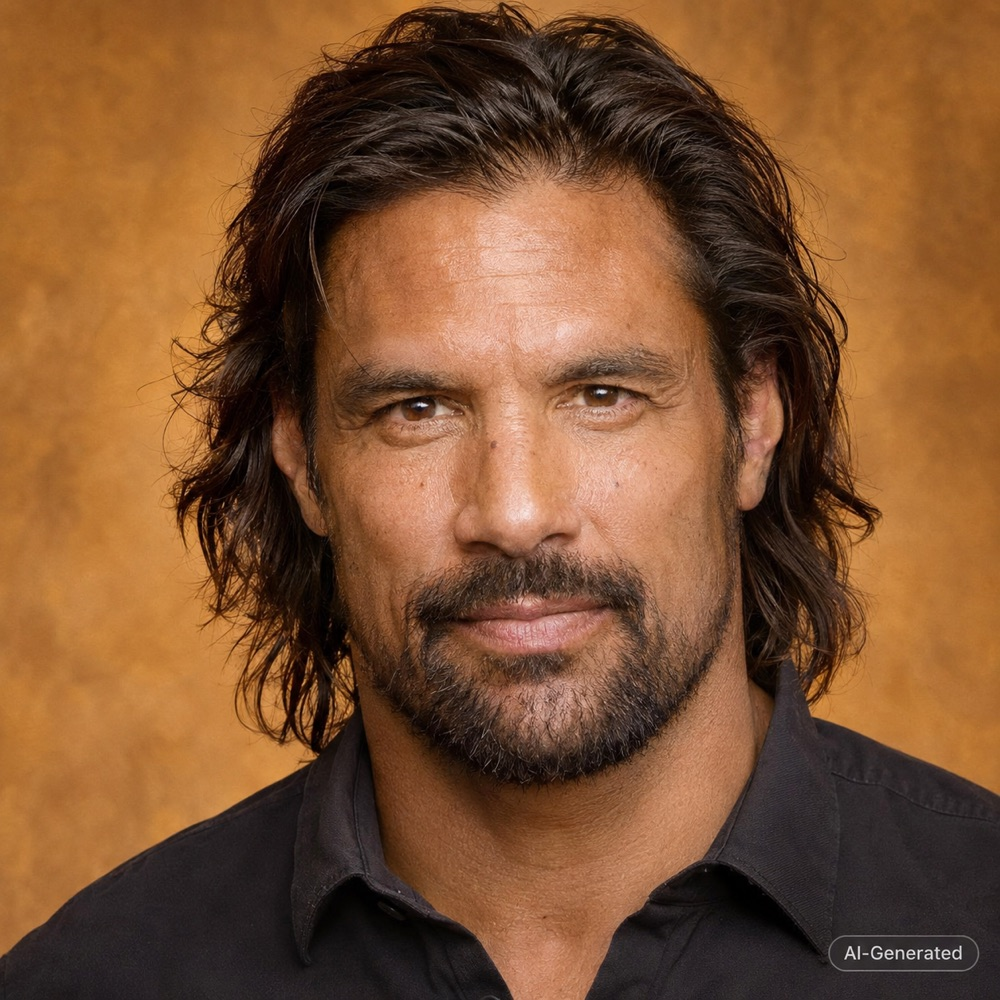
What Is John Barrowman’s Religion? Is He a Christian?

AI-Generated portrait of John Barrowman

John Barrowman’s present religious affiliation and a personal profession of Christian faith are unconfirmed in the sources reviewed here. His criticism of religious institutions should not be turned into an unsupported claim that he is an atheist.

The person behind the performance

Barrowman is an actor, singer, author, and presenter whose work spans musical theatre and television. His career reference records Captain Jack Harkness in Doctor Who and Torchwood, as well as Malcolm Merlyn in the Arrowverse. He has also performed in major stage musicals.

That variety is useful context for a faith profile because a performer may convincingly enter very different fictional worlds. Playing a character who speaks about death, immortality, love, or power does not provide a reliable account of the actor’s beliefs about those subjects outside the production.

Their part in Arrow

In Arrow, Barrowman plays Malcolm Merlyn, the wealthy and dangerous figure associated with the Dark Archer. Family ties and personal grief are important to the character’s decisions, but the story also makes the consequences of his ambitions visible. His relationship with Oliver’s world involves more than an uncomplicated opposition between strangers.

Those fictional actions can be discussed as part of the series without being attributed to Barrowman. A compelling villain is evidence of a performance, not proof about the performer’s religious convictions or moral identity.

What the public record says about faith

An older interview records criticism of religious institutions. Such criticism does not establish present atheism. The public record would need to be more specific before this profile could confidently identify a current denomination or a personal Christian confession.

Famous Faith therefore avoids both an assumed Christian label and an assumed rejection of God. Religious institutions, a person’s experience of them, and belief in God are related but distinct subjects. Reporting them carefully does not require endorsing every view a performer expresses or claiming authority to pronounce on his eternal destiny.

Grief does not give us ownership of other people

Loss can make control appear merciful. Someone may believe that enough power, planning, or punishment will prevent a tragedy from ever happening again. The danger comes when a real sorrow is used to justify making other people pay for it.

Second Corinthians 1:3–4 describes comfort received from God becoming a means of comforting others. It presents a different direction for pain: toward care rather than domination. Romans 12:15 calls believers to share grief, not to excuse whatever a grieving person decides to do.

Famous Faith’s reflection is that compassion and accountability should remain together. We can recognize the reality of someone’s suffering while resisting a destructive response. A tragic history can explain why a choice feels compelling without making the choice right. Healing asks more of us than acquiring the ability to ensure that no one can oppose our wishes.

The gospel and the hope of grace

The Bible says that all have sinned and fall short of God’s glory (Romans 3:23). Our need is deeper than an imperfect public image: we have failed to love God and our neighbors as we should. Jesus Christ, God’s Son, lived without sin, died for sinners, and rose bodily from the dead. His death and resurrection are central to the gospel (1 Corinthians 15:3–4). Salvation is God’s gift, received through faith in Christ rather than earned through good deeds, church membership, or personal achievement (Ephesians 2:8–10). Jesus calls us to repent and believe. A changed life follows his grace; it does not purchase forgiveness.

The reflection above expresses Famous Faith’s Christian perspective. It is not attributed to the actor or presented as a claim to know anyone’s heart.

Sources and image credit

Original AI-generated editorial portrait of John Barrowman, created for Famous Faith. Artistic interpretation, not a photograph. No endorsement by the performer or production is implied.

What Is Manu Bennett’s Religion? Is He a Christian?

AI-Generated portrait of Manu Bennett

Manu Bennett’s current religious affiliation is unconfirmed in the sources reviewed here. His Māori heritage and his performances in fantasy dramas should not be used to assign a personal faith or denomination.

The person behind the performance

Bennett is a New Zealand actor known for Crixus in Spartacus, Slade Wilson in Arrow, and Azog in The Hobbit films. His career biography also describes training and interests extending beyond physically demanding screen roles. His professional identity should not be limited to the apparent toughness of a character.

Bennett’s heritage and the range of his work are relevant biographical details. They are not a substitute for his own statements about belief. A person’s ancestry can be culturally important without allowing a writer to presume religious practice or a complete spiritual outlook.

Their part in Arrow

In Arrow, Bennett portrays Slade Wilson, also known as Deathstroke. The character’s connection with Oliver reaches back to experiences that shape both men. Friendship, injury, power, and revenge become intertwined in their relationship.

These are dramatic themes rather than a record of the actor’s own conduct. The presence of intense violence or extraordinary abilities in the story also does not establish Bennett’s personal beliefs. Famous Faith distinguishes the performer from the role before considering what the narrative might prompt readers to examine.

What the public record says about faith

The reviewed sources do not establish Bennett’s current denomination or a direct personal confession of Christian faith. It would be inaccurate to infer one from a surname, an ethnic background, or participation in productions drawing on mythological and spiritual ideas.

The same standard applies to claims of unbelief: an absence of verified religious information is not proof that a person rejects God. This profile leaves the present affiliation unconfirmed rather than manufacturing certainty. The biblical perspective below belongs to Famous Faith and is not presented as Bennett’s own explanation of his work.

Revenge can keep the wound in command

When someone has been deeply wronged, retaliation may seem like a way to recover dignity or make the pain intelligible. Yet the desire to hurt another person can become a continuing form of bondage. The original injury begins to determine present decisions, including decisions that harm people who were not responsible for it.

Romans 12:17–21 calls Christians away from private vengeance while insisting that evil is real. That instruction does not require abandoning justice, refusing lawful protection, or pretending that an offender is trustworthy. It challenges the belief that our pain gives us unlimited authority over someone else.

Famous Faith sees a serious distinction between seeking accountability and feeding revenge. One seeks a truthful and proportionate response; the other can demand that everyone else live inside the injured person’s anger. The call to entrust judgment to God joins responsibility with humility and invites us to resist becoming what we condemn.

The gospel and the hope of grace

The Bible says that all have sinned and fall short of God’s glory (Romans 3:23). Our need is deeper than an imperfect public image: we have failed to love God and our neighbors as we should. Jesus Christ, God’s Son, lived without sin, died for sinners, and rose bodily from the dead. His death and resurrection are central to the gospel (1 Corinthians 15:3–4). Salvation is God’s gift, received through faith in Christ rather than earned through good deeds, church membership, or personal achievement (Ephesians 2:8–10). Jesus calls us to repent and believe. A changed life follows his grace; it does not purchase forgiveness.

The reflection above expresses Famous Faith’s Christian perspective. It is not attributed to the actor or presented as a claim to know anyone’s heart.

Sources and image credit

Original AI-generated editorial portrait of Manu Bennett, created for Famous Faith. Artistic interpretation, not a photograph. No endorsement by the performer or production is implied.

What Is Colton Haynes’s Religion? Is He a Christian?

AI-Generated portrait of Colton Haynes

Colton Haynes’s present religious affiliation is unconfirmed in the reliable sources reviewed. His public account of his life and his role as Roy Harper on Arrow do not by themselves establish a Christian profession.

The person behind the performance

Haynes is an actor and model known for Jackson Whittemore in Teen Wolf and Roy Harper in Arrow. His career reference records work across television, modeling, and other projects. These public roles are only part of a person’s story.

He also wrote the memoir Miss Memory Lane. The publisher’s description presents an account of difficult experiences behind a recognizable public image. A memoir can help readers understand the difference between being visible and being known, without making every aspect of its author’s religious outlook certain.

Their part in Arrow

In Arrow, Roy Harper becomes associated with the name Arsenal and with the circle around Oliver Queen. His story involves belonging, learning, and the consequences of dangerous choices. The role gives a younger character a place in a mission that is larger than one person.

Famous Faith can consider those themes without treating the actor as an extension of Roy. A character’s courage, wrongdoing, or recovery is part of a scripted narrative. It does not establish what Haynes personally believes about sin, grace, or God.

What the public record says about faith

The material reviewed does not establish a current denomination or an attributable personal testimony of conversion to Christ. The presence of words such as redemption in a memoir’s description does not necessarily mean the author uses them in the theological sense of the Christian gospel.

This profile therefore leaves Haynes’s present affiliation unconfirmed. It does not infer a religion from his birthplace, family history, relationships, or professional work. Nor does it interpret unconfirmed as an assertion of atheism. A more definite religious label would require clearer evidence than the sources reviewed provide.

Being seen is different from being safe enough to be honest

Public attention can reward an image while making vulnerability feel dangerous. The pressure is not limited to celebrities. People can learn to present a version of themselves that seems acceptable and then feel trapped by the need to maintain it.

Psalm 139 describes being known by God more deeply than any public audience could know us. James 5:16 encourages confession and prayer within relationships of care. Neither passage turns private pain into entertainment or gives strangers a right to demand every detail of someone’s life. They point toward a truthful life before God and trustworthy people.

Famous Faith’s reflection is that shame should not be exploited and help should not depend on a person looking impressive. At the same time, relief from shame and reconciliation with God are not identical concepts. The gospel addresses real guilt with real mercy, inviting us away from concealment and toward the forgiveness Christ provides.

The gospel and the hope of grace

The Bible says that all have sinned and fall short of God’s glory (Romans 3:23). Our need is deeper than an imperfect public image: we have failed to love God and our neighbors as we should. Jesus Christ, God’s Son, lived without sin, died for sinners, and rose bodily from the dead. His death and resurrection are central to the gospel (1 Corinthians 15:3–4). Salvation is God’s gift, received through faith in Christ rather than earned through good deeds, church membership, or personal achievement (Ephesians 2:8–10). Jesus calls us to repent and believe. A changed life follows his grace; it does not purchase forgiveness.

The reflection above expresses Famous Faith’s Christian perspective. It is not attributed to the actor or presented as a claim to know anyone’s heart.

Sources and image credit

Original AI-generated editorial portrait of Colton Haynes, created for Famous Faith. Artistic interpretation, not a photograph. No endorsement by the performer or production is implied.