
What Is Deric Augustine’s Religion? Is He a Christian?

AI-generated editorial portrait representing Deric Augustine

What is Deric Augustine’s religion, and is he a Christian? Fans of ABC’s The Rookie may ask because Deric Augustine plays Miles Penn, a character whose choices invite moral questions. The answer requires a distinction: a scripted role and a public biography tell us something about a career, but they do not reveal a private profession of faith.

Who is Deric Augustine?

ABC says Augustine grew up in New Orleans, studied theater at the University of New Orleans, and trained further in New York. He portrayed Muhammad Ali in Godfather of Harlem and appeared in All American and other series before becoming a regular on The Rookie as Miles Penn. The network also describes a foundation he launched in memory of his mother to support families affected by strokes and brain aneurysms, and his young adult fantasy novel Nawlins.

Miles Penn and the actor behind the role

Miles Penn is one of the newer rookies in the LAPD ensemble. His arrival adds the perspective of someone still learning the institution and his place in it. It would be tempting to draw conclusions about Augustine’s character from a helpful foundation or a moving family story. Those may show compassion and commitment, but they do not tell us what he believes about Jesus or salvation.

What has Deric Augustine said about faith?

We could not verify a direct public statement in which Deric Augustine clearly professes faith in Jesus Christ and explains that conviction. Some sites assign religious labels based on fragments: a family background, a holiday greeting, a role in a faith-related production, or an unsourced biography. None of those can establish a person’s present beliefs. We should use the actor’s own words from a dependable source before saying more. A missing public statement is a reporting limit, not evidence that he rejects Christianity.

We should also avoid the opposite shortcut. Silence in a television interview does not prove that a person is an unbeliever. Actors are usually being asked about a series, a role, or a project rather than their spiritual lives. A public profile can describe the available record and acknowledge where it ends. It cannot read a heart. The question “Is this person saved?” ultimately reaches beyond what a stranger can establish from press coverage.

A biblical lens for viewers

Acts of service deserve respect, especially when they arise from grief and care for families. The New Testament nonetheless distinguishes service from the basis of salvation. Ephesians 2:8–9 describes grace as God’s gift received through faith. Good works can matter deeply without becoming a way to earn eternal life.

When the Bible speaks of Christian hope, it points first to Jesus Christ, not to a person’s skill, sincerity, or reputation. Every person needs mercy (Romans 3:23). Christ’s death and resurrection stand at the center of the gospel (1 Corinthians 15:3–4). God saves by grace through faith, apart from earning it by works (Ephesians 2:8–9). These truths also shape how we write about celebrities: we should neither award someone a Christian label for seeming good nor deny that God may be at work in a life we know only from public appearances.

It is reasonable to let a compelling story raise deeper questions. Who can be trusted? What do people do with guilt, loss, or fear? Where does hope come from when effort is not enough? Those questions should take us to Scripture, not to assumptions about a performer. The Bible’s claims can be considered directly. A favorite television character may start a conversation, but the actor does not have to become a spiritual symbol for the conversation to matter.

The answer

On the reliable public material we could verify, Deric Augustine’s personal religious beliefs are not clear enough to identify he as a Christian. We also cannot say that he is not one. What is established is he work as Miles Penn on The Rookie and the professional background described by ABC. If Deric Augustine gives a clear first-person account of faith, this profile can be updated with that statement and its source.

Photo note: The featured portrait is an AI-generated editorial illustration, not a photograph of Deric Augustine.

Sources: ABC’s official Deric Augustine cast biography. Scripture: Romans 3:23; Romans 5:8; 1 Corinthians 15:3–4; Ephesians 2:8–9.

What Is Shawn Ashmore’s Religion? Is He a Christian?

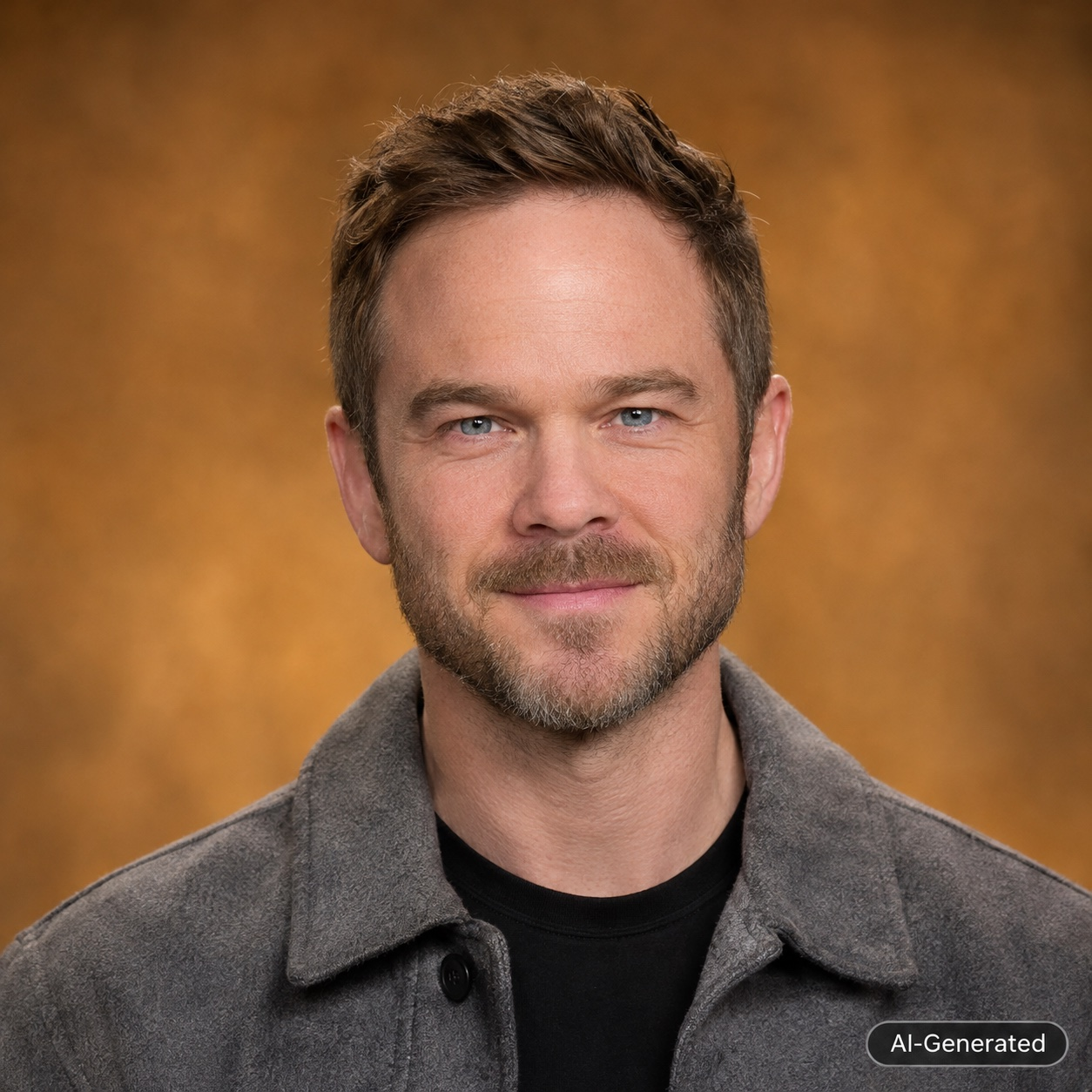
AI-generated editorial portrait representing Shawn Ashmore

What is Shawn Ashmore’s religion, and is he a Christian? Fans of ABC’s The Rookie may ask because Shawn Ashmore plays Wesley Evers, a character whose choices invite moral questions. The answer requires a distinction: a scripted role and a public biography tell us something about a career, but they do not reveal a private profession of faith.

Who is Shawn Ashmore?

Ashmore’s official ABC biography notes his role as Bobby Drake, also called Iceman, in the X-Men films and his appearance as Lamplighter in The Boys. He has worked in thrillers, dramas, and television over many years. On The Rookie he plays Wesley Evers. His career demonstrates how easily one actor can become familiar to audiences through characters who are very unlike one another.

Wesley Evers and the actor behind the role

Wesley’s story as a lawyer brings legal and ethical questions into The Rookie. His choices can affect people he loves and people caught up in the justice system. That can make him a compelling character, but a fictional lawyer’s principles are not a reliable window into Ashmore’s religious life. Performers portray convictions they do not necessarily share.

What has Shawn Ashmore said about faith?

We could not verify a direct public statement in which Shawn Ashmore clearly professes faith in Jesus Christ and explains that conviction. Some sites assign religious labels based on fragments: a family background, a holiday greeting, a role in a faith-related production, or an unsourced biography. None of those can establish a person’s present beliefs. We should use the actor’s own words from a dependable source before saying more. A missing public statement is a reporting limit, not evidence that he rejects Christianity.

We should also avoid the opposite shortcut. Silence in a television interview does not prove that a person is an unbeliever. Actors are usually being asked about a series, a role, or a project rather than their spiritual lives. A public profile can describe the available record and acknowledge where it ends. It cannot read a heart. The question “Is this person saved?” ultimately reaches beyond what a stranger can establish from press coverage.

A biblical lens for viewers

A legal setting makes the question of guilt and acquittal vivid. The gospel’s answer to human guilt is not a clever defense or a stronger résumé. Romans 5:8 says God demonstrates his love in Christ’s death for sinners. The point is mercy grounded in Jesus, not an actor’s on-screen association with justice.

The New Testament does not describe salvation as a prize for people who live impressively. It presents a Savior for sinners. Romans 5:8 says Christ died for us while we were still sinners; 1 Corinthians 15:3–4 centers the gospel on his death and resurrection. Ephesians 2:8–9 says this rescue is by grace through faith rather than works. This applies to viewers as much as performers. Fame can make someone visible, but visibility gives the public no special access to a person’s heart. A careful profile can report words and actions; only God knows the whole person.

It is reasonable to let a compelling story raise deeper questions. Who can be trusted? What do people do with guilt, loss, or fear? Where does hope come from when effort is not enough? Those questions should take us to Scripture, not to assumptions about a performer. The Bible’s claims can be considered directly. A favorite television character may start a conversation, but the actor does not have to become a spiritual symbol for the conversation to matter.

The answer

On the reliable public material we could verify, Shawn Ashmore’s personal religious beliefs are not clear enough to identify he as a Christian. We also cannot say that he is not one. What is established is he work as Wesley Evers on The Rookie and the professional background described by ABC. If Shawn Ashmore gives a clear first-person account of faith, this profile can be updated with that statement and its source.

Photo note: The featured portrait is an AI-generated editorial illustration, not a photograph of Shawn Ashmore.

Sources: ABC’s official Shawn Ashmore cast biography. Scripture: Romans 3:23; Romans 5:8; 1 Corinthians 15:3–4; Ephesians 2:8–9.

What Is Lisseth Chavez’s Religion? Is She a Christian?

AI-generated editorial portrait representing Lisseth Chavez

What is Lisseth Chavez’s religion, and is she a Christian? Fans of ABC’s The Rookie may ask because Lisseth Chavez plays Celina Juarez, a character whose choices invite moral questions. The answer requires a distinction: a scripted role and a public biography tell us something about a career, but they do not reveal a private profession of faith.

Who is Lisseth Chavez?

ABC lists Chavez as a series regular on The Rookie playing Officer Celina Juarez. The network also notes her earlier series-regular work on Chicago P.D. and Legends of Tomorrow. Those parts span police drama and comic-book adventure, very different settings that both rely on strong character choices. Her public professional biography is concise and does not make claims about her personal religion.

Celina Juarez and the actor behind the role

Celina is a newer officer learning how to put judgment into practice. That position naturally creates stories about mentors, mistakes, and confidence. A viewer can discuss the character’s decisions without assuming that Chavez would make the same decisions off camera. A fictional officer’s beliefs, even when stated clearly in dialogue, are not evidence for the actor’s theology.

What has Lisseth Chavez said about faith?

We could not verify a direct public statement in which Lisseth Chavez clearly professes faith in Jesus Christ and explains that conviction. Some sites assign religious labels based on fragments: a family background, a holiday greeting, a role in a faith-related production, or an unsourced biography. None of those can establish a person’s present beliefs. We should use the actor’s own words from a dependable source before saying more. A missing public statement is a reporting limit, not evidence that she rejects Christianity.

We should also avoid the opposite shortcut. Silence in a television interview does not prove that a person is an unbeliever. Actors are usually being asked about a series, a role, or a project rather than their spiritual lives. A public profile can describe the available record and acknowledge where it ends. It cannot read a heart. The question “Is this person saved?” ultimately reaches beyond what a stranger can establish from press coverage.

A biblical lens for viewers

Learning from a mentor is valuable, but the gospel cannot be passed on merely as a professional skill. Scripture describes faith as trust in Christ and his saving work. That distinction matters when audiences see a character grow and understandably want to know the real person behind the role.

Christianity makes a particular claim about the human problem and God’s remedy. Romans 3:23 says all have sinned; no admirable career or popular performance removes that need. According to 1 Corinthians 15:3–4, Christ died for sins and was raised. Ephesians 2:8–9 then says salvation comes by grace through faith, not as wages for good works. A person can be generous, thoughtful, and loved by an audience without those traits telling us whether the person has placed faith in Jesus. That is why Famous Faith does not use a character’s virtue as proof of an actor’s salvation.

It is reasonable to let a compelling story raise deeper questions. Who can be trusted? What do people do with guilt, loss, or fear? Where does hope come from when effort is not enough? Those questions should take us to Scripture, not to assumptions about a performer. The Bible’s claims can be considered directly. A favorite television character may start a conversation, but the actor does not have to become a spiritual symbol for the conversation to matter.

The answer

On the reliable public material we could verify, Lisseth Chavez’s personal religious beliefs are not clear enough to identify she as a Christian. We also cannot say that she is not one. What is established is she work as Celina Juarez on The Rookie and the professional background described by ABC. If Lisseth Chavez gives a clear first-person account of faith, this profile can be updated with that statement and its source.

Photo note: The featured portrait is an AI-generated editorial illustration, not a photograph of Lisseth Chavez.

Sources: ABC’s official Lisseth Chavez cast biography. Scripture: Romans 3:23; Romans 5:8; 1 Corinthians 15:3–4; Ephesians 2:8–9.

What Is Jenna Dewan’s Religion? Is She a Christian?

AI-generated editorial portrait representing Jenna Dewan

What is Jenna Dewan’s religion, and is she a Christian? Fans of ABC’s The Rookie may ask because Jenna Dewan plays Bailey Nune, a character whose choices invite moral questions. The answer requires a distinction: a scripted role and a public biography tell us something about a career, but they do not reveal a private profession of faith.

Who is Jenna Dewan?

ABC describes Dewan as an actress, dancer, host, and producer. She appeared in Step Up and Take the Lead, hosted World of Dance, and has produced television projects as well as acted in them. In The Rookie she plays Bailey Nune. Her public work reaches people through movement, performance, and storytelling across several kinds of media.

Bailey Nune and the actor behind the role

Bailey’s place in John Nolan’s life gives The Rookie a way to explore commitment and what support looks like under pressure. Audiences may connect with her independence and warmth. Those qualities belong to a fictional person and do not settle Dewan’s private religious commitments. Nor does a public conversation about spirituality automatically answer the narrower question of whether someone trusts Jesus Christ as Savior.

What has Jenna Dewan said about faith?

Dewan has discussed spirituality publicly, including in a BUILD Series interview. That discussion shows interest in spiritual questions, but the word spirituality can encompass many different beliefs. We did not find a clear, verifiable statement from her identifying with the biblical gospel or describing faith in Jesus Christ as Savior. It would overstate the evidence to turn a broad spiritual conversation into a settled Christian label.

We should also avoid the opposite shortcut. Silence in a television interview does not prove that a person is an unbeliever. Actors are usually being asked about a series, a role, or a project rather than their spiritual lives. A public profile can describe the available record and acknowledge where it ends. It cannot read a heart. The question “Is this person saved?” ultimately reaches beyond what a stranger can establish from press coverage.

A biblical lens for viewers

Dewan has spoken publicly about spirituality in a BUILD Series conversation. That is useful context, but spirituality is a broad word and should not be presented as a profession of biblical Christianity. We can report that she has discussed spiritual ideas while still saying that the available material does not establish a clear Christian testimony.

Biblical Christianity calls people to trust the crucified and risen Jesus. The apostle Paul summarizes his death for sins and resurrection in 1 Corinthians 15:3–4. Ephesians 2:8–9 explains that salvation is God’s gift, received through faith rather than earned through works. These passages leave no room for the idea that a successful career, an appealing character, or a generous act can save someone. They also give reason for hope: the invitation of Christ is open to ordinary viewers and famous actors alike. We can explain that message without claiming knowledge of anyone’s private spiritual condition.

It is reasonable to let a compelling story raise deeper questions. Who can be trusted? What do people do with guilt, loss, or fear? Where does hope come from when effort is not enough? Those questions should take us to Scripture, not to assumptions about a performer. The Bible’s claims can be considered directly. A favorite television character may start a conversation, but the actor does not have to become a spiritual symbol for the conversation to matter.

The answer

On the reliable public material we could verify, Jenna Dewan’s personal religious beliefs are not clear enough to identify she as a Christian. We also cannot say that she is not one. What is established is she work as Bailey Nune on The Rookie and the professional background described by ABC. If Jenna Dewan gives a clear first-person account of faith, this profile can be updated with that statement and its source.

Photo note: The featured portrait is an AI-generated editorial illustration, not a photograph of Jenna Dewan.

Sources: ABC’s official Jenna Dewan cast biography; BUILD Series conversation about spirituality. Scripture: Romans 3:23; Romans 5:8; 1 Corinthians 15:3–4; Ephesians 2:8–9.

What Is Richard T. Jones’s Religion? Is He a Christian?

AI-generated editorial portrait representing Richard T. Jones

Richard T. Jones plays Wade Grey on ABC’s The Rookie, a leader whose presence gives the police ensemble a sense of authority and experience. Viewers who search for Jones’s religion find a more direct answer than they do for many of his castmates: Jones has publicly spoken about the Lord and about Jesus helping him during an important period of his life. His own words deserve more weight than a religious label assigned by a biography site.

A long career before Wade Grey

ABC’s official biography lists a wide range of Jones’s film work, including The Wood, Event Horizon, Why Did I Get Married?, Super 8, and Concussion. His television credits include Judging Amy and The Rookie, where he portrays Sergeant Wade Grey. That breadth matters because audiences may know him from very different roles and assume they know the person behind them. A career can be public and familiar while a person’s spiritual life remains much less visible.

Wade Grey is a fictional supervisor. His decisions about leadership, discipline, and the people who depend on him are part of the story crafted for The Rookie. Jones’s performance may feel convincing because he has played complex characters for decades. It still does not tell us what he believes. For that, we should look to what Jones actually said in a direct interview.

What Richard T. Jones has said about Jesus

In a 2023 interview with First And Pen, Jones reflected on the years when he worked on Judging Amy. He described that period as one of personal and spiritual growth and said he rededicated himself to the Lord. He also said Jesus helped him through those years. Those are his reported first-person words, not an inference drawn from a faith-themed film or a role that happens to involve religion. They support saying that Jones has publicly expressed Christian faith.

That statement should be reported with its limits. It is an account of a meaningful time in his life, not a complete doctrinal statement about every theological question. It also does not give readers authority to judge the present condition of his heart. Still, it is far more substantial than a website simply listing a denomination without a source. Jones named the Lord and Jesus in describing his own experience.

Faith beyond a screen role

The same First And Pen interview recounts how Jones entered acting through a class he initially took while considering law. He described a career with unexpected turns, including disappointments when particular projects did not produce the success he hoped for. His comments about rededication came in the context of that longer story of work, growth, and setbacks. It would flatten his account to treat it as a promotional line for one movie or to make Wade Grey the source of his faith identity.

Christians can appreciate a public profession while remembering that salvation is not conferred by an interview, a church label, or a career in faith-based entertainment. Scripture teaches that every person needs mercy (Romans 3:23), that Christ died for sinners (Romans 5:8), and that salvation is by grace through faith rather than earned by works (Ephesians 2:8–9). The center of the gospel is Christ’s death and resurrection (1 Corinthians 15:3–4). Those truths provide the standard for speaking about Christian hope, not a celebrity’s visibility.

The answer

Richard T. Jones has publicly spoken of rededicating himself to the Lord and of Jesus helping him. It is fair to describe that as a public expression of Christian faith. We cannot determine his salvation from the outside, and we should not pretend that one interview answers every question about his beliefs. Readers can hear his own words, consider the biblical gospel, and avoid confusing the actor with Wade Grey.

Photo note: The featured portrait is an AI-generated editorial illustration, not a photograph of Richard T. Jones.

Sources: ABC’s official Richard T. Jones cast biography; First And Pen’s interview with Jones. Scripture references: Romans 3:23; Romans 5:8; Ephesians 2:8–9; 1 Corinthians 15:3–4.

What Is Mekia Cox’s Religion? Is She a Christian?

AI-generated editorial portrait representing Mekia Cox

What is Mekia Cox’s religion, and is she a Christian? Fans of ABC’s The Rookie may ask because Mekia Cox plays Nyla Harper, a character whose choices invite moral questions. The answer requires a distinction: a scripted role and a public biography tell us something about a career, but they do not reveal a private profession of faith.

Who is Mekia Cox?

According to ABC, Cox began performing song and dance as a small child and later earned a degree in musical theatre. Her career includes Chicago Med, Once Upon a Time, where she played Princess Tiana, and numerous other television roles. On The Rookie she portrays Nyla Harper, an undercover officer turned training officer. Her experience in dance, theater, film, and television makes her career much broader than one police drama.

Nyla Harper and the actor behind the role

Nyla Harper brings experience and toughness to the team. Her transition from undercover work to training others suggests questions about identity, trust, and life after a demanding assignment. Those themes may resonate with people whose jobs have shaped how they see themselves. Yet the character’s journey is fiction. We should not treat Nyla’s instincts or dialogue as a personal statement from Cox about faith.

What has Mekia Cox said about faith?

We could not verify a direct public statement in which Mekia Cox clearly professes faith in Jesus Christ and explains that conviction. Some sites assign religious labels based on fragments: a family background, a holiday greeting, a role in a faith-related production, or an unsourced biography. None of those can establish a person’s present beliefs. We should use the actor’s own words from a dependable source before saying more. A missing public statement is a reporting limit, not evidence that she rejects Christianity.

We should also avoid the opposite shortcut. Silence in a television interview does not prove that a person is an unbeliever. Actors are usually being asked about a series, a role, or a project rather than their spiritual lives. A public profile can describe the available record and acknowledge where it ends. It cannot read a heart. The question “Is this person saved?” ultimately reaches beyond what a stranger can establish from press coverage.

A biblical lens for viewers

Nyla’s story invites reflection on what remains when a role or career changes. Christianity answers identity questions by pointing beyond performance. Ephesians 2:8–9 says God saves by grace through faith, not by impressive accomplishments. That is good news for people who have served well and for people who believe they have failed.

When the Bible speaks of Christian hope, it points first to Jesus Christ, not to a person’s skill, sincerity, or reputation. Every person needs mercy (Romans 3:23). Christ’s death and resurrection stand at the center of the gospel (1 Corinthians 15:3–4). God saves by grace through faith, apart from earning it by works (Ephesians 2:8–9). These truths also shape how we write about celebrities: we should neither award someone a Christian label for seeming good nor deny that God may be at work in a life we know only from public appearances.

It is reasonable to let a compelling story raise deeper questions. Who can be trusted? What do people do with guilt, loss, or fear? Where does hope come from when effort is not enough? Those questions should take us to Scripture, not to assumptions about a performer. The Bible’s claims can be considered directly. A favorite television character may start a conversation, but the actor does not have to become a spiritual symbol for the conversation to matter.

The answer

On the reliable public material we could verify, Mekia Cox’s personal religious beliefs are not clear enough to identify she as a Christian. We also cannot say that she is not one. What is established is she work as Nyla Harper on The Rookie and the professional background described by ABC. If Mekia Cox gives a clear first-person account of faith, this profile can be updated with that statement and its source.

Photo note: The featured portrait is an AI-generated editorial illustration, not a photograph of Mekia Cox.

Sources: ABC’s official Mekia Cox cast biography. Scripture: Romans 3:23; Romans 5:8; 1 Corinthians 15:3–4; Ephesians 2:8–9.

What Is Alyssa Diaz’s Religion? Is She a Christian?

AI-generated editorial portrait representing Alyssa Diaz

What is Alyssa Diaz’s religion, and is she a Christian? Fans of ABC’s The Rookie may ask because Alyssa Diaz plays Angela Lopez, a character whose choices invite moral questions. The answer requires a distinction: a scripted role and a public biography tell us something about a career, but they do not reveal a private profession of faith.

Who is Alyssa Diaz?

ABC’s biography traces Diaz’s television work from As the World Turns through roles in Southland, The Nine Lives of Chloe King, and Narcos: Mexico. On The Rookie, she plays Angela Lopez, a training officer whose professional life intersects with family and personal responsibility. The official biography also notes her interests in oil painting and Muay Thai. These details show a full creative life beyond a single television part.

Angela Lopez and the actor behind the role

Angela is often asked to act decisively when other people depend on her. The series uses her work and relationships to explore loyalty, judgment, and the costs of difficult choices. A viewer may admire her conviction or recognize her vulnerability. Neither response establishes Diaz’s faith. The actor’s background, hobbies, and on-screen moral choices cannot substitute for her own explanation of what she believes.

What has Alyssa Diaz said about faith?

We could not verify a direct public statement in which Alyssa Diaz clearly professes faith in Jesus Christ and explains that conviction. Some sites assign religious labels based on fragments: a family background, a holiday greeting, a role in a faith-related production, or an unsourced biography. None of those can establish a person’s present beliefs. We should use the actor’s own words from a dependable source before saying more. A missing public statement is a reporting limit, not evidence that she rejects Christianity.

We should also avoid the opposite shortcut. Silence in a television interview does not prove that a person is an unbeliever. Actors are usually being asked about a series, a role, or a project rather than their spiritual lives. A public profile can describe the available record and acknowledge where it ends. It cannot read a heart. The question “Is this person saved?” ultimately reaches beyond what a stranger can establish from press coverage.

A biblical lens for viewers

Angela’s work makes the language of justice easy to discuss. Scripture, however, says human justice and personal achievement do not make a person righteous before God. Romans 3:23 includes every person in the need for grace. The Christian hope is that Jesus Christ died for sinners and rose again, not that admirable people finally earn a clean record.

The New Testament does not describe salvation as a prize for people who live impressively. It presents a Savior for sinners. Romans 5:8 says Christ died for us while we were still sinners; 1 Corinthians 15:3–4 centers the gospel on his death and resurrection. Ephesians 2:8–9 says this rescue is by grace through faith rather than works. This applies to viewers as much as performers. Fame can make someone visible, but visibility gives the public no special access to a person’s heart. A careful profile can report words and actions; only God knows the whole person.

It is reasonable to let a compelling story raise deeper questions. Who can be trusted? What do people do with guilt, loss, or fear? Where does hope come from when effort is not enough? Those questions should take us to Scripture, not to assumptions about a performer. The Bible’s claims can be considered directly. A favorite television character may start a conversation, but the actor does not have to become a spiritual symbol for the conversation to matter.

The answer

On the reliable public material we could verify, Alyssa Diaz’s personal religious beliefs are not clear enough to identify she as a Christian. We also cannot say that she is not one. What is established is she work as Angela Lopez on The Rookie and the professional background described by ABC. If Alyssa Diaz gives a clear first-person account of faith, this profile can be updated with that statement and its source.

Photo note: The featured portrait is an AI-generated editorial illustration, not a photograph of Alyssa Diaz.

Sources: ABC’s official Alyssa Diaz cast biography. Scripture: Romans 3:23; Romans 5:8; 1 Corinthians 15:3–4; Ephesians 2:8–9.

What Is Nathan Fillion’s Religion? Is He a Christian?

AI-generated editorial portrait representing Nathan Fillion

What is Nathan Fillion’s religion, and is he a Christian? Fans of ABC’s The Rookie may ask because Nathan Fillion plays John Nolan, a character whose choices invite moral questions. The answer requires a distinction: a scripted role and a public biography tell us something about a career, but they do not reveal a private profession of faith.

Who is Nathan Fillion?

ABC identifies Fillion as an actor and executive producer from Edmonton, Alberta. He stars in and executive produces The Rookie. Before John Nolan, he played Richard Castle for eight seasons on Castle and Malcolm Reynolds in Firefly and Serenity. His credits also span film, voice acting, and games. That long career explains why many viewers first met him in a completely different fictional world.

John Nolan and the actor behind the role

John Nolan begins the series as a man making a major midlife change: he enters the Los Angeles Police Department as an unusually old rookie. His story raises questions about purpose, second chances, and courage after disappointment. Those themes can feel spiritual, but the screenplay supplies Nolan’s experiences. Fillion’s decision to portray him tells us about his work as an actor, not his beliefs about God.

What has Nathan Fillion said about faith?

We could not verify a direct public statement in which Nathan Fillion clearly professes faith in Jesus Christ and explains that conviction. Some sites assign religious labels based on fragments: a family background, a holiday greeting, a role in a faith-related production, or an unsourced biography. None of those can establish a person’s present beliefs. We should use the actor’s own words from a dependable source before saying more. A missing public statement is a reporting limit, not evidence that he rejects Christianity.

We should also avoid the opposite shortcut. Silence in a television interview does not prove that a person is an unbeliever. Actors are usually being asked about a series, a role, or a project rather than their spiritual lives. A public profile can describe the available record and acknowledge where it ends. It cannot read a heart. The question “Is this person saved?” ultimately reaches beyond what a stranger can establish from press coverage.

A biblical lens for viewers

A role about starting over can remind viewers that a career restart and spiritual rebirth are different. People can make brave decisions and still need the mercy of Christ. The show’s version of hope arrives through work, friendship, and perseverance; the gospel points to a Savior who does for sinners what they cannot do for themselves.

Christianity makes a particular claim about the human problem and God’s remedy. Romans 3:23 says all have sinned; no admirable career or popular performance removes that need. According to 1 Corinthians 15:3–4, Christ died for sins and was raised. Ephesians 2:8–9 then says salvation comes by grace through faith, not as wages for good works. A person can be generous, thoughtful, and loved by an audience without those traits telling us whether the person has placed faith in Jesus. That is why Famous Faith does not use a character’s virtue as proof of an actor’s salvation.

It is reasonable to let a compelling story raise deeper questions. Who can be trusted? What do people do with guilt, loss, or fear? Where does hope come from when effort is not enough? Those questions should take us to Scripture, not to assumptions about a performer. The Bible’s claims can be considered directly. A favorite television character may start a conversation, but the actor does not have to become a spiritual symbol for the conversation to matter.

The answer

On the reliable public material we could verify, Nathan Fillion’s personal religious beliefs are not clear enough to identify he as a Christian. We also cannot say that he is not one. What is established is he work as John Nolan on The Rookie and the professional background described by ABC. If Nathan Fillion gives a clear first-person account of faith, this profile can be updated with that statement and its source.

Photo note: The featured portrait is an AI-generated editorial illustration, not a photograph of Nathan Fillion.

Sources: ABC’s official Nathan Fillion cast biography. Scripture: Romans 3:23; Romans 5:8; 1 Corinthians 15:3–4; Ephesians 2:8–9.
What Is Eric Winter’s Religion? Is He a Christian?

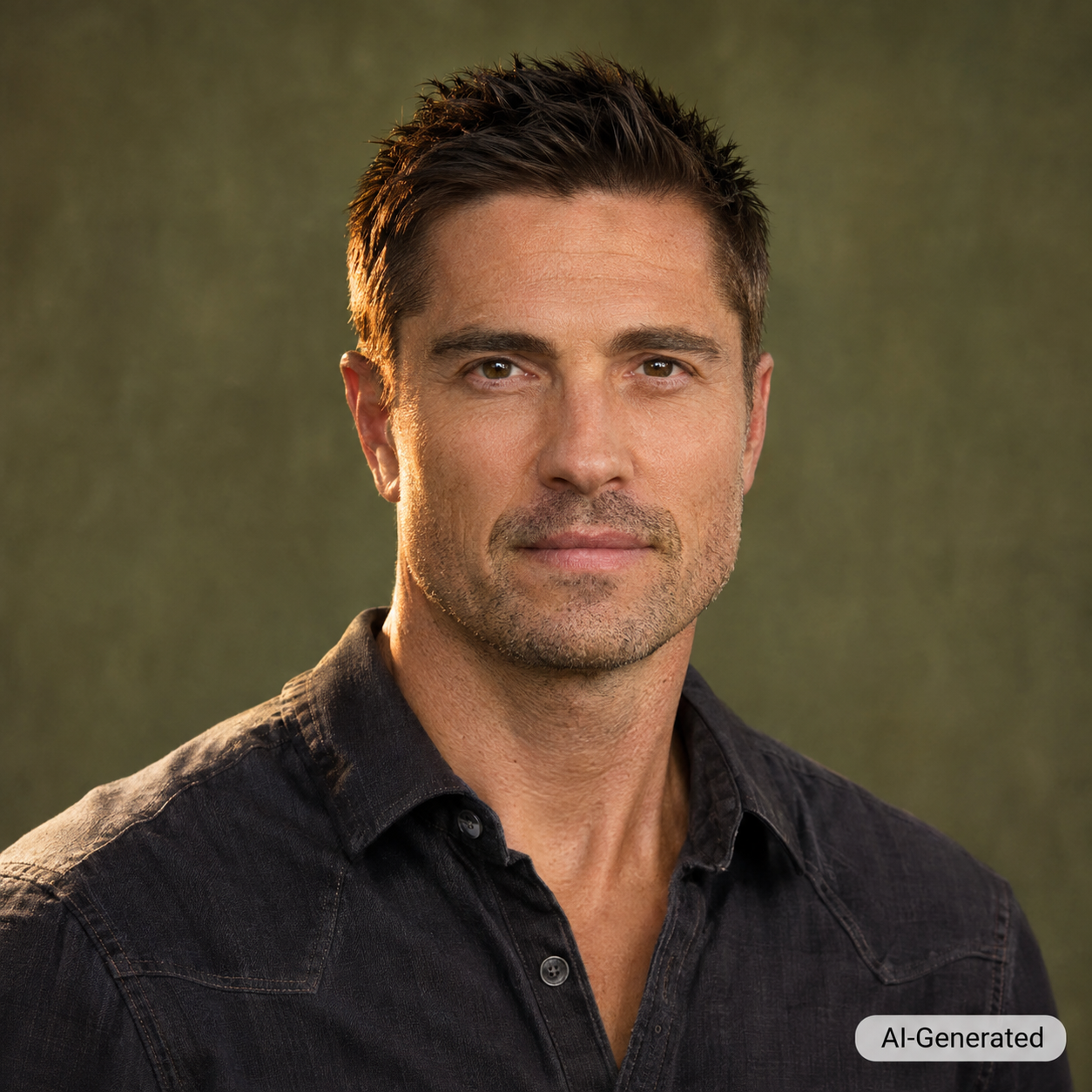
AI-generated editorial portrait representing Eric Winter

Eric Winter plays Tim Bradford on ABC’s The Rookie, a character whose stern manner and developing relationship with Lucy Chen have made him a favorite among viewers. The camera shows us a fictional officer’s loyalty, losses, and decisions. It does not show us the actor’s private convictions. So what, if anything, has Winter said about religion, and is there good reason to describe him as a Christian?

Eric Winter beyond Tim Bradford

ABC’s official cast biography identifies Winter as an actor and producer with work in television and film before The Rookie. His credits include The Mentalist, The Good Doctor, and The Ugly Truth. Those projects put him in very different stories from Tim Bradford’s police work. He also has a public career that includes interviews, entertainment appearances, and family life. None of that biographical material, by itself, defines his religious beliefs.

Tim Bradford is a strong presence on The Rookie. His discipline can seem severe, yet the series gives viewers reasons to see concern beneath it. He trains younger officers, faces emotional strain, and learns that strength includes trust. Fans are free to admire that arc. It would still be a mistake to transfer Tim’s choices, virtues, or moral failures to Winter. An actor gives a character a face and voice; the writers give that character a story.

Has Eric Winter publicly professed Christian faith?

We have not verified a clear first-person public profession from Winter explaining that he follows Jesus Christ or describing how he understands the gospel. Some entertainment pages attach religious labels to celebrities without linking to an interview or statement. A family background, an old role, a holiday message, or someone else’s description is not enough to settle a person’s present beliefs. We would need Winter’s own words from a dependable source before making a firmer claim.

This uncertainty should not be turned into a negative verdict. People differ in what they share publicly, and a lack of religious discussion in promotional interviews is not evidence of unbelief. It simply limits what a profile can responsibly report. We can say that Winter portrays Tim Bradford; we cannot state with confidence from the sources at hand whether he personally identifies as a Christian.

Strength, mercy, and the gospel

The appeal of Tim Bradford’s story may be his mixture of toughness and care. Viewers may see a disciplined man who still needs help, forgiveness, and honest relationships. Those are human themes that can lead to spiritual questions. The Christian gospel, however, is not a lesson that disciplined people earn God’s approval. Scripture says all have sinned and fall short of God’s glory (Romans 3:23). The strongest person in the room still needs grace.

Ephesians 2:8–9 describes salvation as a gift of grace received through faith, not something produced by effort or good works. The heart of that message is Jesus Christ’s death for sins and resurrection, as summarized in 1 Corinthians 15:3–4. Being brave, protective, or admired can be good, but those traits are no substitute for trusting Christ. This is why we do not infer anyone’s salvation from a role on a television series, from a polished public image, or from the kindness fans observe at a distance.

Christians also have reason to speak with humility here. Only God knows a person’s heart. A celebrity’s silence on faith does not license speculation, and a celebrity’s use of religious language does not automatically reveal a saving trust in Christ. The better practice is to quote what someone has actually said, recognize what is still unknown, and explain the gospel without pretending to know the private state of a stranger’s soul.

The answer

Eric Winter’s religion and personal relationship to Christianity are not established by a reliable public statement we could verify. We cannot responsibly say that the actor is a Christian, nor can we say he is not. The character of Tim Bradford gives viewers plenty to discuss about courage, trust, and change. For an answer about Winter’s faith, we would need Winter to speak clearly for himself. We will update this profile if a verifiable statement becomes available.

Photo note: The featured portrait is AI-generated editorial art, not a photograph of Eric Winter.

Source: ABC’s official Eric Winter cast biography. Scripture references: Romans 3:23; Ephesians 2:8–9; 1 Corinthians 15:3–4.

What Is Melissa O’Neil’s Religion? Is She a Christian?

AI-generated editorial portrait representing Melissa O’Neil

Melissa O’Neil is familiar to millions of viewers as Lucy Chen on ABC’s The Rookie. Lucy’s courage, loyalty, and difficult choices invite questions about the woman who plays her. What is Melissa O’Neil’s religion? Has she publicly said she is a Christian? Those questions deserve a careful answer that separates a scripted character from the actor’s own convictions.

Who is Melissa O’Neil?

According to ABC’s official cast biography, O’Neil grew up in Calgary, Alberta, and won Canadian Idol at sixteen. Her career then moved across music, theater, and television. She performed on Broadway in Jesus Christ Superstar and Les Misérables, appeared in the science-fiction series Dark Matter, and joined The Rookie as Lucy Chen. It is a remarkably varied path: a televised singing competition, stage productions demanding live performance, and a long-running network drama.

That range helps explain why viewers connect with Lucy. On The Rookie, the character faces danger, professional pressure, and changing relationships within the Los Angeles Police Department. Fans may see moral courage or sacrificial friendship in those stories. The qualities we admire in a character, however, are written for that character. They do not tell us what O’Neil believes about God, Jesus, salvation, or the Bible.

Has Melissa O’Neil identified as a Christian?

We have not found a reliable, direct public statement in which O’Neil identifies herself as a Christian or explains a Christian testimony. That is a limit on what we can report, not proof that she does or does not believe. Her role in Jesus Christ Superstar also cannot answer the question. Actors can portray biblical figures, sing religious music, or work on faith-related productions without personally affirming the theology in the script. Conversely, a person may have private convictions and choose not to discuss them in interviews.

It is easy for celebrity profiles to turn a fragment of biography into a confident religious label. We do not want to do that. An unsourced claim about church membership, family background, or a social-media post would still leave the central question unanswered: what does she personally believe about Jesus Christ? Until O’Neil speaks clearly on that subject in a source we can verify, the honest answer is that her Christian faith has not been publicly established.

Why the distinction matters

Christian faith is more specific than a fondness for spiritual themes or a role in a religious musical. The New Testament says that salvation is God’s gift of grace received through faith, not a reward earned by good works (Ephesians 2:8–9). It centers on the death and resurrection of Jesus Christ (1 Corinthians 15:3–4). We cannot infer that confession from an actor’s kindness, popularity, charitable work, or fictional storylines. These may be meaningful things, but they are different questions.

The same caution works in the other direction. We cannot inspect someone’s heart or declare that a private person is outside God’s reach because an interview did not mention religion. Readers can appreciate O’Neil’s performances and still leave room for uncertainty about her personal beliefs. Respect for her privacy and accuracy in reporting belong together.

What viewers can take from Lucy Chen’s story

The Rookie often places Lucy under pressure to choose between fear and courage, self-protection and care for other people. Those scenes can open worthwhile conversations about conscience, sacrifice, and hope. Yet a television drama cannot provide the gospel, and Lucy’s decisions should never become evidence for O’Neil’s salvation. If the show prompts deeper questions, the better place to take them is Scripture itself.

The Bible presents every person as needing God’s mercy. Romans 3:23 says all have sinned; Romans 5:8 says Christ died for sinners. The good news is not that admirable people eventually become good enough. It is that Jesus saves those who trust him. That invitation applies equally to celebrities, viewers, and the people whose stories we watch on screen.

The answer

Melissa O’Neil’s religion is not clear from reliable public statements we could verify. We therefore cannot responsibly call her a Christian or claim that she is not one. What we can say is that she plays Lucy Chen on The Rookie and has built a career in music, theater, and television. If O’Neil later describes her faith publicly, this profile can be updated with her own words and an appropriate source.

Photo note: The featured portrait is AI-generated and is an editorial illustration, not a photograph of Melissa O’Neil.

Source: ABC’s official Melissa O’Neil cast biography. Scripture references: Ephesians 2:8–9; 1 Corinthians 15:3–4; Romans 3:23; Romans 5:8.