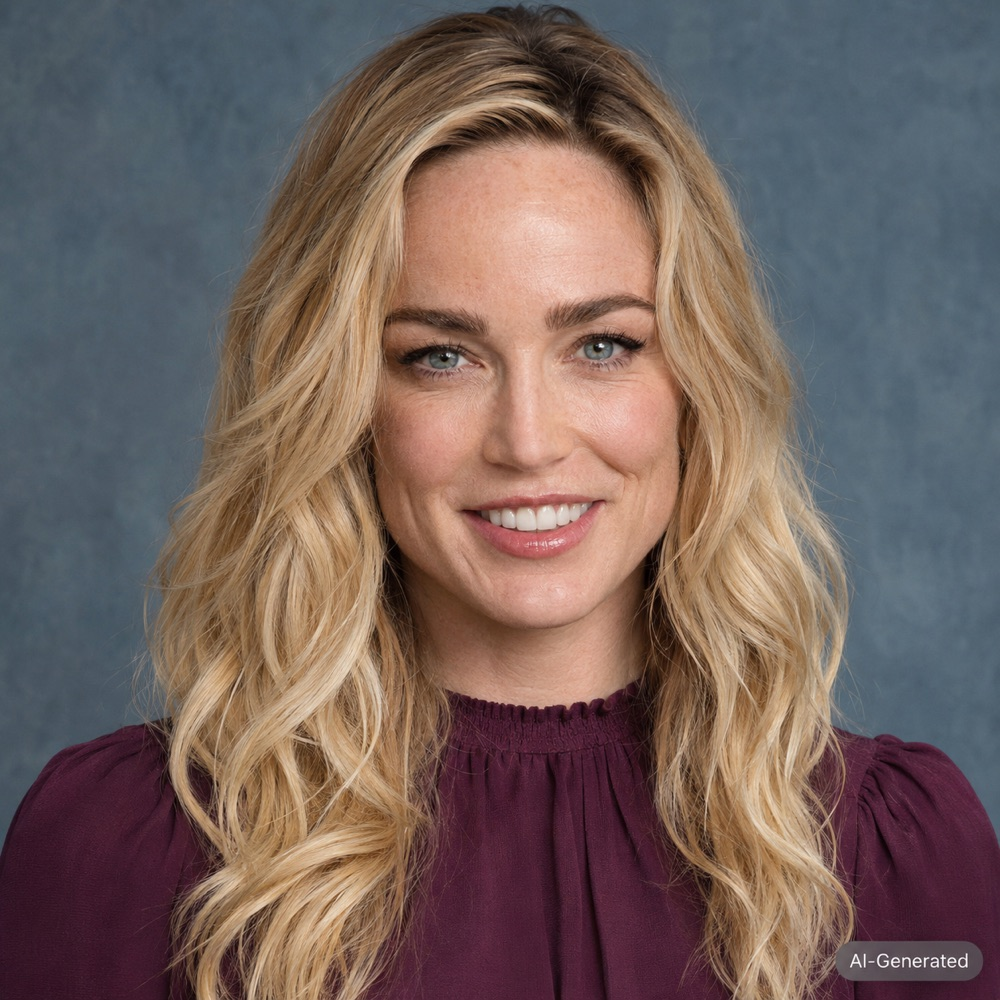
Caity Lotz described herself in a 2012 interview as spiritual without following organized religion. That is a documented historical statement; this profile has not verified a more recent religious affiliation or a Christian conversion testimony.
The person behind the performance
Lotz is an actress, dancer, and martial artist known for Sara Lance in Arrow and Legends of Tomorrow. Her career reference records performance work that began before those television roles. The action characters draw on an already developed movement background.
A 2012 Hot Press interview discussed her work in The Pact and included direct remarks about spiritual matters. Because that interview concerns an earlier period, the statements should be dated rather than silently presented as a complete account of every belief she holds today.
Their part in Arrow
Sara Lance becomes associated with the Canary identity in Arrow before taking a central role as White Canary in Legends of Tomorrow. Her story includes loss, return, and the search for a direction beyond past violence.
The supernatural mechanisms used by the series are fictional. They are not accounts of Christian resurrection, and a performer’s participation does not establish personal acceptance of them. The role can be examined as storytelling while the question of Lotz’s own faith remains tied to her public statements.
What the public record says about faith
In the Hot Press interview, Lotz said, “I don’t follow any organised religion. I’m definitely spiritual.” She also expressed unease about the occult elements involved in filming a horror story. Those remarks establish what she said in that conversation without proving a Christian profession.
Famous Faith does not use spiritual as a synonym for Christian, nor does it assume that an older statement settles a person’s entire future. This profile has not verified a later affiliation that would justify replacing that carefully dated account with a more definite current religious label.
Spiritual curiosity needs a trustworthy foundation
Interest in the unseen can arise from fear, wonder, grief, or a desire to know that life has meaning beyond what we can measure. Christianity takes spiritual reality seriously, but it does not teach that every spiritual claim is equally true or safe.
First John 4:1 calls believers to test spiritual claims. Deuteronomy 18:10–12 warns against divination and attempts to consult the dead. Famous Faith therefore does not recommend occult experimentation as a route to truth or comfort. This is a biblical conviction, not a claim that an actor who performs a scripted scene personally practices what the scene depicts.
Our hope rests in the person and work of Jesus Christ rather than an undefined energy or a technique for controlling the unseen. The call is to seek truth with humility, take Scripture seriously, and distinguish an emotionally powerful experience from a reliable foundation for faith.
The gospel and the hope of grace
The Bible says that all have sinned and fall short of God’s glory (Romans 3:23). Our need is deeper than an imperfect public image: we have failed to love God and our neighbors as we should. Jesus Christ, God’s Son, lived without sin, died for sinners, and rose bodily from the dead. His death and resurrection are central to the gospel (1 Corinthians 15:3–4). Salvation is God’s gift, received through faith in Christ rather than earned through good deeds, church membership, or personal achievement (Ephesians 2:8–10). Jesus calls us to repent and believe. A changed life follows his grace; it does not purchase forgiveness.
The reflection above expresses Famous Faith’s Christian perspective. It is not attributed to the actor or presented as a claim to know anyone’s heart.
Sources and image credit
Original AI-generated editorial portrait of Caity Lotz, created for Famous Faith. Artistic interpretation, not a photograph. No endorsement by the performer or production is implied.