
What Is Glen Powell’s Religion? Is He a Christian?

Portrait of Glen Powell

Glen Powell has publicly affirmed belief in God and prayer. The available evidence is less specific about a present denomination or a detailed Christian profession. It is worth keeping those questions separate rather than assuming that any reference to God answers all of them.

Powell stars as Ben Richards in The Running Man, a 2025 film in which a desperate father enters a deadly televised contest. That recent role keeps him prominent with movie audiences. It is a professional credit, not a statement that every idea in the story reflects his own convictions.

What has Glen Powell said about religion?

An October 2026 Esquire profile reports that Powell believes in God, considers himself spiritual, and often prays with gratitude. It also describes his discomfort with religious hypocrisy. Those points establish something meaningful about his public outlook without supplying a complete creed.

Is belief in God the same as Christian faith?

Belief in God is an important question, but Christianity also makes specific claims about Jesus. The New Testament identifies him as the eternal Son who became human, died for sinners, and rose again. A clear Christian profession involves trusting him, not merely accepting that some kind of higher power exists.

That distinction should not become an excuse to dismiss a person’s spiritual interest. It simply keeps the reporting precise. The sources cited here do not establish Powell’s current church membership or settle his understanding of every Christian doctrine. A reader should not confuse the limits of a profile with a claim that the actor has no faith.

How does the Bible address religious hypocrisy?

Jesus opposed hypocrisy directly. In Matthew 6, he warns against giving, praying, and fasting in order to win admiration. The problem is not that generosity or prayer is wrong. The problem is using a religious act to make ourselves appear important while our hearts pursue another goal.

Christians therefore do not need to defend dishonest behavior because it wears a religious label. The Bible gives them reasons to confront it. Leaders and ordinary believers alike are accountable for truthfulness, humility, and love. Religious language cannot make cruelty, manipulation, or self-promotion holy.

But the failure of a believer is also different from the truth of Christ’s claims. Christianity does not teach that every person who speaks in God’s name is trustworthy. It calls people to examine teaching and conduct in light of Scripture. A bad example is a reason for discernment, not a reason to stop asking who Jesus is.

What does Christian gratitude involve?

First Thessalonians 5:18 calls believers to give thanks in all circumstances. Gratitude recognizes that life is a gift rather than a personal achievement we created from nothing. It can soften pride and help people notice neighbors whose needs success might otherwise hide.

Biblical gratitude is directed toward the God revealed in Scripture. Christians thank him not only when a career goes well but also for mercy in weakness and hope in suffering. The greatest gift in that account is salvation through Jesus. Thankfulness is a response to grace; it cannot buy forgiveness.

What questions does The Running Man raise?

A story about a parent facing an exploitative system can prompt questions about human dignity and the cost of survival. The Bible refuses to treat a person’s value as entertainment or a price tag. Genesis 1:27 roots that value in being made in God’s image.

Those are Christian reflections on a story, not claims about Powell’s private beliefs. The distinction matters. We can examine a movie thoughtfully, report an actor’s actual words accurately, and still recognize that neither fame nor a sympathetic character answers the personal question of faith.

What is the gospel of Jesus Christ?

The Christian message begins with God, who made us and is holy, loving, and just. Every person has sinned and fallen short of his glory (Romans 3:23). Sin includes our actions, words, desires, and refusal to love God and our neighbors. It brings guilt, separates us from God, and deserves his judgment. Fame, good intentions, religious customs, and kind deeds cannot erase that guilt.

God did not leave sinners without hope. Jesus Christ, the eternal Son of God, became human and lived without sin. He willingly died on the cross for sinners, taking the judgment they deserved. He was buried and rose bodily from the dead on the third day (1 Corinthians 15:3–4). His resurrection shows his victory over sin and death. He is alive, and he calls people to come to him.

Forgiveness and eternal life are gifts of God’s grace, received through faith in Jesus rather than earned by works (Ephesians 2:8–10). To repent is to turn from sin toward God; to believe is to rely on Christ and what he has done. Neither a family background nor a public label can replace that trust. A changed life, including love, honesty, and good works, follows salvation as its fruit. It does not purchase it. This invitation is for ordinary readers and famous people alike.

How should readers understand this profile?

This article separates the person’s public statements from Famous Faith’s Bible commentary. Older interviews tell us what someone said at that time; they cannot settle every question about present beliefs. We do not know anyone’s heart or claim to decide whether a person is saved. Christians can evaluate public ideas by Scripture while speaking truthfully, respecting the person, and praying with humility. The same questions about sin, grace, and faith apply to us.

Photo credit

Featured portrait: Gage Skidmore, via Wikimedia Commons, CC BY-SA 2.0. Resized and compressed for this page. Use of the photograph does not imply endorsement of this article.

What Was Richard Riehle’s Religion? Was He a Christian?

Portrait of actor Richard Riehle in 2016

Richard Riehle, the familiar character actor remembered for Office Space, Grounded for Life, and many other roles, died on October 15, 2026, at age 78. The Associated Press reported that Wright Entertainment announced his death on October 19. We extend our condolences to his family, friends, and colleagues.

As people remember his work, some will also wonder about his faith. Riehle’s own account included family ties to the Catholic priesthood and a brief period in seminary. Those experiences are part of his story, even though the public record leaves important questions about his later beliefs unanswered.

Richard Riehle’s religious background

In an interview with Notre Dame Magazine, Riehle explained that both his godfather and his mother’s brother had been priests. With that family example around him, he once considered following a similar path.

He attended Saint Francis de Sales seminary, but soon realized it was not the right direction for him. As he put it, “it became clear pretty fast that it wasn’t for me.” The profile recounts a conversation with seminary leaders that helped him acknowledge this change of direction.

These are meaningful details because they come from his own recollections. They establish an early connection with Catholic religious life. Leaving seminary, however, does not by itself tell us whether someone later practiced a faith, changed beliefs, or continued privately asking spiritual questions.

Was Richard Riehle a Christian? His seminary history alone cannot answer that fully. In the sources reviewed for this article, we did not find a clear public statement explaining his later personal beliefs about God, Jesus, or salvation. That is a limit in the available evidence, rather than proof that he had no faith. Respectful remembrance leaves room for what he did not publicly share.

Remembering the person behind the familiar face

Riehle was born in Menomonee Falls, Wisconsin, in 1948. His biographical record includes study at the University of Notre Dame and an MFA from the University of Minnesota. His career crossed theater, television, film, and voice acting.

Many viewers remember him as Tom Smykowski in Office Space, whose anxious office conversations became part of the film’s lasting appeal. Others knew him as Walt Finnerty in Grounded for Life. His credits also included Glory, The Fugitive, and appearances across Star Trek: The Next Generation, Voyager, and Enterprise. He voiced Bumi in The Legend of Korra.

The range of those parts is a reminder of what character actors contribute. A supporting performance can make a setting feel believable, give a scene its humor, or bring a brief encounter to life. Viewers may remember the face and the feeling long before they learn the performer’s name.

Riehle told Notre Dame Magazine that he looked for roles that would stretch him, rather than simply seeking the lead. That approach offers something worth appreciating: careful work can matter even when it does not receive the largest share of attention.

In its statement reported by AP, Wright Entertainment also remembered his kindness and his encouragement of newer actors and filmmakers. Such tributes describe how colleagues experienced him. They deserve to be heard as memories of a person, while remaining distinct from claims about his private religious convictions.

A biblical perspective on work, kindness, and grief

The Bible gives dignity to work that happens outside the spotlight. Colossians 3:23 calls believers to work wholeheartedly for the Lord. A task does not have to be famous to deserve care. Teaching, serving a customer, caring for family, and helping a coworker can all be opportunities to love others through faithful effort.

Kindness also has real weight in Scripture. Ephesians 4:32 calls Christians to be kind, tenderhearted, and forgiving. Encouragement can make a difference to someone who is new, uncertain, or easily overlooked. Remembering another person’s generosity can prompt us to practice those habits ourselves.

These connections are reflections on biblical teaching, rather than an attempt to turn Riehle’s performances or reputation into a profession of faith. An actor’s roles do not reveal everything about his soul. Honesty and humility matter especially when writing about someone who can no longer answer questions.

Scripture also makes room for sorrow. Romans 12:15 calls us to weep with those who weep. In John 11, Jesus wept at Lazarus’s tomb. Grief is not something mourners must quickly hide or explain away. Friends can show love by listening, offering practical help, and giving people room to remember.

The Christian hope for readers facing questions about death

A death can bring our own questions closer: What is life for? Can guilt be forgiven? Is there hope beyond the grave? The Bible’s answer centers on Jesus Christ. This is an invitation to the reader, not a claim about beliefs Riehle did not publicly state.

The Bible teaches that God made us and loves us, and that he is holy and just. Romans 3:23 says all have sinned and fall short of his glory. We have failed to love God and our neighbors as we should. Neither a kind reputation nor religious education can erase our guilt. Every one of us needs mercy.

God sent his Son, Jesus, to save sinners. Jesus lived without sin and died on the cross for our sins, bearing the judgment we deserve. He was buried and rose bodily from the dead. His resurrection is the foundation of Christian hope: forgiveness and eternal life rest on a living Savior.

Ephesians 2:8–9 teaches that salvation comes by grace through faith, not through works. Jesus calls us to repent—to turn from sin and self-rule—and trust him as Lord and Savior. Good works follow as a response to his grace; they do not purchase it.

We remember Richard Riehle with gratitude for the work he shared and respect for those who loved him. For readers seeking comfort and truth, the Gospels offer a place to begin: consider Jesus’ words, his death, and his resurrection. Bring your grief and questions honestly before God, and consider the mercy Christ offers.

Photo credit: Germar Derron, portrait still from “Richard Riehle Supports Autism Awareness” (2016), via Wikimedia Commons, CC BY 3.0. Existing extracted portrait, resized.

What Is Andrew Garfield’s Religion? Is He a Christian?

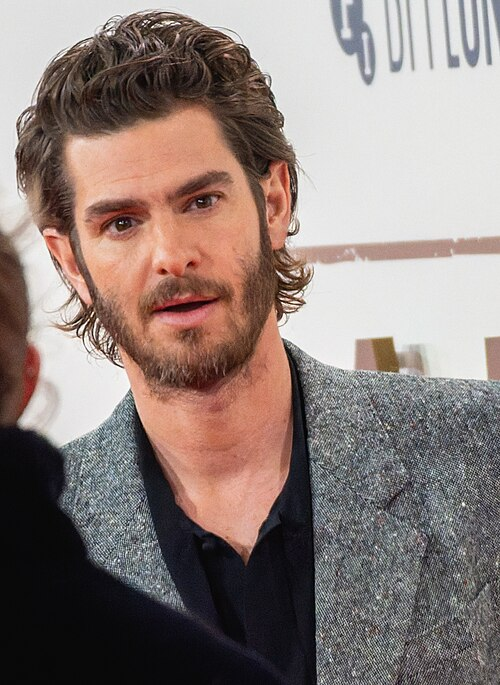
Portrait of Andrew Garfield in 2025

Andrew Garfield’s public comments point to a spiritual life shaped by curiosity, prayer, and a strong interest in Jesus. He has explored Catholic practices with a Jesuit guide while also speaking against the idea that one religion alone holds the truth. His views deserve a fuller answer than a label pulled from one movie or headline.

For readers asking whether Andrew Garfield is a Christian, the clearest approach is to hear his own words across time. His relationship with Christian prayer is well documented. So are his broader views about religion. Those two parts of his story belong together.

What Andrew Garfield has said about faith

In a September 2026 conversation with Jesuit priest James Martin for America’s The Spiritual Life podcast, Garfield described a lasting interest in spiritual searching. He said his home was not religious, but that this left him curious about faith and life’s meaning.

His preparation for Silence brought him into sustained contact with Ignatian spirituality, a Catholic tradition associated with Ignatius of Loyola. He worked with Martin over many months. The process included prayer, reflection, and imaginative meditation on the life of Jesus.

The 2026 conversation matters because it reaches beyond a publicity interview from the film’s release. Garfield described trying to remember the nightly Examen, a prayerful review of the day. He discussed gratitude, God’s presence, and noticing moments of closeness to or distance from God. Christian prayer has remained part of his experience years after that role.

A spiritual outlook that crosses religious boundaries

There is another side to the record. In his 2016 TIME interview, Garfield said he did not want Hacksaw Ridge to communicate that Christianity was the only way. He described using several different words for a higher power and spoke about a personally transformative spiritual preparation for Silence.

In a 2021 NYLON interview, he discussed a deep attraction to spiritual questions and the overlap he sees among traditions. He explicitly rejected the idea of one true religion. He also described theater, and sometimes film, as central places where he experiences spirituality.

That interview offers insight into how he understands his work. Storytelling can become a place to explore meaning, moral failure, and the desire for connection. In the same conversation, Garfield criticized equating God’s love with money, attention, or audience size while discussing his portrayal of televangelist Jim Bakker.

These interviews come from different years. We should not pretend an older statement settles every question about his beliefs today. Still, a careful account should include both his continuing Christian spiritual practices and his publicly expressed openness across religious boundaries.

His roles raise questions; his statements provide the evidence

Many viewers first meet Garfield through Spider-Man. Others know him through The Social Network, Hacksaw Ridge, or Silence. These stories ask different things of an actor. Playing someone with strong convictions does not tell us whether the actor shares those convictions.

That distinction helps us appreciate the work without confusing fiction and personal testimony. An actor can study prayer seriously for a role and carry something from that experience into daily life. We learn what that means for Garfield by listening to his interviews, rather than assigning him the beliefs of a character.

How these ideas compare with the Bible

The Bible welcomes honest seeking. Acts 17:27 describes people seeking God, and the Psalms repeatedly bring questions, longing, and pain into prayer. Gratitude and daily reflection also have clear biblical value. First Thessalonians 5:16–18 calls believers to rejoice, pray, and give thanks.

Scripture also challenges the thought that all religious answers can be equally true. Jesus presents himself as the way to the Father in John 14:6. Acts 4:12 locates salvation in him. These claims concern who Jesus is and what he has done, not whether Christians are smarter or more deserving than their neighbors.

A Christian can recognize kindness, beauty, and honest questions in many settings while still testing spiritual claims. First John 4:1 calls readers to examine spiritual teaching. Respect for a person does not require agreement with every belief. Love should lead us to speak truth with humility, including when we disagree about the most important questions.

The good news for the reader

Our deepest need is more than a moving experience or a clearer sense of ourselves. Romans 3:23 teaches that all have sinned. We have turned from God in thought, word, and action. His holiness means evil matters, and we cannot erase guilt by becoming famous, generous, religious, or successful.

Yet God has acted in love. Jesus Christ, the Son of God, lived without sin, died for our sins, was buried, and rose bodily from the dead. First Corinthians 15:3–4 places those events at the heart of the gospel. At the cross, Jesus bore the judgment sinners deserve. His resurrection declares his victory over sin and death.

Ephesians 2:8–9 explains that salvation is God’s gift, received through faith rather than earned by works. The invitation is to repent, turning from sin and self-rule, and trust Jesus Christ as Lord and Savior. Good works follow as the fruit of new life; they do not buy forgiveness.

You do not need to settle a celebrity’s spiritual identity before responding to that invitation. Read a Gospel, such as John, and consider Jesus’ words and resurrection for yourself. Bring your real questions to God. The Christian hope rests in a living Savior who welcomes sinners who come to him.

Photo credit: Andrew Garfield in 2025, by Raph_PH, via Wikimedia Commons, licensed CC BY 4.0. Cropped version from Commons; resized for this page.

What Is Ryan Gosling’s Religion? Is He a Christian?

Portrait of Ryan Gosling

Ryan Gosling grew up in a Mormon family, but he has publicly distinguished that background from his own religious identity. His childhood is documented; his present faith should not be reduced to a label carried over from his parents. The interviews below give a more careful answer to the question of whether he is a Christian.

Gosling has a recent major film credit in Project Hail Mary, released in the United States on March 20, 2026. He plays a science teacher facing an extraordinary mission to save Earth. The movie title includes a familiar religious expression, but a title cannot serve as the actor’s statement of belief.

Was Ryan Gosling raised Mormon?

Yes. His family background includes the Church of Jesus Christ of Latter-day Saints. However, in a 2007 Busted Halo interview, Gosling explained that the faith was his parents’ and that he had not personally identified with it in the same way. He described his mother as allowing her children to work out their beliefs rather than treating the family religion as their only option.

He also spoke positively about some social experiences of childhood church attendance: meeting people, speaking publicly, and singing. Those comments show that someone can appreciate aspects of religious community while making a distinction about personal faith. Neither appreciation nor distance tells us everything about what that person believes now.

What has Ryan Gosling said about his own beliefs?

A 2002 Village Voice interview described him as religious without a denominational label. That is an older statement, not a verified description of his beliefs in 2026. The later Busted Halo interview makes clear why automatically calling him a practicing Mormon would be misleading.

These sources do not provide a current, detailed profession of faith in Jesus Christ. They also do not justify announcing that he is an atheist. People can move away from a family tradition without giving the public a complete account of their spiritual lives. A responsible profile reports the available statements and acknowledges what remains unanswered.

Do Ryan Gosling’s movie roles reveal his religion?

An actor’s work may explore religious identity, community, isolation, or rescue without reflecting his own convictions. Gosling was speaking to Busted Halo while discussing Lars and the Real Girl, a story in which community and church matter. His comments about the character belong to that context. They should not be rewritten as a conversion testimony.

The same caution applies to Project Hail Mary. A fictional rescue mission can prompt worthwhile questions about sacrifice and hope. It does not tell us whether the person playing the rescuer trusts Christ. Readers should look for direct statements rather than treating a screen story as evidence about private worship.

How does a religious upbringing compare with biblical faith?

The Bible values teaching children about God, but it also presents faith as a personal response to him. In John 1:12–13, belonging to God’s family is connected with receiving Christ, not simply with human ancestry. A parent’s faith cannot function as someone else’s repentance or trust.

Historic Christian teaching also centers on who Jesus is: the eternal Son, truly God and truly human. That question matters more than grouping every community that uses Jesus’ name under one broad label. This profile does not assume Gosling holds the teachings of a church just because his family attended it.

For readers who grew up around religion, his story raises a useful question: have I considered Christ for myself? Good memories, difficult memories, and inherited habits are all part of a life story. The gospel asks us to look directly at Jesus and his saving work.

What is the gospel of Jesus Christ?

The Christian message begins with God, who made us and is holy, loving, and just. Every person has sinned and fallen short of his glory (Romans 3:23). Sin includes our actions, words, desires, and refusal to love God and our neighbors. It brings guilt, separates us from God, and deserves his judgment. Fame, good intentions, religious customs, and kind deeds cannot erase that guilt.

God did not leave sinners without hope. Jesus Christ, the eternal Son of God, became human and lived without sin. He willingly died on the cross for sinners, taking the judgment they deserved. He was buried and rose bodily from the dead on the third day (1 Corinthians 15:3–4). His resurrection shows his victory over sin and death. He is alive, and he calls people to come to him.

Forgiveness and eternal life are gifts of God’s grace, received through faith in Jesus rather than earned by works (Ephesians 2:8–10). To repent is to turn from sin toward God; to believe is to rely on Christ and what he has done. Neither a family background nor a public label can replace that trust. A changed life, including love, honesty, and good works, follows salvation as its fruit. It does not purchase it. This invitation is for ordinary readers and famous people alike.

How should readers understand this profile?

This article separates the person’s public statements from Famous Faith’s Bible commentary. Older interviews tell us what someone said at that time; they cannot settle every question about present beliefs. We do not know anyone’s heart or claim to decide whether a person is saved. Christians can evaluate public ideas by Scripture while speaking truthfully, respecting the person, and praying with humility. The same questions about sin, grace, and faith apply to us.

Photo credit

Featured portrait: Elen Nivrae; crop by Damian Vo, via Wikimedia Commons, CC BY 2.0. Resized and compressed for this page. The photograph does not imply the subject’s or photographer’s endorsement.

What Is Shane Gillis’s Religion? Is He a Christian?

Portrait of Shane Gillis

Shane Gillis has described himself as culturally Catholic while also expressing uncertainty about belief in God. His public comments support a distinction between the religion he grew up with and a clear statement of adult Christian faith. They do not justify turning his comedy into either a conversion testimony or a final verdict about his heart.

What has Shane Gillis said about being Catholic?

In his September 10, 2021 appearance on Whiskey Ginger with Andrew Santino, Gillis discussed childhood church attendance and Catholic schooling. Around the one-hour mark, the conversation moved from memories of church to questions about his present beliefs. A transcript of the episode preserves that exchange.

Gillis said he still identified with Catholicism, connecting that identity with the community in which he was raised. Asked directly about God, he described his belief as fluctuating and said that, at that moment, he did not believe. He also recalled occasionally falling back on a familiar childhood prayer. These remarks belong together, even if they do not fit neatly into one label.

Is Shane Gillis a Christian?

Some people regard Catholicism as a branch of Christianity. Famous Faith distinguishes its teaching on justification from salvation by grace through faith in Christ alone. A cultural Catholic identity does not tell us everything about a person’s convictions. The cited conversation does not provide a clear profession of trust in Jesus as the risen Lord. It also does not establish what Gillis believes today, five years after that episode.

The comedy setting matters. Gillis and Santino joke, interrupt, and exaggerate throughout the discussion. A writer should not turn a punch line into a formal creed. Where Gillis gives an actual answer about his beliefs, it should be dated and reported carefully. Where he is joking, it should not be dressed up as solemn religious teaching.

Does irreverent comedy answer the question of faith?

No single joke can reveal a person’s entire spiritual life. At the same time, humor is not beyond moral evaluation. Christians can ask whether speech tells the truth, treats people with dignity, and builds up rather than tears down. Ephesians 4:29 connects the use of words with the good of those who hear them.

That standard applies to the audience as well as the performer. Laughing at cruelty does not become harmless merely because someone else spoke the words. Nor should a Christian use a comedian’s failures as a reason to feel righteous. James 3 describes the difficulty of controlling the tongue, a problem ordinary people share with famous ones.

How does the Bible distinguish tradition from faith?

Family customs can introduce a child to prayer, Scripture, and Christian community. Those can be valuable gifts. But John 1:12–13 connects becoming God’s child with receiving Christ, not with ancestry alone. Knowing a prayer by memory and trusting the Savior to whom it points are related but different matters.

Mark 9:24 also records an honest cry for help with unbelief. The Bible does not demand that people hide every question before approaching Jesus. It directs them toward him. Doubt should be faced truthfully rather than hidden behind religious language or dismissed with a joke.

For a reader who recognizes the tension between childhood religion and adult uncertainty, the useful next step is to examine Jesus directly. What did he teach? Why did he die? Did he rise from the dead? Those questions are more important than settling which celebrity label is easiest to use.

What is the gospel of Jesus Christ?

The Christian message begins with God, who made us and is holy, loving, and just. Every person has sinned and fallen short of his glory (Romans 3:23). Sin includes our actions, words, desires, and refusal to love God and our neighbors. It brings guilt, separates us from God, and deserves his judgment. Fame, good intentions, religious customs, and kind deeds cannot erase that guilt.

God did not leave sinners without hope. Jesus Christ, the eternal Son of God, became human and lived without sin. He willingly died on the cross for sinners, taking the judgment they deserved. He was buried and rose bodily from the dead on the third day (1 Corinthians 15:3–4). His resurrection shows his victory over sin and death. He is alive, and he calls people to come to him.

Forgiveness and eternal life are gifts of God’s grace, received through faith in Jesus rather than earned by works (Ephesians 2:8–10). To repent is to change your mind toward God; to believe is to rely on Christ and what he has done. Neither a family background nor a public label can replace that trust. A changed life, including love, honesty, and good works, follows salvation as its fruit. It does not purchase it. This invitation is for ordinary readers and famous people alike.

How should readers understand this profile?

This article separates the person’s public statements from Famous Faith’s Bible commentary. Older interviews tell us what someone said at that time; they cannot settle every question about present beliefs. We do not know anyone’s heart or claim to decide whether a person is saved. Christians can evaluate public ideas by Scripture while speaking truthfully, respecting the person, and praying with humility. The same questions about sin, grace, and faith apply to us.

Photo credit

Featured portrait: Quintin Soloviev, via Wikimedia Commons, CC BY 4.0. Resized and compressed for this page. Use of the photograph does not imply endorsement of this article.

What Is Sophie Cunningham’s Religion? Is She a Christian?

Sophie Cunningham with the Indiana Fever in August 2026

Sophie Cunningham publicly expresses Christian faith. The WNBA player has spoken about trusting God, praying before games, and finding her identity beyond basketball. In April 2026, she shared her adult baptism and thanked Jesus. Her public statements give readers a clear picture of the faith she says guides her life.

For Cunningham, this is more than a religious label attached to her name by someone else. She has described faith as a source of stability amid the pressure and attention that come with professional sports. Her story includes years of public comments about prayer, Scripture, and her desire to honor God through basketball.

What has Sophie Cunningham said about Jesus?

In April 2026, Cunningham shared a baptism video with the message, “Loving Jesus is fun, try it.” RELEVANT reported her post alongside her explanation that she had been baptized when she was young and wanted to make that decision personally as an adult. The Christian Post reported that the baptism took place at Christ’s Church of the Valley in Peoria, Arizona.

Her comments connect her faith directly with Jesus, rather than leaving readers to interpret a general reference to spirituality. They also describe a personal response: she wanted her adult commitment to reflect a decision she was making herself.

The public record supports describing Cunningham as a professing Christian. Her statements do not explain every detail of her theology or establish a complete denominational history. There is no need to invent those details to give a clear answer about the Christian faith she publicly expresses.

Why did Sophie Cunningham get baptized again?

Cunningham explained that she had been baptized as a child but felt drawn to do it again as an adult. In comments reported by The Indianapolis Star in April 2026, she described the decision as her own and spoke positively about its importance in her life.

Christians have different views about infant baptism and whether someone should be baptized again. Those differences should be discussed carefully. Cunningham’s explanation tells us why she chose this step; it does not require us to assume what she believes about every question surrounding baptism.

What stands out in her account is the desire to take personal responsibility for her faith. That raises a meaningful question for any reader who grew up around Christianity: have familiar beliefs become convictions we have personally considered and embraced?

How does her faith affect basketball?

Cunningham’s public faith story began well before her 2026 baptism. Sports Spectrum reported in 2021 that, during her Missouri college career, she described tracing a cross over her shoes, knees, heart, and forehead before playing. She connected the routine with prayer, remembering why she played, and recognizing her abilities as gifts from God.

In April 2026, she also said, “my faith really keeps me grounded.” Her comments distinguished the sport she loves from her deeper identity. Basketball is important to her, but she described faith as something that helps her handle the attention surrounding it.

That distinction matters in a career where public opinion can change after one game. A good performance brings praise. An injury, mistake, or disagreement can bring criticism. Cunningham has publicly pointed to faith as an anchor amid those changes.

Who is Sophie Cunningham beyond her faith?

Cunningham became a standout at the University of Missouri before entering the WNBA. She finished her college career as the program’s leading scorer with 2,187 points. Phoenix selected her in the 2019 draft, and she later joined the Indiana Fever in 2025. Her professional career has included the demands of changing teams, earning playing time, and recovering from injury.

Those experiences help explain the setting in which she discusses trust and identity. They do not prove religious beliefs on their own. Her own public words provide the evidence for her faith.

How do her statements compare with the Bible?

Cunningham’s emphasis on gratitude for her abilities fits the biblical teaching that our gifts come from God. First Corinthians 4:7 challenges pride by asking what we possess that we did not receive. Talent gives us a reason for thankfulness and responsibility, rather than a reason to place ourselves above others.

Her desire to honor God through basketball also connects with Colossians 3:23. That passage calls believers to work wholeheartedly for the Lord. Its application reaches beyond sports: a parent, student, business owner, or employee can approach ordinary responsibilities with the same purpose.

Prayer also belongs in daily Christian life. Philippians 4:6–7 directs believers to bring their concerns to God with thanksgiving. This does not promise a winning season, perfect health, or freedom from criticism. Christian faith includes trusting God when circumstances remain difficult.

Cunningham has also publicly referenced Romans 8:28, as documented by Sports Spectrum. Read alongside verse 29, that promise points toward God shaping His people to become like Christ. It offers hope in hardship without claiming that every painful event is good in itself.

What does the gospel mean for the reader?

Cunningham’s story may encourage readers to consider their own faith. The central Christian question reaches beyond whether we admire a believing athlete: how can sinful people be reconciled to God?

The Bible teaches that God is holy and just, and that all of us have sinned (Romans 3:23). His commandments reveal failures we often excuse—lying, stealing, coveting, and putting other things ahead of Him. Jesus also addressed anger and lust in the heart. Being respected, generous, or religious cannot erase our guilt.

The good news is that God sent His Son, Jesus Christ, to save sinners. Jesus lived without sin, died on the cross for our sins, and rose bodily from the dead. He bore the judgment that sinners deserve, and His death and resurrection stand at the center of the gospel (1 Corinthians 15:3–4).

Salvation is God’s gift, received through faith rather than earned by good works (Ephesians 2:8–9). We are called to repent—to turn from sin—and trust Jesus Christ rather than our own goodness. Baptism is an important act of Christian obedience, but our confidence must rest in the Savior to whom it points.

You do not need fame or an impressive religious history to come to Christ. You need His mercy, just as every other person does. Read a Gospel such as John, consider who Jesus says He is, and respond to His call to repent and believe.

Photo credit: John McClellan / John Mac, Sophie Cunningham with the Indiana Fever on August 2, 2026, via Wikimedia Commons, CC BY-SA 4.0. Existing crop by Sportzeditz; resized by Wikimedia Commons. No endorsement implied.

What Is Mark Wahlberg’s Religion? Is He a Christian?

Mark Wahlberg’s life story has often been told as a story of change. He has spoken about a troubled younger life, his family, his work, and his Catholic faith. Because he has been more open than many actors about religion, people naturally ask: Is Mark Wahlberg a Christian?

This question needs both honesty and humility. It is good to report what a person has said about faith. It is not good to act as if we can see into a person’s heart. God knows every heart perfectly; we do not.

What has Mark Wahlberg said publicly about faith?

Wahlberg has repeatedly identified himself as Catholic and has spoken about prayer as part of his daily life. In interviews connected with the film Father Stu, he explained that his Catholic faith matters deeply to him and that he wanted to make a story about repentance, service, and grace. He has also publicly supported a prayer app and has discussed the value of beginning his day with prayer.

His words show that religion is not simply a background detail he avoids. He has been willing to place Catholic belief at the center of public conversations about his work and his choices.

Is Mark Wahlberg a Christian?

Mark Wahlberg publicly identifies as Catholic and has discussed prayer and Jesus. His religious label does not by itself tell us what he personally trusts for salvation. That is the clearest answer we can responsibly give about his stated religion. It does not give us the right to pronounce a final verdict on his relationship with God. Every person, famous or unknown, stands before the same holy God and needs His mercy.

Some people regard Catholicism as a branch of Christianity. Famous Faith believes Catholic teaching on justification differs in important ways from the gospel of salvation by grace through faith in Jesus Christ alone. A person who identifies as Catholic may personally trust Christ alone; a church label cannot tell us what that person believes about salvation.

The gospel is good news precisely because no one is saved by a cleaned-up image, a disciplined routine, or religious words. Jesus came for sinners. He died and rose again so that people who repent and trust Him can be forgiven and changed. The Bible points us to Christ Himself, not to any celebrity’s spiritual routine.

Wahlberg’s public discussion of repentance is a useful word, because repentance is central to Christianity. It is more than feeling sorry. Repentance is a change of mind toward God; faith trusts Jesus Christ and His finished work for forgiveness. A changed life follows grace rather than earning salvation. Christians are not people who claim to have no past. They are people who believe Jesus is able to forgive and make people new.

What should we take away?

Wahlberg has clearly and publicly described himself as Catholic, and his faith appears often in interviews and public projects. We can report that fairly. We can also remember that the ultimate question is not whether someone carries a Christian label, but whether they have trusted the risen Christ.

Instead of turning faith into gossip, we can pray for Mark Wahlberg, his family, and everyone influenced by his work. And we can let the gospel turn the question toward us: Are we trusting Jesus, or only our own version of being good enough?

Sources

Image credit: Mark Wahlberg at MCAS Miramar in 2021, U.S. Marine Corps photo by Sgt. Jorge A. Rosales, public domain, via Wikimedia Commons.

What Is Matt Damon’s Religion? Is He a Christian?

Portrait of Matt Damon

Matt Damon’s public comments point to a personal sense of the divine without a clearly defined religious affiliation. They do not give enough evidence to describe him confidently as a practicing Christian. His own words are more useful than online labels that treat a film role or a political opinion as a statement of faith.

Damon remains a current movie star. He appears in Christopher Nolan’s The Odyssey, which opened July 17, 2026. That puts his work within the past year, but a story drawn from ancient Greek literature does not establish the actor’s personal worship or beliefs.

What has Matt Damon said about religion?

In a Nobleman interview, Damon was asked whether he had a spiritual code. He described a clear moral framework, without a specific spirituality, alongside an appreciation of the divine. When the interviewer asked what happens after death, he said he did not know. That answer combines spiritual openness with uncertainty; it is not a detailed Christian confession or a simple declaration that nothing beyond matter exists.

In the same conversation, Damon recalled talking with Martin Sheen about death and church. He found Sheen’s practice of setting aside weekly time to reflect with other people interesting. Importantly, the churchgoing described in that story was Sheen’s. Repeating the anecdote as evidence that Damon himself attends church would change what the interview actually says.

Is Matt Damon a Christian or an atheist?

The sources reviewed here do not establish either label as his present identity. Appreciation of the divine is not identical to faith in Jesus Christ. At the same time, uncertainty about death is not proof that someone rejects God altogether. A careful answer leaves room for those distinctions instead of making an attention-grabbing claim that the evidence cannot carry.

His acting work should also remain separate from his personal convictions. A performer may explore questions about destiny, suffering, sacrifice, or supernatural beings because those questions make compelling stories. Portraying them does not tell us which teachings the performer accepts. Christians should be especially careful about passing along claims simply because they fit an assumption about Hollywood.

How does his spiritual outlook compare with the Bible?

The Bible treats moral questions as real and serious. It calls people to love their neighbors, speak honestly, and care for those in need. Yet it also asks what grounds our moral obligations. In Scripture, goodness is rooted in God’s character, not only in a private code that each person develops.

The New Testament also offers a specific answer to the question of death. Jesus connects eternal life to himself in John 11:25–26, and Paul places the resurrection at the center of Christian hope. Christian faith therefore makes a claim about an event, not simply a hopeful feeling about what might come next. Readers can examine that claim by reading the Gospel accounts.

None of this tells us what Damon privately believes today. It does show why a general sense of spirituality and biblical Christianity should not be treated as interchangeable. The Bible invites honest questions, then directs people toward the person and work of Jesus.

What is the gospel of Jesus Christ?

The Christian message begins with God, who made us and is holy, loving, and just. Every person has sinned and fallen short of his glory (Romans 3:23). Sin includes our actions, words, desires, and refusal to love God and our neighbors. It brings guilt, separates us from God, and deserves his judgment. Fame, good intentions, religious customs, and kind deeds cannot erase that guilt.

God did not leave sinners without hope. Jesus Christ, the eternal Son of God, became human and lived without sin. He willingly died on the cross for sinners, taking the judgment they deserved. He was buried and rose bodily from the dead on the third day (1 Corinthians 15:3–4). His resurrection shows his victory over sin and death. He is alive, and he calls people to come to him.

Forgiveness and eternal life are gifts of God’s grace, received through faith in Jesus rather than earned by works (Ephesians 2:8–10). To repent is to turn from sin toward God; to believe is to rely on Christ and what he has done. Neither a family background nor a public label can replace that trust. A changed life, including love, honesty, and good works, follows salvation as its fruit. It does not purchase it. This invitation is for ordinary readers and famous people alike.

How should readers understand this profile?

This article separates the person’s public statements from Famous Faith’s Bible commentary. Older interviews tell us what someone said at that time; they cannot settle every question about present beliefs. We do not know anyone’s heart or claim to decide whether a person is saved. Christians can evaluate public ideas by Scripture while speaking truthfully, respecting the person, and praying with humility. The same questions about sin, grace, and faith apply to us.

Photo credit

Featured portrait: Harald Krichel, via Wikimedia Commons, CC BY-SA 4.0. Resized and compressed for this page. The photograph does not imply the subject’s or photographer’s endorsement.

Everybody Loves Raymond: Faith, Family, and the Bible

Surviving Everybody Loves Raymond cast members at the 2025 reunion

Everybody Loves Raymond presents a family familiar with Catholic life, but its cast members have different religious backgrounds and public beliefs. Some have spoken plainly about faith. Others have shared much less. This guide brings together all nine main cast profiles and looks at the show’s family life through the Bible.

The comedy works because ordinary relationships can be both loving and difficult. A dinner becomes a contest. A favor becomes a debt. A brother feels overlooked. A husband wants peace without taking responsibility. Those situations can make us laugh, but they can also help us recognize habits we need to change.

What religion are the Everybody Loves Raymond cast members?

The table below summarizes the evidence reviewed for this series. Each name opens a full profile with sources, a biblical comparison, and the gospel. Public identity is not the same thing as knowing someone’s heart, and an unanswered question should not be replaced with a guess.

Cast member Character What the public record supports
Ray Romano Ray Barone Current beliefs not clearly established; dated skeptical remark reported by secondary sources.
Patricia Heaton Debra Barone Publicly professes Christian faith; later interviews describe Catholic identity.
Brad Garrett Robert Barone Jewish upbringing and identity; reported distance from religious practice in 2014.
Doris Roberts Marie Barone Documented Jewish identity; detailed personal theology not established.
Peter Boyle Frank Barone Catholic background and a reported return to Mass after 1999.
Monica Horan Amy MacDougall Barone Raised Catholic; converted to Judaism before marrying Phil Rosenthal.
Madylin Sweeten Ally Barone Personal religious beliefs unconfirmed in the sources reviewed.
Sawyer Sweeten Geoffrey Barone Personal religious beliefs unconfirmed in the sources reviewed.
Sullivan Sweeten Michael Barone Personal religious beliefs unconfirmed in the sources reviewed.

The original CBS cast description establishes the characters and family relationships. It does not establish the actors’ personal faith. Keeping those two subjects separate is essential, especially for performers who joined the series as children.

Is Everybody Loves Raymond a Christian show?

It is a family sitcom with religious elements, rather than a systematic presentation of Christianity. In a Beliefnet interview, Patricia Heaton explained that church life and Catholic identity were woven into the Barone family. She described a storyline about Ray’s reluctance to attend church and a conversation about why Debra went.

That setting gives the show room to talk about gratitude, marriage, guilt, forgiveness, and the place of God in everyday life. It does not mean that every joke or character choice agrees with Scripture. A believable portrayal of flawed people is not automatically an endorsement of their behavior.

What does the Bible say about Ray and Debra’s marriage?

Ray and Debra’s conflicts often expose how easy it is to want the benefits of marriage while resisting its duties. Viewers may recognize avoiding a difficult conversation, making excuses, keeping score, or using sarcasm when honesty feels costly.

Ephesians 5:21–33 sets marriage within reverence for Christ and calls husbands to sacrificial love. Philippians 2:3–4 challenges selfish ambition and urges concern for another person’s interests. Those passages do not give either spouse permission to control, belittle, or neglect the other.

A practical response is to ask a better question than who won the argument. Did I tell the truth? Did I listen? Did I take responsibility for my part? The biblical goal is not a household where nobody ever disagrees. It is a relationship shaped by humility, faithfulness, and love.

How does Marie’s interference compare with biblical love?

Marie can be generous and intrusive in the same conversation. Her role makes a recognizable problem funny: a person can sincerely care while also insisting that everyone accept her way of doing things. Good intentions do not automatically make an action wise.

First Corinthians 13:4–5 describes love as patient and kind, without insisting on its own way. Genesis 2:24 also speaks of marriage as establishing a new family bond. Parents deserve honor, but adult children need to carry responsibilities in their own households.

That balance challenges both generations. Parents can offer help without turning it into control. Adult children can establish boundaries without contempt. These are lessons viewers can apply to themselves, rather than excuses to diagnose the actors who played the characters.

What do Robert’s rivalry and Frank’s bluntness reveal?

Robert’s frustration about Ray’s attention highlights the danger of comparison. James 3:14–16 warns about envy and selfish ambition. Another person’s success can become a reason to feel cheated when we treat affection as a contest with only one winner.

Frank’s blunt speech raises another question: is what I am saying helpful, or am I enjoying the ability to wound? Ephesians 4:29 calls for words that build others up. Honesty does not require cruelty. Humor can expose foolishness without teaching us to dismiss another person’s dignity.

A sitcom often returns its characters to familiar patterns so another episode can work. Real life calls for something deeper than repeating the same fight. Repentance means acknowledging wrong and turning from it, not merely waiting until the tension passes.

Is family affection enough to deal with sin?

Family love is valuable, but it cannot make us innocent before God. Romans 3:23 teaches that all have sinned. The Ten Commandments expose dishonesty, theft, coveting, and failure to honor God. Jesus’ teaching in Matthew 5 reaches inward to anger and lust.

These failures are not limited to unusually troubled families. They appear in respectable homes, religious communities, and ordinary routines. We can laugh at a character’s selfishness while avoiding our own. The Bible asks us to examine ourselves honestly instead of grading our lives against someone worse.

What is the full gospel of Jesus Christ?

God is holy and just. Sin deserves judgment, and we cannot erase guilt by doing enough good things, belonging to a church, or being loved by our family. We need forgiveness that deals with wrongdoing rather than pretending it never mattered.

God has provided a Savior through His Son, Jesus Christ. Jesus lived without sin, died on the cross for sinners, and rose bodily from the dead. First Corinthians 15:3–4 places His death, burial, and resurrection at the center of the gospel. Romans 5:8 presents His death as the expression of God’s love for sinful people.

Salvation is received by grace through faith, not earned by works (Ephesians 2:8–9). Jesus calls us to repent and believe: turn from sin and trust Him rather than our own goodness. Forgiveness begins a changed life of following Christ, loving others, and returning to Him when we fail.

No cast member’s public religious label can answer that personal question for us. The purpose of this series is to report public beliefs accurately and invite readers to consider Jesus. We do not claim to know anyone’s heart or final standing before God.

Where should I start reading?

Choose any cast member in the table above, or browse the Famous Faith Index. Read the evidence with its dates and limits in view. Then consider the larger question the Bible places before every one of us: am I relying on myself, or on the grace God offers through Jesus Christ?

Photo credit: Sonja Flemming/CBS, ©2025 CBS Broadcasting, Inc., via TV Insider. Surviving cast members at the 2025 reunion: Madylin Sweeten, Brad Garrett, Monica Horan, Patricia Heaton, Ray Romano, and Sullivan Sweeten. Resized and compressed.

What Is Sullivan Sweeten’s Religion? Is He a Christian?

Sullivan Sweeten at the 2025 Everybody Loves Raymond reunion

Sullivan Sweeten’s personal religion is not confirmed by the reliable public sources reviewed for this article. Some biography pages assign religious labels to actors without showing where the information came from. For this profile, we did not find a direct statement from Sweeten identifying a faith or explaining what he believes about Jesus.

That uncertainty should remain visible. It is not proof that he is an atheist, and it is not a reason to assume that he is Christian. Sweeten is known for playing Michael Barone on Everybody Loves Raymond, but a childhood television role cannot answer a question about his adult convictions.

What do we know about Sullivan Sweeten’s public life?

CBS’s cast information identifies Sullivan as Michael Barone and his twin brother Sawyer as Geoffrey. Their sister Madylin played Ally. The siblings were a real family working together inside a fictional one.

TV Insider’s 2025 overview describes Sullivan as having largely stepped away from the spotlight after his years on the sitcom. Coverage of his professional life is not the same thing as a public account of his religious beliefs. A person may be recognizable from television and still choose to keep important parts of life private.

This is why a careful profile needs boundaries. We can identify his role and discuss verified public information without claiming that a limited public record gives us access to his inner life.

Why isn’t a biography website’s religious label enough?

A label becomes useful when it can be traced to good evidence: a direct interview, a clear public statement, or reliable reporting that explains its source. Repetition is not the same as verification. If several sites copy one another, the number of search results may grow without the evidence getting stronger.

That principle matters for faith because words such as Christian can mean several things in casual writing. Sometimes a writer means family background. Sometimes the word refers to church attendance. Sometimes it describes a person’s stated trust in Jesus. Those are related questions, but they are not identical answers.

For Sweeten, the available verified material does not establish a personal Christian profession. The fair answer is to say so clearly. We can revisit that conclusion if a reliable statement becomes available, without pretending that we already possess one.

Does the Barone family’s Catholic identity settle the issue?

No. The Barones attend church and discuss religion within a comedy written for television. Sullivan’s participation as Michael does not establish his own religious upbringing or present practice. Child actors perform the scenes given to them; they are not signing a statement of faith each time their characters mention God.

Nor can we automatically transfer a sibling’s beliefs to him. Even in close families, individuals can reach different conclusions about religion. Respecting that distinction is part of treating a person as a person, rather than as a small part of a familiar television brand.

What does the Bible say about respecting another person’s privacy?

First Corinthians 13:6 connects love with truth. Love does not need an invented answer in order to care about someone. Proverbs 18:13 warns against giving an answer before listening. Together, these principles challenge the habit of speaking confidently when our information is incomplete.

First Samuel 16:7 also reminds readers that God sees the heart. We can describe a public confession when one exists, but we should not act as though we can inspect a person’s soul. Christians are called to witness faithfully to Jesus, not to create a spiritual ranking of people they have never met.

Can a family’s religious background save anyone?

In John 1:12–13, becoming a child of God is not reduced to human ancestry. The New Testament calls individuals to receive Christ and believe in Him. A religious household may provide teaching, prayer, and encouragement, but it cannot replace a person’s own response to the gospel.

The same is true for readers who grew up around church. Knowing Bible stories or sharing the beliefs of admired relatives does not remove our need for forgiveness. The issue is not whether our family looks more religious than someone else’s. It is whether we are trusting the Savior.

What is the gospel of Jesus Christ?

Romans 3:23 teaches that all people have sinned. We have lied, acted selfishly, coveted what others have, and failed to love God and our neighbors as we should. Jesus’ teaching about anger and lust in Matthew 5 shows that our hearts are accountable as well as our outward behavior.

God is holy and just. We cannot erase guilt by accumulating good deeds, enjoying a clean public reputation, or belonging to the right family. Sin deserves judgment, and our need is for mercy grounded in truth. Christianity does not offer a way to congratulate ourselves for being better than others.

It announces what God has done through His Son. Jesus lived without sin, died on the cross for sinners, and rose bodily from the dead. First Corinthians 15:3–4 centers the gospel on His death, burial, and resurrection. He provides reconciliation with God that we cannot earn.

Salvation is received by grace through faith, not by works (Ephesians 2:8–9). Jesus calls us to repent and believe: turn from sin and rely on Him. A changed life follows that trust. This message is an invitation for every reader, not a claim that we know Sullivan Sweeten’s private spiritual condition.

We can appreciate his contribution to a beloved comedy, respect what he has chosen not to share, and leave uncertain matters uncertain. Honest limits strengthen a faith conversation; they do not weaken it.

Photo credit: Sonja Flemming/CBS, ©2025 CBS Broadcasting, Inc., via TV Insider’s reunion photo gallery. Cropped from the cast publicity photograph to show Sullivan Sweeten.