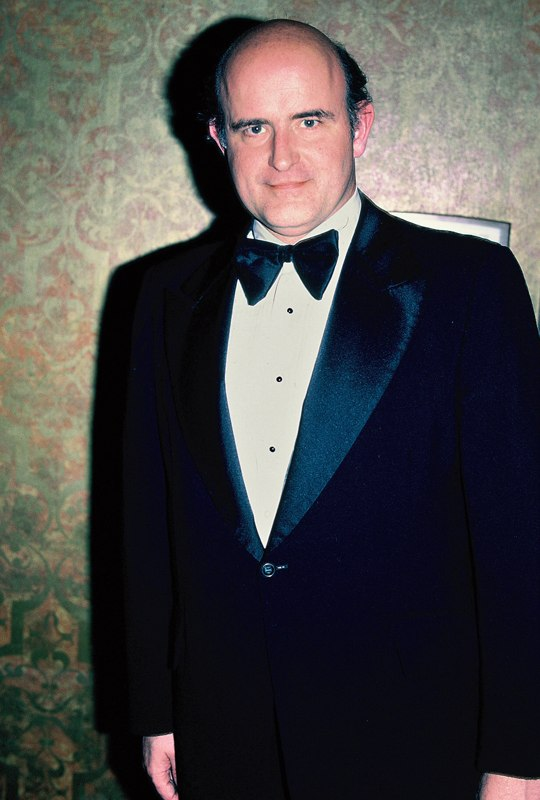
Peter Boyle had a Catholic background and publicly described returning to Mass later in life. His religious story included time with the Christian Brothers, a long period of inconsistent practice, and a renewed commitment after a serious health event. Describing him only as a former monk leaves out an important part of that story.
Boyle played Frank Barone on Everybody Loves Raymond and the monster in Young Frankenstein. Neither character should be treated as his personal testimony. To understand the actor’s faith, the most useful evidence is what he said about his own life.
Was Peter Boyle really a monk?
Boyle spent part of his young adulthood with the Christian Brothers, a Catholic teaching community. The Television Academy’s remembrance discusses that part of his life and points to its 2005 oral-history interview with him. News accounts often summarize the experience by saying he was a monk.
A religious brother is not necessarily an ordained priest. It is therefore more precise to describe Boyle’s connection with a Catholic religious community than to assume he had served as a priest. Accounts differ about the length of the period, so this article does not try to settle it by choosing whichever number appears most often.
That background shows that religion played a serious role in his early life. It does not tell us that every later year was equally devoted. People’s spiritual histories can include commitment, distance, questions, and return.
Did Peter Boyle return to the Catholic Church?
A Catholic News Service obituary carried by Catholic Review reports Boyle’s account of returning to Mass after a 1999 heart attack. Referring to a 2005 interview, it quotes his decision to get “back to Mass” after years of being lax in Catholic practice.
That is meaningful evidence of renewed religious practice. It supports a more complete description than saying that he left religious life and never looked back. At the same time, a newspaper report does not allow us to describe every detail of his understanding of grace, repentance, or salvation.
The record supports identifying a Catholic Christian background and a reported return to worship. It does not authorize us to claim knowledge of his final spiritual condition. Only God knows a person completely.
What should Christians learn from a renewed awareness of mortality?
A health crisis can interrupt the assumption that we have endless time. Boyle’s reported response invites a question that applies to every reader: what deserves our attention while life is still before us? This is not a claim that every crisis is a specific message about a person’s behavior.
Psalm 90:12 asks God to teach us to number our days so that we gain wisdom. James 4:13–15 warns against planning as though tomorrow were guaranteed. The point is not panic. It is humility about our limits and honesty about the fact that our lives belong to God.
Returning to worship can be an important step, but the Bible calls for more than attendance. Jesus warned that outward religious activity can exist without a heart that knows Him (Matthew 7:21–23). The personal question is whether we are trusting Him and responding to His word.
How does Catholic practice compare with the Bible’s message?
Catholic Christianity confesses Jesus Christ, His death, and His resurrection. Protestant and Catholic Christians also have substantial disagreements about justification, authority, and the sacraments. A short celebrity profile should acknowledge those differences without assigning the actor positions he never explained.
Famous Faith’s focus is the Bible’s teaching that forgiveness rests on Christ’s work and is received by faith. Ephesians 2:8–10 distinguishes salvation as God’s gift from the good works that follow it. A religious background, a vow, or a return to a familiar ritual cannot replace personal dependence on Jesus.
Why is Jesus the center of the gospel?
We all need more than a second chance to appear religious. Romans 3:23 teaches that everyone has sinned. God’s commands expose our dishonesty, selfish desires, failures to love, and willingness to put ourselves first. Jesus’ teaching about anger and lust in Matthew 5 reaches beneath appearances to the heart.
God is holy and just. We cannot cancel our guilt by remembering our better moments or promising never to fail again. Religious service cannot purchase innocence. The gospel begins by telling the truth about a problem we cannot solve through effort alone.
God’s Son, Jesus Christ, lived a sinless life and died on the cross for sinners. He bore the judgment our sin deserves and rose bodily from the dead. First Corinthians 15:3–4 describes His death, burial, and resurrection as the heart of the good news. His resurrection means death did not defeat Him.
Jesus calls people to repent and believe (Mark 1:15). Repentance means turning from sin toward God; faith means relying on Christ rather than our own goodness. Salvation is given by grace, not earned through a religious résumé. Those who trust Him begin a new life of obedience and love, depending on His mercy each day.
What is a fair conclusion about Peter Boyle’s faith?
Boyle’s public story includes Catholic formation and a reported return to Mass. We can report those facts, appreciate his work, and resist pretending to know what only God knows. His story also reminds us not to postpone our own response to Jesus until we feel sure that there will be more time.
Photo credit: Photo by Alan Light, Peter Boyle at the 1978 F.I.S.T. premiere, via Wikimedia Commons. CC BY 2.0. Resized and compressed.
