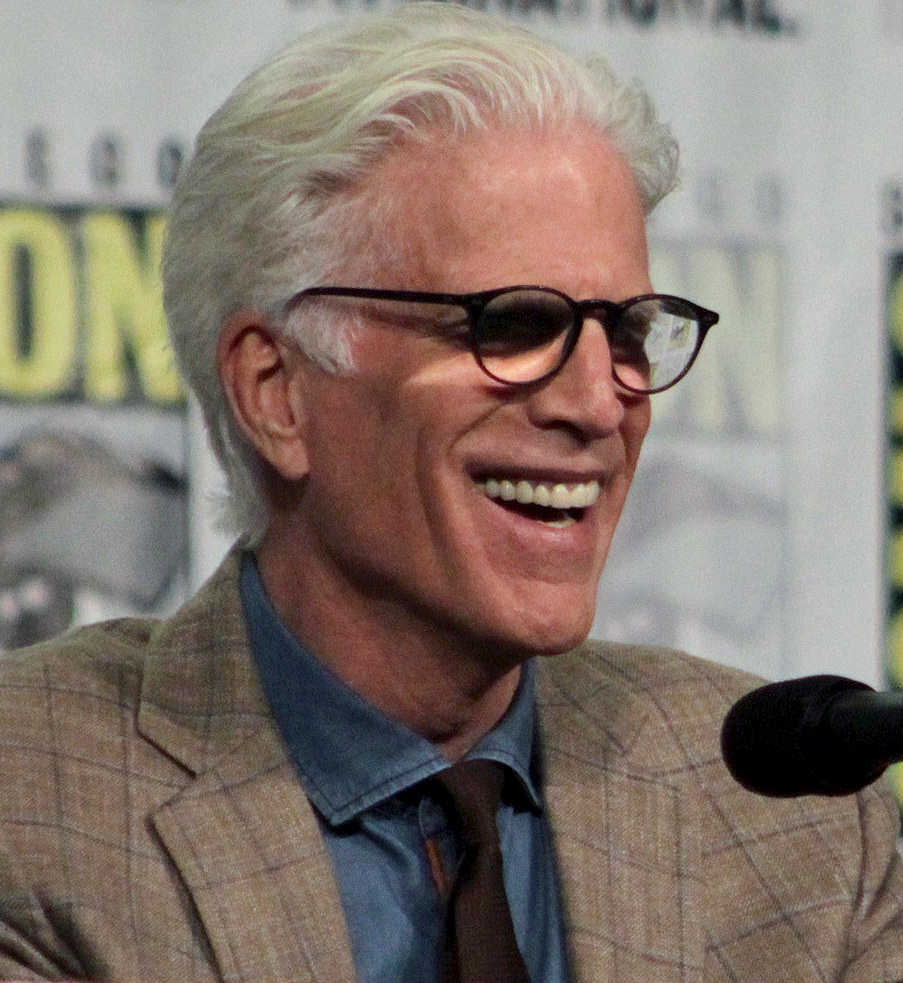
Ted Danson has publicly described a spiritual outlook that includes hope in an afterlife, faith in something beyond the visible world, and trust in the power of love. His clearest explanation comes from his own interviews, rather than from the beliefs of Sam Malone or any other character he has played.
What Ted Danson has said about faith
In a July 2024 interview on NPR’s Wild Card, Danson distinguished between faith and beliefs he felt expected to defend. He spoke of an afterlife and something divine beyond ordinary experience. He preferred an open conversation to an argument over whose religious position was right. He also recalled attending church with his mother, who moved from the Episcopal Church to Catholicism, and exploring different spiritual ideas with a mentor.
Those comments give readers a useful description: Danson speaks openly about spirituality, love, and life after death, while resisting a rigid label. His words describe a personal outlook. They are more helpful than a celebrity database that simply assigns him a denomination.
The same interview included reflections on mistakes, personal growth, gratitude, and his mother’s death. These themes help explain why questions of meaning matter to him. They should be read as his own experience, rather than turned into a complete creed he did not give. Read the NPR interview and transcript.
The actor beyond Sam Malone
Danson became a household name as Sam Malone on Cheers, which ran from 1982 to 1993. He later led Becker, appeared in CSI, and reached another generation through The Good Place. His film work includes Three Men and a Baby and Saving Private Ryan. Born in San Diego, he spent much of his childhood in Flagstaff, Arizona, and earned a drama degree at Carnegie Mellon.
His work also extends beyond acting. Danson has supported ocean conservation and coauthored Oceana. He and Woody Harrelson launched the interview podcast Where Everybody Knows Your Name in 2024. His career offers room for humor, serious storytelling, and conversations about life. See his career background.
It is easy to feel that we know an actor after years of watching him. A familiar voice can seem like the voice of a friend. Yet a performance is still a performance. The Good Place explores ethics and the afterlife through fiction. It does not serve as a statement of everything Danson personally believes about either subject.
Is Ted Danson a Christian?
The interviews reviewed here support a clear description of his spiritual interests. They do not provide a detailed, recent account of his church life or his understanding of Jesus. That leaves the answer more limited than a simple label might suggest. Famous Faith reports what he has said publicly and does not claim access to his private relationship with God.
Love, gratitude, and the Bible
Danson’s interest in love and gratitude provides a thoughtful place to consider the Christian view. Scripture teaches that love is central to knowing God. First John 4:7–10 connects love with God’s own character and with His sending of His Son. Biblical love is more than a warm feeling. It takes action for another person’s good, even when that action costs something.
Gratitude also has a place in Christian life. First Thessalonians 5:18 calls believers to give thanks in every circumstance. This does not mean pretending loss or pain is pleasant. It means trusting that God is still worthy of our attention and that His care reaches us even when life is hard.
There is also a difference between hoping that some divine reality exists and the Bible’s description of God. Scripture presents a personal Creator who knows us, speaks truth, and holds us responsible for how we live. Christian hope in the afterlife rests on Jesus’ resurrection, rather than on our ability to picture what comes next. These are comparisons of ideas, not a judgment about Danson’s heart.
The good news for the reader
The desire to grow into a better person is understandable. Many of us want to make peace with the past and become kinder. The Bible takes that desire seriously, but it also explains why we need more than self-improvement. Romans 3:23 teaches that all have sinned. We have broken God’s good commands in our actions, words, and thoughts. Fame, charity, and a fresh start cannot erase that guilt.
God has not left us to solve the problem alone. Jesus Christ, the Son of God, entered our world and lived without sin. He died on the cross for sinners and rose bodily from the dead. First Corinthians 15:3–4 places His death and resurrection at the heart of the gospel. At the cross, God’s justice and love meet: sin is taken seriously, and mercy is offered freely.
Ephesians 2:8–9 teaches that salvation is God’s gift, received through faith, not earned by works. Repentance means turning from sin toward God. Faith means relying on Jesus Himself to save you, rather than trusting your record, your spiritual feelings, or someone else’s faith. The invitation is personal. You can bring your questions and your real need to Him.
If you want to explore this further, read the Gospel of John, especially John 3 and John 20. Ask what Jesus says about Himself and why His resurrection matters. Speak with a Bible-teaching church that welcomes honest questions. You do not need a famous person’s approval to seek God. Christ’s promise is the reason Christians offer this hope to every interested reader.
Photo credit: Dominique Redfearn / aitchisons, via Wikimedia Commons, CC BY 2.0. Existing portrait crop on Commons; no endorsement implied.
_(cropped_2).jpg)