
What Is Keiynan Lonsdale’s Religion? Is He a Christian?

AI-Generated portrait of Keiynan Lonsdale

AI-generated editorial portrait; not a photograph.

Keiynan Lonsdale has spoken about spirituality and feeling spiritually led in his creative work. Those comments do not establish a specific religion or a profession of biblical Christianity.

The person behind the performance

Keiynan Lonsdale is an Australian actor, dancer, and musician known for Wally West in The Flash and for his work in Love, Simon and the Divergent film series. His career history reflects an artist working across several forms rather than only within superhero television.

In an October 2026 Hella Chisme conversation, Lonsdale describes his creative choices in spiritual terms. That direct discussion is more useful to a faith profile than an assumed label based on a song title or a fictional character’s background.

Their place in The Flash

Wally West enters the series as part of the West family and becomes Kid Flash. His story includes discovering abilities, navigating family relationships, and finding a place alongside a hero who is already established. Those developments give the show another perspective on ambition and belonging.

The character’s journey should not be treated as Lonsdale’s religious autobiography. A superhero story can draw on spiritual imagery or speak about purpose without establishing what the actor believes about God. Likewise, a performer’s public creative identity is not a complete account of private theology. We need to distinguish what Lonsdale actually says from meanings a viewer may attach to the role.

What the evidence says about faith

The podcast transcript records Lonsdale saying that acting, dancing, and music come from a spiritual place and that he feels led toward certain creative projects. That supports describing spirituality as part of how he talks about his work. It does not identify a denomination or establish agreement with the Bible’s account of salvation.

This profile does not equate broad spiritual language with a Christian profession. It also does not infer religion from sexuality, clothing, nationality, or artistic style. Those shortcuts would replace evidence with assumptions. The accurate conclusion is narrower: he has publicly discussed spirituality, while the sources reviewed do not establish a specific religious affiliation or personal trust in Jesus Christ.

Purpose needs a trustworthy foundation

Feeling strongly that a path is right can be meaningful, but intensity does not by itself make a belief true. First Thessalonians 5:21 calls believers to test what they hear and hold fast to what is good. For Christians, spiritual claims must be examined in light of Scripture rather than accepted because a speaker is talented or sincere.

That examination should be joined with humility and respect. A clear disagreement with a belief does not require inventing motives or speaking cruelly about the person who holds it. Famous Faith offers the gospel as the standard for its own conclusions. This reflection belongs to the site, not to Lonsdale’s stated beliefs.

The Bible’s message of grace

The Bible says that all have sinned and fall short of God’s glory (Romans 3:23). Jesus Christ, God’s Son, lived without sin, died for sinners, and rose bodily from the dead. His death and resurrection are the heart of the gospel (1 Corinthians 15:3–4). Salvation is God’s gift, received by grace alone through faith in Christ alone, not earned through good deeds, religious membership, or personal achievement (Ephesians 2:8–9). Repentance means turning from sin toward God. The changed life that follows faith is its fruit, not the price of forgiveness. This hope is available to famous performers and ordinary readers alike.

The spiritual conclusion should remain as careful as the evidence. We can appreciate this performance, read the linked sources, and examine our own trust in Christ without pretending to know another person’s heart.

Image disclosure: AI-generated editorial portrait representing Keiynan Lonsdale, created for Famous Faith; not a photograph. No endorsement implied.

More from this series: Explore all 30 The Flash cast faith profiles.

What Is Rick Cosnett’s Religion? Is He a Christian?

AI-Generated portrait of Rick Cosnett

AI-generated editorial portrait; not a photograph.

Rick Cosnett’s current religion and a personal profession of Christian faith are not established by the sources reviewed for this profile.

The person behind the performance

Rick Cosnett is an actor whose television credits include The Vampire Diaries, The Flash, and Quantico. His career overview identifies Eddie Thawne as one of his best-known roles and distinguishes the actor’s professional history from the history of the fictional Thawne family.

That distinction is important because a familiar surname within a television universe can carry assumptions about motive or destiny. Those assumptions belong to the fiction. A religion profile should use credits to identify the subject and direct evidence to establish belief, rather than allowing a character’s symbolic importance to stand in for the actor’s own words.

Their place in The Flash

Cosnett plays Eddie Thawne, a detective whose relationships place him close to Barry and Iris. Later appearances add another dimension through Cobalt Blue. Eddie’s connection to the larger Thawne story gives him significance beyond a straightforward workplace or romantic role.

The series places questions of loyalty, jealousy, sacrifice, and responsibility around this character. Those themes can be discussed without assuming that Cosnett personally shares every emotion or belief written for Eddie. Nor does a fictional sacrifice become evidence that the actor holds Christian doctrine. The actor and the character should remain separate subjects even when a performance is emotionally persuasive.

What the evidence says about faith

The reviewed sources do not provide a dependable present denomination or a clear personal account of Christian faith. Public information about national background, education, relationships, or identity does not supply a religious confession. It would be equally unreliable to assume belief or unbelief from those details.

An honest profile can therefore explain why Cosnett is well known while leaving the religion question open. That is preferable to repeating an unsupported biography label as fact. If a direct statement becomes available, it can be reported with its date and context. Until then, this review does not claim knowledge of convictions the sources have not established.

Sacrifice in a story and salvation in Christ

A character who gives something up for others can prompt genuine admiration. Christian faith, however, does not treat every fictional sacrifice as equivalent to the work of Jesus. The New Testament makes specific historical claims about the sinless Son of God dying for sinners and rising again.

That distinction lets readers appreciate an emotional story without turning it into a substitute gospel. Human generosity can teach us to consider another person’s good, but it cannot accomplish the reconciliation with God that Christ provides. This is Famous Faith’s interpretation of the theme. It is not a claim that Cosnett intended Eddie’s story as Christian teaching or has personally affirmed the beliefs explained here.

The Bible’s message of grace

The Bible says that all have sinned and fall short of God’s glory (Romans 3:23). Jesus Christ, God’s Son, lived without sin, died for sinners, and rose bodily from the dead. His death and resurrection are the heart of the gospel (1 Corinthians 15:3–4). Salvation is God’s gift, received by grace alone through faith in Christ alone, not earned through good deeds, religious membership, or personal achievement (Ephesians 2:8–9). Repentance means turning from sin toward God. The changed life that follows faith is its fruit, not the price of forgiveness. This hope is available to famous performers and ordinary readers alike.

The spiritual conclusion should remain as careful as the evidence. We can appreciate this performance, read the linked sources, and examine our own trust in Christ without pretending to know another person’s heart.

Image disclosure: AI-generated editorial portrait representing Rick Cosnett, created for Famous Faith; not a photograph. No endorsement implied.

More from this series: Explore all 30 The Flash cast faith profiles.
What Is Jesse L. Martin’s Religion? Is He a Christian?

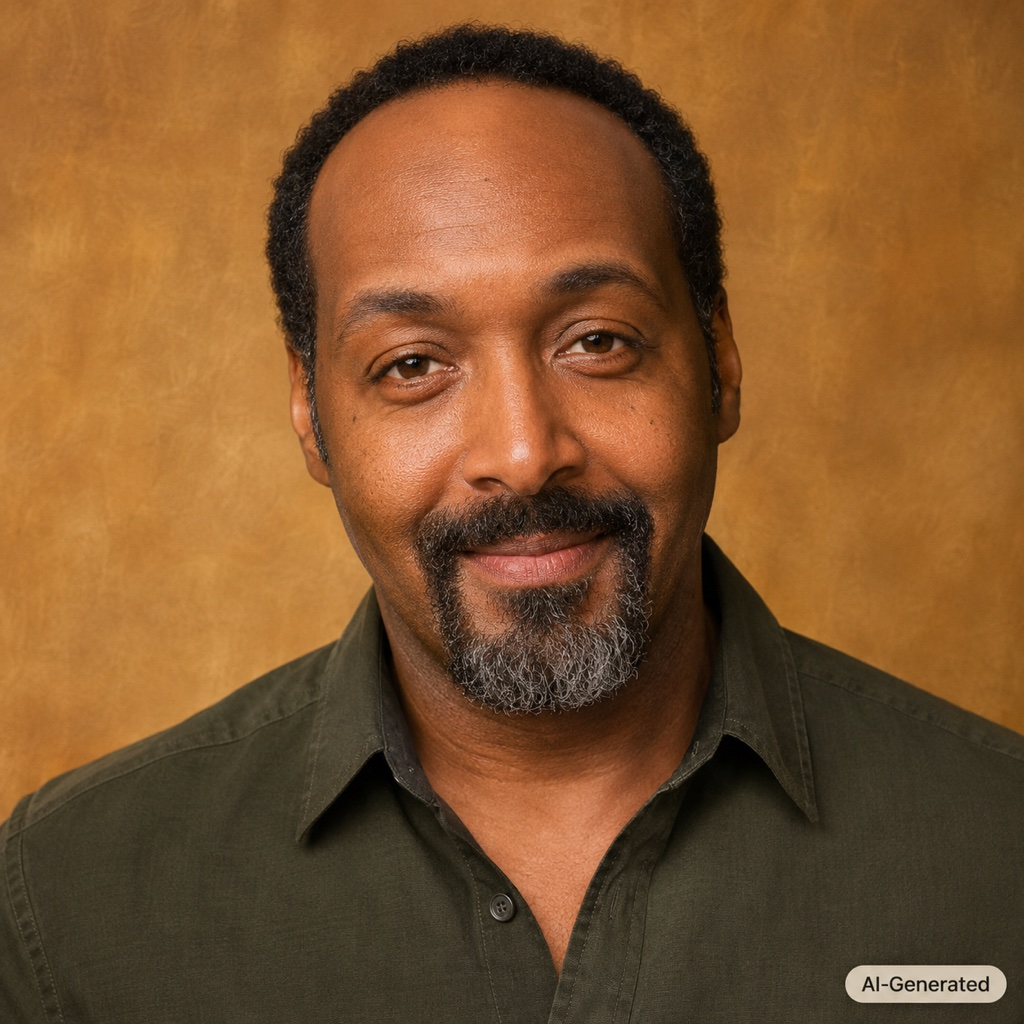
AI-Generated portrait of Jesse L. Martin

AI-generated editorial portrait; not a photograph.

Jesse L. Martin’s present religious affiliation is unconfirmed in the sources reviewed here. His stage and television roles do not establish a personal Christian testimony.

The person behind the performance

Jesse L. Martin is an actor and singer known for originating Tom Collins in Rent, playing Detective Ed Green in Law & Order, and portraying Joe West in The Flash. His career biography documents a career spanning musical theater, police drama, and superhero television. These professional identities can seem very different while still relying on the same performer’s ability to communicate warmth and authority.

A role involving a father, an officer, or a morally serious story is not a religious credential. The career record establishes where viewers may have seen Martin; it should not be made to establish beliefs the source does not document.

Their place in The Flash

Joe West is a police detective and the father of Iris and Wally. He also raises Barry after the loss that shapes Barry’s childhood. His importance to the series often comes from steadiness, care, and a willingness to speak plainly when the younger heroes become absorbed in their plans.

That fatherly role helps explain why viewers may ask about Martin’s personal values. However, a convincing performance should not be treated as autobiography. Joe’s words, relationships, and decisions come from a scripted character. A personal faith profile needs Martin’s own statements or dependable reporting about him before assigning a religious label.

What the evidence says about faith

The public material reviewed does not establish his current church membership or a clear profession of personal trust in Jesus Christ. References to religious language in a musical, a character’s prayer, or a performance in a socially important production do not independently settle those questions.

This profile therefore leaves his present affiliation unconfirmed rather than inferring it from reputation or professional warmth. That conclusion is deliberately limited. It does not establish atheism, and it does not rule out private faith. Religious history can be reported when documented, but it should not be invented to fill a gap in an otherwise familiar biography. The same restraint is owed to people whose performances we admire.

The quiet work of caring for someone

Joe’s relationship with Barry gives the series a recurring picture of care expressed through ordinary commitment. Scripture treats those responsibilities seriously. James 1:27 connects genuine concern with attention to people made vulnerable by loss.

For a Christian reader, that is a reason to ask practical questions: who needs patience, protection, or dependable presence from us? Compassion is more than approving a moving scene; it becomes action when another person needs help. At the same time, even admirable care does not erase sin or earn forgiveness. This biblical reflection is Famous Faith’s commentary on the role. It does not pronounce on Martin’s private life or assign him a religious identity.

The Bible’s message of grace

The Bible says that all have sinned and fall short of God’s glory (Romans 3:23). Jesus Christ, God’s Son, lived without sin, died for sinners, and rose bodily from the dead. His death and resurrection are the heart of the gospel (1 Corinthians 15:3–4). Salvation is God’s gift, received by grace alone through faith in Christ alone, not earned through good deeds, religious membership, or personal achievement (Ephesians 2:8–9). Repentance means turning from sin toward God. The changed life that follows faith is its fruit, not the price of forgiveness. This hope is available to famous performers and ordinary readers alike.

The spiritual conclusion should remain as careful as the evidence. We can appreciate this performance, read the linked sources, and examine our own trust in Christ without pretending to know another person’s heart.

Image disclosure: AI-generated editorial portrait representing Jesse L. Martin, created for Famous Faith; not a photograph. No endorsement implied.

More from this series: Explore all 30 The Flash cast faith profiles.

What Is Tom Cavanagh’s Religion? Is He a Christian?

AI-Generated portrait of Tom Cavanagh

AI-generated editorial portrait; not a photograph.

Tom Cavanagh has a documented Catholic family background. That history does not establish his current beliefs or, by itself, a profession of biblical Christianity.

The person behind the performance

Tom Cavanagh is a Canadian actor known for leading Ed and for his recurring role as Dan Dorian in Scrubs. His career biography also records Love Monkey, Trust Me, and his acting and directing work on The Flash. The variety matters: audiences may associate him with warmth in one series and menace in another.

The same biography describes his Roman Catholic family background. That is relevant historical information, but it needs a narrower interpretation than a confident claim about everything he believes today. A childhood religious environment and a present personal confession are different kinds of evidence.

Their place in The Flash

Cavanagh plays multiple versions of Harrison Wells and also portrays Eobard Thawne wearing Wells’s appearance. The series uses his familiar face for mentors with different personalities, histories, and motives. That creative device becomes one of the show’s most recognizable features.

It is also a useful warning against confusing appearance with identity. The actor’s ability to play both a trusted colleague and a dangerous adversary says something about performance, not about his moral or religious commitments. Any assessment of Cavanagh’s actual faith should begin with evidence about the actor, rather than treating a fictional mentor’s authority as spiritual credibility.

What the evidence says about faith

The reviewed material establishes a Catholic background, but does not settle his current denomination or provide a complete personal account of salvation. Searches also return other people named Tom Cavanagh, including an Irish businessman and an American hockey player. Their religious biographies should not be transferred to the actor.

Some people classify Catholicism as a branch of Christianity. Famous Faith’s standard is personal trust in Christ and the biblical gospel, not an institutional label. We believe salvation is by grace alone through faith in Jesus Christ alone. Reporting Cavanagh’s family history therefore does not mean declaring that the label saves him, endorsing Catholic doctrine, or claiming to know his heart.

Trust should be examined, not merely inherited

A familiar face can gain authority before its claims receive careful scrutiny. The many Wells characters make that risk unusually visible. Acts 17:11 commends examining teaching against Scripture rather than accepting it simply because a speaker seems impressive.

That principle applies to religious institutions and celebrity opinions as well as to everyday advice. It does not require cynicism toward every person. It calls for a willingness to test claims, ask questions, and admit when an answer is incomplete. This is Famous Faith’s Christian reflection on the story, not a description of Cavanagh’s personal theology. Readers should examine their own foundation of trust with the same care.

The Bible’s message of grace

The Bible says that all have sinned and fall short of God’s glory (Romans 3:23). Jesus Christ, God’s Son, lived without sin, died for sinners, and rose bodily from the dead. His death and resurrection are the heart of the gospel (1 Corinthians 15:3–4). Salvation is God’s gift, received by grace alone through faith in Christ alone, not earned through good deeds, religious membership, or personal achievement (Ephesians 2:8–9). Repentance means turning from sin toward God. The changed life that follows faith is its fruit, not the price of forgiveness. This hope is available to famous performers and ordinary readers alike.

The spiritual conclusion should remain as careful as the evidence. We can appreciate this performance, read the linked sources, and examine our own trust in Christ without pretending to know another person’s heart.

Image disclosure: AI-generated editorial portrait representing Tom Cavanagh, created for Famous Faith; not a photograph. No endorsement implied.

More from this series: Explore all 30 The Flash cast faith profiles.

What Is Carlos Valdes’s Religion? Is He a Christian?

AI-Generated portrait of Carlos Valdes

AI-generated editorial portrait; not a photograph.

Carlos Valdes’s religion is not confirmed by the public sources reviewed here. His acting and musical work do not establish a personal Christian profession.

The person behind the performance

Carlos Valdes is a Colombian-American actor and singer whose best-known screen role is Cisco Ramon in The Flash. His professional biography also connects him with stage work and the musical television series Up Here. This combination of music and acting is useful context for understanding the performer behind a character often remembered for humor and technical ingenuity.

Researching his name requires care. Searches can return a footballer, a DJ, or other people named Carlos Valdes or Valdés. A religious statement by one of those people cannot be used as evidence about The Flash actor. The credited professional history helps establish which person is actually being discussed.

Their place in The Flash

Cisco begins as a gifted member of the S.T.A.R. Labs team and becomes known to viewers as Vibe. He contributes problem-solving, friendship, and a distinctive comic voice, giving the series important moments of relief amid danger. His place in the team also creates stories about belonging and the responsibilities that accompany unusual abilities.

Those fictional developments are separate from Valdes’s own religious life. A scene involving another world, a powerful being, or a character’s sacrifice is part of a superhero narrative. It does not tell us whether the actor worships in a church, follows a different tradition, or considers religion a private matter.

What the evidence says about faith

The reviewed sources do not establish a current religious affiliation or a clear personal testimony of Christian faith. Cultural background and surname are not reliable substitutes for that evidence. Neither is a musical performance, even if a song uses spiritual language.

It is also important to distinguish the actor from Cisco. Fans may feel they know a long-running character well, but that familiarity does not automatically extend to the performer’s convictions. The responsible conclusion remains limited: his religion is unconfirmed in this review. That is a statement about the evidence available here, not a declaration about what Valdes must believe or the condition of his heart.

Gifts are meant to serve others

Cisco’s abilities make him valuable, but the story also depends on his willingness to use them for a team. First Peter 4:10 describes gifts as something to steward in service to others. A Christian reading of that principle encourages generosity rather than pride in being indispensable.

The same question applies outside fiction: do our skills make us more willing to help, or more determined to control every outcome? Talent is not a substitute for character, and neither talent nor service can purchase salvation. This is Famous Faith’s application for readers. It should not be presented as Valdes’s own explanation of his career or as proof that his screen role carries an intended Christian message.

The Bible’s message of grace

The Bible says that all have sinned and fall short of God’s glory (Romans 3:23). Jesus Christ, God’s Son, lived without sin, died for sinners, and rose bodily from the dead. His death and resurrection are the heart of the gospel (1 Corinthians 15:3–4). Salvation is God’s gift, received by grace alone through faith in Christ alone, not earned through good deeds, religious membership, or personal achievement (Ephesians 2:8–9). Repentance means turning from sin toward God. The changed life that follows faith is its fruit, not the price of forgiveness. This hope is available to famous performers and ordinary readers alike.

The spiritual conclusion should remain as careful as the evidence. We can appreciate this performance, read the linked sources, and examine our own trust in Christ without pretending to know another person’s heart.

Image disclosure: AI-generated editorial portrait representing Carlos Valdes, created for Famous Faith; not a photograph. No endorsement implied.

More from this series: Explore all 30 The Flash cast faith profiles.

What Is Danielle Panabaker’s Religion? Is She a Christian?

AI-Generated portrait of Danielle Panabaker

AI-generated editorial portrait; not a photograph.

Danielle Panabaker’s current religion is unconfirmed here. Conflicting online labels are not supported by a clear personal statement in the sources reviewed.

The person behind the performance

Danielle Panabaker is an actress and director whose work ranges from early family entertainment to horror films and The Flash. Her career history includes Sky High, Read It and Weep, and Friday the 13th. On The Flash, she became a familiar presence both in front of the camera and as an episode director.

A Spirit & Flesh interview discusses her education, preparation, and experience across genres. Those subjects provide useful insight into her approach to acting. The magazine’s title and her ordinary use of the word faith about filmmakers should not be mistaken for a declaration of religious affiliation.

Their place in The Flash

Panabaker portrays Caitlin Snow, Frost, and Khione, characters with connected appearances but distinct identities in the series. Caitlin’s scientific knowledge makes her important to the team, while the different characters allow Panabaker to vary temperament, relationships, and emotional expression.

That range is especially relevant to a religion profile. A story may give one character a different outlook from another even when the same actress plays both. It would be unreliable to select a fictional statement, spiritual power, or moral choice and present it as Panabaker’s own belief. The performance demonstrates creative work; a personal testimony would require a different kind of source.

What the evidence says about faith

Some celebrity biography pages call Panabaker Christian, while others label her Buddhist. Repetition alone does not resolve the conflict. Without a direct statement or a dependable report explaining the basis for the claim, this profile does not assign either label.

Her published discussion of study and professional preparation does not supply a current denomination or an account of trust in Jesus Christ. Nor can those conclusions be drawn from a film genre, educational achievement, or a charitable credit. A careful answer preserves uncertainty rather than choosing whichever label seems more likely. We can appreciate what the interview actually explains while recognizing the religious questions it leaves unanswered.

Identity is deeper than appearance

Playing several related characters illustrates how quickly viewers can rely on outward similarities when deciding who someone is. Scripture also cautions against making appearance the final measure of a person. First Samuel 16:7 distinguishes outward observation from God’s knowledge of the heart.

That does not mean readers should pretend they can make the same judgment God makes. It means humility is appropriate when evidence is limited. Religious identity, personal conduct, and saving faith require more careful thought than recognizing a face. This reflection belongs to Famous Faith’s Christian outlook. It does not establish Panabaker’s doctrine or suggest that the supernatural ideas in The Flash are biblical teaching.

The Bible’s message of grace

The Bible says that all have sinned and fall short of God’s glory (Romans 3:23). Jesus Christ, God’s Son, lived without sin, died for sinners, and rose bodily from the dead. His death and resurrection are the heart of the gospel (1 Corinthians 15:3–4). Salvation is God’s gift, received by grace alone through faith in Christ alone, not earned through good deeds, religious membership, or personal achievement (Ephesians 2:8–9). Repentance means turning from sin toward God. The changed life that follows faith is its fruit, not the price of forgiveness. This hope is available to famous performers and ordinary readers alike.

The spiritual conclusion should remain as careful as the evidence. We can appreciate this performance, read the linked sources, and examine our own trust in Christ without pretending to know another person’s heart.

Image disclosure: AI-generated editorial portrait representing Danielle Panabaker, created for Famous Faith; not a photograph. No endorsement implied.

More from this series: Explore all 30 The Flash cast faith profiles.

What Is Candice Patton’s Religion? Is She a Christian?

AI-Generated portrait of Candice Patton

AI-generated editorial portrait; not a photograph.

Candice Patton’s religious affiliation and a personal profession of Christian faith are unconfirmed in the sources reviewed for this profile.

The person behind the performance

Candice Patton played Iris West-Allen throughout The Flash’s nine-season run. Her career biography also records television work before the series, including The Game. Iris became the role most closely associated with her, bringing Patton a large audience and a lasting place in the show’s central relationships.

In a 2023 TV Insider interview, Patton reflected on finishing the series and the development of Iris. Her account is a useful source about the performance because it comes from the actress herself. It should be read as a discussion of acting and representation, rather than treated as an explanation of her religion.

Their place in The Flash

Iris is a journalist, a member of the West family, and Barry Allen’s partner. Her importance extends beyond reacting to the hero’s adventures: she pursues stories, supports others, and makes decisions under pressure. The character’s work provides a natural connection to questions about truth and public responsibility.

Patton’s portrayal also gives the series much of its emotional continuity. Viewers see Iris respond to separation, danger, and competing responsibilities. Those experiences belong to the fictional story. They do not establish what Patton believes about God, nor should a viewer assume that every statement written for Iris is a statement the actress would make for herself.

What the evidence says about faith

The reviewed professional interviews do not establish Patton’s current denomination or a clear Christian testimony. Public advocacy, career choices, or a person’s relationships cannot supply that missing evidence. A religious label needs a dependable source that actually addresses religious identity.

It is reasonable to ask about a familiar actress’s faith, but an honest answer can be incomplete. Saying that her beliefs are unconfirmed here is more accurate than converting a positive public impression into a spiritual conclusion. It is equally important not to turn an absence of information into a declaration that she has no faith. The limits of the sources should stay visible.

Truth is a responsibility, not a convenient tool

A reporter character offers a useful reminder that truth should matter even when a false story would be more comfortable. Proverbs 18:13 warns against answering before listening. That principle applies to journalism, family disagreements, and celebrity profiles alike.

Christians should resist circulating an appealing claim merely because it supports an argument they already want to make. A source needs to identify the right person, preserve context, and support the conclusion being drawn. Patton’s role gives readers a starting point for that reflection, but the biblical teaching is Famous Faith’s own commentary. It calls us to examine how we handle information about others, including people whose private convictions remain unknown.

The Bible’s message of grace

The Bible says that all have sinned and fall short of God’s glory (Romans 3:23). Jesus Christ, God’s Son, lived without sin, died for sinners, and rose bodily from the dead. His death and resurrection are the heart of the gospel (1 Corinthians 15:3–4). Salvation is God’s gift, received by grace alone through faith in Christ alone, not earned through good deeds, religious membership, or personal achievement (Ephesians 2:8–9). Repentance means turning from sin toward God. The changed life that follows faith is its fruit, not the price of forgiveness. This hope is available to famous performers and ordinary readers alike.

The spiritual conclusion should remain as careful as the evidence. We can appreciate this performance, read the linked sources, and examine our own trust in Christ without pretending to know another person’s heart.

Image disclosure: AI-generated editorial portrait representing Candice Patton, created for Famous Faith; not a photograph. No endorsement implied.

More from this series: Explore all 30 The Flash cast faith profiles.

What Is Grant Gustin’s Religion? Is He a Christian?

AI-Generated portrait of Grant Gustin

AI-generated editorial portrait; not a photograph.

Grant Gustin’s current religion is not established by the reliable sources reviewed here. We have not verified a direct personal profession of Christian faith or a current denomination.

The person behind the performance

Grant Gustin is an actor and singer best known for playing Barry Allen in The Flash. His earlier work includes Sebastian Smythe in Glee, while his stage career includes the Broadway musical Water for Elephants. These credits show a performer whose career extends beyond a superhero costume. The career biography is useful for that professional history, but a list of roles does not answer the separate question of religious belief.

In a 2024 Men’s Health interview, Gustin discussed the transition from television to Broadway and the pressures of his working life. That is meaningful personal context, but it should not be expanded into a religious testimony that the interview does not supply.

Their place in The Flash

Barry Allen begins as a forensic investigator whose extraordinary speed gives him a new responsibility toward Central City. Across nine seasons, Gustin carries a story about family, grief, friendship, and the consequences of trying to repair the past. Barry’s willingness to help others is one reason audiences connect with him.

The character also makes costly mistakes. His power cannot prevent every loss, and the people closest to him often challenge his judgment. Those story elements can support a discussion of responsibility without making Barry’s convictions interchangeable with Gustin’s. A performer can understand a character deeply while holding different personal beliefs.

What the evidence says about faith

Searches for Gustin’s religion produce confident labels and vague references to unnamed interviews. This profile does not adopt those claims without a traceable statement. An allegation that he was raised Christian, for example, should not be repeated as established fact simply because several biography sites copy it.

The sources linked here document his work and some personal experiences. They do not establish a present church affiliation or a clear account of what he believes about salvation. That leaves the answer unconfirmed. It does not prove that Gustin rejects God, and it does not justify assigning a religious identity from his family, nationality, or screen image.

Can strength repair every loss?

The Flash invites viewers to imagine having enough power to undo heartbreak. Scripture takes grief seriously while offering a different foundation for hope. Psalm 34:18 describes God as near to the brokenhearted; it does not promise that faithful people can rewrite every painful event.

A Christian reflection on Barry’s limitations points beyond the fantasy of controlling time. We need wisdom to act faithfully within the life we have, including the humility to accept help. We also need forgiveness for our own wrong choices, not merely a chance to alter their consequences. That is Famous Faith’s biblical application of the story. It is not a claim that Gustin intended this lesson or has publicly professed these beliefs.

The Bible’s message of grace

The Bible says that all have sinned and fall short of God’s glory (Romans 3:23). Jesus Christ, God’s Son, lived without sin, died for sinners, and rose bodily from the dead. His death and resurrection are the heart of the gospel (1 Corinthians 15:3–4). Salvation is God’s gift, received by grace alone through faith in Christ alone, not earned through good deeds, religious membership, or personal achievement (Ephesians 2:8–9). Repentance means turning from sin toward God. The changed life that follows faith is its fruit, not the price of forgiveness. This hope is available to famous performers and ordinary readers alike.

The spiritual conclusion should remain as careful as the evidence. We can appreciate this performance, read the linked sources, and examine our own trust in Christ without pretending to know another person’s heart.

Image disclosure: AI-generated editorial portrait representing Grant Gustin, created for Famous Faith; not a photograph. No endorsement implied.

More from this series: Explore all 30 The Flash cast faith profiles.

What Is Kieran Culkin’s Religion? Is He a Christian?

Portrait of Kieran Culkin at the 2024 New York Film Festival

Kieran Culkin has a Catholic background, but his own account of childhood was less religious than that label may suggest. In a conversation with Marc Maron, he explained that his family attended Catholic school while not being very religious. His current adult beliefs are not clearly established by the public interviews reviewed here.

What Kieran Culkin has said about his upbringing

On WTF with Marc Maron, Culkin discussed his large family and early life. He recalled that his father’s work for the church helped the children attend its school. He described religion as something that did not play a very strong role at home, apart from occasions such as Easter.

That is useful firsthand evidence. It helps prevent an easy mistake: treating Catholic education as proof of a strongly religious family or a person’s adult commitment. Culkin was describing the life he remembered, not presenting a detailed statement of present belief.

A 2023 Esquire profile also records his Catholic schooling through third grade. It then describes his move to the Professional Children’s School, which served young performers. These details establish part of his education. They do not, by themselves, establish his current religion.

What his public family comments do show

In his 2025 Oscar acceptance speech, Culkin warmly thanked his wife, Jazz Charton, and spoke about their family and his wish for more children. The National Catholic Register covered the speech and its positive reception among readers who value family life.

That is a public expression of affection and gratitude. It deserves to be understood in its own setting. It was not a formal explanation of his beliefs about God, Jesus, or salvation. Religious readers may appreciate what someone says about family without assuming that person shares every part of their faith.

For now, the careful answer is limited: Culkin has Catholic roots and has spoken about a childhood that was not strongly religious. The material reviewed for this article does not provide a clear current profession of Christian faith, nor does it justify declaring him an atheist.

From Home Alone to major recognition

Culkin began acting as a child. In Home Alone, he played Fuller, while his older brother Macaulay played Kevin McCallister. He later appeared in films including Father of the Bride and Igby Goes Down, building a career with a different path from his brother’s.

Many viewers now know him as Roman Roy in Succession. The show’s sharp family conflicts helped bring his work to a large adult audience. His performance in A Real Pain earned the 2025 Academy Award for supporting actor. He also joins The Hunger Games: Sunrise on the Reaping as Caesar Flickerman.

His roles can be funny, harsh, wounded, or difficult to like. None should be used as a shortcut to his religion. The actor, the character, and the writer are different people. Good research keeps those voices separate.

Family and faith through a biblical lens

The Bible gives us good reason to value family relationships. Psalm 127:3 presents children as a gift. Ephesians 5:25 calls husbands to love their wives with self-giving care. Ephesians 6:4 tells fathers to guide children without provoking them to anger. These teachings place love and responsibility above status.

We can appreciate a public expression of love for a spouse or children without turning it into a full religious claim. That is one way to be both charitable and accurate. Admiration does not require guessing what someone believes in private.

Scripture also makes a distinction between religious background and personal trust in God. Growing up around a church can provide valuable teaching and community. Yet a person’s family story cannot answer every question about their own convictions. In John 3, Jesus speaks about the need for new birth, reaching deeper than ancestry or education.

This is a question for readers too. Have we only inherited familiar words, or have we considered the truth those words point to? Honest reflection can begin without pretending to know another person’s heart.

The gospel: grace for ordinary people

The Christian message does not begin with fame, a perfect family, or a record of religious achievement. It begins with a holy God who created us and made us to know him. We have sinned against him. Our selfishness, pride, dishonesty, and failures to love are real, and they bring guilt and judgment.

We cannot repair that broken relationship by earning awards, raising a family, or trying to outweigh our wrongs with good actions. God has provided the rescue we cannot provide for ourselves. Jesus Christ, God’s Son, lived without sin and willingly gave his life on the cross for sinners.

Jesus was buried and rose bodily from the dead. He is the living Savior, not simply an inspiring teacher from the past. The gospel calls us to repent of sin and trust him as Lord and Savior. Forgiveness comes by God’s grace through faith, rather than by works (Ephesians 2:8–9).

For the interested reader, this offers a clear next step: examine Jesus’s words and actions in the Gospels. Bring your questions about family, identity, guilt, and hope. Christian faith points to a Savior who welcomes repentant sinners and gives them new life. That invitation stands on his mercy, not on a person’s fame or upbringing.

Sources

Photo: Bryan Berlin / WikiPortraits, Wikimedia Commons, CC BY-SA 4.0. Cropped by LeeGer; displayed at reduced size.

What Is Hannah Murray’s Religion? Is She a Christian?

Hannah Murray speaking at San Diego Comic-Con in 2015

Hannah Murray played Gilly in Game of Thrones, portraying a young woman whose vulnerability never erased her intelligence or persistence. Questions about Murray’s own spiritual life now have a more substantial public context than a fictional role. In 2026, she discussed her memoir, The Make-Believe: A Memoir of Magic and Madness, and experiences involving a wellness organization. What can readers responsibly say about Hannah Murray’s religion?

Hannah Murray’s public spiritual story needs careful description

In a May 2026 interview with British Vogue, Murray discussed a period of involvement with a group offering esoteric training and alternative healing. She described a mental health crisis and the process of writing about what happened. Looking back, she spoke of being vulnerable and financially exploited. Her account makes spiritual searching part of her public story, but it does not establish a present religious affiliation.

The material reviewed for this profile does not establish a personal profession of Christian faith from Murray. Her religion therefore remains unconfirmed here. Describing an experience with a wellness organization is not the same as endorsing it now. Nor should an account of past beliefs be treated as a complete inventory of someone’s current convictions.

A person deserves more than a sensational headline

Murray’s willingness to speak publicly about difficult experiences does not make every painful detail necessary to repeat. Her story belongs to a human being, not merely a cautionary example. Christians should listen without turning suffering into entertainment, making a diagnosis of their own, or claiming to know the spiritual state of someone they have never met.

Mental illness does not prove moral inferiority, demonic possession, or a lack of sincerity. It must not become a shortcut for explaining another person’s relationship with God. Compassion includes respecting appropriate medical care and the limits of what an observer knows. Faithful Christian concern can accompany practical help without treating those things as competitors.

Spiritual promises should be open to examination

A desire for healing and meaning can make extraordinary promises attractive. That desire deserves understanding, while the promises still require scrutiny. Scripture calls people to test spiritual claims rather than surrender judgment to whoever speaks with the greatest confidence. First John 4:1 urges discernment; a claim to special knowledge does not exempt anyone from it.

Questions about accountability matter. Can people ask honest questions without being shamed? Are financial demands transparent? Is a leader willing to admit limits? Are vulnerable people directed toward appropriate help rather than pressured to demonstrate greater loyalty? These are general questions readers can apply when evaluating a group. They are not an invitation to speculate beyond Murray’s own account.

Gilly’s story and the responsibility to protect

Gilly’s fictional journey offers another reason to consider how people with little power are treated. The care a community gives its vulnerable members reveals more than the speeches of its leaders. An apparently impressive institution can fail in the ordinary duties of protection, patience, and listening. Status is a poor substitute for love.

James 1:27 connects the practical life of faith with concern for people who can be easily overlooked. Jesus’ welcome toward the burdened also challenges a harsh religious atmosphere that treats need as an embarrassment. Christians should be willing to offer companionship without demanding a dramatic testimony in return. A person’s dignity is not dependent on becoming an inspiring story for somebody else.

The Gospel does not offer a ladder of secret achievement

Christian hope begins with God’s character and action, rather than a hidden technique. God is the holy Creator who made us for himself. His Ten Commandments expose our failures to love him and our neighbors: dishonesty, coveting, hatred, theft, sexual wrongdoing, and misplaced worship show that all of us have sinned. We deserve judgment from a just Judge. This universal human guilt must not be confused with a medical condition.

We cannot purchase reconciliation through courses, religious status, good deeds, or personal achievement. God provided the rescue. Jesus Christ, his eternal divine Son, became truly human and lived without sin. He willingly died on the cross as the substitute for sinners, was buried, and rose bodily from the dead. His victory supplies a foundation stronger than the authority of a charismatic human leader.

Salvation is a gift of grace received through faith in Christ, not a reward for our works. Ephesians 2:8–9 excludes boasting and spiritual scorekeeping. You can acknowledge your sin honestly before God and trust Jesus’ finished work, relying on his death and resurrection as the sufficient basis for forgiveness. Nobody needs access to an elite inner circle to hear that invitation.

The Gospel is also not a promise that believers will never experience illness or need support. Christians live in a world of real suffering and are called to carry one another’s burdens. Receiving grace should make a community more truthful and compassionate, rather than more eager to explain every hardship as someone’s spiritual failure.

What can be concluded about Hannah Murray?

Murray has publicly described difficult spiritual searching and has chosen to tell her story in her own words. The reviewed evidence leaves her current religious affiliation unconfirmed. Readers can respect that boundary, appreciate her work, and take seriously the biblical call to discernment and care without claiming a verdict about her heart or her future.


Source: Hannah Murray’s interview with British Vogue, May 27, 2026.

Photo: Hannah Murray at San Diego Comic-Con, 2015, by Gage Skidmore, via Wikimedia Commons, CC BY-SA 3.0. Resized.