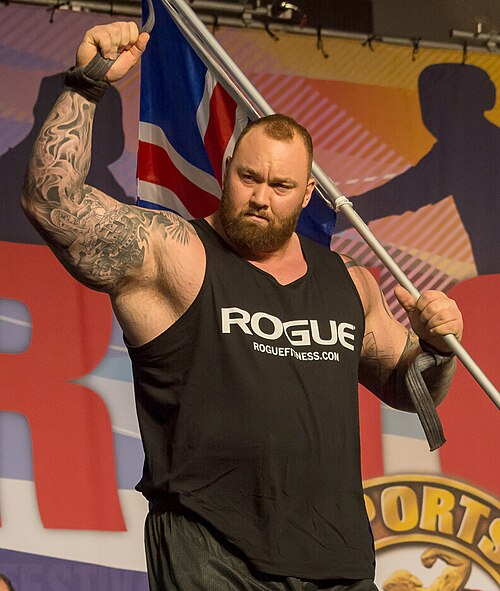
Hafþór Júlíus Björnsson is known for extraordinary strength in competition and for portraying Gregor Clegane, the Mountain, in Game of Thrones. The physical presence that made the role convincing can overshadow questions about the real person behind it. What is Hafþór Björnsson’s religion, and has he publicly identified himself as a Christian?
What can be confirmed about Hafþór Björnsson’s faith?
The public interview material reviewed for this profile does not establish a clear religious affiliation or a personal profession of Christian faith from Björnsson. His religion therefore remains unconfirmed here. Some brief online biographies assign religious labels, but an unsupported label is not a substitute for a traceable statement from the person concerned.
Neither Icelandic nationality nor the name Thor establishes a belief in Norse gods. Equally, a piece of jewelry, a photograph, or a role associated with fantasy religion cannot establish Christian faith. Religious identity deserves more careful treatment than that. The absence of a confirmed statement also does not establish atheism or tell us what spiritual questions he may consider privately.
Strength as a demanding profession
In a 2019 interview with Michael Matthews for Legion Athletics, Björnsson discussed the practical demands of strongman competition, including training, recovery, and his experiences working on Game of Thrones. His sporting achievements include winning the World’s Strongest Man competition in 2018. These are public career facts, rather than evidence of a particular religion.
A competitive career makes visible something ordinary workers also experience: ability needs cultivation, repetition, and attention to limits. A spectacular result can hide years of preparation. Christians can appreciate disciplined work and the responsible development of physical gifts without making performance the measure of a person’s value before God.
The Mountain is a character, not a moral biography
Gregor Clegane’s cruelty is a feature of a fictional story. It should not be treated as a description of the actor who portrays him. That distinction is especially important when a performance is physically convincing. A viewer can find a character frightening without assuming the performer shares the character’s motives or beliefs.
The story also provides a reason to ask what strength is for. Power can protect a vulnerable neighbor, or it can make a vulnerable person easier to exploit. Scripture does not admire force merely because it succeeds. The moral direction of power matters, and the ability to intimidate is not equivalent to the courage to do what is right.
Biblical strength includes restraint
Proverbs 16:32 values self-control above the capture of a city. That comparison challenges the instinct to measure strength only by visible conquest. Restraint can be demanding: refusing an angry response, admitting a mistake, or using an advantage fairly may require a kind of discipline that an audience never celebrates.
Christian teaching also calls the strong to bear with the weak rather than simply please themselves. Romans 15:1 directs attention toward responsibility, not superiority. Gifts become occasions for service. That principle applies to physical ability, money, intelligence, professional influence, and social confidence. Whatever advantage we possess can become either a tool of love or an excuse to overlook someone else.
Human ability has a boundary
Even impressive strength cannot make a person self-sufficient. Bodies depend on rest, food, care, and countless things outside individual control. Recognizing dependence is not an insult to achievement. It places achievement within a truthful account of human life. We are creatures, and our gifts do not turn us into the source of our own existence.
The Bible’s account of grace reaches deeper still. We cannot lift ourselves out of guilt before God through enough effort. Physical discipline can improve a skill, but reconciliation with the holy Creator is not a contest won by exceptional determination. The most capable person and the least publicly impressive person share the same need for mercy.
The Gospel is rescue, rather than another performance standard
God’s Ten Commandments reveal our failure to love him and our neighbors. Dishonesty, coveting, theft, hatred, sexual wrongdoing, and giving created things the place God deserves expose a universal problem. All of us have sinned and deserve judgment from a just Judge. This applies to the reader and the writer as surely as it applies to any well-known name.
God provided what our efforts cannot achieve. Jesus Christ, his eternal divine Son, became truly human and lived without sin. He willingly died on the cross as the substitute for sinners, was buried, and rose bodily from the dead. His resurrection gives Christian hope an objective foundation in his victory over sin and death.
Salvation is a gift of grace received through faith in Christ, not a reward earned through works. Ephesians 2:8–9 leaves no room for boasting in our own record. You can acknowledge your sin honestly before God and trust Jesus’ finished work, relying on his death and resurrection as the sufficient basis for forgiveness. The Savior supplies the rescue; our task is not to outperform everyone else until we deserve it.
New obedience then follows grace as its fruit. Christians are called to develop their gifts and serve others gratefully, while remembering that God’s acceptance is secured by Christ. Dependence on him can produce humility without making meaningful effort unimportant.
A fair conclusion about Hafþór Björnsson
Björnsson’s reviewed public interviews offer insight into his work and athletic discipline, while leaving his religious affiliation unconfirmed. Readers can appreciate his accomplishments, evaluate a fictional character carefully, and consider the biblical purpose of strength without claiming knowledge of his heart. The Gospel directs every person toward a hope that rests on Christ’s achievement rather than our own.
Source: Michael Matthews’ interview with Hafþór Björnsson, Legion Athletics, 2019.
Photo: Hafþór Björnsson at the Arnold Classic, 2017, by Paula R. Lively, via Wikimedia Commons, CC BY 2.0. Cropped version, resized.
