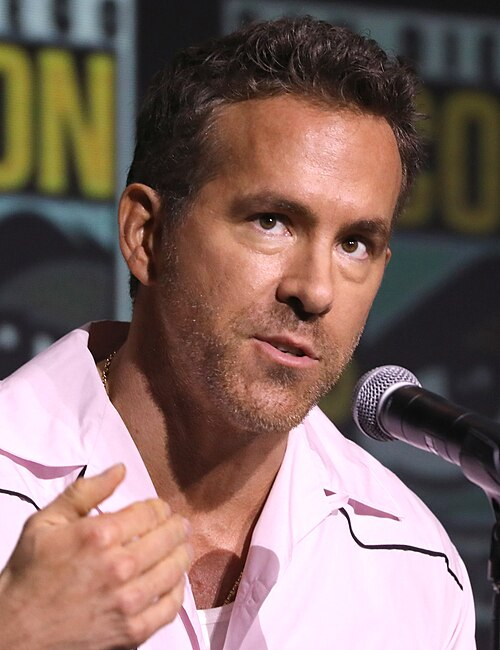
Ryan Reynolds has a Catholic background, but his public comments about religion have also included strong criticism and uncertainty. The available record does not give a clear, recent statement of a specific faith he practices today. That makes it important to separate his upbringing, his older interviews, and the limits of what he has chosen to share.
Fans know Reynolds for humor, quick replies, and memorable screen characters. Questions about his religion call for a different pace. A joke can reveal something real, but it is not always a complete statement of belief. Here is what the sources actually support.
His religious background and public criticism
Beliefnet’s profile reports that Reynolds grew up in an Irish Catholic household. That describes his background. It does not, by itself, establish his present church membership or beliefs about God.
A more direct source is a 2007 conversation with filmmaker John August published by The Advocate. Discussing another interview, Reynolds recalled making a harsh comment about religion. He also admitted that he had no settled understanding of what religion was or ought to be and did not consider himself qualified to settle the subject.
That combination is worth preserving. The interview documents criticism of religion, but also hesitation about his own authority. It would be misleading to turn it into a detailed religious system he never laid out there. It is also an old interview, not a fresh declaration about his beliefs in 2026.
On the evidence reviewed here, we can describe a Catholic upbringing and publicly expressed skepticism toward religion. A firm claim that he currently practices Catholicism, has joined another faith, or holds a fully defined atheist position would go beyond what these sources establish.
Why privacy matters when researching his beliefs
In a Rotten Tomatoes interview about Definitely, Maybe, Reynolds discussed wanting some mystery around actors. He said he was not interested in knowing every detail of performers’ private lives, including their religious preferences. The remark concerned celebrity culture; it was not a statement that he personally had no beliefs.
The same interview shows a thoughtful side of his craft. He discussed becoming more comfortable with vulnerability in dramatic work and described the gradual pace of his career. Before Two Guys and a Girl, he recalled a discouraging period of Canadian acting jobs and a move to Los Angeles with a friend.
His later screen work includes romantic comedy, action, and darker humor. Deadpool and Free Guy reach very different audiences, while Definitely, Maybe offers another side of his acting. None of those characters should serve as a substitute for Reynolds’s own account of faith.
Readers deserve an honest answer even when the answer is incomplete. Public interest does not make every private question publicly answerable. We can report documented remarks without guessing what someone believes at home or treating silence as proof of unbelief.
What the Bible says about criticism of religion
The Bible itself contains sharp criticism of religious hypocrisy. In Matthew 23, Jesus rebukes leaders who seek honor while neglecting justice, mercy, and faithfulness. James 1:27 connects sincere religious life with care for vulnerable people and moral integrity. Empty ritual is not the goal of biblical faith.
That gives Christians reason to listen when people describe harm done in religious settings. A defensive answer that excuses cruelty does not honor Jesus. Wrongdoing should be named, victims should be heard, and leaders should be accountable. A religious title does not place anyone above the truth.
At the same time, the failure of a religious person does not settle whether God exists or whether Jesus rose from the dead. Those are distinct questions. Christianity asks readers to examine Christ himself, including his teaching, his death, and the testimony to his resurrection.
First Peter 3:15 calls Christians to explain their hope with gentleness and respect. That rules out treating a skeptical actor as an enemy. Honest disagreement can be clear without becoming cruel. The same humility should shape the way we describe anyone’s beliefs online.
The gospel is good news for imperfect people
The Christian message does not begin with a claim that churchgoing people are morally superior. Romans 3:23 says all have sinned. Our pride, dishonesty, selfishness, and failures of love place us in need of forgiveness before a holy God. A good public reputation cannot erase that need.
God’s answer is Jesus Christ. The eternal Son of God became man and lived a sinless life. He willingly died on the cross for sinners, bearing the judgment we deserve. He was buried and rose bodily from the dead, as the gospel summary in First Corinthians 15:3–4 explains.
Salvation is received by grace through faith, not earned through religious performance or charitable work (Ephesians 2:8–9). Jesus calls us to repent, turning away from sin and self-rule, and trust him as Lord and Savior. Forgiveness rests on his finished work, not our ability to impress God.
For a reader with doubts, the invitation is to investigate rather than pretend. Read the Gospel of John. Ask whether Jesus’ claims are true. Bring questions honestly into prayer. The hope Christians offer is not that every religious institution has behaved well, but that Jesus is trustworthy and able to save those who come to him.
Photo: Ryan Reynolds at San Diego Comic-Con in 2024, by Gage Skidmore, via Wikimedia Commons, CC BY-SA 3.0. Resized; image reuse remains under the same license.
