People · Beliefs
Kurt Russell
Kurt Russell grew from a Disney teenager into an actor known for tough, memorable characters. Away from those roles, his interviews return to family, age, and the pleasure of working with his son—while his religious affiliation remains less clearly documented.
- Profession
- Actor
- Disney recognition
- Named a Disney Legend in 1998
- Family connection
- Father of actor Wyatt Russell
- Religious affiliation
- Not established by the sources reviewed here
Kurt Russell has had more than one kind of screen life. Some viewers remember the young star of Disney comedies; others picture the harder-edged roles that followed. His ability to keep working across those changes is part of the appeal of a career that has lasted for decades.
A more recent pleasure has been sharing a role with his son Wyatt, with the two actors playing the same character at different ages. It is an unusual family connection inside an already long professional story.
The Disney years and what followed
Disney’s D23 biography records Russell’s birth on March 17, 1951, and his early interest in both acting and baseball. His father, Bing Russell, was also an actor. The younger Russell worked in television and became a prominent young performer at Disney.
Films such as The Computer Wore Tennis Shoes belong to that chapter. Later work took him into very different territory, including The Thing, Silkwood, and Tombstone. He also portrayed hockey coach Herb Brooks in Miracle. The shift from child performer to adult actor was not a single role but a continuing willingness to work in different kinds of stories.
D23 honored him as a Disney Legend in 1998. That recognition points back to the early foundation without reducing the rest of his career to nostalgia. Audiences can discover different Russells depending on where they begin watching.
Work, family, and the passage of time
In a March 2026 AARP interview, Russell spoke about getting older, his relationship with Goldie Hawn, and working with Wyatt in Monarch: Legacy of Monsters. The chance for father and son to share a character was an opportunity he wanted to take.
The conversation also touched on losing his sister and the questions that come with age. Those are ordinary human concerns inside an extraordinary public career. A recognizable face is still a person experiencing love, grief, family relationships, and uncertainty.
We should not turn every reflection on mortality into a hidden religious declaration. His comments can be allowed their own meaning while readers consider the larger questions they raise for themselves.
Why a definite religious label needs care
The sources reviewed for this profile do not establish a clear religious affiliation in Russell’s own words. That leaves his religion unconfirmed rather than proving that he has no spiritual beliefs.
In a 2005 Beliefnet interview with Deborah Caldwell, Goldie Hawn described Russell’s spiritual life in terms of time spent in nature. She also spoke about their respect for one another’s different approaches. That is Hawn’s account of her partner at that time, not Russell’s own statement of doctrine or a current membership record.
It would therefore be a mistake to assign him Hawn’s religious identity simply because they have shared a life. Nor does playing a character who talks about belief settle the question. The strongest answer is modest: his career and family life are well documented, while a specific present religion is not established here.
Beyond the Spotlight
A long career can bring experience, but it cannot stop time or answer every question about death. From Famous Faith’s Christian perspective, our hope rests in knowing the God who made us, rather than in lasting fame, personal independence, or the number of years we manage to enjoy.
God is loving and holy. The Ten Commandments reveal the good he requires and the sin within us. Lies, stealing, coveting, and treating something else as more important than God are examples of breaking his law. The writer shares this need with every reader. Our best qualities cannot erase our guilt.
The Bible teaches that we will face God’s judgment and warns that hell is real punishment for sin. That calls for humility and honesty, not speculation about Russell’s heart or eternal destiny. The gospel is good news because God has provided mercy for people who cannot rescue themselves.
Jesus Christ, the sinless Son of God, died on the cross for sinners and rose bodily from the dead. His resurrection is central to the Christian hope: death does not have the final word. Salvation is offered by grace through faith, not earned through achievements, good behavior, or a spiritual routine (Ephesians 2:8–9).
Repentance means turning from sin and rebellion toward God with a changed mind and heart, learning to trust who he is and the love he has shown through Jesus. That trust normally changes our conduct, but the change does not purchase forgiveness. Jesus is the Savior, not our improved performance.
We can bring grief, doubts, and honest questions to him, confess our need, and trust him for forgiveness and a new life. This is Famous Faith’s invitation, not a statement of Russell’s beliefs. For further reflection, visit the Good Person Test.
Sources
- D23 — Disney Legend Kurt Russell
- AARP — Kurt Russell on Grief, Goldie and Why He Loves Getting Older (March 12, 2026)
- Beliefnet — Goldie Hawn interview with Deborah Caldwell (2005); source cited in plain text because the full interview includes adult personal material
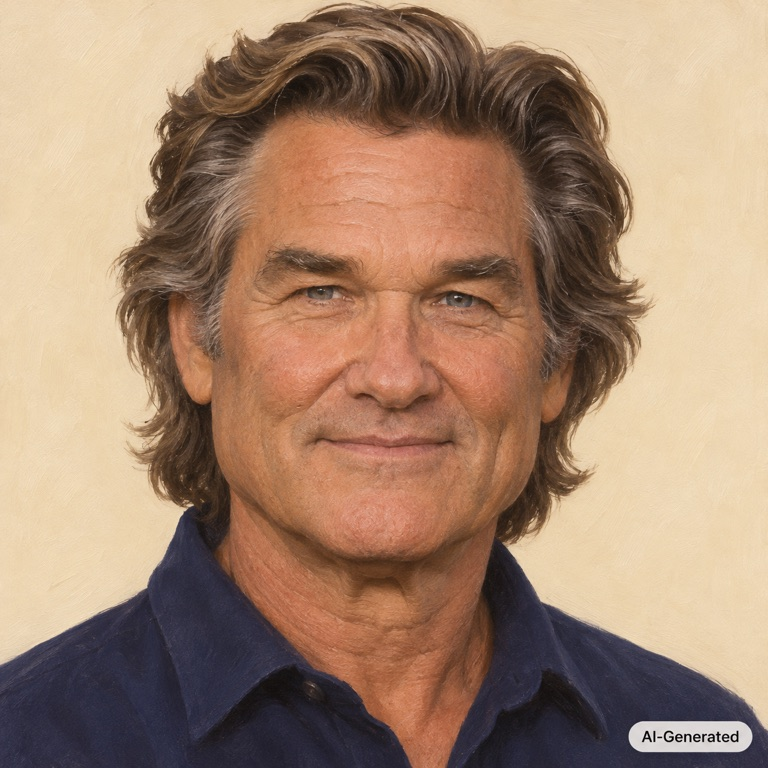
Artwork: Original AI-generated portrait created for Famous Faith; not a photograph. No endorsement is implied.