People · Beliefs
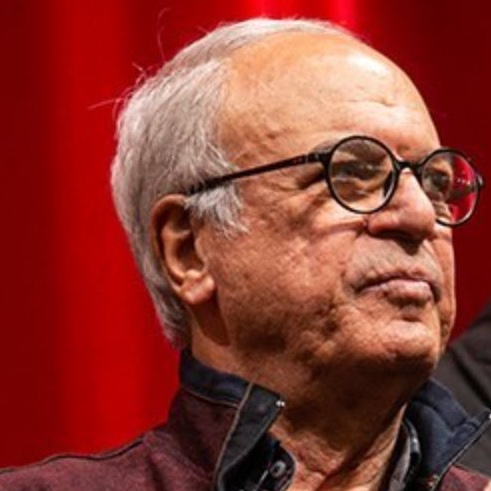
Gholamreza Nikkhah
Gholamreza Nikkhah brought a quiet seriousness to Iranian television comedy. The actor who played Tofigh Ejbari in Bezangah died in Shiraz on November 23, 2026, at 78.
- Known for
- Iranian film and television comedy
- Early work
- Theater in Bushehr
- Notable role
- Tofigh Ejbari in Bezangah
- Died
- November 23, 2026 · Shiraz, Iran · age 78
An actor who took comedy seriously
When Gholamreza Nikkhah talked about playing Tofigh Ejbari, he remembered a man who knew how to look after his own interests. He wanted viewers to see a person with motives of his own. That was the challenge he took on in Bezangah, the 2008 comedy directed by Reza Attaran. Nikkhah approached the part with the same care he brought to more serious roles. Decades after he began acting onstage, television audiences knew him as someone who could make a difficult character funny. Tasnim’s remembrance · iFilm
The series takes place in Karaj. After a father dies, his children clash over what he left them, a house and a bakery. Tofigh, married to one of the daughters, has his own stake in the argument. Nikkhah played him as someone who could see a way to benefit from either side. iFilm · Tasnim’s remembrance
Nikkhah died in Shiraz, Iran, on November 23, 2026. He was 78. Tasnim and Iran International reported that he suffered a heart attack. He had appeared in comedies such as The Man with a Thousand Faces and Bitter Coffee, as well as the newer reality program Joker. Iran International spoke with fellow actor Borzoo Arjmand as part of its coverage. Tasnim News Agency · Iran International · ISNA reporting via Hamshahri
From theater in Bushehr to television
Nikkhah began acting in theater in Bushehr in the mid-1960s. He took a small television role in the late 1980s and became better known through comedy series in the 1990s, including Nowruz 72 and Parvaz 57. Those jobs prepared him for the ensemble comedies that later made him a regular presence on Iranian screens. One of them was Mehran Modiri’s The Man with a Thousand Faces, built around an ordinary man who keeps getting mistaken for people with power and status. Honar Online · iFilm on The Man with a Thousand Faces
Nikkhah worked with Modiri again on Bitter Coffee, a comedy set at a royal court. He also appeared in the film Tehran, Tehran and in the historical series Jeyran. In 2026 he joined Modiri for The Man with Three Thousand Faces, a return to the story of Masoud Shastchi. Nikkhah played Fereydoun Shastchi, Masoud’s father. That part brought him back to a comedy series viewers had known since 2008. Honar Online · IMVBox · The Man with Three Thousand Faces trailer · Iran Art cast reporting
What is known about his faith
Bezangah originally aired during Ramadan in 2008, a detail iFilm records in its account of the series. Nikkhah’s own comments about the show centered on the work of acting and making Tofigh believable. His public interviews and the reporting that followed his death leave his personal religious affiliation and beliefs about Jesus unconfirmed. iFilm · Tasnim’s remembrance · Iran International
Beyond the Spotlight
Comedy can give people a little room to breathe on a hard day. When grief comes, Scripture gives room for tears too. At the grave of his friend Lazarus, Jesus wept with the people who loved him. Christians see in that scene the love of God for people who are hurting. The Bible also tells us that everyone has sinned, and Jesus spoke plainly about hell and God’s judgment. The same Lord who takes sin seriously offers mercy to the people he came to save. John 11:25–36 and Matthew 25:31–46
Jesus went to the cross and died for our sins. He rose bodily from the grave. God gives forgiveness and eternal life by grace, and we receive that gift through faith in Christ. Repentance means turning away from sin and turning toward God in trust. That is the hope Christians hold onto when they mourn. The love Jesus showed at Lazarus’s grave belongs to the living Savior who promises a future beyond death. 1 Corinthians 15:3–8, Ephesians 2:4–9 and Acts 20:21
Sources and image credit
- Tasnim News Agency · Death report and career overview
- Iran International · Independent report and interview with fellow actor Borzoo Arjmand
- ISNA reporting via Hamshahri · Account of Nikkhah’s death in Shiraz
- iFilm · Bezangah cast credits, original broadcast and story
- Tasnim’s remembrance · Nikkhah’s own remarks about comedy and playing Tofigh
- Honar Online · Career history from Bushehr theater through television and film
- Iran Art cast reporting · Fereydoun Shastchi named as Nikkhah’s 2026 character
Photograph by Naser Jafari / Tasnim News Agency, cropped to a square. Wikimedia Commons source · CC BY 4.0
