
What Is Olivier Richters’s Religion? Is He a Christian?

AI-Generated portrait of Olivier Richters

AI-generated editorial portrait; not a photograph.

Olivier Richters appears in Reacher as Paulie, part of the story introduced in season 3. Fans may recognize a face long before they know anything about the person’s beliefs. Asking about an actor’s religion is understandable, but the answer needs to come from evidence about the actor rather than from the fictional world on screen.

Olivier Richters’s religion is not confirmed in the reliable public sources reviewed for this profile. We have not established a clear personal profession of Christian faith or a current denomination.

The person behind Paulie

Richters plays Paulie in Reacher’s third season. His career record includes bodybuilding and screen work such as Black Widow. The visibility of a performer with an unusually imposing physical presence can make audiences feel that they know the person quickly. In reality, physical appearance is one of the least reliable ways to decide what someone believes about God.

Paulie makes physical danger unusually immediate in the story. The performance relies on a striking contrast of bodies and movement, but the character’s brutality should not be transferred to Richters himself. Film and television depend on performers making imaginary conflict convincing. That professional achievement does not provide a religious biography, whether the part being played is a hero, a villain, or someone whose motives are initially unclear.

What the public evidence does—and does not—show

The reviewed career material does not establish Richters’s current religion or a clear profession of Christian faith. His nationality, public training routine, and physical stature do not supply that answer. The same caution applies to casual comments about motivation or discipline: those can be important without specifying a denomination or an understanding of the gospel.

This profile distinguishes documented career information, direct statements about belief, and Famous Faith’s own Christian commentary. The sources linked here can establish a performance or a comment without answering every question about his present convictions. An interview about a role is not automatically a testimony. Likewise, an absent religious statement is not evidence that someone rejects God. We should leave an unanswered question open rather than supply a convenient label.

Strength governed by love

The Bible does not treat impressive physical strength as a substitute for moral wisdom. First Corinthians 13:1–3 shows how even remarkable abilities become empty without love. Strength used to intimidate is different from strength used to protect and serve. Readers need not possess an actor’s physique to face the same question: how do we use whatever power we have? Influence, money, knowledge, and status can all become tools of selfishness or service. This is a Christian reflection on the contrast made vivid by an imposing screen character, not a claim that Richters’s private beliefs match the lesson.

The Bible’s message of grace

The Bible teaches that our deepest problem is sin, not a lack of recognition or an insufficiently impressive religious background. Romans 3:23 includes every one of us in that diagnosis. Jesus Christ, God’s Son, lived without sin, died for sinners, and rose bodily from the dead. His death and resurrection are the heart of the gospel (1 Corinthians 15:3–4). Salvation is received by God’s grace through faith in Christ, not earned by good deeds, church membership, cultural identity, or success (Ephesians 2:8–9). Repentance means turning from sin toward God; faith means depending on Jesus Himself. The obedience that follows is a response to grace, not its purchase price. That is the standard Famous Faith uses when explaining Christianity, regardless of how famous or likable someone may be.

For Olivier Richters, the most accurate conclusion is the one the evidence actually supports: the reviewed sources do not settle the question of a current religious affiliation or personal trust in Christ. We can appreciate his work without making a spiritual judgment on the strength of a performance. The question also invites readers to examine their own hope: is it grounded in Jesus Christ, or only in a reputation, a tradition, or an identity other people recognize?

Image disclosure: AI-generated editorial portrait representing Olivier Richters, created for Famous Faith; not a photograph. No endorsement implied.

More from this series: Explore all 31 Reacher cast faith profiles.

What Is Roberto Montesinos’s Religion? Is He a Christian?

AI-Generated portrait of Roberto Montesinos

AI-generated editorial portrait; not a photograph.

Roberto Montesinos appears in Reacher as Guillermo Villanueva, part of the story introduced in season 3. Fans may recognize a face long before they know anything about the person’s beliefs. Asking about an actor’s religion is understandable, but the answer needs to come from evidence about the actor rather than from the fictional world on screen.

Roberto Montesinos’s religion is not confirmed in the reliable public sources reviewed for this profile. We have not established a clear personal profession of Christian faith or a current denomination.

The person behind Guillermo Villanueva

Montesinos’s professional agency biography identifies Reacher’s Guillermo Villanueva and earlier work including Father Stu and We Bought a Zoo. It also describes his service in the U.S. Navy’s Nuclear Propulsion Program. Those are concrete professional details. They help establish which Roberto Montesinos is being discussed without requiring a speculative account of his private religion.

Villanueva is an experienced DEA agent in the third-season story. A veteran presence can give an investigative team perspective, especially when urgency makes patience difficult. Montesinos’s earlier work and military experience may interest viewers, but we should not assume a direct spiritual connection between those experiences and the fictional agent. A role remains a portrayal, even when an actor brings relevant life experience to the work.

What the public evidence does—and does not—show

The reviewed agency material does not establish a current denomination or a clear Christian profession. Appearing in Father Stu is particularly easy to overinterpret because the film has an explicit religious subject. A part in that production is evidence of employment, not proof of Catholic practice, Christian conversion, or agreement with the movie’s theology. This profile keeps those different claims separate.

This profile distinguishes documented career information, direct statements about belief, and Famous Faith’s own Christian commentary. The sources linked here can establish a performance or a comment without answering every question about his present convictions. An interview about a role is not automatically a testimony. Likewise, an absent religious statement is not evidence that someone rejects God. We should leave an unanswered question open rather than supply a convenient label.

Service, experience, and humility

Experience can be a gift when it is used to help others rather than silence them. First Peter 5:5 commends humility, and Philippians 2:4 asks believers to consider the interests of others. Those principles reach professional teams as well as households and churches. A person with experience can steady a difficult situation while remaining willing to listen. This application is prompted by the veteran-agent role and the documented service background; it does not presume to describe Montesinos’s own spiritual commitments. The reader’s opportunity is to consider how personal experience might become a form of service rather than a source of pride.

The Bible’s message of grace

The Bible teaches that our deepest problem is sin, not a lack of recognition or an insufficiently impressive religious background. Romans 3:23 includes every one of us in that diagnosis. Jesus Christ, God’s Son, lived without sin, died for sinners, and rose bodily from the dead. His death and resurrection are the heart of the gospel (1 Corinthians 15:3–4). Salvation is received by God’s grace through faith in Christ, not earned by good deeds, church membership, cultural identity, or success (Ephesians 2:8–9). Repentance means turning from sin toward God; faith means depending on Jesus Himself. The obedience that follows is a response to grace, not its purchase price. That is the standard Famous Faith uses when explaining Christianity, regardless of how famous or likable someone may be.

For Roberto Montesinos, the most accurate conclusion is the one the evidence actually supports: the reviewed sources do not settle the question of a current religious affiliation or personal trust in Christ. We can appreciate his work without making a spiritual judgment on the strength of a performance. The question also invites readers to examine their own hope: is it grounded in Jesus Christ, or only in a reputation, a tradition, or an identity other people recognize?

Image disclosure: AI-generated editorial portrait representing Roberto Montesinos, created for Famous Faith; not a photograph. No endorsement implied.

More from this series: Explore all 31 Reacher cast faith profiles.

What Is Johnny Berchtold’s Religion? Is He a Christian?

AI-Generated portrait of Johnny Berchtold

AI-generated editorial portrait; not a photograph.

Johnny Berchtold appears in Reacher as Richard Beck, part of the story introduced in season 3. Fans may recognize a face long before they know anything about the person’s beliefs. Asking about an actor’s religion is understandable, but the answer needs to come from evidence about the actor rather than from the fictional world on screen.

Johnny Berchtold’s religion is not confirmed in the reliable public sources reviewed for this profile. We have not established a clear personal profession of Christian faith or a current denomination.

The person behind Richard Beck

Berchtold’s work includes The Passenger and Dog Gone alongside Reacher. A Film Updates interview provides a professional conversation with the actor rather than an anonymous biography table. Such material is valuable for understanding his work. It should still be distinguished from a direct statement about current religious affiliation or the basis of personal faith.

Richard Beck is part of the third season’s dangerous family situation. Berchtold’s performance places a younger figure within circumstances shaped by adults with considerable power. The character’s vulnerability helps create tension, but it does not tell us about the actor’s spiritual upbringing. A performer can explore dependence, fear, or loyalty without presenting those experiences as his own testimony.

What the public evidence does—and does not—show

Some biography sites supply a Christian label for Berchtold, while others list religion as unknown. Repetition cannot resolve that difference. The reviewed interview does not establish a clear personal profession of Christianity or a current denomination, so this profile does not choose the most convenient table entry. A religiously themed film role would not independently settle the matter either.

This profile distinguishes documented career information, direct statements about belief, and Famous Faith’s own Christian commentary. The sources linked here can establish a performance or a comment without answering every question about his present convictions. An interview about a role is not automatically a testimony. Likewise, an absent religious statement is not evidence that someone rejects God. We should leave an unanswered question open rather than supply a convenient label.

Family identity and personal responsibility

A family story can raise questions about what we inherit and what we choose. Scripture recognizes the importance of family while holding individuals accountable before God. Ezekiel 18 emphasizes personal responsibility rather than a simple transfer of guilt or righteousness from parent to child. The same care should govern our speech about actors: a relative’s assumed religion is not proof of the performer’s present faith. Readers can value family influences without treating them as salvation. The Bible directs each person toward repentance and trust in Christ, not confidence that someone else’s identity can answer on his behalf.

The Bible’s message of grace

The Bible teaches that our deepest problem is sin, not a lack of recognition or an insufficiently impressive religious background. Romans 3:23 includes every one of us in that diagnosis. Jesus Christ, God’s Son, lived without sin, died for sinners, and rose bodily from the dead. His death and resurrection are the heart of the gospel (1 Corinthians 15:3–4). Salvation is received by God’s grace through faith in Christ, not earned by good deeds, church membership, cultural identity, or success (Ephesians 2:8–9). Repentance means turning from sin toward God; faith means depending on Jesus Himself. The obedience that follows is a response to grace, not its purchase price. That is the standard Famous Faith uses when explaining Christianity, regardless of how famous or likable someone may be.

For Johnny Berchtold, the most accurate conclusion is the one the evidence actually supports: the reviewed sources do not settle the question of a current religious affiliation or personal trust in Christ. We can appreciate his work without making a spiritual judgment on the strength of a performance. The question also invites readers to examine their own hope: is it grounded in Jesus Christ, or only in a reputation, a tradition, or an identity other people recognize?

Image disclosure: AI-generated editorial portrait representing Johnny Berchtold, created for Famous Faith; not a photograph. No endorsement implied.

More from this series: Explore all 31 Reacher cast faith profiles.

What Is Brian Tee’s Religion? Is He a Christian?

AI-Generated portrait of Brian Tee

AI-generated editorial portrait; not a photograph.

Brian Tee appears in Reacher as Francis Xavier Quinn, part of the story introduced in season 3. Fans may recognize a face long before they know anything about the person’s beliefs. Asking about an actor’s religion is understandable, but the answer needs to come from evidence about the actor rather than from the fictional world on screen.

Brian Tee said in a 2024 interview that he was not religious, while also describing spiritual responses to grief. That is stronger evidence than an unsupported Christian label.

The person behind Francis Xavier Quinn

Tee plays Quinn in Reacher and has also appeared in Chicago Med and Expats. A 2024 SHARP interview is especially useful because it distinguishes the faith journey of his Expats character from his own experience. That distinction is exactly what a celebrity religion profile needs: an actor can explain a character’s religious response without describing himself in the same terms.

Francis Xavier Quinn belongs to the dangerous history surrounding Reacher’s third season. Tee’s portrayal helps give that history a personal dimension for the protagonist. It remains a fictional role, just as his work in a hospital drama or a story about grief remains performance. The audience should not turn a character’s name, religious imagery, or moral behavior into evidence of the performer’s denomination.

What the public evidence does—and does not—show

In SHARP, Tee said he was not religious and described prayer connected with his late grandmother while discussing grief. That supports a dated description of his outlook, rather than an invented Christian label. It does not justify expanding the statement into a claim that he rejects every spiritual idea or that his views could never change. His words deserve their own context and limits.

This profile distinguishes documented career information, direct statements about belief, and Famous Faith’s own Christian commentary. The sources linked here can establish a performance or a comment without answering every question about his present convictions. An interview about a role is not automatically a testimony. Likewise, an absent religious statement is not evidence that someone rejects God. We should leave an unanswered question open rather than supply a convenient label.

Grief, spiritual longing, and Christian hope

The desire for comfort after loss is deeply human. Christianity addresses that longing through the resurrection of Jesus rather than a promise that every spiritual practice is equally true. First Timothy 2:5 presents Christ as the mediator between God and humanity. Christians bring their grief to God through Him. That is a distinct claim, and it should not be blurred into a general endorsement of prayer directed toward departed relatives. We can acknowledge Tee’s honest discussion of loss with compassion while explaining why biblical hope rests on the risen Christ. Compassion and doctrinal clarity need not compete.

The Bible’s message of grace

The Bible teaches that our deepest problem is sin, not a lack of recognition or an insufficiently impressive religious background. Romans 3:23 includes every one of us in that diagnosis. Jesus Christ, God’s Son, lived without sin, died for sinners, and rose bodily from the dead. His death and resurrection are the heart of the gospel (1 Corinthians 15:3–4). Salvation is received by God’s grace through faith in Christ, not earned by good deeds, church membership, cultural identity, or success (Ephesians 2:8–9). Repentance means turning from sin toward God; faith means depending on Jesus Himself. The obedience that follows is a response to grace, not its purchase price. That is the standard Famous Faith uses when explaining Christianity, regardless of how famous or likable someone may be.

For Brian Tee, the most accurate conclusion is the one the evidence actually supports: his 2024 interview describes him as not religious, while leaving room for the spiritual questions he discussed in connection with grief. We can appreciate his work without making a spiritual judgment on the strength of a performance. The question also invites readers to examine their own hope: is it grounded in Jesus Christ, or only in a reputation, a tradition, or an identity other people recognize?

Image disclosure: AI-generated editorial portrait representing Brian Tee, created for Famous Faith; not a photograph. No endorsement implied.

More from this series: Explore all 31 Reacher cast faith profiles.

What Is Sonya Cassidy’s Religion? Is She a Christian?

AI-Generated portrait of Sonya Cassidy

AI-generated editorial portrait; not a photograph.

Sonya Cassidy appears in Reacher as Susan Duffy, part of the story introduced in season 3. Fans may recognize a face long before they know anything about the person’s beliefs. Asking about an actor’s religion is understandable, but the answer needs to come from evidence about the actor rather than from the fictional world on screen.

Sonya Cassidy’s religion is not confirmed in the reliable public sources reviewed for this profile. We have not established a clear personal profession of Christian faith or a current denomination.

The person behind Susan Duffy

Cassidy’s work includes The Paradise, Humans, and Lodge 49 as well as Reacher. Her career record shows a performer moving between period drama, speculative storytelling, and contemporary television. The range helps explain why different audiences may recognize her. It does not establish whether she shares a religious outlook with any of the characters or colleagues involved.

Susan Duffy is a DEA agent at the center of Reacher’s third-season operation. The role places professional purpose beside the immediate danger faced by people involved in an investigation. Duffy’s decisions can be evaluated within the story, but they should not become an account of Cassidy’s private moral or religious life. Acting is not the same thing as publicly endorsing a character’s entire worldview.

What the public evidence does—and does not—show

The reviewed public material does not establish Cassidy’s current religion or a clear Christian profession. A school, a country of origin, or a familiar professional circle cannot supply that missing evidence. It would also be too strong to describe her as nonreligious simply because the available career sources focus on her work. The appropriate wording is that her affiliation remains unconfirmed in those sources.

This profile distinguishes documented career information, direct statements about belief, and Famous Faith’s own Christian commentary. The sources linked here can establish a performance or a comment without answering every question about her present convictions. An interview about a role is not automatically a testimony. Likewise, an absent religious statement is not evidence that someone rejects God. We should leave an unanswered question open rather than supply a convenient label.

Protecting people as well as pursuing a result

Investigative stories often ask whether a worthy objective can justify the cost imposed on someone else. Christian ethics refuses to treat a neighbor as disposable. Romans 13:10 connects love with doing no harm, while Micah 6:8 joins justice to mercy and humility. The reader can apply those principles to decisions involving power, work, and responsibility. Success should not become an excuse for indifference to the vulnerable. This is a reflection on a theme suggested by Duffy’s profession in the story, not an assertion that Cassidy intended a Christian lesson or holds the beliefs described here.

The Bible’s message of grace

The Bible teaches that our deepest problem is sin, not a lack of recognition or an insufficiently impressive religious background. Romans 3:23 includes every one of us in that diagnosis. Jesus Christ, God’s Son, lived without sin, died for sinners, and rose bodily from the dead. His death and resurrection are the heart of the gospel (1 Corinthians 15:3–4). Salvation is received by God’s grace through faith in Christ, not earned by good deeds, church membership, cultural identity, or success (Ephesians 2:8–9). Repentance means turning from sin toward God; faith means depending on Jesus Himself. The obedience that follows is a response to grace, not its purchase price. That is the standard Famous Faith uses when explaining Christianity, regardless of how famous or likable someone may be.

For Sonya Cassidy, the most accurate conclusion is the one the evidence actually supports: the reviewed sources do not settle the question of a current religious affiliation or personal trust in Christ. We can appreciate her work without making a spiritual judgment on the strength of a performance. The question also invites readers to examine their own hope: is it grounded in Jesus Christ, or only in a reputation, a tradition, or an identity other people recognize?

Image disclosure: AI-generated editorial portrait representing Sonya Cassidy, created for Famous Faith; not a photograph. No endorsement implied.

More from this series: Explore all 31 Reacher cast faith profiles.

What Is Anthony Michael Hall’s Religion? Is He a Christian?

AI-Generated portrait of Anthony Michael Hall

AI-generated editorial portrait; not a photograph.

Anthony Michael Hall appears in Reacher as Zachary Beck, part of the story introduced in season 3. Fans may recognize a face long before they know anything about the person’s beliefs. Asking about an actor’s religion is understandable, but the answer needs to come from evidence about the actor rather than from the fictional world on screen.

Anthony Michael Hall has publicly discussed a Catholic background and belief in God. Those statements are documented, but they do not establish every aspect of his present theology.

The person behind Zachary Beck

Hall’s film career includes The Breakfast Club and Weird Science, followed by television work such as The Dead Zone. In a Busted Halo interview, he discusses God, his Catholic background, and the way he understands work and personal growth. Unlike a simple cast listing, this is material in which the performer addresses spiritual subjects himself.

As Zachary Beck in Reacher’s third season, Hall inhabits a powerful businessman whose circumstances pull the investigation into dangerous territory. The contrast with his earlier comic roles illustrates the range of an actor’s work. Beck’s choices do not identify Hall’s own theology. Neither an appealing performance nor an unsympathetic character should replace the actor’s actual words as evidence.

What the public evidence does—and does not—show

The interview supports reporting a Catholic background and an expressed belief in God. Its age matters: an older conversation is evidence of what was said then, not a guarantee that every conviction has remained unchanged. We should not equate gratitude for blessings, references to prayer, or Catholic association with a fully documented understanding of justification by faith. Those distinctions allow us to be fair to the person and clear about the gospel.

This profile distinguishes documented career information, direct statements about belief, and Famous Faith’s own Christian commentary. The sources linked here can establish a performance or a comment without answering every question about his present convictions. An interview about a role is not automatically a testimony. Likewise, an absent religious statement is not evidence that someone rejects God. We should leave an unanswered question open rather than supply a convenient label.

Catholic language and the question of salvation

Some people regard Catholicism as a branch of Christianity. Famous Faith measures religious teaching against Scripture and affirms salvation by God’s grace through faith in Christ, apart from human merit or religious achievement. A Catholic label cannot save a person, and neither can a Protestant label. Someone identifying as Catholic may personally trust Christ, but the label itself is not the saving reason. We can report Hall’s background without endorsing every doctrine associated with it or claiming certainty about his heart. The decisive question is the object of faith, not the prominence of a religious identity.

The Bible’s message of grace

The Bible teaches that our deepest problem is sin, not a lack of recognition or an insufficiently impressive religious background. Romans 3:23 includes every one of us in that diagnosis. Jesus Christ, God’s Son, lived without sin, died for sinners, and rose bodily from the dead. His death and resurrection are the heart of the gospel (1 Corinthians 15:3–4). Salvation is received by God’s grace through faith in Christ, not earned by good deeds, church membership, cultural identity, or success (Ephesians 2:8–9). Repentance means turning from sin toward God; faith means depending on Jesus Himself. The obedience that follows is a response to grace, not its purchase price. That is the standard Famous Faith uses when explaining Christianity, regardless of how famous or likable someone may be.

For Anthony Michael Hall, the most accurate conclusion is the one the evidence actually supports: he has discussed Catholic background and faith in God, while the reviewed evidence does not establish every element of his present Christian convictions. We can appreciate his work without making a spiritual judgment on the strength of a performance. The question also invites readers to examine their own hope: is it grounded in Jesus Christ, or only in a reputation, a tradition, or an identity other people recognize?

Image disclosure: AI-generated editorial portrait representing Anthony Michael Hall, created for Famous Faith; not a photograph. No endorsement implied.

More from this series: Explore all 31 Reacher cast faith profiles.

What Is Robert Patrick’s Religion? Is He a Christian?

AI-Generated portrait of Robert Patrick

AI-generated editorial portrait; not a photograph.

Robert Patrick appears in Reacher as Shane Langston, part of the story introduced in season 2. Fans may recognize a face long before they know anything about the person’s beliefs. Asking about an actor’s religion is understandable, but the answer needs to come from evidence about the actor rather than from the fictional world on screen.

Robert Patrick has publicly identified with the Anglican-Episcopal tradition. That establishes a stated affiliation; it does not independently settle every question about his beliefs or salvation.

The person behind Shane Langston

Patrick’s career includes the T-1000 in Terminator 2 and John Doggett in The X-Files, roles very different from a church testimony. A Den of Geek interview provides direct evidence about religion: he identifies himself with the Anglican-Episcopal tradition. That statement is a stronger basis for describing his affiliation than the many intimidating characters he has portrayed.

Shane Langston gives Reacher’s second season a forceful antagonist associated with a private defense contractor. The part requires authority and menace, qualities Patrick can bring to the screen without sharing the character’s moral commitments. A role can be professionally convincing while personally distant. The same actor can play a threatening figure in one production and speak sincerely about church in an interview.

What the public evidence does—and does not—show

Patrick’s statement establishes an Episcopal identification at the time of that interview. It should not be expanded into a claim that we know every one of his present beliefs. Church affiliation, a person’s understanding of Scripture, and personal trust in Christ are related questions, but they are not identical. This profile reports the affiliation and leaves the limits visible rather than assuming that a denomination automatically proves salvation.

This profile distinguishes documented career information, direct statements about belief, and Famous Faith’s own Christian commentary. The sources linked here can establish a performance or a comment without answering every question about his present convictions. An interview about a role is not automatically a testimony. Likewise, an absent religious statement is not evidence that someone rejects God. We should leave an unanswered question open rather than supply a convenient label.

An affiliation is not a substitute for Christ

Christianity concerns a living relationship with God through Jesus Christ, not simply the name of a congregation. The New Testament repeatedly calls people to examine their faith rather than depend on appearances. Second Corinthians 13:5 places that examination before believers themselves. A church tradition can supply a vocabulary of worship without answering whether a particular individual is depending on Christ. This caution applies to Famous Faith’s readers as well as to celebrities. We can accurately report Patrick’s own identification while refusing to treat a familiar denominational word as a complete spiritual biography.

The Bible’s message of grace

The Bible teaches that our deepest problem is sin, not a lack of recognition or an insufficiently impressive religious background. Romans 3:23 includes every one of us in that diagnosis. Jesus Christ, God’s Son, lived without sin, died for sinners, and rose bodily from the dead. His death and resurrection are the heart of the gospel (1 Corinthians 15:3–4). Salvation is received by God’s grace through faith in Christ, not earned by good deeds, church membership, cultural identity, or success (Ephesians 2:8–9). Repentance means turning from sin toward God; faith means depending on Jesus Himself. The obedience that follows is a response to grace, not its purchase price. That is the standard Famous Faith uses when explaining Christianity, regardless of how famous or likable someone may be.

For Robert Patrick, the most accurate conclusion is the one the evidence actually supports: he has publicly identified with the Anglican-Episcopal tradition, while a denominational label cannot tell us everything about his personal faith. We can appreciate his work without making a spiritual judgment on the strength of a performance. The question also invites readers to examine their own hope: is it grounded in Jesus Christ, or only in a reputation, a tradition, or an identity other people recognize?

Image disclosure: AI-generated editorial portrait representing Robert Patrick, created for Famous Faith; not a photograph. No endorsement implied.

More from this series: Explore all 31 Reacher cast faith profiles.
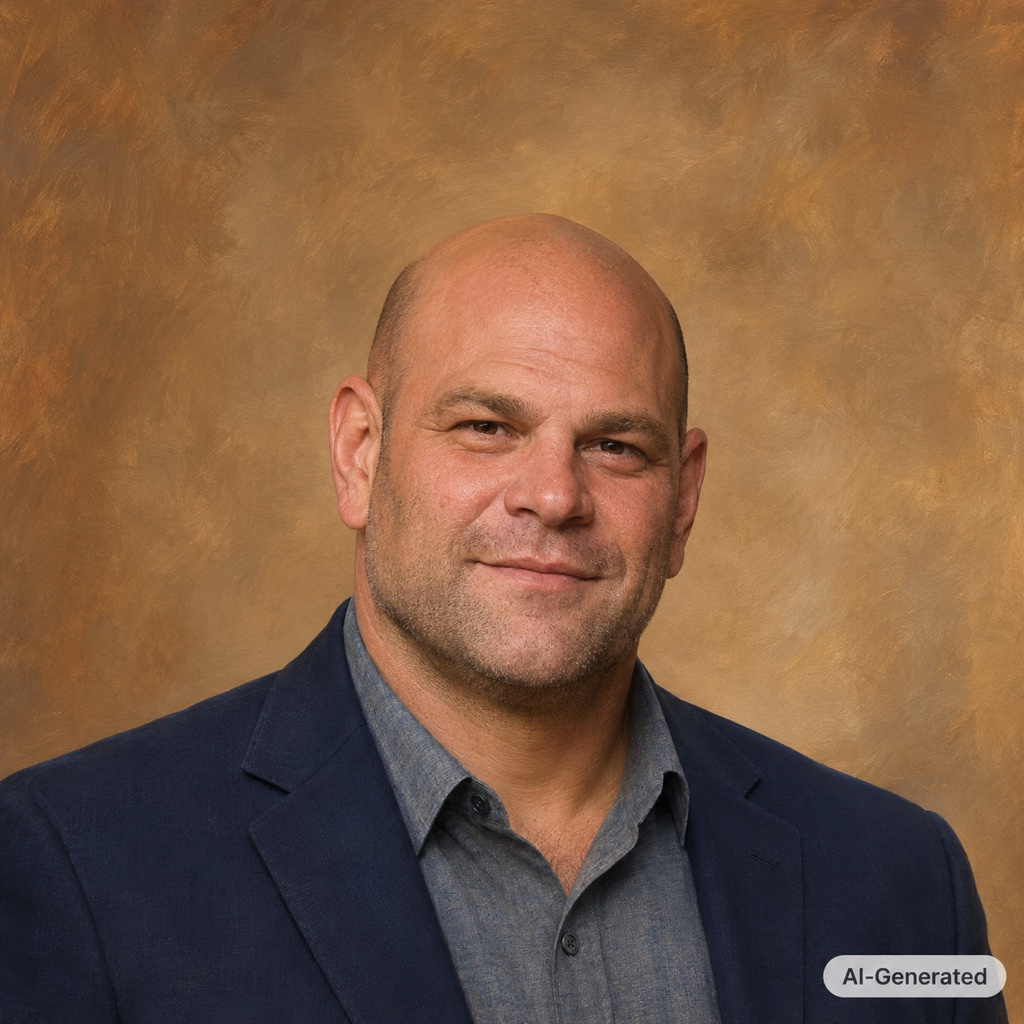
What Is Domenick Lombardozzi’s Religion? Is He a Christian?

AI-Generated portrait of Domenick Lombardozzi

AI-generated editorial portrait; not a photograph.

Domenick Lombardozzi appears in Reacher as Guy Russo, part of the story introduced in season 2. Fans may recognize a face long before they know anything about the person’s beliefs. Asking about an actor’s religion is understandable, but the answer needs to come from evidence about the actor rather than from the fictional world on screen.

Domenick Lombardozzi’s religion is not confirmed in the reliable public sources reviewed for this profile. We have not established a clear personal profession of Christian faith or a current denomination.

The person behind Guy Russo

Lombardozzi is familiar to crime-drama audiences through work including The Wire and Reacher. A Backstage interview about his career discusses the work behind his recognizable screen presence. Knowing that history can help viewers appreciate the craft involved in playing investigators and other strongly drawn figures. It does not establish a denomination or a personal account of salvation.

In Reacher’s second season, he plays NYPD detective Guy Russo. The character’s involvement adds another professional viewpoint to a case that the former military team approaches through its own shared history. Tension between different investigators can give a story energy without requiring the actors themselves to share the same outlook. Russo’s part in the drama belongs to the character’s circumstances and choices.

What the public evidence does—and does not—show

No current religious affiliation or clear personal profession of Christian faith has been established from the reviewed sources. An Italian family background is not sufficient evidence of Catholic practice or belief. Nor should an actor’s screen reputation become a shortcut to assumptions about his private life. This profile treats career facts as career facts and leaves the unconfirmed religious question open.

This profile distinguishes documented career information, direct statements about belief, and Famous Faith’s own Christian commentary. The sources linked here can establish a performance or a comment without answering every question about his present convictions. An interview about a role is not automatically a testimony. Likewise, an absent religious statement is not evidence that someone rejects God. We should leave an unanswered question open rather than supply a convenient label.

Justice requires more than stubborn certainty

Proverbs 18:13 warns against answering before listening. Investigative stories make that failure easy to recognize when a character is certain too soon. In ordinary life, we may do the same thing with a neighbor, a coworker, or a public figure whose motives we assume we understand. Christian concern for justice requires patience with evidence and a willingness to correct a mistaken conclusion. That does not mean that wrongdoing should be ignored. It means that truth matters enough to be pursued carefully, especially when an accusation could damage someone else. The same standard should govern how we discuss an actor’s religion.

The Bible’s message of grace

The Bible teaches that our deepest problem is sin, not a lack of recognition or an insufficiently impressive religious background. Romans 3:23 includes every one of us in that diagnosis. Jesus Christ, God’s Son, lived without sin, died for sinners, and rose bodily from the dead. His death and resurrection are the heart of the gospel (1 Corinthians 15:3–4). Salvation is received by God’s grace through faith in Christ, not earned by good deeds, church membership, cultural identity, or success (Ephesians 2:8–9). Repentance means turning from sin toward God; faith means depending on Jesus Himself. The obedience that follows is a response to grace, not its purchase price. That is the standard Famous Faith uses when explaining Christianity, regardless of how famous or likable someone may be.

For Domenick Lombardozzi, the most accurate conclusion is the one the evidence actually supports: the reviewed sources do not settle the question of a current religious affiliation or personal trust in Christ. We can appreciate his work without making a spiritual judgment on the strength of a performance. The question also invites readers to examine their own hope: is it grounded in Jesus Christ, or only in a reputation, a tradition, or an identity other people recognize?

Image disclosure: AI-generated editorial portrait representing Domenick Lombardozzi, created for Famous Faith; not a photograph. No endorsement implied.

More from this series: Explore all 31 Reacher cast faith profiles.

What Is Ferdinand Kingsley’s Religion? Is He a Christian?

AI-Generated portrait of Ferdinand Kingsley

AI-generated editorial portrait; not a photograph.

Ferdinand Kingsley appears in Reacher as A.M., part of the story introduced in season 2. Fans may recognize a face long before they know anything about the person’s beliefs. Asking about an actor’s religion is understandable, but the answer needs to come from evidence about the actor rather than from the fictional world on screen.

Ferdinand Kingsley’s religion is not confirmed in the reliable public sources reviewed for this profile. We have not established a clear personal profession of Christian faith or a current denomination.

The person behind A.M.

Kingsley’s work includes Hob Gadling in The Sandman as well as the very different character A.M. in Reacher. In a Spectator interview, he discusses an artistic family background and the experience of establishing his own career. Those details can help explain a performer’s professional path without determining his religious convictions. An actor’s family history should not be mistaken for his present personal confession.

A.M. gives the second season a dangerous presence outside the central group of investigators. The contrast with Kingsley’s other roles makes it especially important to separate portrayal from belief. A performer can convincingly inhabit a threatening character and a sympathetic character in different productions. Neither assignment establishes his understanding of God, the Bible, or the way a person is reconciled to God.

What the public evidence does—and does not—show

The reviewed interview does not establish a current religion or a clear profession of Christian faith. Family ancestry, an inherited surname, and the beliefs associated with a relative do not answer that question. The available evidence should not be stretched into a claim that he is Christian, Muslim, Hindu, or Jewish. A specific classification requires evidence specific to Kingsley himself.

This profile distinguishes documented career information, direct statements about belief, and Famous Faith’s own Christian commentary. The sources linked here can establish a performance or a comment without answering every question about his present convictions. An interview about a role is not automatically a testimony. Likewise, an absent religious statement is not evidence that someone rejects God. We should leave an unanswered question open rather than supply a convenient label.

The danger of treating people as a means to an end

A mercenary figure can make the instrumental treatment of people unusually visible. Scripture approaches human life from a different starting point: people bear God’s image, and loving a neighbor is a duty rather than a calculation of usefulness. Luke 10:25–37 challenges the impulse to narrow the circle of people whose suffering matters. That principle reaches ordinary relationships as well as dramatic acts of violence. It asks how we treat coworkers, strangers, and anyone who cannot benefit us. It is a Christian reflection on the story’s moral world, not a hidden testimony attributed to Kingsley.

The Bible’s message of grace

The Bible teaches that our deepest problem is sin, not a lack of recognition or an insufficiently impressive religious background. Romans 3:23 includes every one of us in that diagnosis. Jesus Christ, God’s Son, lived without sin, died for sinners, and rose bodily from the dead. His death and resurrection are the heart of the gospel (1 Corinthians 15:3–4). Salvation is received by God’s grace through faith in Christ, not earned by good deeds, church membership, cultural identity, or success (Ephesians 2:8–9). Repentance means turning from sin toward God; faith means depending on Jesus Himself. The obedience that follows is a response to grace, not its purchase price. That is the standard Famous Faith uses when explaining Christianity, regardless of how famous or likable someone may be.

For Ferdinand Kingsley, the most accurate conclusion is the one the evidence actually supports: the reviewed sources do not settle the question of a current religious affiliation or personal trust in Christ. We can appreciate his work without making a spiritual judgment on the strength of a performance. The question also invites readers to examine their own hope: is it grounded in Jesus Christ, or only in a reputation, a tradition, or an identity other people recognize?

Image disclosure: AI-generated editorial portrait representing Ferdinand Kingsley, created for Famous Faith; not a photograph. No endorsement implied.

More from this series: Explore all 31 Reacher cast faith profiles.

What Is Shaun Sipos’s Religion? Is He a Christian?

AI-Generated portrait of Shaun Sipos

AI-generated editorial portrait; not a photograph.

Shaun Sipos appears in Reacher as David O’Donnell, part of the story introduced in season 2. Fans may recognize a face long before they know anything about the person’s beliefs. Asking about an actor’s religion is understandable, but the answer needs to come from evidence about the actor rather than from the fictional world on screen.

Shaun Sipos’s religion is not confirmed in the reliable public sources reviewed for this profile. We have not established a clear personal profession of Christian faith or a current denomination.

The person behind David O’Donnell

Sipos joins Reacher’s second-season ensemble as David O’Donnell. The description of his Gent’s Talk interview identifies faith among the subjects discussed alongside his career and experiences under pressure. That is a useful lead, but an episode title is not the same thing as a detailed confession of Christian doctrine. A responsible profile should be clear about how much its source establishes.

O’Donnell is part of the group brought together by a dangerous investigation involving former colleagues. His interactions with the team make room for history, humor, and the practical question of whether someone can be counted on when circumstances become costly. These are themes viewers can discuss without assuming that Sipos’s character is a statement about his own spiritual convictions.

What the public evidence does—and does not—show

Faith appears in the public interview context, but the material reviewed here does not establish a current denomination or a sufficiently specific personal profession to label Sipos a Christian with confidence. Similarly, appearing in a religiously themed production would not settle the question. Belief in a higher purpose, confidence in a journey, and trust in the risen Jesus are not interchangeable statements.

This profile distinguishes documented career information, direct statements about belief, and Famous Faith’s own Christian commentary. The sources linked here can establish a performance or a comment without answering every question about his present convictions. An interview about a role is not automatically a testimony. Likewise, an absent religious statement is not evidence that someone rejects God. We should leave an unanswered question open rather than supply a convenient label.

Being dependable when loyalty has a cost

Proverbs 17:17 describes a friend’s love as something that persists through adversity. It is easy to value loyalty when it means agreement or pleasant company; it becomes harder when truth, time, and sacrifice are involved. Christian friendship should not mean helping a friend conceal wrongdoing. It can mean telling the truth, seeking another person’s good, and remaining present through a difficult season. O’Donnell’s place in an ensemble story offers a setting for that reflection. It should not be turned into evidence about whether the actor playing him belongs to a particular church.

The Bible’s message of grace

The Bible teaches that our deepest problem is sin, not a lack of recognition or an insufficiently impressive religious background. Romans 3:23 includes every one of us in that diagnosis. Jesus Christ, God’s Son, lived without sin, died for sinners, and rose bodily from the dead. His death and resurrection are the heart of the gospel (1 Corinthians 15:3–4). Salvation is received by God’s grace through faith in Christ, not earned by good deeds, church membership, cultural identity, or success (Ephesians 2:8–9). Repentance means turning from sin toward God; faith means depending on Jesus Himself. The obedience that follows is a response to grace, not its purchase price. That is the standard Famous Faith uses when explaining Christianity, regardless of how famous or likable someone may be.

For Shaun Sipos, the most accurate conclusion is the one the evidence actually supports: the reviewed sources do not settle the question of a current religious affiliation or personal trust in Christ. We can appreciate his work without making a spiritual judgment on the strength of a performance. The question also invites readers to examine their own hope: is it grounded in Jesus Christ, or only in a reputation, a tradition, or an identity other people recognize?

Image disclosure: AI-generated editorial portrait representing Shaun Sipos, created for Famous Faith; not a photograph. No endorsement implied.

More from this series: Explore all 31 Reacher cast faith profiles.