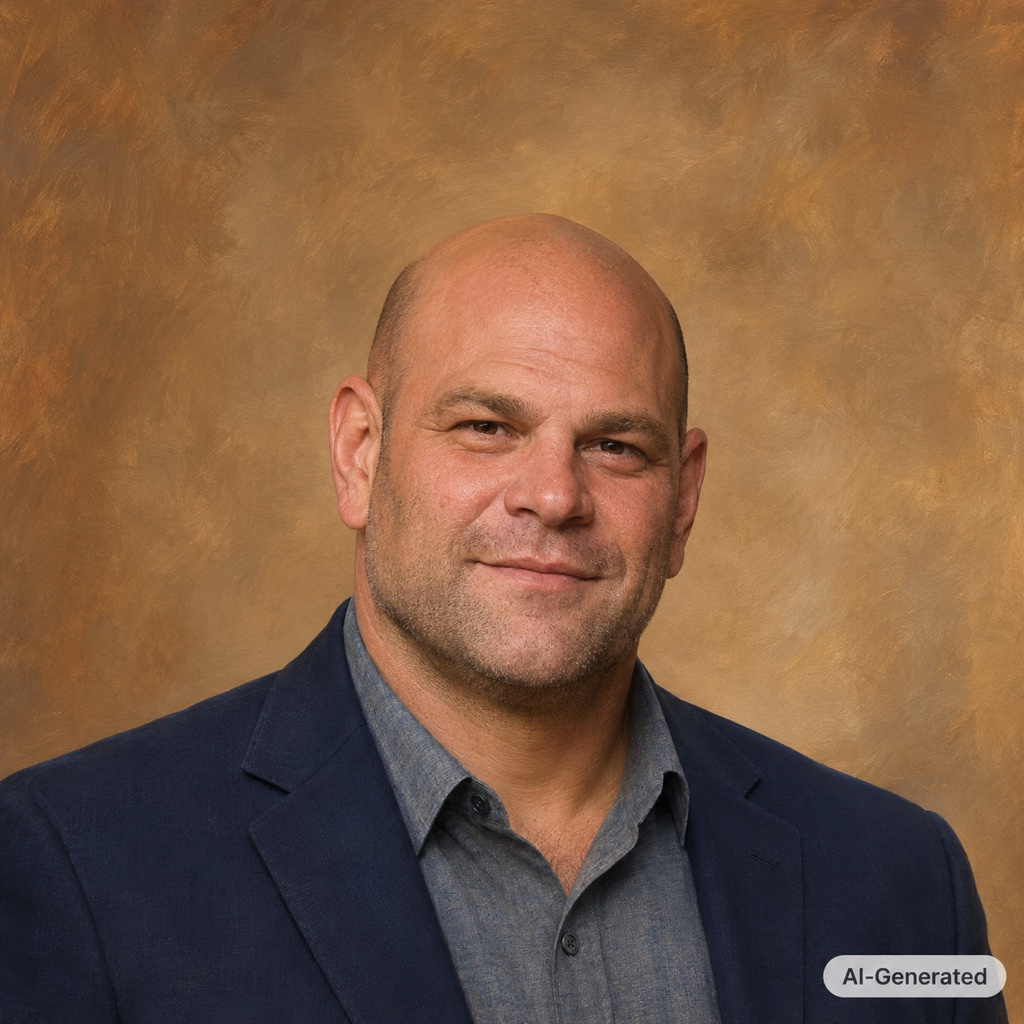
AI-generated editorial portrait; not a photograph.
Domenick Lombardozzi appears in Reacher as Guy Russo, part of the story introduced in season 2. Fans may recognize a face long before they know anything about the person’s beliefs. Asking about an actor’s religion is understandable, but the answer needs to come from evidence about the actor rather than from the fictional world on screen.
Domenick Lombardozzi’s religion is not confirmed in the reliable public sources reviewed for this profile. We have not established a clear personal profession of Christian faith or a current denomination.
The person behind Guy Russo
Lombardozzi is familiar to crime-drama audiences through work including The Wire and Reacher. A Backstage interview about his career discusses the work behind his recognizable screen presence. Knowing that history can help viewers appreciate the craft involved in playing investigators and other strongly drawn figures. It does not establish a denomination or a personal account of salvation.
In Reacher’s second season, he plays NYPD detective Guy Russo. The character’s involvement adds another professional viewpoint to a case that the former military team approaches through its own shared history. Tension between different investigators can give a story energy without requiring the actors themselves to share the same outlook. Russo’s part in the drama belongs to the character’s circumstances and choices.
What the public evidence does—and does not—show
No current religious affiliation or clear personal profession of Christian faith has been established from the reviewed sources. An Italian family background is not sufficient evidence of Catholic practice or belief. Nor should an actor’s screen reputation become a shortcut to assumptions about his private life. This profile treats career facts as career facts and leaves the unconfirmed religious question open.
This profile distinguishes documented career information, direct statements about belief, and Famous Faith’s own Christian commentary. The sources linked here can establish a performance or a comment without answering every question about his present convictions. An interview about a role is not automatically a testimony. Likewise, an absent religious statement is not evidence that someone rejects God. We should leave an unanswered question open rather than supply a convenient label.
Justice requires more than stubborn certainty
Proverbs 18:13 warns against answering before listening. Investigative stories make that failure easy to recognize when a character is certain too soon. In ordinary life, we may do the same thing with a neighbor, a coworker, or a public figure whose motives we assume we understand. Christian concern for justice requires patience with evidence and a willingness to correct a mistaken conclusion. That does not mean that wrongdoing should be ignored. It means that truth matters enough to be pursued carefully, especially when an accusation could damage someone else. The same standard should govern how we discuss an actor’s religion.
The Bible’s message of grace
The Bible teaches that our deepest problem is sin, not a lack of recognition or an insufficiently impressive religious background. Romans 3:23 includes every one of us in that diagnosis. Jesus Christ, God’s Son, lived without sin, died for sinners, and rose bodily from the dead. His death and resurrection are the heart of the gospel (1 Corinthians 15:3–4). Salvation is received by God’s grace through faith in Christ, not earned by good deeds, church membership, cultural identity, or success (Ephesians 2:8–9). Repentance means turning from sin toward God; faith means depending on Jesus Himself. The obedience that follows is a response to grace, not its purchase price. That is the standard Famous Faith uses when explaining Christianity, regardless of how famous or likable someone may be.
For Domenick Lombardozzi, the most accurate conclusion is the one the evidence actually supports: the reviewed sources do not settle the question of a current religious affiliation or personal trust in Christ. We can appreciate his work without making a spiritual judgment on the strength of a performance. The question also invites readers to examine their own hope: is it grounded in Jesus Christ, or only in a reputation, a tradition, or an identity other people recognize?
Image disclosure: AI-generated editorial portrait representing Domenick Lombardozzi, created for Famous Faith; not a photograph. No endorsement implied.
More from this series: Explore all 31 Reacher cast faith profiles.