What Is Jenna Fischer’s Religion? Is She a Christian?

Jenna Fischer at the 2017 Toronto International Film Festival
Jenna Fischer

Jenna Fischer gave The Office one of its most recognizable and relatable characters: Pam Beesly. As the receptionist who gradually found her voice, explored her artistic ambitions, and built a life with Jim Halpert, Pam brought a quieter kind of comedy to Dunder Mifflin. Fischer’s performance often depended on a pause, an expression, or an understated reply. Her work made ordinary uncertainty feel worth noticing. When readers ask about Fischer’s religion, however, a familiar performance is not a substitute for her own statements.

What is publicly known about Jenna Fischer’s religion?

Biographical reporting identifies Fischer as a former student of Nerinx Hall, a Catholic high school in Missouri. Beliefnet categorizes her as Catholic, but its entry also acknowledges that she rarely discusses her faith publicly and draws a connection from her schooling. That connection should not be treated as proof of her present convictions. Attending a Catholic school does not establish what someone believes about God, Jesus, Scripture, salvation, or the church today.

In the sources reviewed for this article, we did not find a clear, detailed statement from Fischer describing her current religious beliefs. The responsible answer is therefore limited: a Catholic educational background is reported, while her present personal faith is not clearly established by the material available here. We are not assuming she is Christian, assuming she is not, or claiming access to her heart. Further direct statements could add to this picture.

Her public words about work and perseverance

Fischer has been much more open about the demands of an acting career. Truman State University describes her as a 1995 theatre graduate. During a 2019 campus visit, she offered practical guidance to aspiring performers, discussed the uncertain path into the profession, and helped support a scholarship honoring a former theatre professor. She emphasized the need to keep working when a career does not follow a predictable route.

In that conversation, Fischer said artists need to become their own strongest supporters and develop confidence that can survive repeated testing. Those comments concern professional perseverance, not a declaration about salvation. We should not turn career advice into a religious creed. Still, they offer an interested reader a useful distinction: confidence can help someone continue practicing a craft, but confidence in ourselves cannot reconcile us to God. The Bible calls believers to diligent work while locating their deepest hope in the Lord, not in personal ability.

The actor behind Pam Beesly

Fischer’s official Office Ladies biography records an Emmy nomination for her work as Pam and two Screen Actors Guild ensemble awards. It also describes stage work including Reasons to Be Happy and Meteor Shower, alongside film roles in Brad’s Status, Walk Hard, and The Giant Mechanical Man. Her career extends beyond one beloved television character.

Through Office Ladies, which she hosts with Angela Kinsey, and their book The Office BFFs, Fischer has helped fans appreciate the friendships and collaborative work behind the series. Her acting-career guide, The Actor’s Life, likewise offers a practical window into creative work. These contributions are worth appreciating on their own terms. They do not establish a theological position, and neither do Pam’s fictional choices. The actor and the character must remain distinct.

What does the Bible say about faith?

Because Fischer’s present beliefs are not clearly stated in the sources reviewed, it would be misleading to construct a point-by-point comparison between the Bible and doctrines she has not endorsed. We can instead explain the biblical teaching plainly. Christianity is not simply a school background, a cultural identity, a reputation for kindness, or a belief that perseverance will eventually pay off. Those things may have value, but none answers the problem of sin before a holy God.

Scripture teaches that all have sinned and fall short of God’s glory (Romans 3:23). This includes religious people, talented people, and people admired by millions. Our guilt cannot be removed by good intentions or by balancing wrongs against achievements. We need forgiveness that we cannot provide for ourselves. This is a message for the reader, not a speculative judgment about Fischer.

The gospel for the interested reader

God’s answer is Jesus Christ, the eternal Son who became truly human. Jesus lived without sin, willingly died on the cross for sinners, and rose bodily from the dead. At the cross He bore the judgment sin deserves. His resurrection is not merely a symbol of optimism; it declares His victory over death. Through Him, sinners can be forgiven and reconciled to God.

Salvation is by grace through faith, not by works (Ephesians 2:8–9). Jesus calls us to repent—to turn from sin and self-rule—and to trust Him rather than our own goodness. We do not earn His welcome by achieving a successful life or presenting a respectable image. We come because He is merciful and His work is sufficient. Whoever calls on the name of the Lord will be saved (Romans 10:13). That invitation belongs to every interested reader, whether famous or unknown.

Sources

Photo: GabboT via Wikimedia Commons. CC BY-SA 2.0. Cropped version supplied by Commons; displayed at a reduced size.

What Is Rainn Wilson’s Religion? Is He a Christian?

Rainn Wilson at GalaxyCon Richmond in 2025
Rainn Wilson

Rainn Wilson is known around the world as Dwight Schrute, the fiercely competitive salesman, beet farmer, and aspiring authority figure on the American version of The Office. Dwight’s certainty is part of the joke: he usually has an answer, even when he has misunderstood the question. Wilson himself has spent considerable time discussing questions of meaning, faith, and human connection. His public religious identity is not a matter of guessing from a character or a surname. He has repeatedly spoken about being a member of the Bahá’í Faith.

What religion does Rainn Wilson follow?

Wilson identifies as Bahá’í, a religion distinct from Christianity. In a 2007 interview published by the Bahá’í World News Service, he explained that he grew up in that faith, stepped away during his twenties, and returned after a period of examining religious ideas. He described rediscovering belief in God and accepting Bahá’u’lláh as the messenger for the present age. His account is useful because it comes from his own explanation, rather than an outsider’s interpretation of his work.

Wilson’s later conversations show that spirituality remains a public interest, not simply a childhood label. In a 2023 NPR interview about his book Soul Boom, he discussed his spiritual journey and the need for connection. In an Interfaith America conversation, he talked about faith in Hollywood and the difficulty of discussing religion in a skeptical cultural environment. Readers can appreciate his willingness to discuss serious questions while recognizing that willingness to speak about God is not the same as confessing Christian doctrine.

Respect, service, and real differences

In his Bahá’í World News Service interview, Wilson connected his upbringing with concern for equality, service, and the human family. He also described humor and artistic talent as ways to contribute to others. Those aims deserve a fair hearing. Christians can commend compassion, hospitality, and the dignity of every person without saying that all religions teach the same thing. Respect does not require erasing differences that believers themselves consider important.

The difference is especially clear when the conversation turns to Jesus. Biblical Christianity confesses Jesus Christ as the eternal Son of God made flesh, not merely one teacher among a succession of religious messengers. His cross and resurrection are the decisive work by which sinners are reconciled to God. This article therefore distinguishes Wilson’s public Bahá’í identification from Christian faith. It does not claim to know his private thoughts or pronounce a verdict on his heart.

The actor behind Dwight Schrute

Dwight is memorable because Wilson commits to the character’s peculiar logic. Workplace status, loyalty, survival skills, and tiny contests become enormous matters in Dwight’s world. Yet the performance makes room for vulnerability, affection, and growth. His clashes with Jim Halpert and devotion to Michael Scott are funny partly because they reveal how deeply he wants recognition. Wilson helped make those exaggerated needs recognizable rather than merely strange.

That achievement is worth appreciating without confusing performer and role. An actor’s fictional behavior is not evidence of the actor’s beliefs or character. Wilson’s career has included film and television work beyond The Office, while his books and spiritual conversations have given audiences another way to encounter him. The range reminds us that a person is more than the role through which we first met him.

Is Rainn Wilson a Christian?

Based on his public self-description, Rainn Wilson identifies as Bahá’í rather than Christian. The accurate answer should stop there rather than inventing a conversion story or treating his religious commitments as a punchline. Christians are called to speak truthfully and lovingly. We can pray for Wilson to know Christ while approaching him with the same patience and respect we would hope to receive ourselves.

The deeper question belongs to every reader as well. Our need before God is not solved by fame, education, sincerity, charitable service, or belonging to a religious community. Scripture teaches that all have sinned and fall short of God’s glory (Romans 3:23). We have failed to love God fully and our neighbors faithfully. Sin deserves judgment, and we cannot cancel that debt by pointing to our better moments.

The gospel: hope in Christ alone

The good news is that God has acted to save sinners through Jesus Christ. Jesus lived without sin, willingly died on the cross bearing the judgment sinners deserve, and rose bodily from the dead. He is not simply an example of kindness or a source of uplifting ideas. He is the risen Lord and Savior. Forgiveness and reconciliation with God come through His finished work, not through religious effort or moral achievement.

Jesus calls us to repent and believe the gospel. Repentance means turning from sin and self-rule toward God; faith means trusting Christ Himself rather than our own record. Salvation is by grace through faith, not by works (Ephesians 2:8–9). No celebrity receives a special route to God, and no ordinary person is overlooked. Christ welcomes all who come to Him in faith. That promise gives a firmer hope than applause, status, or even the sincere search for meaning.

Sources

Photo: Super Festivals via Wikimedia Commons. CC BY 2.0. Cropped version from Commons; displayed at a reduced size.

What Is John Krasinski’s Religion? Is He a Christian?

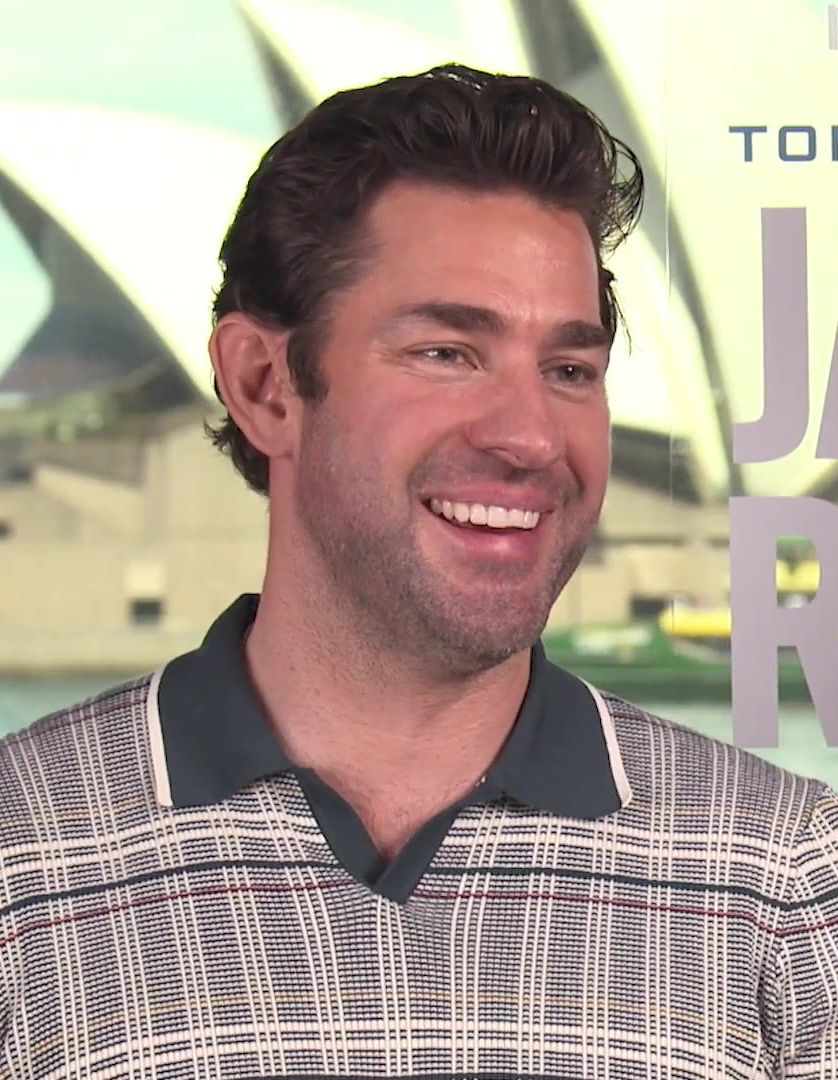
John Krasinski in Sydney in 2022
John Krasinski

John Krasinski became one of television’s most recognizable faces as Jim Halpert on The Office. His quiet looks at the camera, dry humor, friendship with Pam Beesly, and long-running rivalry with Dwight Schrute gave the American version of the show much of its emotional center. Yet the character worked because Krasinski did not play Jim as a detached observer who was always right. Jim could be funny, patient, ambitious, avoidant, and sometimes selfish—the mixture that made him feel human.

John Krasinski’s religious background

Public reporting and Krasinski’s own remarks point to a Catholic upbringing. In an interview about License to Wed, he said that he had grown up Catholic and referred to the marriage-preparation setting depicted in the film. More recent reporting similarly notes that he tends to keep his present religious beliefs private. That is an important distinction. A person may be shaped by a faith tradition and still not give public access to every conviction, question, or part of a spiritual journey.

For that reason, this article should not manufacture certainty. It is fair to say that Krasinski has publicly described a Catholic background. It is not fair to claim that he has given a detailed testimony of conversion, repentance, and personal faith in Christ when he has not said those things publicly. God knows the heart; online writers do not. The right Christian response is honesty, humility, and prayer rather than rumor.

Beyond Jim Halpert

Krasinski was born in Massachusetts and studied theater at Brown University. Before his major acting breakthrough, he spent time teaching English in Costa Rica and worked through the ordinary uncertainty of early acting work. The Office gave him a national audience, but he later developed as a writer, director, producer, and leading actor. His work on A Quiet Place showed a different side of his creative ability, building a tense story around a family facing danger, fear, sacrifice, and the instinct to protect one another.

It is good to appreciate skill, discipline, collaboration, and thoughtful storytelling. These are gifts from God’s common grace. But a successful career cannot answer the deepest human problem. Jim’s familiar smirk may invite viewers to laugh at chaos, yet each of us eventually has to ask what we are living for, what our sin deserves, and whether we can stand before a holy God by our own record.

Is John Krasinski a Christian?

The most responsible answer is limited: he has spoken of a Catholic upbringing, but the public record does not establish a personal Christian conversion. That is not a verdict on his soul. It is a refusal to say more than the evidence permits. Christians should pray that Krasinski would know the grace of God in Jesus Christ, while remembering that the same question confronts every one of us.

The Bible says that all have sinned and fall short of the glory of God (Romans 3:23). Sin is more than public scandal. It includes our self-rule, our pride, our excuses, and the ways we love created things more than the Creator. No amount of family tradition, religious familiarity, talent, moral effort, or likability can erase that guilt. We need rescue, not self-improvement.

The good news of Jesus Christ

God has provided that rescue in His Son. Jesus Christ, fully God and fully man, lived the sinless life we have not lived. He willingly died on the cross, bearing the judgment that sinners deserve, and He rose bodily from the grave. His resurrection announces that death has been defeated and that forgiveness is real. Salvation is a gift of grace, received through faith, not a prize earned by good works (Ephesians 2:8–9).

Jesus calls people to repent and believe the gospel. Repentance is turning from self-rule to God; faith is resting in Christ’s finished work rather than our own record. Everyone who calls on the name of the Lord will be saved (Romans 10:13). That promise is for famous people and unknown people, for those who feel strong and those who know they are desperate. Christ is sufficient for all who come to Him.

Sources

Photo: Prime Video AU & NZ via Wikimedia Commons. CC BY 3.0.

What Is Steve Carell’s Religion? Is He a Christian?

Steve Carell at the Anchorman 2 Australian premiere
Steve Carell

Steve Carell became inseparable from Michael Scott for millions of viewers of The Office, but the man behind Dunder Mifflin’s painfully eager regional manager has built a career with far more range than that one unforgettable role. Carell is known for understatement, generosity in an ensemble, and the unusual ability to make a character’s bad decision funny without pretending that it is wise. Those gifts make a fair look at his public faith background worthwhile too.

What has Steve Carell said about religion?

The clearest public information points to a Roman Catholic background. In interviews connected with Evan Almighty, Carell described himself as “Catholic, born and bred.” He explained that he did not take the role simply because of his religious background, but because he thought the story carried a good message. A later profile likewise reported that he was raised Catholic. Those are meaningful statements of identity, but Carell has generally kept the more personal details of his spiritual life private.

That restraint matters. It would be unfair to turn a denominational label, a movie role, or a warm public image into a detailed testimony that he has not offered. Public information supports saying that Carell has identified with Catholicism; it does not give outsiders enough grounds to declare with confidence where he stands before God. Christians should avoid pretending to know another person’s heart. Scripture says that the Lord sees the heart (1 Samuel 16:7).

From history student to comic actor

Carell grew up in Massachusetts, studied history at Denison University, and pursued comedy after college. His early work included Chicago’s Second City and television comedy, followed by years as a correspondent on The Daily Show. He broke through to a wider audience in films including Anchorman and The 40-Year-Old Virgin, while The Office gave him the long runway to make Michael Scott both exasperating and unexpectedly human.

Michael’s need to be admired is a large part of the character’s comedy. He reaches for affirmation in all the wrong ways: clumsy speeches, misplaced jokes, grand gestures, and decisions that put coworkers in impossible positions. Yet Carell rarely plays him as a simple villain. Beneath the self-importance is someone longing to belong and to be loved. That is not a defense of Michael’s failures; it is one reason the performance has endured. It recognizes a hunger that people really carry.

Carell’s career also shows a willingness to work beyond the obvious comic lane. He has voiced Gru in the Despicable Me films and has taken serious roles in projects such as Foxcatcher, The Big Short, and The Morning Show. Longstanding collaboration with his wife, Nancy Carell, and a reputation for being steady in an often volatile industry are part of the broader portrait found in interviews and profiles. Admiring discipline, creative work, family faithfulness, and kindness is appropriate. But even admirable qualities are not the same thing as reconciliation with God.

Is Steve Carell a Christian?

Based on his public comments, it is accurate to say that Steve Carell has described himself as Catholic and was raised Roman Catholic. It is not accurate to claim that he has publicly given a clear, personal testimony of repentance and saving faith in Jesus Christ. Only Carell and God know the full answer. The better response is neither gossip nor guesswork, but prayer: that he would know Christ personally and rest in the grace God gives sinners.

That distinction is important for every person, not only celebrities. Church background, morality, talent, charitable instincts, or religious vocabulary cannot save anyone. The Bible teaches that all have sinned and fall short of God’s glory (Romans 3:23). Sin is not merely someone else’s embarrassing behavior; it is our own rebellion against the holy God who made us. We do not repair that problem by trying harder, collecting good deeds, or building a better public image.

The good news of Jesus Christ

God’s answer is Jesus Christ. The eternal Son of God became man, lived without sin, willingly died on the cross for sinners, and rose bodily from the grave. At the cross, Jesus bore the judgment sin deserves so that all who turn from sin and trust Him may be forgiven, counted righteous before God, and receive eternal life. Salvation is a gift of grace, not wages earned by religion or performance (Ephesians 2:8–9).

Jesus calls people to repent and believe the gospel. To repent is not simply to feel embarrassed; it is to turn from self-rule toward God. To believe is to rely on Christ Himself—His finished work, not our own worthiness. The promise is wonderfully direct: “Everyone who calls on the name of the Lord will be saved” (Romans 10:13). Whether a person is famous or unknown, awkward or polished, the same Savior is enough.

Sources

Photo: Eva Rinaldi via Wikimedia Commons. CC BY-SA 2.0. Displayed at a reduced size.

What Is Megan Fox’s Religion? Is She a Christian?

Megan Fox visiting service members in 2019

Megan Fox has been famous for much of her adult life. Viewers know her from Transformers and other films, while interviews have also shown a person thinking about fear, control, and faith. So what is Megan Fox’s religion? Is she a Christian? Her own words provide a better starting point than a movie role, a photo, or a rumor online.

In a 2013 interview, Fox said she grew up attending a Pentecostal church in Tennessee. She described speaking in tongues as a child, reading the book of Revelation, and continuing to attend a church at the time of the interview. That is real public evidence of a Christian religious background and practice then. It does not tell us every belief she holds today, and no interview lets us see her heart.

What Megan Fox said about church

Speaking with Esquire in 2013, Fox talked about a Pentecostal church she attended when she was young. She said she began speaking in tongues around age eight. Later, she described attending a different church as an adult and feeling that she might speak in tongues during worship. She also spoke about feeling safe in God’s hands. These details came from a conversation with her, not from a list of celebrity religions.

The interview also recorded Fox saying she had read Revelation many times. She was curious about its images and about the end times. Readers should remember that asking questions about a difficult biblical book is not the same as having a settled answer to every doctrine. Christians themselves have debated how to read parts of Revelation. Fox’s comments show an interest in Scripture and spiritual things, but we should not use them to assign her a full set of beliefs she did not state.

Near the end of the profile, the writer described an icon of the crucified Christ in Fox’s home. That observation helps explain why some readers associate her with Christianity. Still, an object in a home is less direct evidence than a person’s own words. Many people own religious art for family, cultural, or personal reasons. We should let Fox’s interview statements carry the main weight.

Why the date of an interview matters

A 2013 interview tells us what Fox was willing to share in 2013. People grow, change churches, rethink doctrines, or become less public about religion. It would be careless to say that every detail from that interview is a complete report of her faith in 2026. The responsible statement is narrower: she described a Pentecostal upbringing and said she was attending church at that time.

It is also unfair to reduce her to the way film studios marketed her. Fox spoke in the same interview about the strain of being treated as a sex symbol. A person can be caught in a public image she did not fully choose. Christians should not use that image to mock her or pronounce judgment on her soul. Our task is to report her words faithfully and treat her as a person made in God’s image.

Experiences and the center of Christian faith

Fox’s story raises a question that matters beyond Hollywood: How do spiritual experiences relate to the gospel? Christians differ on the gift of tongues. Some churches expect it in worship; others do not. That disagreement need not be solved in an article about a celebrity. What all Christians need to hear is the message of Jesus Christ. A dramatic experience does not save a person. Neither does the absence of one prove that God is far away.

The Bible says all people have sinned and fall short of God’s glory (Romans 3:23). We cannot make ourselves right with God by being famous, moral, religious, or emotionally moved in worship. Jesus, the Son of God, lived without sin, died for sinners, and rose again. God saves by grace through faith in Christ (Ephesians 2:8–9). That is the heart of the gospel and the measure by which we should understand any talk of Christian faith.

Fox’s words about feeling safe in God’s hands may resonate with people who feel afraid or judged. The Bible does offer comfort, but it also calls us to face sin honestly. Christ does not invite people to pretend they are fine. He invites them to come for mercy. His welcome is not reserved for the respectable or the unnoticed. That is good news for every person who has been misread by others, and for every person who knows they need forgiveness.

Is Megan Fox a Christian?

Fox has publicly described a Pentecostal childhood, church attendance, Bible reading, and trust in God’s care. Those facts support saying that Christianity has been part of her public story. They do not allow me to certify her present relationship with Jesus or explain every belief she holds now. God knows her heart. We can be honest about the evidence and humble about its limits.

The question for you is not only what Fox believes. Are you trusting Jesus Christ yourself? Turn from sin and put your faith in him. He died and rose again, and he offers forgiveness and new life to those who come to him. Do not wait for perfect feelings, a religious performance, or someone else’s example. Repent and trust Christ today.

Source: Esquire’s 2013 interview with Megan Fox.

Photo: Spc. Ethan Ford / U.S. Army Garrison Yongsan, via Wikimedia Commons, public domain (U.S. federal government work). Cropped version of the source photograph.

What Is Michael Richards’s Religion? Is He a Christian?

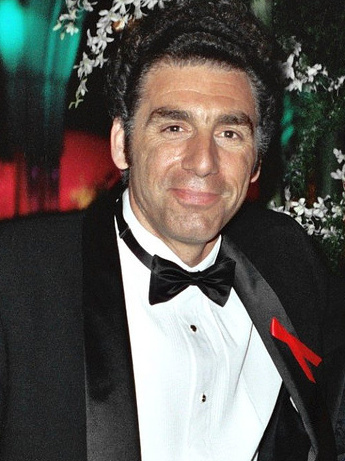
Michael Richards

Michael Richards played Cosmo Kramer, the unpredictable neighbor whose dramatic entrances and physical comedy made him one of Seinfeld’s most memorable characters. Kramer is fictional, but Richards’ public life has included both major success and a very public failure. That contrast is central to answering a faith question about him with care.

Michael Richards’s career

Before Seinfeld, Richards appeared on television, in comedy, and in films. He worked with Billy Crystal on Fridays and later developed the kind of physical, committed performance that made Kramer distinctive. His work on Seinfeld brought him three Emmy Awards and made a character with almost no ordinary boundaries seem instantly recognizable.

After the series, Richards acted less frequently. His name later became associated with the 2006 Laugh Factory incident in which he directed racist slurs at audience members during a stand-up performance. The incident was wrong. Richards apologized publicly, stepped away from the spotlight, and has discussed the years that followed. It would be dishonest to make that episode disappear, but it would also be wrong to claim that a person’s worst public moment is the whole of his life.

What Michael Richards has said about faith

In 2024, while discussing his memoir Entrances and Exits, Richards told Fox News that he “found faith” during his extended hiatus. He described faith in creation, mercy, reflection, and the possibility of moving toward a better place. He also said his search led him into philosophy, religion, and psychology.

Those are meaningful spiritual statements. They show that Richards has thought seriously about guilt, repentance, creation, and change. Yet the language reported publicly does not give a clear, detailed Christian confession. It does not explicitly say that he has trusted Jesus Christ as Savior and Lord, or explain what he believes about the cross and resurrection. Famous Faith should honor the statements he has made without extending them beyond their meaning.

Is Michael Richards a Christian?

The most careful answer is that Michael Richards has publicly said he found faith, but the available public statements do not establish a clear profession of biblical Christianity. Spiritual language can point in many directions. Christians should not attach the word “Christian” to someone merely because he speaks about God, creation, self-improvement, or becoming better.

At the same time, the gospel gives real hope for people confronting serious sin. God does not minimize evil, and neither should we. He calls sinners to confess, turn from sin, and seek mercy. The Christian message is not that we can repair ourselves through reflection. It is that Jesus Christ saves guilty people who cannot save themselves.

Mercy, repentance, and real hope

Public failure often tempts us either to excuse sin or to treat a person as permanently beyond grace. The Bible gives neither answer. Sin is serious, and God’s judgment is real. But Christ came into the world to save sinners. That does not erase consequences or make apologies unnecessary. It does mean that no one is outside the reach of God’s mercy when they repent and trust in Christ.

The gospel is more than a spiritual label

It is easy to treat faith as a personal style, a family inheritance, or a positive feeling. The Bible speaks more directly. God is holy, and every one of us has sinned against Him in thought, word, and action. We have not loved God with all our heart, and we have not loved our neighbors as ourselves. Sin creates real guilt before a just God. Fame, generosity, talent, religious ancestry, and moral effort cannot remove it.

The good news is what Jesus Christ has done. God the Son became man, lived the sinless life we have not lived, died on the cross for sinners, was buried, and rose bodily from the dead. He took the judgment sin deserves and offers forgiveness and eternal life as a gift. We are saved by grace through faith, not by works.

To become a Christian is not simply to admire Jesus or call oneself spiritual. It is to repent, turning from sin, and trust in Jesus Christ alone as Savior and Lord. That invitation belongs to every person, famous or unknown. A careful article about a celebrity’s beliefs should eventually lead us to the more important question: what is your response to the risen Christ?

Sources

Photo: Alan Light, via Wikimedia Commons; CC BY 2.0 License. Displayed at a reduced size.

What Is Jason Alexander’s Religion? Is He a Christian?

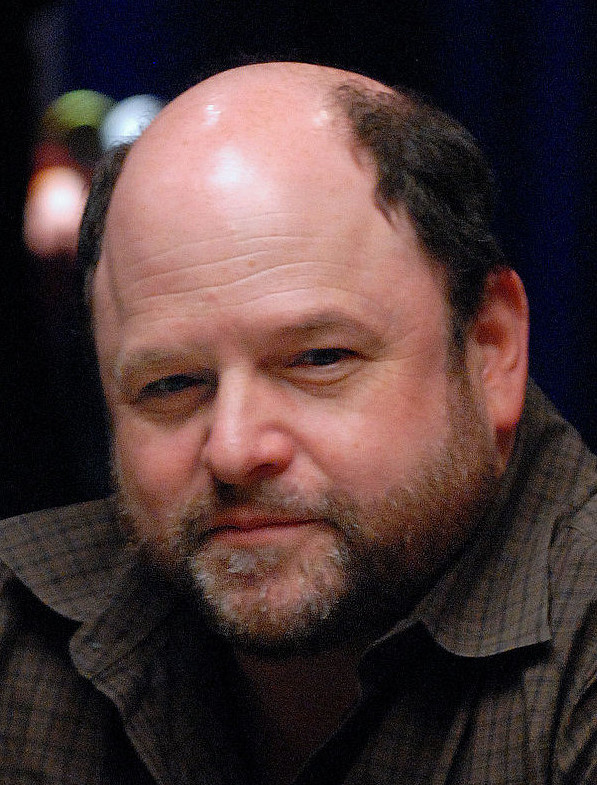
Jason Alexander

Jason Alexander played George Costanza, the anxious, ambitious, and frequently self-defeating friend at the center of Seinfeld. George’s schemes and insecurities became a major part of the show’s comedy, but Alexander’s own career reaches well beyond that role. He is a Tony Award-winning stage actor, singer, director, voice performer, and longtime participant in charitable and civic work.

Jason Alexander and Jewish identity

Alexander has spoken directly about being Jewish. In a 2025 conversation for the Being Jewish with Jonah Platt podcast, the episode description summarizes his discussion of Jewish identity, cultural Judaism, formal doctrine, philanthropy, and advocacy. He described Jewish identity in deeply personal terms and discussed what it means to be publicly Jewish during a time of heightened antisemitism.

His birth name was Jay Scott Greenspan, and he has spoken about the origin of his stage name. Public profiles and interviews consistently identify him as Jewish. That is clearer evidence than rumor or fan speculation, and Famous Faith should say so plainly. It is also right to distinguish cultural identity, family history, and formal theological conviction rather than reducing all three to a single label.

From Broadway to George Costanza

Before Seinfeld, Alexander built a substantial theater career. He won a Tony Award for Jerome Robbins’ Broadway and brought musical-theater skill to roles that demanded singing, timing, and character transformation. On television, George Costanza gave him a character who could be petty, funny, fearful, and unexpectedly sympathetic. Alexander’s performance helped the show become one of the defining sitcoms of its era.

He has also appeared in film, directed for television and theater, and supported causes connected to peace, Jewish organizations, and humanitarian work. Those activities may show convictions and commitments, but they still do not replace a personal confession of faith. A good biography can recognize real achievements without using them as evidence of salvation.

Is Jason Alexander a Christian?

Jason Alexander publicly identifies as Jewish, and there is no clear public profession supporting the conclusion that he is a Christian. Christianity is not a vague appreciation for religion or morality. Christians confess that Jesus is Israel’s promised Messiah, fully God and fully man, who died for sin and rose again.

That disagreement is theological, but it should never produce contempt. Christians are called to love their neighbors, tell the truth, and pray. We should reject antisemitism and any attempt to treat Jewish people as less worthy of dignity. God made every person in His image, and the gospel calls sinners of every background to Christ.

A question for every reader

George Costanza often chases a better reputation, an easier outcome, or an escape from consequences. His stories can be funny because they exaggerate habits all of us recognize in ourselves. The gospel addresses something deeper than our public image. It confronts sin honestly and offers forgiveness through Jesus Christ.

Alexander’s openness about identity also reminds us that religious questions are personal. It is better to report the words a person has actually used, acknowledge their background with respect, and avoid turning a short internet answer into a sweeping judgment. That approach leaves room for truth, prayer, and humility.

The gospel is more than a spiritual label

It is easy to treat faith as a personal style, a family inheritance, or a positive feeling. The Bible speaks more directly. God is holy, and every one of us has sinned against Him in thought, word, and action. We have not loved God with all our heart, and we have not loved our neighbors as ourselves. Sin creates real guilt before a just God. Fame, generosity, talent, religious ancestry, and moral effort cannot remove it.

The good news is what Jesus Christ has done. God the Son became man, lived the sinless life we have not lived, died on the cross for sinners, was buried, and rose bodily from the dead. He took the judgment sin deserves and offers forgiveness and eternal life as a gift. We are saved by grace through faith, not by works.

To become a Christian is not simply to admire Jesus or call oneself spiritual. It is to repent, turning from sin, and trust in Jesus Christ alone as Savior and Lord. That invitation belongs to every person, famous or unknown. A careful article about a celebrity’s beliefs should eventually lead us to the more important question: what is your response to the risen Christ?

Sources

Photo: flipchip / LasVegasVegas.com, via Wikimedia Commons; CC BY-SA 3.0 License. Displayed at a reduced size.

What Is Julia Louis-Dreyfus’s Religion? Is She a Christian?

Julia Louis-Dreyfus

Julia Louis-Dreyfus played Elaine Benes on Seinfeld, bringing intelligence, comic timing, and a distinctive physical style to one of television’s best-known ensemble comedies. Her career began with Saturday Night Live and continued through acclaimed work in The New Adventures of Old Christine, Veep, films, and voice roles. Because Elaine remains such a familiar character, people often wonder what Louis-Dreyfus herself believes.

Family history and Jewish heritage

Louis-Dreyfus has spoken publicly about her father’s history. At the 2017 Screen Actors Guild Awards, she said he fled religious persecution in Nazi-occupied France. Reporting about her family describes her father as Jewish and recounts the family’s connection to the Holocaust and the French Resistance. That heritage matters and deserves to be described accurately, especially when a person speaks about antisemitism and persecution.

Her family background alone does not establish how she defines her present religious belief or practice. In public interviews, Louis-Dreyfus generally discusses family, acting, comedy, politics, health, and the work she chooses. Reliable public reporting does not provide a detailed, clear profession of Christian faith from her. A careful answer should respect the evidence and leave room for what has not been publicly stated.

A career built on comic character work

On Seinfeld, Elaine became central to stories about friendship, work, romance, and the odd pressure of urban social life. Louis-Dreyfus later won major awards for playing Selina Meyer on Veep, a character very different from Elaine but equally dependent on precision and fearlessness. She has also spoken candidly about recovering from breast cancer, a period that brought family, friends, and healthcare into sharp focus.

Accomplishment and hardship can both make people ask spiritual questions. But neither fame nor suffering gives outsiders the right to pronounce a verdict on someone’s soul. The Bible tells Christians to speak truthfully and humbly. We can report heritage and public comments without pretending to know private beliefs.

Is Julia Louis-Dreyfus a Christian?

There is no clear public profession that supports identifying Julia Louis-Dreyfus as a Christian. Her Jewish family history is documented, but Christianity is not established merely by heritage, good work, or values a person may admire. Christians confess that Jesus Christ is the Messiah and Savior, and that salvation comes through personal faith in Him.

This does not make Louis-Dreyfus less worthy of respect. Every person is made in God’s image and should be treated with dignity. The goal of Famous Faith is not to make celebrity labels feel final. It is to give readers an honest answer and point them toward the gospel.

Looking beyond the character

Elaine Benes is a fictional character. Julia Louis-Dreyfus is a real person with a family history, career, and private life that viewers only partly see. That difference helps us ask better questions. Rather than forcing an answer where public evidence is thin, we can pray for her and consider the far more personal question of what we ourselves believe about Jesus.

The gospel is more than a spiritual label

It is easy to treat faith as a personal style, a family inheritance, or a positive feeling. The Bible speaks more directly. God is holy, and every one of us has sinned against Him in thought, word, and action. We have not loved God with all our heart, and we have not loved our neighbors as ourselves. Sin creates real guilt before a just God. Fame, generosity, talent, religious ancestry, and moral effort cannot remove it.

The good news is what Jesus Christ has done. God the Son became man, lived the sinless life we have not lived, died on the cross for sinners, was buried, and rose bodily from the dead. He took the judgment sin deserves and offers forgiveness and eternal life as a gift. We are saved by grace through faith, not by works.

To become a Christian is not simply to admire Jesus or call oneself spiritual. It is to repent, turning from sin, and trust in Jesus Christ alone as Savior and Lord. That invitation belongs to every person, famous or unknown. A careful article about a celebrity’s beliefs should eventually lead us to the more important question: what is your response to the risen Christ?

Sources

Photo: Neil Grabowsky, for the Montclair Film Festival, via Wikimedia Commons; CC BY 2.0 License. Displayed at a reduced size.

What Is Jerry Seinfeld’s Religion? Is He a Christian?

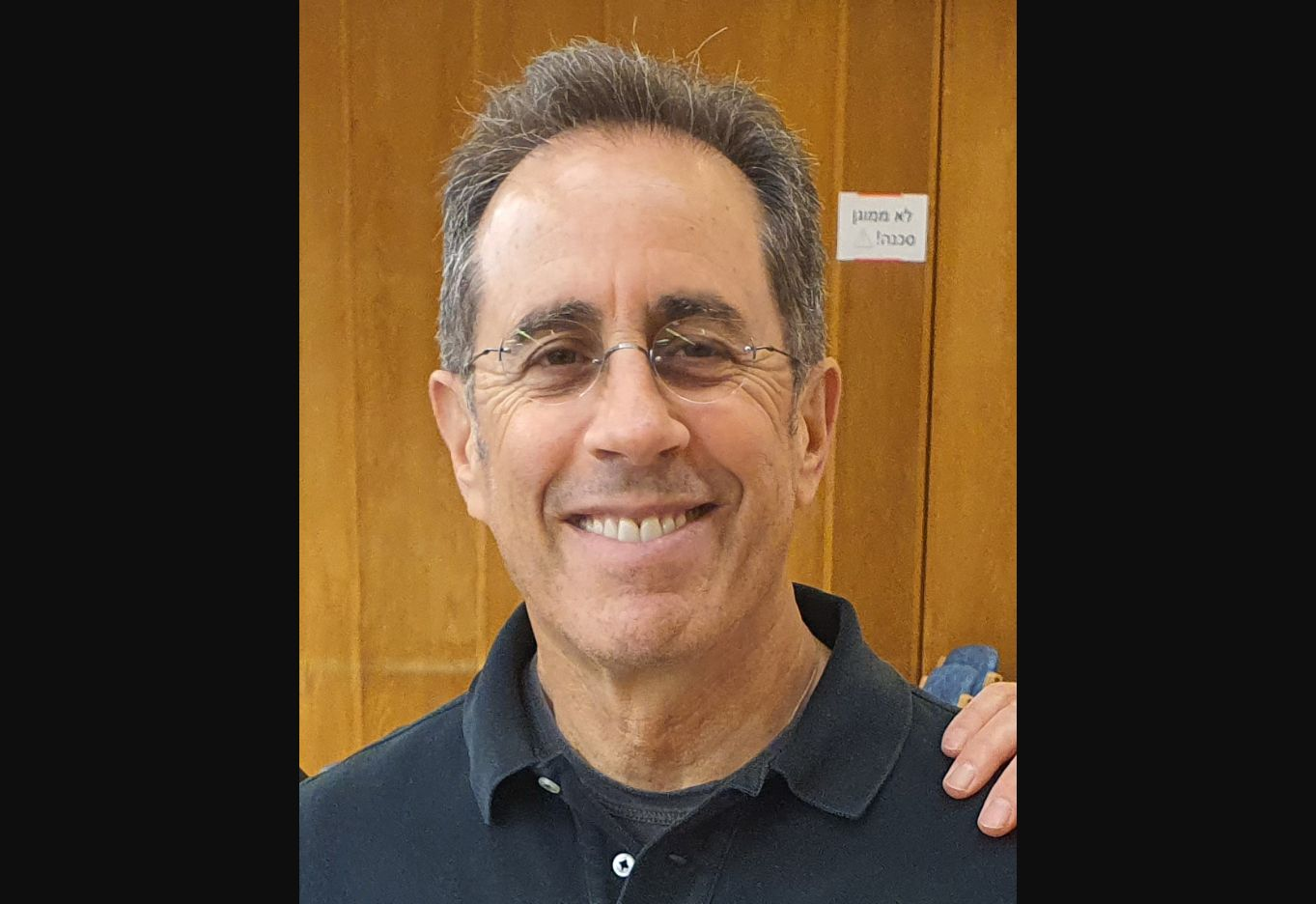
Jerry Seinfeld

Jerry Seinfeld became one of the most recognizable comedians in America through Seinfeld, the sitcom he created with Larry David. On the show, he played a version of himself: a New York comedian whose friends turn small frustrations, dating mishaps, and everyday etiquette into elaborate arguments. The series ran for nine seasons and made the names Jerry, Elaine, George, and Kramer part of pop-culture history.

Jerry Seinfeld’s Jewish background

Seinfeld has publicly identified himself as Jewish. In a 2024 interview with GQ, while explaining his response to antisemitism after October 7, he said plainly, “Well, I’m Jewish.” Biographical sources also describe his family as having Hungarian and Syrian Jewish roots. Jewish identity is an important and meaningful part of his background, and it would be inaccurate to hide it behind a vague description such as “spiritual.”

At the same time, public Jewish identity does not answer every question about a person’s beliefs, practices, or relationship with God. People can relate to Judaism through family, culture, tradition, worship, theology, or a combination of those things. Famous Faith should describe the available evidence without claiming more than it proves.

Comedy, work, and a public life

Before television made him famous, Seinfeld built his career through stand-up comedy. He appeared on The Tonight Show in 1981 and later returned to the stage after his sitcom ended. Interviews portray him as intensely focused on the craft of comedy: revising material, observing details, and valuing disciplined work over celebrity. His later projects have included Comedians in Cars Getting Coffee, books, stand-up specials, and the 2024 film Unfrosted.

That long career helps explain why people are curious about more than his jokes. A public figure can feel familiar after decades on television. Yet viewers know a performer through selected work, not through private access to his heart. The distinction is important whenever we ask a religion question about a celebrity.

Is Jerry Seinfeld a Christian?

There is no clear public profession of Christian faith that supports calling Jerry Seinfeld a Christian. His public identification is Jewish. Christians should honor that evidence while also being clear about what Christianity teaches: Jesus is the promised Messiah, the Son of God, and the only Savior of sinners. Jewish heritage and Christian faith are not interchangeable labels.

We should not use a person’s humor, politics, success, or family history as a shortcut to a spiritual verdict. God alone fully knows the heart. The right response is truthfulness, respect, and prayer rather than speculation.

Why the question matters

Jerry Seinfeld’s career shows how much people enjoy noticing ordinary life. Christians can appreciate sharp observation, hard work, and the shared laughter of comedy while still using discernment about the material they watch. More importantly, a celebrity’s background reminds us to examine our own. What tradition do we claim, and have we personally turned to Christ for forgiveness?

For readers, this is a useful caution. We can be thankful for talent and persistence without asking a public figure to carry more spiritual significance than he claims. Only God can see the inner person. The proper place for a well-known comedian in a faith article is as a subject of honest research, not as a substitute for the Savior.

The gospel is more than a spiritual label

It is easy to treat faith as a personal style, a family inheritance, or a positive feeling. The Bible speaks more directly. God is holy, and every one of us has sinned against Him in thought, word, and action. We have not loved God with all our heart, and we have not loved our neighbors as ourselves. Sin creates real guilt before a just God. Fame, generosity, talent, religious ancestry, and moral effort cannot remove it.

The good news is what Jesus Christ has done. God the Son became man, lived the sinless life we have not lived, died on the cross for sinners, was buried, and rose bodily from the dead. He took the judgment sin deserves and offers forgiveness and eternal life as a gift. We are saved by grace through faith, not by works.

To become a Christian is not simply to admire Jesus or call oneself spiritual. It is to repent, turning from sin, and trust in Jesus Christ alone as Savior and Lord. That invitation belongs to every person, famous or unknown. A careful article about a celebrity’s beliefs should eventually lead us to the more important question: what is your response to the risen Christ?

Sources

Photo: Zafrir Keren, via Wikimedia Commons; CC BY-SA 3.0 License. Displayed at a reduced size.

What Is David Schwimmer’s Religion? Is He a Christian?

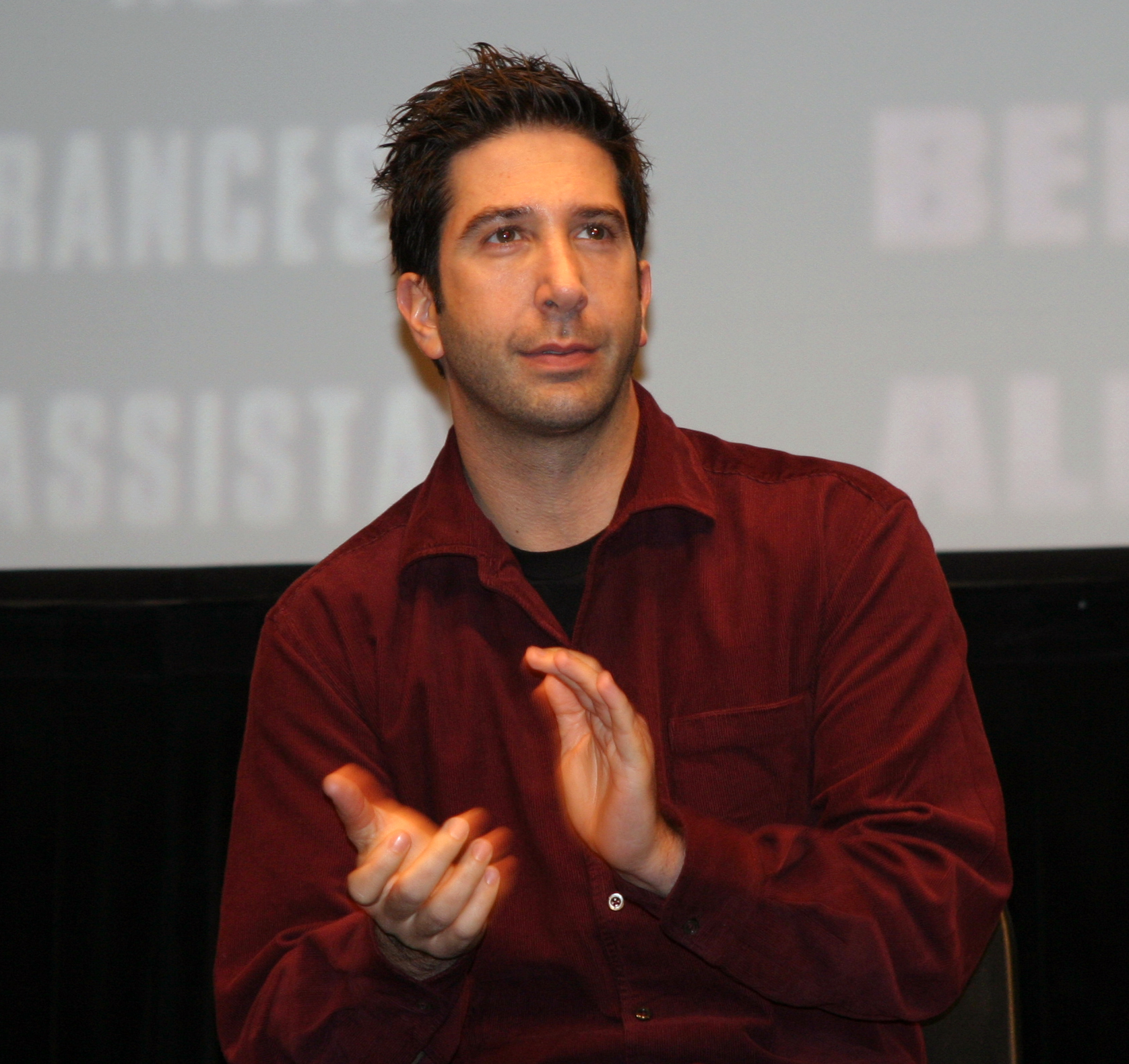
David Schwimmer portrait

David Schwimmer played Ross Geller, the earnest, anxious paleontologist whose relationships helped shape Friends. Viewers also remember Ross’s attempts to teach his son about Hanukkah. But a television story is not the strongest evidence for an actor’s real beliefs. When asking about David Schwimmer’s religion, we can start with his own public discussion of Jewish identity rather than treating Ross as a spiritual autobiography.

A career beyond Ross Geller

Schwimmer was born in New York in 1966 and grew up in Los Angeles. He studied at Northwestern University and became a co-founder of Chicago’s Lookingglass Theatre Company. That theater background preceded the worldwide fame of Friends. His comic work as Ross depended on physical performance, timing, and the ability to make insecurity both funny and recognizable.

After and alongside the sitcom, his career included directing, stage work, voicing Melman in the Madagascar films, and portraying Robert Kardashian in The People v. O. J. Simpson: American Crime Story. These are very different kinds of performances. They remind us that an actor’s role is selected and crafted, not necessarily an expression of his personal convictions.

In a 2016 Salon interview, Schwimmer discussed waiting tables for years while auditioning, preparing carefully for a role involving wine, and the importance of service-industry experience. He also spoke about how his upbringing shaped his awareness of representation. Those comments offer a more substantial picture of a working actor than the shorthand of a famous sitcom character.

What has David Schwimmer said about Jewish identity?

In that Salon interview, Schwimmer directly identified himself as Jewish while discussing race and casting on Friends. His biographical background also documents a Jewish family. This is stronger evidence than assuming his religion from his surname or from a holiday episode. It establishes that Jewish identity is part of how he has publicly described himself.

However, Jewish identity does not tell us everything about religious observance or theology. It can involve ancestry, culture, community, religious practice, or several of these together. The interview was not a detailed statement about his understanding of God, his level of synagogue participation, or his beliefs about Jesus. A careful answer should not pretend it supplied information it did not.

Is David Schwimmer a Christian?

The sources reviewed here do not establish a public profession of Christian faith. Schwimmer’s documented Jewish identity should be reported plainly, while his exact current theological beliefs should not be invented. This article cannot decide the condition of his heart or make a declaration about his eternal destiny. Those matters are not settled by a profile writer.

It is also important to distinguish religious reporting from hostility toward Jewish people. Christians should reject antisemitism and speak about individuals with dignity. The gospel is not a claim that one ancestry makes a person better than another. It announces salvation in Jesus Christ, the Jewish Messiah, for Jews and Gentiles alike.

The question everyone must face

A person’s heritage can be meaningful, but no family background automatically reconciles a sinner to God. The same is true for someone raised in a Christian home. We cannot substitute our parents’ convictions, our community membership, or our public reputation for a personal response to Christ. The Bible addresses us as people accountable for our own sin.

The Ten Commandments help us see that need. Have you lied, taken something that was not yours, coveted another person’s life, or used God’s name carelessly? Jesus taught that lust and hateful anger reveal sin in the heart. This is not a list of accusations against Schwimmer. It is a mirror for every reader, including the writer. Romans 3:23 teaches that all have sinned and fall short of God’s glory.

God is perfectly holy and just. Sin deserves judgment; Scripture warns of hell. Being educated, talented, generous, or compassionate does not erase guilt. Neither religious activity nor a secular commitment to doing good can make our record sinless. We need more than approval from other people. We need mercy from the God against whom we have sinned.

Jesus is the promised Savior

The gospel announces that God sent His Son into the world. Jesus Christ lived without sin and willingly died on the cross for sinners, bearing the judgment we deserve. He was buried and rose bodily from the dead. The message of 1 Corinthians 15:3–4 centers on those events. Christianity is not simply a different cultural preference; it rests on the identity and saving work of the risen Jesus.

Jesus is the only Savior. Salvation is offered by grace through faith, not earned by works or inherited by ancestry. Ephesians 2:8–9 rules out boasting. Repentance means turning from sin and self-rule; faith means relying on Christ alone rather than your own righteousness. No one has to possess fame or a particular family story to come to Him. What we need is forgiveness, and He is able to save.

Pray for David Schwimmer with respect and love, that he would know Jesus as Messiah and Savior. If you came here because you enjoy Ross Geller, let the conversation move beyond the sitcom. What do you believe about Jesus Christ, and on what are you resting your hope of acceptance before God?

Sources

Photo: toothgap, via Wikimedia Commons; CC BY-SA 2.0. Displayed at a reduced size; hub thumbnail visually cropped to fit. License