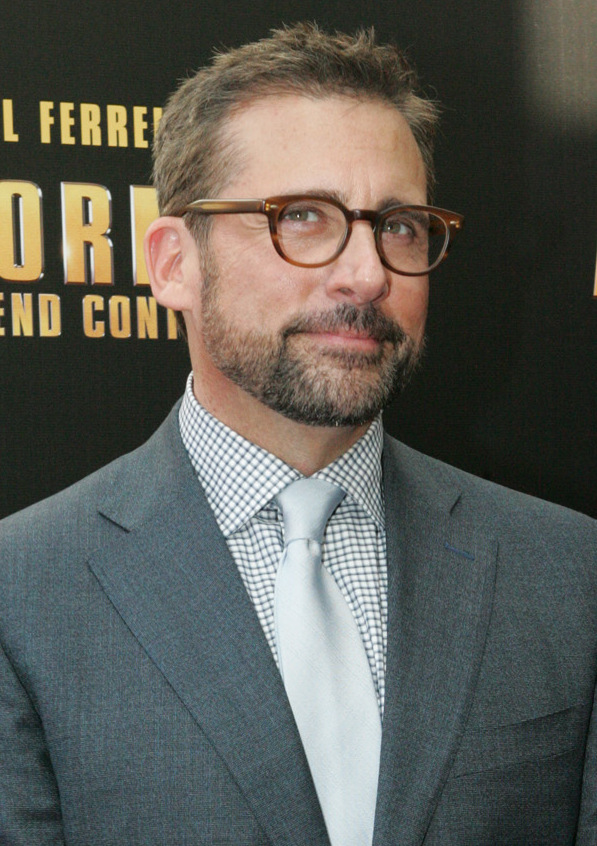
Steve Carell became inseparable from Michael Scott for millions of viewers of The Office, but the man behind Dunder Mifflin’s painfully eager regional manager has built a career with far more range than that one unforgettable role. Carell is known for understatement, generosity in an ensemble, and the unusual ability to make a character’s bad decision funny without pretending that it is wise. Those gifts make a fair look at his public faith background worthwhile too.
What has Steve Carell said about religion?
The clearest public information points to a Roman Catholic background. In interviews connected with Evan Almighty, Carell described himself as “Catholic, born and bred.” He explained that he did not take the role simply because of his religious background, but because he thought the story carried a good message. A later profile likewise reported that he was raised Catholic. Those are meaningful statements of identity, but Carell has generally kept the more personal details of his spiritual life private.
That restraint matters. It would be unfair to turn a denominational label, a movie role, or a warm public image into a detailed testimony that he has not offered. Public information supports saying that Carell has identified with Catholicism; it does not give outsiders enough grounds to declare with confidence where he stands before God. Christians should avoid pretending to know another person’s heart. Scripture says that the Lord sees the heart (1 Samuel 16:7).
From history student to comic actor
Carell grew up in Massachusetts, studied history at Denison University, and pursued comedy after college. His early work included Chicago’s Second City and television comedy, followed by years as a correspondent on The Daily Show. He broke through to a wider audience in films including Anchorman and The 40-Year-Old Virgin, while The Office gave him the long runway to make Michael Scott both exasperating and unexpectedly human.
Michael’s need to be admired is a large part of the character’s comedy. He reaches for affirmation in all the wrong ways: clumsy speeches, misplaced jokes, grand gestures, and decisions that put coworkers in impossible positions. Yet Carell rarely plays him as a simple villain. Beneath the self-importance is someone longing to belong and to be loved. That is not a defense of Michael’s failures; it is one reason the performance has endured. It recognizes a hunger that people really carry.
Carell’s career also shows a willingness to work beyond the obvious comic lane. He has voiced Gru in the Despicable Me films and has taken serious roles in projects such as Foxcatcher, The Big Short, and The Morning Show. Longstanding collaboration with his wife, Nancy Carell, and a reputation for being steady in an often volatile industry are part of the broader portrait found in interviews and profiles. Admiring discipline, creative work, family faithfulness, and kindness is appropriate. But even admirable qualities are not the same thing as reconciliation with God.
Is Steve Carell a Christian?
Based on his public comments, it is accurate to say that Steve Carell has described himself as Catholic and was raised Roman Catholic. It is not accurate to claim that he has publicly given a clear, personal testimony of repentance and saving faith in Jesus Christ. Only Carell and God know the full answer. The better response is neither gossip nor guesswork, but prayer: that he would know Christ personally and rest in the grace God gives sinners.
That distinction is important for every person, not only celebrities. Church background, morality, talent, charitable instincts, or religious vocabulary cannot save anyone. The Bible teaches that all have sinned and fall short of God’s glory (Romans 3:23). Sin is not merely someone else’s embarrassing behavior; it is our own rebellion against the holy God who made us. We do not repair that problem by trying harder, collecting good deeds, or building a better public image.
The good news of Jesus Christ
God’s answer is Jesus Christ. The eternal Son of God became man, lived without sin, willingly died on the cross for sinners, and rose bodily from the grave. At the cross, Jesus bore the judgment sin deserves so that all who turn from sin and trust Him may be forgiven, counted righteous before God, and receive eternal life. Salvation is a gift of grace, not wages earned by religion or performance (Ephesians 2:8–9).
Jesus calls people to repent and believe the gospel. To repent is not simply to feel embarrassed; it is to turn from self-rule toward God. To believe is to rely on Christ Himself—His finished work, not our own worthiness. The promise is wonderfully direct: “Everyone who calls on the name of the Lord will be saved” (Romans 10:13). Whether a person is famous or unknown, awkward or polished, the same Savior is enough.
Sources
- Beliefnet: Steve Carell’s religion
- The Guardian profile of Steve Carell
- The Believer: interview with Steve Carell
- Collider: Evan Almighty interview
Photo: Eva Rinaldi via Wikimedia Commons. CC BY-SA 2.0. Displayed at a reduced size.
