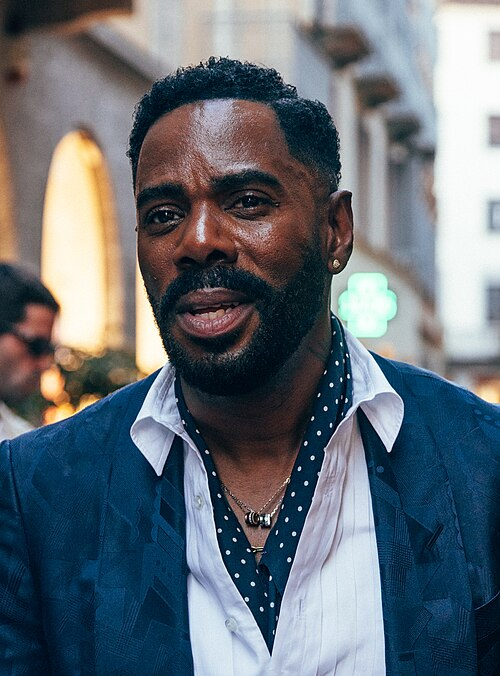
Colman Domingo has described himself as spiritual rather than religious. His interviews reveal an interest in faith, a family connection with church leaders, and experiences in more than one spiritual setting. His public outlook is broader than a single denominational label.
In a 2024 GQ interview, he said, “I’m a spiritual person, I’m not a religious person.” That is a helpful place to begin. It allows his own description to lead, instead of assigning him the religion of a character he plays.
What religious background has Colman Domingo described?
In a 2013 American Theatre interview, Domingo explained that his extended family included several ministers, including his grandfather and uncles. Yet he said he did not grow up in a churchgoing household. His mother encouraged her children to find their own form of spirituality.
That distinction matters. Having relatives who are ministers does not automatically mean a person shares their beliefs or practices. Domingo described a home that gave him room to explore. The family connection is part of the story, but it should not be used to replace his own account.
What has he said about his spiritual life as an adult?
The GQ interview connected his spiritual outlook with memories of his mother and her hopes for his future. He spoke about the meaning he found in seeing some of those hopes become reality. His comments describe gratitude and a sense of connection rather than a formal religious creed.
In a 2025 New Yorker interview, he recalled exploring Buddhist practices and attending Glide Memorial Church while living in San Francisco. These were experiences he named himself. They show an openness to different spiritual settings, although they do not establish that he accepts every teaching associated with them.
That is an important boundary. We should not turn his experiences into a claim that he thinks all religions are identical. Nor should we treat the words of a fictional role as his own testimony. The clearest answer is the one he gave: he has described himself as spiritual, without identifying with religion in the same way.
How do faith and human connection appear in his work?
Domingo works as an actor, writer, and theatre artist. In the American Theatre discussion of his play Wild with Happy, he spoke about faith and uncertainty as themes. His interest in these questions reaches beyond a single interview or screen role.
In a May 2026 ELLE interview, he described an interest in faith in one another. He also emphasized kindness and the importance of holding convictions with grace. Those are his stated values, and they offer readers a more useful picture than a guessed religious label.
That year, he appeared as Joe Jackson in Michael. The role is confirmed by the ELLE interview, and the film’s official STARZ listing includes him among its stars. Audiences may come to him through that performance, his television work, or his stage career. The questions about meaning belong to the person as well as to the stories.
How does the Bible compare with spiritual exploration?
Christians can appreciate an honest search for meaning and a desire to treat people kindly. Genesis 1:27 teaches that every human being bears God’s image. Jesus commands love for our neighbors, and James 1:19 urges careful listening. Respect is not something people have to earn by agreeing with us.
Scripture also asks us to test spiritual claims. First John 4:1 warns against accepting every spirit without examination. Different religious teachings make different claims about God, humanity, and salvation. Being meaningful to someone does not, by itself, make a belief true.
Christianity makes a particular claim about Jesus. In John 14:6, He presents Himself as the way to the Father. Christians therefore cannot honestly say that every path teaches the same thing. That conviction should be explained clearly and humbly. It is a statement about the gospel, not permission to mock people who are exploring or disagree.
Where does the gospel place our hope?
Trust and kindness between people are valuable, but the Bible says humanity needs more than encouragement. We are made for God, yet all of us have sinned against Him (Romans 3:23). Sin includes selfishness, falsehood, pride, and failures to love. It brings guilt before a holy and just God.
We cannot overcome that guilt through artistic expression, spiritual experience, or a more successful life. God acted in love by sending His Son, Jesus Christ. Jesus became human, lived without sin, and willingly died on the cross for sinners. He bore the judgment we deserve. He was buried and rose bodily from the dead.
First Corinthians 15:3–4 places those events at the center of the gospel. Ephesians 2:8–9 teaches that salvation is a gift of grace received through faith, not something earned through good works. God calls each of us to repent of sin and trust in Jesus as Savior and Lord.
Domingo’s interviews provide a thoughtful account of his spiritual interests. For readers asking their own questions, the Christian invitation is to examine Jesus’ words and His resurrection. Read the Gospel of John, bring your questions honestly, and consider the forgiveness and new life He offers.
Photo credit: Sofia Luna Cabras, Wikimedia Commons, CC0 1.0 public-domain dedication. Cropped portrait, resized.
