What Is Bobbi Althoff’s Religion? Is She a Christian?

AI-Generated portrait of Bobbi Althoff

Bobbi Althoff has spoken about a Christian upbringing, belief in God, and returning to church after her divorce. In a December 2024 conversation with Rainn Wilson, the podcast host described prayer as a source of peace when she feels anxious. More recently, she has said she is not Mormon. Her comments give us a more useful answer than guessing from her famously awkward interviews or the title of a television show.

Althoff is best known for her dry, deliberately uncomfortable interviews with celebrities including Drake and Mark Cuban. Behind that comic persona is a mother and creator who has also discussed faith and uncertainty in her own words.

From parenting videos to celebrity interviews

Before launching The Really Good Podcast, Althoff built an audience on TikTok with funny videos about pregnancy, parenting, and the unexpected details of motherhood. In 2022, one of her jokes about changes that can happen while breastfeeding reached a large audience. Her deadpan delivery helped turn an ordinary, sometimes embarrassing experience into something other parents could recognize.

Her podcast brought that same comic approach to conversations with entertainers and other public figures. In 2023, her interview with Drake attracted widespread attention. Entrepreneur Mark Cuban was another guest. Althoff often plays the part of an interviewer who appears unimpressed or asks an unexpected question; that on-camera character should not be confused with a complete picture of her private beliefs.

As Complex reported in 2023, her move into interviews followed her success with short-form comedy. Her work has since expanded beyond those early clips, but the contrast between a serious-looking host and a surprising question remains part of what made viewers notice her.

What has Bobbi Althoff said about God?

In her December 17, 2024 appearance on Rainn Wilson’s Soul Boom podcast, Althoff described growing up in a household that considered itself Christian. She remembered attending church and believing in God as a young person. She also spoke honestly about the complicated way she experienced religion in her family.

During that conversation, she said religion had become less central during her marriage. After her divorce, she began attending church again. She described praying when she felt anxious and said that believing in God helped her release some of the things she could not control. Her description of God emphasized someone greater than herself who could hear her thoughts and bring her comfort. A transcript of the conversation gives the surrounding context.

Those are meaningful public statements about belief and prayer. They do not provide a complete explanation of what Althoff believes about Jesus’ death, resurrection, or the basis of salvation. We can respect what she has chosen to share without filling in the parts she has not explained.

Is Bobbi Althoff Mormon?

In September 2026, Althoff addressed that question after her casting in The Secret Lives of Mormon Wives: Orange County. As E! News reported, she said in an Instagram Story that she was not Mormon, although a brother was and she had attended a Mormon church a couple of times while growing up.

That is her own clarification. A show’s title, a family member’s affiliation, or an occasional childhood visit does not establish a person’s religion. Her 2024 account points to a Christian upbringing and a renewed interest in church and prayer; her present beliefs deserve to be described with the same care she gives them herself.

Prayer, peace, and the God who hears

Althoff’s comments about anxiety raise a question many people understand. What do we do with fears we cannot control? The Bible invites us to bring our concerns to God. Philippians 4:6–7 encourages prayer with thanksgiving, while 1 Peter 5:7 tells readers to cast their cares on Him because He cares for them.

Prayer is not a performance that earns God’s approval, and faith is not a guarantee that every hard feeling will disappear. People experiencing anxiety may also need support from trusted people and qualified professionals. Scripture points us to a God who knows us and welcomes honest dependence, even in the middle of difficulty.

At the same time, the Bible’s answer to our deepest need goes further than a moment of calm. It asks what makes us right with a holy God. That question is for every reader and writer, not a verdict on Althoff’s heart.

Why all of us need a Savior

God’s law shows us that none of us has lived as we should. Have we lied to protect our reputation, taken something that was not ours, or wanted what belonged to someone else? Jesus also taught that sin reaches into the heart, not only into the actions other people can see (Matthew 5:21–28).

Romans 3:23 says that all have sinned and fall short of God’s glory. Because God is holy and just, our guilt is serious. A better public image, a religious routine, or a record of kind deeds cannot erase it. We all need mercy.

The good news of Jesus Christ

Jesus Christ, the Son of God, became human and lived without sin. He willingly died on the cross in our place, paying the full penalty for our sins. He was buried and rose bodily from the dead. His finished work is sufficient; the hope of the gospel rests on what He has done, not what we can accomplish for ourselves (1 Corinthians 15:3–4).

Forgiveness and eternal life are God’s free gift, received by grace through faith in Jesus Christ. Ephesians 2:8–9 says salvation is not earned by works. A changed life can follow as a response to grace, but it does not buy that gift. If you recognize your need for forgiveness, trust the crucified and risen Jesus Christ alone as your Savior.

Sources: Soul Boom, December 17, 2024; Soul Boom transcript; E! News, September 29, 2026; Complex, 2023 career profile; CafeMom, 2022.

Image: AI-generated editorial illustration of Bobbi Althoff. It is not a photograph.

What Is Kristofer Hivju’s Religion? Is He a Christian?

Kristofer Hivju smiling onstage at Tons of Rock in 2026

Kristofer Hivju brought warmth, humor, and formidable energy to Tormund Giantsbane in Game of Thrones. The character begins on the far side of a wall and eventually stands beside people who once viewed him as an enemy. That memorable journey leads some viewers to ask about the actor behind it: What is Kristofer Hivju’s religion, and is he a Christian?

Kristofer Hivju’s religion is not established by Tormund

The public material reviewed for this profile does not establish a clear religious affiliation or personal Christian profession from Hivju. His religion therefore remains unconfirmed here. That carefully limited answer should not become a claim that he rejects God. It simply acknowledges the limits of the evidence available for this article.

Norwegian identity is not a confession of faith. Neither interest in Scandinavian history nor a role involving an invented culture establishes that someone practices Norse religion. Tormund’s beliefs belong to a fictional story, while Hivju’s actual spiritual convictions require his own public testimony. Respecting that distinction allows an honest discussion without turning cultural associations into religious labels.

Preparing a character, rather than announcing a creed

In a 2019 GQ interview, Hivju described going into the woods to prepare physically for Tormund’s untamed energy. He also discussed the character’s developing friendship with Jon Snow and his affection for Brienne. These comments concern performance and storytelling; they are not a declaration of the actor’s own religious practices.

Preparing a role can require imagination, movement, observation, and repeated effort. Christians can appreciate that craft as one expression of the abilities God gives human beings. We do not have to confuse artistic preparation with spiritual revelation in order to recognize dedication. Nor should a convincing performance lead us to assume we have been allowed into every part of the performer’s private life.

What Tormund’s friendships suggest about outsiders

Tormund’s changing relationship with people south of the Wall offers a useful question for viewers: How readily do we reduce another person to the group we think they belong to? Fear can make a label feel more informative than an actual encounter. A story can challenge that habit while still leaving its audience responsible for testing the story’s moral conclusions.

The Bible grounds human dignity in something deeper than an unlikely alliance. People bear God’s image before they prove useful to our side. James 2 warns against favoritism, and Jesus’ teaching about loving our neighbors refuses a narrow definition based on convenience. The stranger is not merely an obstacle in the story we tell about ourselves. He or she is a person to whom we owe truthful, patient love.

Courage needs more than a loud voice

Tormund’s forceful personality can be entertaining, but Scripture does not measure courage by volume or physical size. Courage can mean protecting someone vulnerable, refusing dishonest pressure, or admitting a wrong when pride wants to hide it. A gentle answer can require more self-control than an impressive threat. Christian strength remains accountable to the character of Christ.

That also means enjoying a character does not require approving everything he says or does. The series contains graphic violence, sexual content, and cruelty that deserve discernment. A Christian viewer can recognize friendship and sacrifice while declining material that damages the conscience. Appreciation of Hivju’s performance and evaluation of the show’s content are related questions, but they are not identical judgments.

Grace brings outsiders near to God

The Gospel addresses a separation more serious than a fictional wall. God is our holy Creator, and our sin alienates us from him. His Ten Commandments expose our failures: dishonesty, coveting, theft, hatred, sexual wrongdoing, and giving created things the place that belongs to God. None of us has loved God and neighbor perfectly. We deserve judgment from the just Judge of all people.

We cannot overcome that guilt by becoming stronger, joining a better group, or performing enough generous deeds. God himself supplied the rescue. Jesus Christ, the eternal divine Son, became truly human and lived a sinless life. He willingly died on the cross as the substitute for sinners, was buried, and rose bodily from the dead. His victory rests on real events, not a hopeful legend about human potential.

Salvation is a gift of grace received through faith, not wages paid for our works. Ephesians 2:8–9 leaves no room for boasting. You can acknowledge your sin before God and trust Jesus’ finished work for forgiveness, relying on his death and resurrection rather than your own record. The welcome of God is secured by Christ, and the new obedience that follows is a response to his mercy.

Appreciation without assumptions

Kristofer Hivju’s reviewed public interviews help explain his approach to a memorable character, while leaving his religious affiliation unconfirmed. Readers can appreciate his craft and consider biblical questions about courage, prejudice, and belonging without claiming to know his heart. The Christian invitation is personal for each of us: consider who Jesus is and whether the hope we rely upon can actually reconcile us to God.


Source: Kristofer Hivju’s GQ interview, May 7, 2019.

Photo: Kristofer Hivju at Tons of Rock, 2026, by Birgit Fostervold, via Wikimedia Commons, CC BY-SA 4.0. Cropped and resized.

What Is Kat Stickler’s Religion? Is She a Christian?

AI-Generated portrait of Kat Stickler

Kat Stickler has made millions of people laugh with her TikTok videos, impressions of her mother, and honest stories about parenting and life after divorce. But what does she believe about God? The answer is less clear than her online presence might suggest. Some biography sites list her religion as Christianity, but the sources we reviewed do not include a clear statement from Stickler explaining her own beliefs about Jesus or identifying her present religious affiliation.

That does not mean she has no faith. It means we should be honest about what we can and cannot verify. A social media personality shares only a part of her life, and an unsourced label should not be treated as a personal testimony.

From hospital research to TikTok

Before her videos reached a large audience, Stickler worked as a research coordinator at a hospital. In a July 2023 interview with Latina to Latina, she described working on studies involving veterans dealing with post-combat trauma and people using an exoskeleton. She recalled the joy of seeing a person make progress and said she wanted to be part of something bigger than herself.

During the pandemic, Stickler began making videos with her then-husband, Mike, and their young daughter, MK. The couple’s lighthearted family videos found an audience, and Stickler continued creating on her own after they announced their separation in 2021. Her account grew to include comedy, parenting, and moments of vulnerability. Her official website describes her goal as encouraging people through both humor and honest storytelling.

In an interview originally published in February 2023, Stickler told Elite Daily that making people laugh brought her fulfillment during a painful season. Creating content, she said, helped her feel connected to a community when life felt lonely. Her public reflections offer a window into how she approached change; they do not, by themselves, tell us what she believes about salvation.

Is Kat Stickler a Christian?

We cannot answer that with confidence from the reliable public material we found. A biographical summary on Legit.ng lists Christianity as her religion, but it does not provide her own explanation as evidence for that label. That is a lead, not a substitute for a clear statement from her.

It is also important not to assign her beliefs based on a relative or former spouse. Religious upbringing, family connections, and the language people hear around them do not tell us what someone personally trusts. Only God knows a person’s heart, and Stickler deserves the same care and honesty we would want for ourselves.

When life does not go according to plan

Many people understand the pressure Stickler described in her Latina to Latina interview: wanting to meet expectations, wondering what others think, and trying to find a way forward when life changes. A large following may magnify those pressures, but the desire to be accepted is familiar to people who have never posted a video.

Scripture points us beyond the approval of a crowd. Psalm 139 describes a God who knows us fully. That can be comforting, but it also means we cannot hide our failures from Him. God sees more than our polished moments or our public mistakes; He knows our thoughts, motives, and actions.

Why all of us need grace

The Bible teaches that God is holy and just, and that all of us have sinned. Consider a few of His commands. Have we ever lied to protect our image? Taken something that was not ours, however small? Coveted what belonged to someone else? Jesus also taught that anger and lust reveal sin in the heart, not merely in outward behavior (Matthew 5:21–28).

These questions are not a way to single out Kat Stickler. They apply to the writer and every reader. Romans 3:23 says that all have sinned and fall short of God’s glory. We cannot erase our guilt by being funny, successful, generous, religious, or better than we used to be. A just God takes sin seriously, and we need more than a fresh start that depends on our own effort.

The good news of Jesus Christ

God did not leave us to rescue ourselves. Jesus Christ, the eternal Son of God, became human and lived a sinless life. He willingly died on the cross in our place, bearing the full penalty for our sins. He was buried and rose bodily from the dead, showing that His finished work is sufficient and that death does not have the final word (1 Corinthians 15:3–4).

Forgiveness and eternal life are God’s free gift, received by grace through faith in Jesus Christ. They are not wages earned by good works, religious rituals, or a promise to reform ourselves. Ephesians 2:8–9 says salvation is by grace through faith, not by works. Good works can follow as a response to God’s kindness, but they do not purchase His acceptance.

If you recognize your need for a Savior, the invitation is to trust Jesus Christ and what He has already done for you. His promise does not rest on a perfect public image, a successful career, or the approval of an audience. It rests on His finished work and the grace of God.

Sources: Kat Stickler, official website; Latina to Latina, July 24, 2023; Elite Daily, February 27, 2023; Legit.ng, biographical profile.

Featured image: AI-generated illustration of Kat Stickler, created with OpenAI. It is not a photograph.

What Is Jacob Anderson’s Religion? Is He a Christian?

Jacob Anderson speaking at San Diego Comic-Con in 2017

Jacob Anderson is familiar to Game of Thrones viewers as Grey Worm, the disciplined commander whose guarded exterior gradually gives way to affection, loyalty, and grief. Away from Westeros, Anderson also makes music as Raleigh Ritchie. His creative life naturally invites curiosity about the convictions behind the performances. What is Jacob Anderson’s religion, and has he publicly identified himself as a Christian?

What has Jacob Anderson said about religion?

The public interview material reviewed for this profile does not establish a clear religious affiliation or a personal profession of Christian faith. That leaves his religion unconfirmed here. It does not establish atheism, and it does not give readers permission to fill the gap with assumptions about his background. A person can discuss emotional experiences, morality, or meaningful art without announcing a religious identity.

Anderson’s acting roles require a similar distinction. Grey Worm inhabits an invented world with invented gods. His later work as Louis in Interview with the Vampire includes a character with religious struggles. Neither character supplies reliable evidence about the actor’s own beliefs. The responsible answer stays with Anderson’s actual public words rather than turning a script into testimony.

Raleigh Ritchie and the work of expressing difficult thoughts

In a 2017 conversation with Interview, Anderson discussed acting alongside his music career. He described songwriting as a way of expressing thoughts that keep returning, rather than simply pursuing pop celebrity. He also spoke about nerves before performing and the change once a show begins. Those observations illuminate his creative process; they do not amount to a statement of religion.

There is something recognizable about the desire to give an inward burden an outward form. Many people find that a song, a carefully chosen sentence, or an honest conversation helps name what previously felt tangled. Christians can appreciate that gift without pretending that every honest lyric is a prayer or that every performer shares a Christian understanding of hope.

Honesty is a beginning, and the Psalms show where it can lead

The Bible makes room for truthful expression. Its Psalms contain grief, questions, thanksgiving, and cries for help. Psalm 62:8 invites people to pour out their hearts before God. Biblical faith does not demand an attractive performance before someone can speak honestly. The God addressed in Scripture already knows what polished appearances can conceal.

Yet expression and reconciliation are different things. Naming a feeling can bring clarity without answering whether the belief beneath it is true. Christian prayer directs the heart toward the living God, whose character gives lament a listener and hope a foundation. That is a biblical observation prompted by the subject of creativity, not a description of Anderson’s private spiritual practices.

Grey Worm, loyalty, and the limits of a role

Grey Worm’s story raises difficult questions about belonging, obedience, and what grief can do to judgment. A viewer may admire courage while also examining the cause it serves. Scripture does not treat intense loyalty as automatically righteous. Loyalty needs truth, and strength needs a moral direction beyond the expectations of a powerful leader.

Christians are called to test their own allegiances too. Approval from a group cannot make cruelty good, and a painful loss cannot turn revenge into justice. Jesus commands love of neighbor and teaches his followers to resist returning evil for evil. These standards help readers assess a fictional story while remembering that its events are not the actor’s own moral biography.

The Christian answer reaches deeper than self-expression

The Gospel begins with God, the holy Creator who made us for himself. His Ten Commandments expose our failures to love him and our neighbors: lies, coveting, theft, sexual wrongdoing, hatred, and misplaced worship reveal more than occasional mistakes. All of us have sinned. We are accountable to a just Judge and deserve judgment. Artistic achievement, good intentions, or an emotionally honest account of our lives cannot erase that guilt.

God’s answer is Jesus Christ, his eternal divine Son who became truly human. Jesus lived without sin, willingly died on the cross as the substitute for sinners, was buried, and rose bodily from the dead. His resurrection declares a victory that our own resources could never produce. The cross is not advice to express ourselves better; it is God’s provision for our actual need of forgiveness.

Salvation is God’s gift of grace, received through faith in Christ rather than earned through works. Ephesians 2:8–9 rules out boasting in our achievements. You can acknowledge your sin before God and trust Jesus’ finished work, resting in his death and resurrection as the sufficient basis for forgiveness. A changed life follows his grace; it does not purchase it.

What can readers responsibly conclude?

Jacob Anderson’s reviewed public comments offer insight into his creative work, while leaving his personal religious affiliation unconfirmed. Christians can enjoy thoughtful performances, ask serious questions about the stories they watch, and speak about the Gospel without claiming knowledge of another person’s heart. The invitation of Jesus belongs to every reader, whatever their career or familiarity with a famous name.


Source: Jacob Anderson’s interview with Interview, July 20, 2017.

Photo: Jacob Anderson at San Diego Comic-Con, 2017, by Gage Skidmore, via Wikimedia Commons, CC BY-SA 3.0. Cropped and resized.

What Is Nathalie Emmanuel’s Religion? Is She a Christian?

Nathalie Emmanuel speaking at San Diego Comic-Con in 2017

Nathalie Emmanuel’s current religious affiliation is not clearly confirmed in the primary interview material reviewed for this profile. There is not enough verified evidence here to identify her as a practicing Christian or assign her another definite faith. Conflicting labels on celebrity biography sites should not replace a clear statement from the actress herself.

Emmanuel played Missandei in Game of Thrones. Missandei’s experiences and beliefs belong to a fictional character. A role, a name, or a public appearance cannot settle what the performer personally believes about God.

Nathalie Emmanuel on finding her voice

In a 2020 interview with Glamour UK, Emmanuel described beginning acting as a way to express herself. She also spoke about a tendency to observe rather than seek the center of attention. That account offers insight into her creative life, not a declaration of religious belief.

It challenges an easy assumption about actors: a person can appear confident on screen and still prefer a quieter place in ordinary conversation. A performance asks for a particular kind of expression. It does not mean an audience knows how the actor experiences every other part of life.

Words can serve people

Missandei’s work as a translator gives language an important place in the story. Words can create understanding across a boundary, but they can also be used to hide motives or wound someone. The question for readers reaches beyond a fictional court: what do our words accomplish?

The Bible connects truthful speech with love. Ephesians 4:15 calls believers to speak truth in love, and Colossians 4:6 encourages gracious speech. Neither principle asks people to be dishonest to avoid discomfort. Neither gives permission to be cruel simply because a statement contains a fact.

A quiet person can speak with courage, and a forceful person can learn restraint. These are biblical applications for the audience, not claims about Emmanuel’s private conduct. We can appreciate a theme in her work without assuming that she shares every Christian conclusion drawn from it.

Finding a voice does not make every word right

Being heard matters, especially when someone has been dismissed. Yet every voice, including our own, needs moral accountability. We may defend our right to speak while overlooking whether we have spoken truthfully or treated another person fairly.

God’s Ten Commandments reveal His holy law. They forbid false worship, lies, theft, adultery, coveting, and murder. Jesus also addresses hateful anger and lust in the heart (Matthew 5:21–28). God knows the motives beneath our words and the choices hidden from an audience.

Romans 3:23 says all have sinned and fall short of God’s glory. Our guilt deserves His just judgment. A good reputation, a strong cause, and a sincere effort to be kind cannot erase sin. This includes the writer and every reader. The Bible’s diagnosis is universal, so a discussion of a celebrity’s religion should begin with humility rather than superiority.

The Word who became human

The Gospel directs our hope toward Jesus Christ. John 1 identifies Him as the eternal Word who became flesh. He is God’s eternal Son, who became truly human while remaining truly God. Jesus lived a completely sinless life and perfectly obeyed the Father.

He willingly died on the cross as the substitute for sinners, bearing the judgment we deserve. Jesus was buried and rose bodily from the dead on the third day (1 Corinthians 15:3–4). His resurrection is central to Christian hope. It is not merely a way of saying that His words continue to inspire people.

Forgiveness and eternal life are offered by grace through faith in Christ, not earned through works (Ephesians 2:8–9). Religious practice, charitable action, confidence, and artistic talent cannot purchase salvation. Jesus has completed the saving work. Those who trust Him depend on His sacrifice and righteousness rather than their own ability to deserve acceptance.

The Christian message therefore offers more than the encouragement to speak with a stronger voice. It offers reconciliation with God through the Savior who has dealt with our guilt. Good works and gracious words follow as responses to grace, not as payments for forgiveness.

A personal question beyond public labels

Emmanuel’s interview provides a thoughtful view of expression and confidence. Her present faith remains unconfirmed in the sources reviewed here. We cannot judge her heart, and Missandei’s story should remain separate from the person who portrayed her.

For each reader, the response to Jesus is personal. Acknowledge your sin before God and trust Christ alone—His death for sinners and His bodily resurrection. Salvation rests on His finished work. The Gospel offers forgiveness and eternal life as gifts, without requiring you to find an impressive way to explain yourself or prove that you deserve mercy.

Sources and photo credit

Nathalie Emmanuel interview, Glamour UK, March 11, 2020. Scripture: Ephesians 4:15; Colossians 4:6; John 1:1–14; Matthew 5:21–28; Romans 3:23; 1 Corinthians 15:3–4; Ephesians 2:8–9.

Featured photo: Nathalie Emmanuel at San Diego Comic-Con, 2017, by Gage Skidmore / Wikimedia Commons, CC BY-SA 3.0. Cropped and resized.

What Is Theo Von’s Religion? Is He a Christian?

Theo Von speaking into a microphone in a black shirt in August 2016.

Theo Von talks openly about God, prayer, and his need for spiritual help. He has described Christianity as the faith he knows best, reflected on a story about Jesus, and said he wants a closer connection with God. His own conversations show that faith matters to him personally.

What Has Theo Von Said About Christianity?

In his March 26, 2024 conversation with Brittany Broski, Von said, “I use Christianity because that’s the thing I’m most familiar with.” He also spoke more broadly about finding faith and building a relationship with a higher power.

That wording gives readers a useful starting point. Christianity provides familiar language for his spiritual life. At the same time, the conversation does not lay out a denomination or a detailed statement of belief about Jesus. The clearest answer comes from describing what he actually says, instead of filling in the rest for him.

Why Does Prayer Matter to Him?

During his October 28, 2026 interview with Sophie Cunningham, Von described prayer as an important connection with God. He said that getting busy can leave him feeling disconnected. “I wish my connection was stronger right now,” he explained. He also described regular prayer as a way of keeping that relationship personal.

Many readers will recognize the tension between wanting to pray and letting a crowded schedule take over. A relationship needs attention. Honest prayer begins with bringing our actual concerns to God, rather than trying to sound impressive or pretending that everything is fine.

Why Did He Ask God for a New Story?

In “Something New,” released April 20, 2026, Von discussed wanting to change patterns in his life. He reflected on Jesus healing a man at Bethesda in John 5 and applied the question about wanting healing to his own desire for change. He said, “I’m asking God for a new story.”

His reflection raises a difficult question: do we want change, or only relief from the results of our choices? Familiar patterns can feel safe even when they hurt us. Admitting that struggle can be a meaningful beginning. It also reveals why lasting hope needs a foundation stronger than our confidence in ourselves.

What Does the Bible Say About Change?

In John 5:1–9, Jesus meets a man who has been unable to walk for many years. The man cannot produce his own healing. Jesus acts with authority and gives him what he could not provide for himself. The passage directs attention to Jesus and his power.

The Bible also describes a deeper need shared by every person: reconciliation with God. Second Corinthians 5:17–21 connects becoming new with being in Christ. This change involves forgiveness, a restored relationship with God, and a new direction for life.

Christian hope therefore reaches beyond writing a better personal story. It rests on what God has done through his Son. We can admit our failures because we are invited to seek mercy, not to hide until we have made ourselves worthy.

Is Spiritual Interest the Same as Christian Faith?

Questions about God can lead to valuable conversations. Reading Scripture and listening carefully can also challenge assumptions we have carried for years. But the Bible gives Christian faith a clear center: Jesus Christ.

Romans 10:9–13 speaks about confessing Jesus as Lord, believing that God raised him from the dead, and calling on him for salvation. Ephesians 2:8–10 teaches that salvation is God’s gift, received through faith. Good works follow; they do not purchase it.

These passages help answer the article’s question without turning a celebrity interview into a verdict on someone’s heart. Von’s public words show engagement with God and Christianity. Readers can consider those words while letting Scripture explain what following Jesus means.

What Hope Does the Gospel Offer?

The gospel begins with a problem deeper than disappointment or a difficult past. We have sinned against a holy God. Lies, selfishness, hatred, and other wrongs reveal a need that popularity, money, and good intentions cannot remove.

Jesus Christ, God’s Son, lived without sin and died for sinners. He rose from the dead, as 1 Corinthians 15:3–4 explains. His death and resurrection provide the basis for forgiveness and lasting hope.

Jesus calls people to repent and believe the gospel in Mark 1:15. Repentance means turning from sin toward God. Faith means trusting Jesus as Savior and Lord. We do not first earn the right to come to him by fixing every part of our lives.

Theo Von’s questions can prompt readers to examine their own beliefs. What are we trusting to make us right with God? The Christian answer is Jesus, whose grace gives guilty people a reason to come honestly and begin following him.

Sources

Photo: Lisa Gansky, via Wikimedia Commons, CC BY-SA 2.0. Photograph cropped for framing and compressed for the web.

What Is Joe Rogan’s Religion? Is He a Christian?

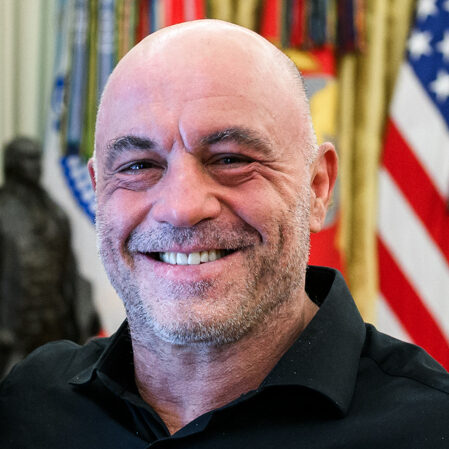
Joe Rogan smiling in a black collared shirt at the White House in April 2026.

Joe Rogan has said that he attends church and admires the teachings of Jesus. When asked directly in a March 2026 interview whether he was Christian, he answered, “Because I don’t know.” His public comments show an interest in Christianity alongside questions he is still working through.

Who Is Joe Rogan?

Rogan is a stand-up comedian, UFC commentator, and host of The Joe Rogan Experience. His official biography also lists his work on NewsRadio and Fear Factor. His long conversations with guests often give difficult ideas more room than a short television interview would.

That format makes discussions about faith interesting to follow. Listeners can hear a question develop, watch a guest challenge an assumption, and notice where the host remains unconvinced. It also means that a brief clip may leave out part of the conversation.

Has Joe Rogan Said He Is a Christian?

During his March 10, 2026 conversation with Michael Shellenberger, Rogan said he had been going to church for three or four years. He praised Jesus’s moral teaching, saying, “I can’t find a flaw in the way He tells you to live life.”

As The Christian Post reported, Shellenberger pressed him for a direct answer about being Christian. Rogan expressed uncertainty and also voiced doubts about biblical miracles. Church attendance and admiration for Jesus were clear parts of that exchange; a firm declaration of Christian belief was not.

A careful answer to the title question should reflect that distinction. We can report his words without turning them into a conversion announcement.

What Did He Discuss with Wesley Huff?

In episode 2252 with Christian apologist Wesley Huff, released in January 2025, the conversation explored the Bible and the claims of Christianity. Near the end, Huff asked Rogan what he thought about Jesus.

Rogan considered whether Jesus was the Son of God or an exceptional human teacher. He also spoke positively about Christians he knew and the effect of Christ’s teachings on their lives. The episode transcript, around 3:05:52–3:08:19, shows both his interest and his questions.

That exchange raised a question worth considering beyond any celebrity interview: who is Jesus? A person’s answer shapes what they understand Christianity to be.

Why Does Jesus’s Identity Matter?

Jesus’s teaching about love, forgiveness, and humility deserves serious attention. But the Bible also asks readers to consider his identity. In Matthew 16:13–16, Jesus asks his disciples who they say he is. Peter identifies him as the Christ, the Son of the living God.

That claim carries more weight than calling someone a helpful teacher. Christians trust Jesus as the Savior who has authority to forgive sin and give eternal life. His commands matter because of who he is.

The Resurrection is central to that faith. First Corinthians 15:3–4 and 14 connects the gospel to Christ’s death for sins, burial, and rising from the dead. Paul even says that Christian faith would be empty if Christ had not risen. The historical claim deserves examination, along with the moral teaching.

What Can Someone Do with Honest Questions?

The Bible records people struggling to believe. In John 20:24–31, Thomas refuses to accept the other disciples’ report that Jesus is alive. Jesus later confronts his doubt and calls him to believe. Thomas responds by acknowledging Jesus as his Lord and God.

Readers with questions can begin with the same subject: Jesus himself. Read one of the Gospels in full. Consider what Jesus said, what the writers claimed happened, and why the Resurrection mattered so much to them. Ask questions in a church where Scripture is explained carefully.

Christians can also respond to public questions with patience. Mockery is a poor way to help someone examine the gospel. Clear answers, honest listening, and a life shaped by love make a better starting point.

The Gospel Makes the Question Personal

The Christian message addresses our own need for forgiveness. We have sinned against a holy God. Our good deeds cannot erase that guilt, and religious interest cannot earn salvation. Jesus Christ, God’s Son, lived without sin, died for sinners, and rose again.

Ephesians 2:8–9 teaches that salvation is God’s gift, received by grace through faith. In Mark 1:15, Jesus calls people to repent and believe the gospel. Repentance means turning from sin toward God; faith means trusting Christ as Savior and Lord.

A celebrity’s spiritual questions may start a conversation. Each reader still has to consider Jesus personally. His invitation to receive forgiveness and follow him reaches every one of us.

Sources

Photo: Daniel Torok / The White House, via Wikimedia Commons. Public domain. Further cropped for framing.

What Is Rose Leslie’s Religion? Is She a Christian?

Rose Leslie at the Seattle Game of Thrones premiere in 2013

Rose Leslie’s current religious beliefs are not clearly confirmed in the primary interview material reviewed for this profile. There is not enough verified evidence here to call her a practicing Christian or assign her another definite religious affiliation. A church setting or family tradition cannot, by itself, establish a personal profession of faith.

Leslie played Ygritte in Game of Thrones. Ygritte’s beliefs and choices belong to a fictional world. The actress should not be described as though her character’s words settle what she believes about God or Jesus Christ.

Rose Leslie on community and ordinary life

In a 2022 interview with Harper’s Bazaar, Leslie discussed finding community through playgroups in church halls. The context was meeting other parents and sharing the challenges of family life. That account does not establish that she attended worship services or belonged to a particular church.

She also spoke about the value of supportive surroundings while balancing work and family. These are personal reflections worth taking seriously without expanding them into a religious testimony. A fair profile distinguishes what a person said from what an audience might be tempted to assume.

A place to admit that life is difficult

Community can matter because it allows people to stop pretending that everything comes naturally. A parent, worker, or friend may look capable while feeling stretched beyond what others see. An honest conversation can make the next day feel less lonely.

The Bible encourages bearing one another’s burdens (Galatians 6:2). That calls for practical care rather than a demand that people always present a cheerful image. Listening, offering help, and making room for truthful words can be expressions of love.

This is a Christian application for readers, not a claim that Leslie bases her outlook on that passage. It also does not mean that community solves every difficulty. It means we should treat another person’s need with patience instead of assuming that an outward appearance tells the whole story.

Belonging and believing are different questions

A church hall can host many activities, and people can benefit from them while holding different beliefs. Even a long connection with a congregation cannot substitute for personal trust in Christ. Christianity centers on the Savior, not on the social setting around religion.

God’s Ten Commandments reveal why we need Him. They express His holy law, forbidding false worship, lies, theft, adultery, coveting, and murder. Jesus also addresses hateful anger and lust within the heart (Matthew 5:21–28). We have not always loved God fully or loved other people faithfully.

Romans 3:23 says that all have sinned and fall short of God’s glory. We deserve His just judgment. A supportive community cannot erase that guilt, and neither can family devotion or a respected reputation. This is a shared human need, including the reader and writer, not an accusation aimed at an actress whose private faith we cannot know.

The Savior who welcomes the undeserving

The Gospel announces what God has done for sinners. Jesus Christ is His eternal Son. He became truly human while remaining truly God and lived a completely sinless life. His love and obedience were perfect in every thought, word, and action.

Jesus willingly died on the cross as the substitute for sinners, bearing the judgment we deserve. He was buried and rose bodily from the dead on the third day (1 Corinthians 15:3–4). His resurrection is central to Christian hope. It is not merely a comforting image of love continuing in human memories.

Forgiveness and eternal life are gifts of grace, received through faith in Christ, not earned by works (Ephesians 2:8–9). Religious attendance, care for family, professional success, and charitable service cannot purchase salvation. Jesus has completed the saving work. Those who trust Him rest on His sacrifice and righteousness rather than their own ability to become deserving.

That grace gives Christians a foundation for welcoming others honestly. A church should not become a stage where people compete to appear flawless. Believers can admit weakness and offer care because they themselves depend on mercy, not because they have achieved a superior moral position.

A personal hope beyond assumptions

Leslie’s comments invite appreciation for community and the value of honest support. They do not confirm her current religious affiliation. We cannot judge her heart, and Ygritte should remain distinct from the person who portrayed her.

For each reader, the response to Jesus is personal. Have you acknowledged your sin before God and trusted Christ alone? His death for sinners and His bodily resurrection provide the basis for forgiveness and eternal life. Come relying on His finished work. The Gospel offers reconciliation with God as a gift, deeper than the comfort of belonging to a familiar group and stronger than the need to look as though you have everything together.

Sources and photo credit

Helena Lee’s interview with Rose Leslie, Harper’s Bazaar Arabia, June 22, 2022. Scripture: Galatians 6:2; Matthew 5:21–28; Romans 3:23; 1 Corinthians 15:3–4; Ephesians 2:8–9.

Featured photo: Rose Leslie at the Seattle Game of Thrones premiere, 2013, by Suzi Pratt / Wikimedia Commons, CC BY-SA 2.0. Existing headshot crop.

What Is Kendrick Lamar’s Religion? Is He a Christian?

Kendrick Lamar’s music often deals with sin, temptation, family, pain, hope, God, and the pull of life in Compton. Biblical words and images appear throughout his work, and he has spoken publicly about God at different points in his career. So, is Kendrick Lamar a Christian?

This is a question where it is especially important to slow down. Art can explore faith, quote Scripture, or use religious imagery without functioning as a simple statement of doctrine. We should not treat a song lyric as a complete testimony, and we should not claim certainty about a person’s soul.

What has Kendrick Lamar said publicly about God and faith?

Lamar has spoken about growing up around church and has used Christian language in interviews and music. In a long Noisey interview, he discussed his background and the spiritual questions surrounding his life and art. He has also publicly described feeling used by God for a purpose. His albums frequently wrestle with confession, guilt, violence, mercy, and the need for change.

Those themes are real and worth taking seriously. Yet they do not make it wise to reduce Lamar’s work to a simple “Christian” or “not Christian” label. His writing is artistic, complex, and sometimes intentionally unresolved.

Is Kendrick Lamar a Christian?

Kendrick Lamar has publicly used Christian language and has talked about God, but the public record does not give a simple, clear statement that settles every question about his current beliefs. It is fair to say that Christianity and the Bible have strongly shaped parts of his language and art. It is not fair to claim we know more than he has made clear.

The Bible itself invites honest wrestling, but it also speaks plainly about the heart of the gospel. Sin is not only a problem outside of us; it is a problem in us. Jesus came to save sinners, not merely to inspire better stories. Through His death and resurrection, He offers forgiveness and a new heart to those who turn to Him.

That distinction matters. Religious symbols can be powerful, but they cannot save. Honest self-examination can be helpful, but it cannot remove guilt. Jesus Christ alone is the Savior. Christians can listen thoughtfully to art while keeping the gospel itself at the center.

What should we take away?

Kendrick Lamar’s public work shows a serious interest in spiritual questions and frequent use of biblical themes. We should not mock that or flatten it into a label. We can pray that the truth of Jesus would be clear in his life and that listeners who hear spiritual questions in his music would seek answers in God’s Word.

For every listener, the deepest question is not whether an artist’s symbolism is religious. It is whether we have come to Christ ourselves. He meets people with real mercy and real hope.

Sources

Image credit: Kendrick Lamar in 2013, photo by Merlijn Hoek, CC BY 3.0, via Wikimedia Commons.

What Is Sebastian Stan’s Religion? Is He a Christian?

Portrait of Sebastian Stan in New York City in 2024

Sebastian Stan has Romanian Orthodox roots and continuing religious ties. A 2025 Vanity Fair profile described him as not especially religious.

What Sebastian Stan has shared about faith

He lit a candle for his late father at an Orthodox church. He recalled childhood churchgoing under Romania’s Communist government and described crossing himself before flights.

They leave room for questions about his beliefs today. A public visit to a chapel is a meaningful event, but it is not a full explanation of someone’s theology. The available account does not settle what he believes about every Christian teaching or how he would describe his current church membership.

The evidence supports a connection with Orthodox Christianity, while leaving his current level of religious commitment unclear. We should let those limits stand.

Why audiences know Sebastian Stan

Many viewers first came to know Stan as Bucky Barnes in Marvel’s Captain America films. The role grew into the Winter Soldier and became part of a much larger story. In Thunderbolts*, Bucky joins a team of troubled people facing difficult choices about their past and future.

Stan has also taken on very different roles outside that series. A Different Man explores appearance and identity, while The Apprentice required him to portray a young Donald Trump. These projects show how far his work stretches beyond one familiar screen character.

An actor’s work can lead audiences to ask serious questions. What makes a person who they are? Can someone change after doing wrong? What does forgiveness involve? Those are useful subjects to discuss. But a script is evidence about a story, not direct evidence about the actor’s religion.

Heritage, habits, and personal conviction

Many readers will recognize the difference between growing up around religion and explaining their own beliefs as adults. A family custom can carry memories of home, loved ones, safety, or loss. People may keep a practice while their understanding of it changes.

This does not make those practices empty. It means that good research should ask what the person actually says about them. There is a difference between reporting a public act and claiming to know all the reasons behind it. It is also possible to respect someone’s privacy while honestly describing what is known.

Orthodox Christianity itself should not be confused with a vague spiritual interest. It has historic teachings about the Trinity, Jesus Christ, his death and resurrection, and the life of the church. Describing Stan’s background does not establish how fully he personally affirms each of those teachings.

What the Bible says about prayer and trust

The Bible gives people a reason to pray when life feels beyond their control. Psalm 62:8 calls God’s people to pour out their hearts before him. Prayer can include grief, fear, thanks, and questions. It does not require impressive language.

Jesus also taught that prayer is more than repeating words or performing an outward act. In Matthew 6:7–8, he warns against thinking that many words will make God listen. The point is not that a familiar prayer or gesture is always wrong. The point is that God is a Father to be trusted, not a power to be managed through a formula.

That distinction matters for any reader who treats a religious habit as a guarantee of safety. Scripture does not promise that a gesture will prevent every accident or painful event. It invites us to know God and trust his character even when life is uncertain.

Grief also has a place in Christian faith. Jesus wept at Lazarus’s tomb in John 11. The same chapter points beyond sorrow to his authority over death. Christian hope can face loss honestly because it rests on a Savior who rose from the grave.

The gospel is more than a family tradition

A Christian upbringing can introduce someone to important truths. Still, each of us needs reconciliation with God. Scripture says we have all sinned (Romans 3:23). Sin includes our actions and the pride, selfishness, and unbelief of our hearts. A holy God judges sin justly. Neither a religious family nor public success can erase our guilt.

The good news is that God came to rescue sinners through Jesus Christ, his eternal Son. Jesus lived the sinless life we have failed to live. He died on the cross in the place of sinners, was buried, and rose bodily from the dead. His victory is the foundation of the Christian message.

God calls us to turn from sin and place our trust in Jesus as Lord and Savior. Salvation is a gift of grace received through faith, not a reward for collecting enough good deeds or religious experiences (Ephesians 2:8–9).

For the reader, the question goes deeper than a celebrity’s background. Who is Jesus, and will you trust him? Reading the Gospel of John is a good place to examine his claims. The Christian invitation is to receive forgiveness and new life in Christ, with a hope that reaches beyond our habits, fears, and family history.

Sources

Photo: Jay Dixit, Wikimedia Commons, CC BY-SA 4.0. Cropped by Filmgoer; displayed at reduced size.