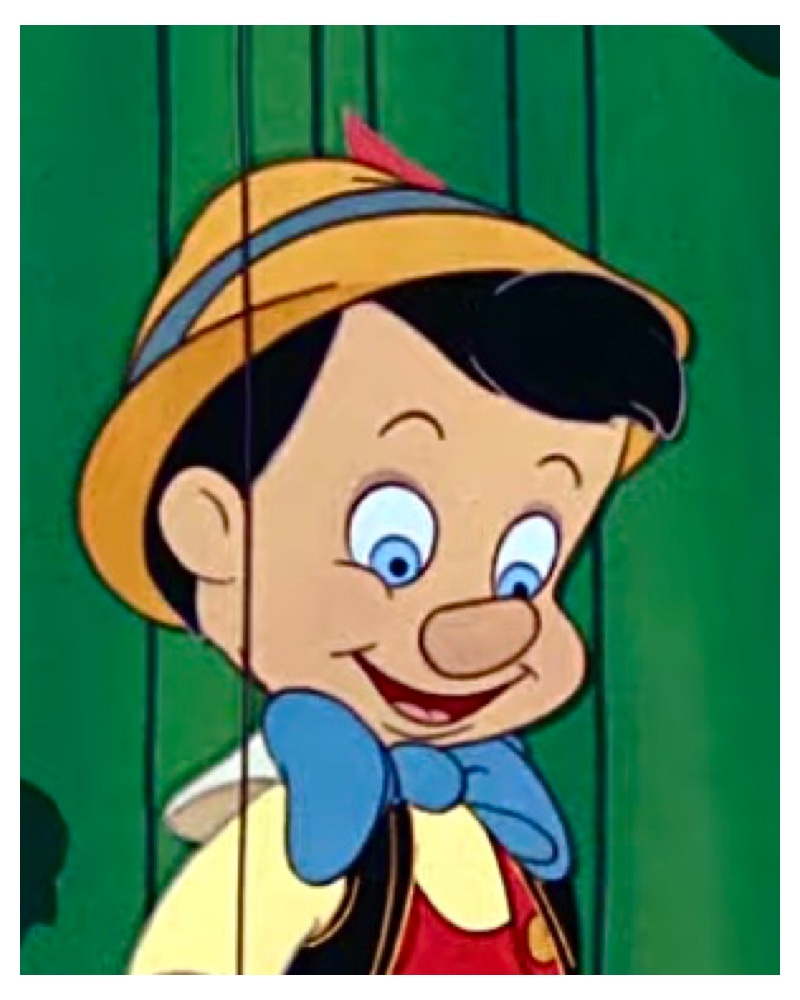
Imagine telling a convenient lie at work and watching your nose move closer to the monitor. Imagine explaining a missing purchase to your spouse while your face slowly makes the explanation less believable. Pinocchio’s famous problem would make everyday dishonesty remarkably difficult to manage.
That is why the wooden boy remains such an effective character. He turns an inward problem into something everyone can see. The lie is already damaging the relationship before the nose grows. The magic simply makes the damage impossible to ignore.
Fictional character study: This article follows Disney’s 1940 animated Pinocchio, with its Jiminy Cricket, Blue Fairy, and Pleasure Island. Carlo Collodi’s original book and later adaptations differ, so scenes from those versions are not being treated as interchangeable.
“Am I a real boy?” — Pinocchio, Pinocchio (1940)
The question he asks the Blue Fairy names the longing behind the adventure. The film gives that longing a moral shape: what kind of person will he become?
The nose is a symptom
Disney’s official film description frames Pinocchio’s journey around becoming brave, loyal, and honest. That last quality is the one most people picture first. In the encounter with the Blue Fairy, his efforts to explain himself only make his dishonest position more visible.
The cleverness of the scene is that Pinocchio wants to escape the consequences of an earlier choice. A new lie looks useful for a moment. Then protecting it requires more invention. He is trying to solve a problem with the very thing making it grow.
We do the same without the special effects. A missed deadline becomes a story about someone else’s mistake. A hidden expense becomes an argument about why the question was unfair. Soon the original problem has a second problem standing guard over it.
Why we find a lie so attractive
People often lie because the truth threatens something they want: approval, comfort, advantage, or a clean reputation. That does not make dishonesty right. It helps us understand why merely promising to use accurate words may not reach the whole problem.
If I must appear flawless, confession will always feel dangerous. If winning matters more than loving my neighbor, a misleading statement will start looking practical. The mouth often protects the thing the heart has already decided it cannot lose.
Proverbs 28:13 contrasts concealing sin with confessing and forsaking it. Both parts matter. Honest confession is more than carefully admitting the smallest fact the evidence can prove. It means bringing the wrong into the light and turning away from it.
Pleasure Island sells the beginning of the story
In the 1940 film, Pleasure Island offers Pinocchio a world where restraints seem to disappear. The destructive freedom he finds there eventually reveals a frightening cost. The attractions come first. The consequences arrive later.
That sequence is one reason the episode remains memorable. Temptation rarely introduces itself by describing the wreckage. It shows the exciting evening, the flattering message, the easy shortcut, or the chance to belong. It leaves tomorrow outside the advertisement.
James 1:13–15 describes desire drawing a person toward sin and sin bringing death. The Bible does not require us to believe that every pleasurable thing is suspect. It asks us to follow a desire far enough to see where it is leading.
Follow the invitation: What does this choice promise tonight, and what might it require you to carry tomorrow?
A worthwhile reading also notices exploitation. Pinocchio is vulnerable, and others profit from leading him astray. Calling a choice sinful should never become an excuse to ignore the people who manipulate the inexperienced. Scripture condemns deception by the tempter as well as wrongdoing by the tempted.
A conscience needs more than a memorable tune
Jiminy Cricket makes conscience into a companion who can speak, protest, and try to catch up. It is an ingenious storytelling device. The boy can walk away from the advice, and the audience can watch him do it.
Our conscience is valuable, but it is not infallible. We can feel guilty about something harmless or grow comfortable with something destructive. Repetition can make a wrong choice feel normal. The absence of discomfort does not settle whether an action is good.
Christians therefore need more than a vague sense of what feels right. Psalm 119:9–11 points to God’s word as a guide. We test our instincts against Scripture, welcome honest correction, and ask God to expose the excuses we have grown fond of hearing.
What honesty might look like this week
- Correct a misleading impression you benefited from creating.
- Admit a wrong without adding a sentence that blames the listener.
- Ask for help before the situation requires another cover story.
- Leave a tempting situation while you still have a clear opportunity to leave.
These choices may cost us embarrassment, money, or a little status. They can also begin repairing trust. Forgiveness and restored confidence are related, but they are not identical. A person may forgive you while reasonably needing time and evidence before trusting you again.
Becoming good enough is not the gospel
Pinocchio’s wish to become a real boy gives the film its emotional shape. Christianity makes a different claim about our relationship with God. We are already human beings made in his image, yet we have sinned against him. Better behavior cannot undo that guilt or purchase a new standing before him.
Jesus Christ lived truthfully and without sin, died for sinners, and rose again. God offers forgiveness through him by grace, received through faith (Titus 3:4–7). Repentance includes putting down our explanations long enough to admit the truth: we need mercy.
Pinocchio’s nose gives away the lie. The gospel gives us a reason to stop hiding even when our faces reveal nothing. The Savior already knows the truth about us, and he calls us to come into the light.
Sources and image credit
- Disney Movies: Pinocchio, the 1940 animated film
- Disney: Spotlight on Pinocchio
- Primary work: Pinocchio, Walt Disney Productions, 1940; version reference
Character dialogue is quoted briefly for commentary; other descriptions are paraphrased. Bible links identify the passages used in the interpretation.
Image credit: Walt Disney Productions, trailer frame from Pinocchio (1940), via Wikimedia Commons. The source identifies this trailer frame as public domain in the United States. Cropped and resized to a headshot.
