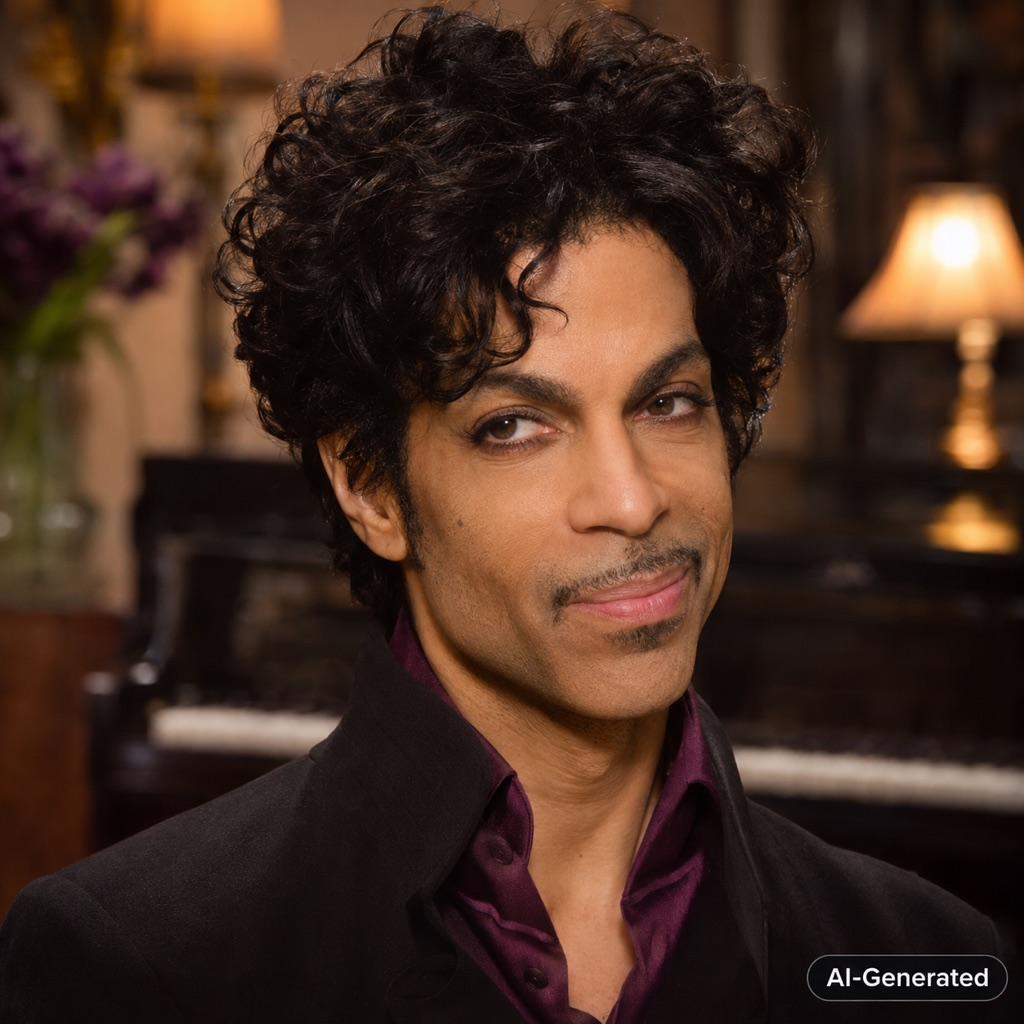
Prince became a Jehovah’s Witness in 2001 and discussed that faith openly in later interviews. Earlier Christian influences were part of his background, but his adult affiliation was more specific. Jehovah’s Witnesses identify themselves as Christians, while holding teachings about Jesus that differ from historic Trinitarian Christianity.
The musician behind a singular public image
Prince Rogers Nelson was a singer, songwriter, instrumentalist and performer whose work moved between funk, rock, R&B and pop. His musical independence was as recognizable as his stage presence. Songs, arrangements and performances could draw on several traditions while remaining unmistakably his own.
The Television Academy’s biographical record identifies Purple Rain as a defining part of his career and records his death on April 21, 2016, at fifty-seven. His work continues to invite discussion about creativity, identity and belief. Yet religious references in a catalog do not supply the whole answer to what an artist personally believed.
What Prince said about becoming a Witness
In Claire Hoffman’s 2008 New Yorker interview, Prince discussed the influence of musician Larry Graham and described a long period of conversation before his change of faith. He preferred to think of it as a realization. The profile also documented his attendance at a Kingdom Hall and his participation in door-to-door evangelism.
That evidence is more concrete than a rumor attached to a dramatic performance. It includes his own explanation and identifiable practices associated with Jehovah’s Witnesses. The timing also matters: an earlier song cannot be used to cancel out a later statement of affiliation simply because the older work remains more familiar to listeners.
Journalist Mark Brown offered another firsthand account in TIME, recalling a conversation about God during an interview. Brown said Prince gave him a Watchtower publication and offered to continue the religious conversation later. That recollection supports the picture of someone willing to discuss and promote his faith, rather than keeping it as a distant family tradition.
Why the word Christian needs explanation here
The question “Was Prince a Christian?” can become confusing if it asks one word to do too much. The answer about his public religious affiliation is straightforward: he was a Jehovah’s Witness. The answer about how that relates to the Christian faith needs an explanation of beliefs, rather than an argument over a label alone.
On their official explanation of whether they are Christians, Jehovah’s Witnesses describe themselves as followers of Jesus. They also state that they do not accept the Trinity. Their explanation of belief in Jesus says that they do not regard Him as Almighty God.
Historic Trinitarian Christianity confesses the deity of Jesus Christ, not merely His importance as a teacher or an example. John 1:1 and John 20:28 are among the passages Christians point to when explaining that conviction. A careful profile should acknowledge the difference rather than treating every use of Christian vocabulary as an identical confession.
Fame cannot answer the deepest question
Prince’s extraordinary ability can make listeners feel that his work points beyond ordinary life. Art can certainly prompt reflection, longing and gratitude. But musical brilliance does not make an artist a final authority about God. A moving performance and a true theological claim are different things, and both deserve to be considered honestly.
That principle protects readers from two mistakes: making talent a reason to accept every belief, or treating disagreement as permission to reduce a whole person to a dispute. We can appreciate the music, report his public religion accurately and examine its teachings without claiming to know the judgment that belongs to God alone.
The gospel directs attention to Jesus
The Bible teaches that all people have sinned and need reconciliation with God (Romans 3:23). Jesus Christ, the eternal Son, lived without sin, died for sinners and rose bodily from the dead (1 Corinthians 15:3–4). Forgiveness comes by God’s grace through faith in Christ, rather than being earned through artistic achievement, religious activity or personal discipline (Ephesians 2:8–9).
Repentance means turning from sin toward the Savior, and obedience grows from His mercy. Prince’s interviews establish his public affiliation with Jehovah’s Witnesses. For readers, the enduring question is what Scripture teaches about Jesus and whether their own hope rests in Him.
Sources
- The New Yorker: Prince’s 2008 discussion of his faith
- TIME: A journalist’s firsthand religious conversation with Prince
- Jehovah’s Witnesses: Official explanation of Christian identification
- Jehovah’s Witnesses: Official explanation of belief in Jesus
- Television Academy: Prince biography and death date
Image disclosure: AI-generated editorial portrait representing Prince, created for Famous Faith; not a photograph. The setting is illustrative and does not document an actual event. No endorsement implied.