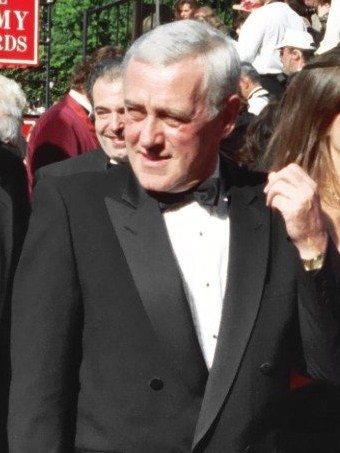
John Mahoney spoke directly about Christianity, prayer, and his Roman Catholic faith. The actor remembered for playing Martin Crane on Frasier described spiritual life as central to the way he wanted to treat people. Unlike a religious label guessed from his background, those are beliefs and practices he chose to explain in his own words.
What did John Mahoney say he believed?
In an interview by Cathleen Falsani, reprinted by The Porch in 2018, Mahoney said that Christianity was probably the most important part of his life. He described regular prayer, a desire to treat people with dignity, and a significant experience at Mass in a Chicago Catholic church. He understood that experience as a turning point toward a less self-centered life.
Mahoney also spoke about asking the Holy Spirit for wisdom and offering his performances to God. In the same conversation, he argued that kindness could sometimes justify telling a lie to avoid hurting someone. These statements show both the importance of his faith and particular ideas that can be examined against Scripture.
Reporting his profession without claiming to know his heart
The accurate description is that Mahoney said Christianity was important to him and discussed his Catholic practice. We can report his own words without assuming a Catholic label tells us what he personally trusted for salvation. That deserves to be reported plainly. It does not require a writer to declare with certainty what his final standing before God was. God knows a person completely; a profile is limited to the public record.
Christian readers may also use the word Christian in different ways. It can describe a person’s stated affiliation or, more specifically, someone who is born again through faith in Christ. Keeping those meanings distinct lets us report Mahoney’s own identification while explaining the biblical basis of salvation clearly.
Prayer, wisdom, and love
There is much in the desire to become less self-centered that Christians can recognize. Philippians 2:3–4 calls believers to consider others. James 1:5 invites those who lack wisdom to ask God. First Thessalonians 5:17 encourages an ongoing life of prayer. Faith should affect ordinary interactions, not remain a Sunday label.
At the same time, the Bible directs prayer and confidence toward God rather than treating spiritual habits as a way of earning acceptance. First Timothy 2:5 identifies Jesus Christ as the mediator between God and humanity. The Christian hope is grounded in His person and work, not the number of prayers we say or the strength of an emotional experience.
Does kindness require setting truth aside?
Mahoney’s comments about lying raise a real moral question. The Bible values both love and truth. Proverbs 12:22 condemns lying, and Ephesians 4:15 joins truth with love. A Christian should not use blunt honesty as an excuse for cruelty, but neither should kindness become a general permission to deceive.
Often there is a wiser response than either a hurtful comment or a false statement. We can listen, speak gently, choose the right time, or admit that a needless opinion does not have to be offered. Examining an idea this way does not require dismissing Mahoney’s evident concern about how people treat one another.
His public story can also challenge readers who assume that being religious automatically settles eternity. A sincere desire to improve matters, but the gospel begins with our need for grace. The question each of us must answer is whether our hope rests in becoming good enough or in the Savior who died and rose for sinners.
A personal question for the reader
There is nothing wrong with being interested in John Mahoney’s faith. Learning what another person actually believes can lead to thoughtful, respectful conversations. But our first concern should be our own standing before God and where we will spend eternity. A celebrity’s confidence, uncertainty, religious background, or kindness cannot answer that question for us.
The gospel: forgiveness through Jesus Christ
The Bible says God created us and is perfectly holy. All of us have sinned against Him in our thoughts, words, and actions (Romans 3:23). We cannot erase that guilt by being more successful, joining a religious group, or doing enough good things. Sin deserves judgment, and its wages are death (Romans 6:23).
God loved sinners enough to send His Son. Jesus Christ, fully God and fully man, lived a sinless life, died on the cross for our sins, and rose bodily from the dead. His death and resurrection are the heart of the gospel (1 Corinthians 15:3–4). He alone can reconcile us to God.
Salvation is a gift of grace received through faith, not a reward for our works (Ephesians 2:8–9). Jesus calls us to repent and believe: to change our minds toward God and trust Jesus Christ as Savior (Mark 1:15). You can speak honestly to God today, confess your sin, and ask for His mercy through Christ. A prayer is not a magic formula; the hope is Jesus Himself. Read the Gospel of John and find a church that faithfully teaches Scripture as you consider and respond to His invitation.
Image: photo by Alan Light, Wikimedia Commons. CC BY 2.0. Cropped and/or resized for display.
