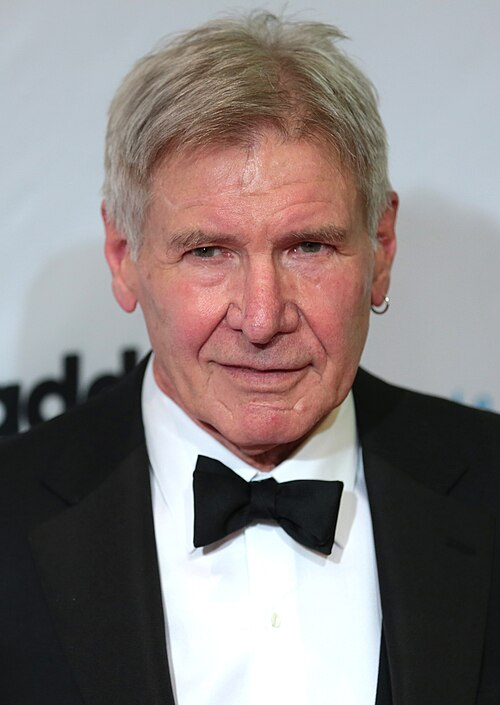
Harrison Ford has spoken openly about God, but his public explanation does not amount to a statement of Christian faith. In a March 2026 interview with NPR’s Fresh Air, he described a view of God centered on life and nature. That distinction matters. A person’s family background, kindness, or work on screen does not tell us whether that person trusts Jesus Christ.
This article looks at Ford’s own words, gives some background on his career, and compares the ideas he described with the Bible. It is not a claim to know his heart or every belief he holds today.
From Han Solo to a lasting film career
Ford became widely known as Han Solo in Star Wars in 1977. He returned to the role in The Empire Strikes Back and Return of the Jedi. His work gave the space adventure a memorable mix of humor, confidence, and human weakness. Han’s appeal came partly from the way Ford made a larger-than-life story feel grounded.
His career also includes the Jack Ryan films Patriot Games and Clear and Present Danger, along with Air Force One. More recently, he worked with Helen Mirren in 1923. These roles span different kinds of stories, from adventure and political suspense to family drama. They help explain his wide audience, but they cannot serve as evidence of his personal religion. Playing a brave or selfless man does not establish what an actor believes about God.
What has Harrison Ford said about religion?
Speaking to Terry Gross in 2026, Ford said he had not had a history of religious affiliation. His mother was Jewish and his father was Catholic. He described finding meaning in a thought from theologian Paul Tillich: consider what gives life its deepest meaning when the word God is difficult to use. For Ford, life’s complexity, nature, and the way living things connect seemed like “the same thing as God.”
That is a personal spiritual explanation, not a profession of faith in Jesus as Savior. The interview supports describing the outlook he expressed at that time. It does not justify assigning him a church membership, calling him a practicing Christian, or deciding that his views can never change. His parents’ religions are part of his upbringing, not proof of his own convictions.
Nature can inspire wonder without being God
The Bible gives readers strong reasons to appreciate the natural world. Genesis 1 describes creation as God’s work and calls it good. Psalm 19:1 says the heavens declare God’s glory. Mountains, trees, animals, and the rich variety of life can move us to awe and gratitude. Christians do not need to dismiss that wonder or treat care for the earth as unimportant.
Yet Scripture makes a clear distinction between the Creator and what he created. God brings the world into being; he is not simply another name for the world. Romans 1:25 warns against worshiping created things instead of the Creator. In the Bible, God is personal. He speaks, loves, judges rightly, and calls people into a relationship with him.
This is where Ford’s description and the biblical account differ. Seeing beauty and connection in nature can raise meaningful questions. It does not, by itself, tell us who God is or how sinful people can be forgiven. Christians look to God’s revelation in Scripture and most clearly to Jesus Christ. Appreciation for creation can become an invitation to seek its Maker.
Why the question of Jesus matters
Christianity is more than a feeling of peace, a respect for life, or a belief that the universe has meaning. Those experiences may be important, but the Christian message makes specific claims about Jesus. John 1 teaches that the Son existed before creation, that all things were made through him, and that he became flesh. God’s answer to our deepest need is not merely an idea we discover inside ourselves.
The Bible also says that our problem is moral, not just a lack of spiritual awareness. Romans 3:23 teaches that all have sinned. We have failed to love God and our neighbors as we should. That includes famous people and unknown people, religious people and people with no religious label. This shared need leaves no room for treating a celebrity as beneath us.
The gospel is good news for the reader
Jesus Christ, the Son of God, lived without sin. He willingly died on the cross for sinners and rose bodily from the dead. First Corinthians 15:3–4 puts his death and resurrection at the center of the gospel. He did what we cannot do for ourselves: he dealt with our guilt and opened the way to peace with God.
Salvation is a gift of God’s grace, received through faith in Christ. Ephesians 2:8–9 says it is not earned by works. A successful career, a generous donation, love for nature, or a church background cannot buy forgiveness. Good works have a place in a life changed by grace, but they are not the price of that grace.
The invitation is to repent and trust Jesus. Repentance means turning from sin toward God, not claiming that you have already become perfect. Faith means relying on Christ and what he has done, rather than on your own goodness. You can speak honestly to God, ask for his mercy, and begin reading a Gospel such as John to learn who Jesus is.
Ford’s comments offer a useful starting point for discussing meaning and the beauty of life. The Bible takes the conversation further: beyond creation to its Creator, beyond spiritual interest to Christ, and beyond admiration to a relationship with God through the risen Savior.
Sources
- NPR Fresh Air: Harrison Ford interview, March 11, 2026 (VPM)
- Golden Globes: Harrison Ford career profile
Photo: Gage Skidmore / Wikimedia Commons, CC BY-SA 3.0. Resized and displayed with a square crop.
