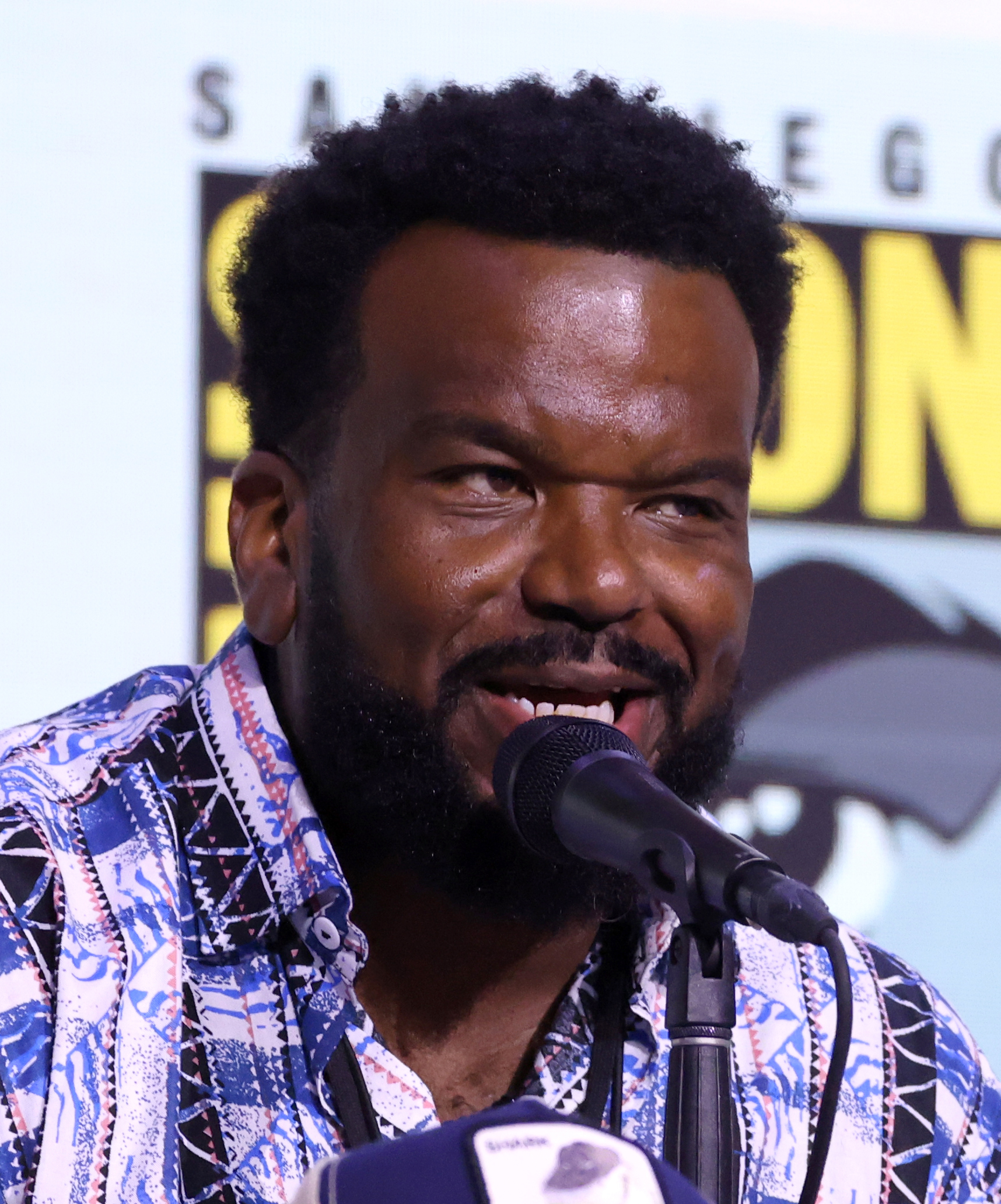
Is Craig Robinson a Christian?
Craig Robinson has publicly described gospel music as a significant part of his family’s musical life. That is a documented connection with Christian culture, but it is not the same as a current profession of Christian faith. In the reliable interviews and professional sources reviewed for this article, a clear statement establishing his present religious identity or beliefs about salvation was not verified. It would therefore be inaccurate to confidently label him a Christian—or an atheist—on that evidence alone.
Fans know Robinson as Darryl Philbin on The Office, but fictional roles cannot settle questions about the actor’s faith. Even a performer playing a version of himself in a comedy is still participating in a scripted story. This profile focuses on his own public account of music and his documented professional background, followed by a clearly identified Christian reflection and gospel explanation for the reader.
Gospel music in a musical household
Speaking with Jesse Thorn on Bullseye, Robinson recalled singing frequently with his family, including a substantial amount of gospel music. He described harmonizing in everyday settings and growing up surrounded by instruments. His mother was a music teacher, and his brother is a musician who has also worked with him. Robinson remembered his father playing a hymn at church.
In that conversation, Robinson also credited Bernie Mac’s encouragement during his early comedy career and discussed the joy of performing with the professional musicians in his band. These recollections help explain how musical training and comedy came together in his work. They do not supply a full statement of religious doctrine.
A hymn can carry memories of family, community, and worship. Those connections are meaningful, but a researcher must not turn remembered songs into an invented testimony. Knowing the vocabulary and sound of Christian worship does not by itself tell us how someone understands Jesus Christ today. The evidence allows appreciation of Robinson’s musical roots while leaving unverified religious questions open.
From Chicago classrooms to comedy
Robinson’s official biography describes a career in the Chicago Public School System before he pursued comedy full time. He taught kindergarten through eighth grade, earned his undergraduate degree at Illinois State University, and completed a master’s degree in education at St. Xavier University. Those details are a reminder that a familiar entertainment career may follow another substantial vocation.
His official biography also records film work including Knocked Up, Pineapple Express, and Hot Tub Time Machine, alongside television appearances and voice acting. The breadth of those credits demonstrates that Darryl is one important part of a wider career rather than its entire description. A university’s religious affiliation or a film’s subject matter should not be used as a shortcut to labeling his own beliefs.
The Los Angeles Philharmonic’s artist profile describes Robinson’s combination of stand-up comedy, solo performance, and full-band shows with the Nasty Delicious. It also connects his early interest in acting and comedy with Second City in Chicago. Music is a genuine part of his professional identity, not merely a prop beside the jokes.
Robinson’s work on The Office draws much of its humor from Darryl’s contrast with Michael Scott’s management style. A measured look or response can make an exaggerated situation funnier. Darryl’s role also broadens the show beyond the sales desks, reminding viewers that the workplace includes people whose skills and responsibilities differ. Appreciating that contribution does not require assuming that the character and actor share every conviction.
A biblical reflection on music and vocation
Christianity has a deep relationship with music. The Psalms contain praise, lament, confession, and thanksgiving. Colossians 3:16 describes singing as a way believers teach and encourage one another. In Scripture, music is not just atmosphere; it can carry truth, help people remember, and give expression to worship.
Yet musical participation is not the same as reconciliation with God. A person may know hymns, enjoy gospel harmonies, or grow up among churchgoing relatives without having personally trusted Christ. That principle applies to everyone, not only entertainers. Faith cannot be inherited through family talent or established through a favorite genre.
Teaching and performance also provide opportunities to serve others with developed abilities. From a Christian perspective, human creativity exists within the goodness of God’s creation. Skill, preparation, and collaboration can be appreciated as gifts without turning professional success into proof of God’s approval or evidence of salvation. Fame is neither a certificate of faith nor a reason to dismiss a person’s dignity.
This reflection is not an assertion that Robinson holds these biblical views. It is a comparison prompted by the documented themes of music and work in his life. Honest religious research should distinguish an actor’s statements, a researcher’s interpretation, and the Bible’s teaching rather than blend them into one unsupported claim.
The gospel for the interested reader
The Christian gospel begins with God, who is holy and just and who created us to know Him. All of us have sinned and fallen short of His glory (Romans 3:23). Sin is more than a mistake in performance or a need for personal improvement. It is rebellion against God, bringing guilt, separation, and judgment. We cannot erase it through education, talent, generosity, or a religious family background.
God’s answer is Jesus Christ, fully God and fully man. Jesus lived without sin and died on the cross as the substitute for sinners, bearing the punishment we deserve. He rose bodily from the dead, defeating death. His saving work is the foundation of the gospel (1 Corinthians 15:3–4).
God calls us to repent and trust in Jesus Christ as Lord and Savior. Salvation is by grace through faith, not earned by works (Ephesians 2:8–9). Turn from sin and self-reliance and place your hope in Christ’s finished work. Forgiveness, reconciliation with God, and eternal life are found in Him. This invitation is offered to the interested reader without claiming knowledge of Craig Robinson’s private spiritual condition.
Sources
- Bullseye with Jesse Thorn: interview with Craig Robinson
- Craig Robinson: official biography
- Los Angeles Philharmonic: Craig Robinson artist profile
Photo: Gage Skidmore, via Wikimedia Commons, CC BY-SA 3.0. Displayed at reduced size; no additional crop. No endorsement implied.
