The profile · Screenwriter and producer
Christopher Markus
Christopher Markus did not leave college with a settled plan to become a screenwriter. A graduate writing program introduced him to Stephen McFeely, and a long partnership grew from shared work, rewriting, and an interest in character.

- Undergraduate degree
- Rutgers University, 1991[1]
- Graduate study
- UC Davis creative writing, 1994–1996[2]
- Writing partner
- Stephen McFeely[2]
- 2005 Emmy
- Writing for The Life and Death of Peter Sellers[3]
The person behind the work
A writing partnership formed in graduate school
Christopher Markus graduated from Rutgers in 1991. When he returned to address the university’s 2026 graduates, he said screenwriting had not been a settled plan at that earlier point. The advice came from someone whose career later became closely associated with very large films, but whose path had remained open.[1]
At UC Davis, Markus and Stephen McFeely studied creative writing from 1994 to 1996. The partnership began there and continued as they moved toward writing for film and television. Two people who had been training to tell stories on a page had to learn a form that would also be shaped by performers, directors, and editors.[2]
The Life and Death of Peter Sellers became an early major success. Markus and McFeely won the 2005 Emmy for writing a miniseries, movie, or dramatic special. Their work on The Chronicles of Narnia followed a different kind of challenge: adapting a much-loved fictional world rather than dramatizing a performer’s life.[3][4]
A career in range
Selected work, at a glance
2004
The Life and Death of Peter Sellers
Co-screenwriter
An early film that brought an Emmy for writing.[3]
2005
The Lion, the Witch and the Wardrobe
Co-screenwriter
An adaptation of C. S. Lewis’s Narnia story.[4]
2014
Captain America: The Winter Soldier
Co-screenwriter
Character and political tension share an action setting.[5]
2015–2016
Agent Carter
Co-creator and executive producer
A television series built around Peggy Carter.[5]
The person behind the work
A first draft is a beginning, not a monument
Their credits include The Lion, the Witch and the Wardrobe, Prince Caspian, You Kill Me, and the three Captain America films starring Chris Evans. They also created Agent Carter for television and wrote Infinity War and Endgame. The changing scale makes the partnership more interesting than one franchise label.[5]
In a UC Davis conversation, Markus argued that a film series benefits from different creative voices. One writer does not need to supply every tone or perspective. That is a practical account of collaboration: variety can make a shared world more lively when the people working on it remain clear about the characters.[2]
At Rutgers in 2026, he described failure as something that can deepen understanding and improve methods. That is not a promise that every setback will produce a successful film. It is permission to keep revising rather than treating one imperfect attempt as a final description of a person.[1]
A screenwriter’s credit also has limits worth respecting. Disney’s current Doomsday page names Stephen McFeely as its writer. Markus’s work on the earlier Avengers films does not by itself make him a credited writer on every later installment.[7]
A closer look
Three ways into the work
Peter Sellers: a life requires a point of view
A screen biography cannot include every incident. The writing has to choose a structure that helps the audience understand a person while making clear that a dramatization is not the whole historical record.[3]
Narnia: adapt what matters, not only what happens
A familiar book brings readers with strong expectations. A screen adaptation must preserve enough of the story’s character and meaning while working through different tools. The original’s Christian themes do not settle the screenwriters’ own beliefs.[4]
Agent Carter: make room for another lead
Creating a series involves a world that can continue generating choices and consequences. Peggy’s experience after the war offers a different center of attention from the films that first introduced her.[5]
The person behind the work
Respect the story without inventing the writer’s faith
Narnia contains Christian ideas because of the stories C. S. Lewis wrote. Markus’s screenwriting work on those adaptations is a career fact. The sources used here do not clearly describe his present religious beliefs, and a writing assignment cannot answer that question on its own.[4]
His comments about multiple voices and revision are useful in their own setting. A good story can become clearer when a writer stops defending every first choice. In ordinary life, that same openness can help us hear correction. The Bible’s call to repentance goes deeper than improving a draft, but it also begins with refusing to pretend nothing needs to change.
Listen to the person
In their own words
May 2026
“Life has no final draft.”
Famous Faith’s Christian perspective
Beyond the Spotlight
The thought that a life can change is hopeful. Christian repentance, however, is more than editing our story until it sounds better. God invites us to face what is true, including wrongs we cannot erase simply by choosing a more flattering account of ourselves.
The Ten Commandments forbid lying, theft, adultery, and coveting. They ask us to examine actual choices rather than decide that being the central character of our own story makes us good. We can acknowledge another person’s wrong while still admitting that we have broken God’s law too.
God’s standard does not change with the narrator. 1 John 3:4 defines sin as breaking his law. We all need to face that reality. Jesus warned of judgment and hell, and those warnings deserve a gentle, serious hearing. They do not authorize us to write the ending of another person’s relationship with God.
Jesus Christ, the Son of God, entered human history and lived without sin. He died on the cross for our sins and rose bodily from death. God’s love is shown in the Savior who gives himself for sinners. God offers forgiveness through faith in him. Salvation comes as grace, not as a reward for rewriting our habits well enough or presenting a better religious story (Ephesians 2:8–9).
Repentance is a changed mind and heart that turns from sin and rebellion toward God. We begin trusting God as he is, with his love made clear in Jesus Christ. That change usually reaches our actions, from truthful words to seeking forgiveness and putting wrongs right. Good works follow God’s mercy rather than purchasing it. His invitation allows honest confession without requiring us to pretend the past was harmless.
God’s welcome does not depend on finding the perfect words for your life. Tell him the truth, trust Jesus for forgiveness, and begin following him with people who can offer patient biblical care.
Explore the Good Person Test and the promise of forgiveness →
This section shares Famous Faith’s Christian beliefs. It does not speak for Christopher Markus.
People connected to the story
Follow the connections
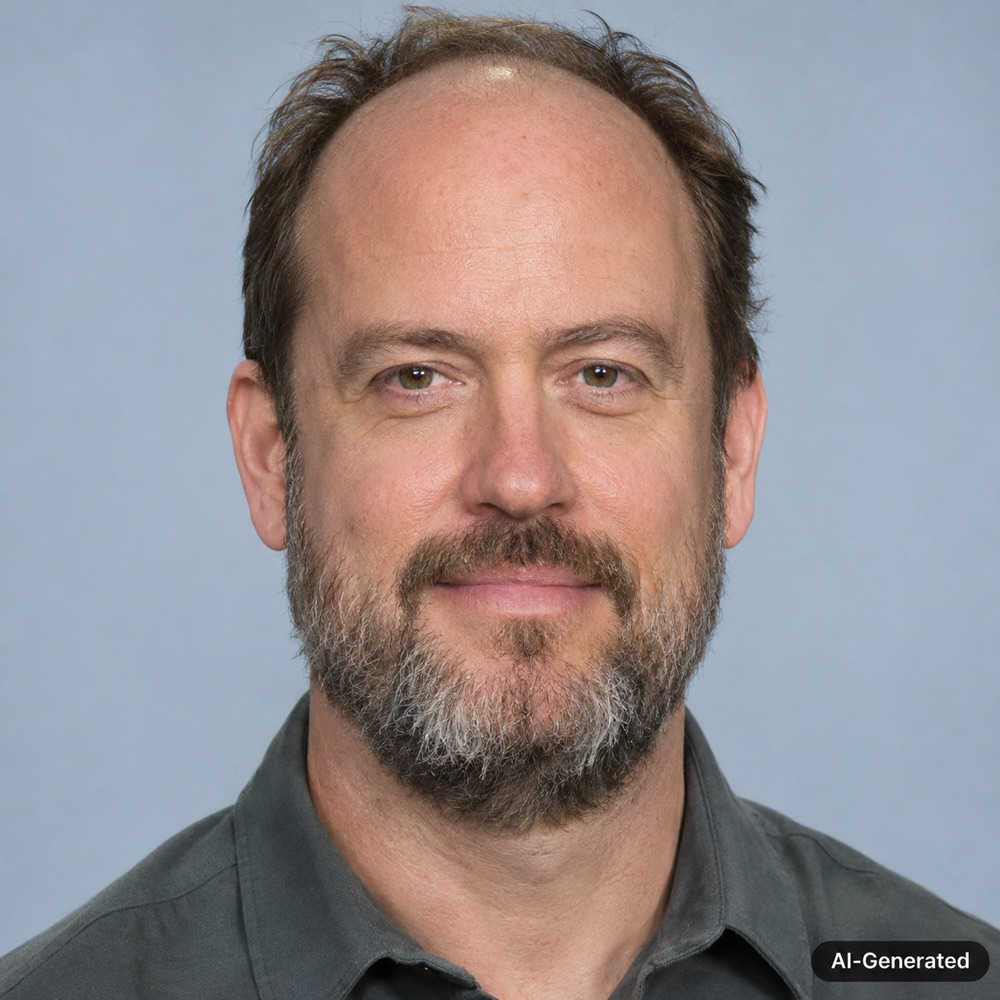
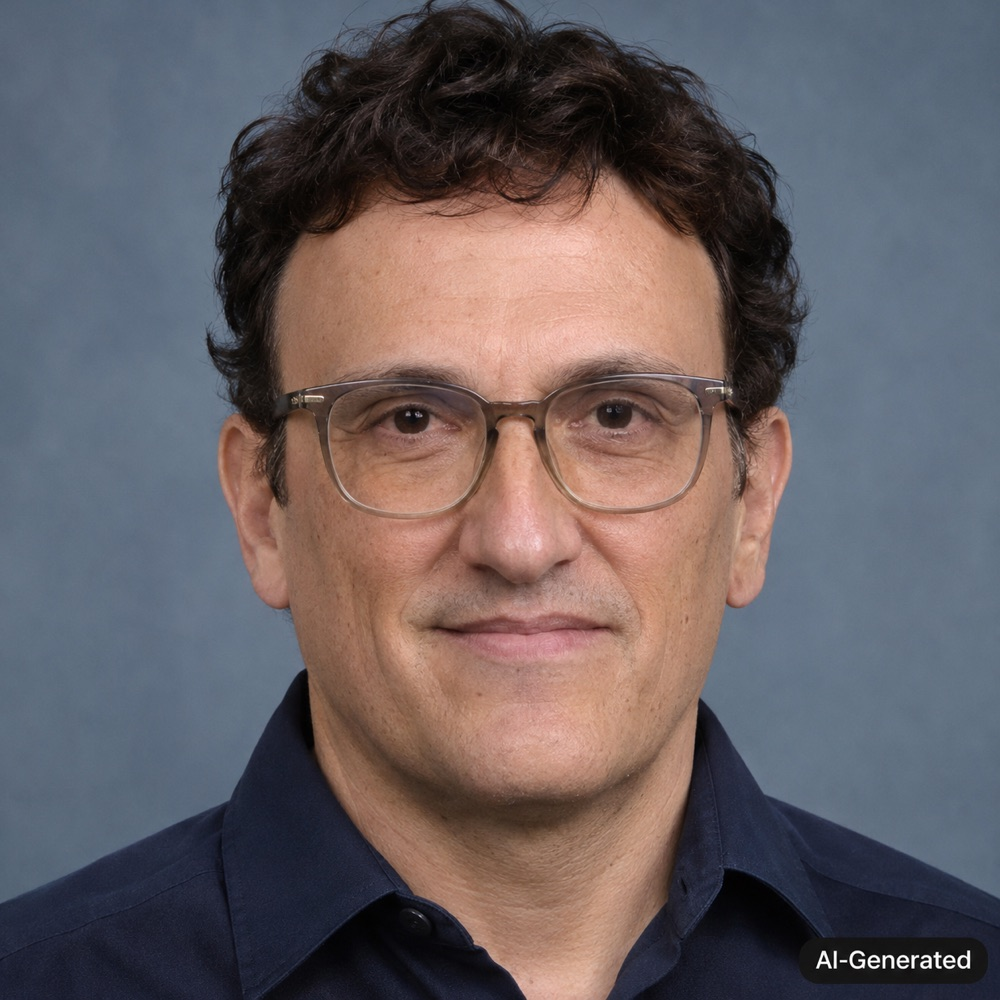
Anthony Russo
One of the directors of the later Captain America and Avengers scripts.[6]
Read the profile →
Joe Russo
Their screenwriting work developed alongside the brothers’ directing partnership.[6]
Read the profile →Sources and further reading
- Rutgers University — Christopher Markus commencement remarks (2026)
- UC Davis — Markus and McFeely at the Chancellor’s Colloquium (2020)
- UC Davis — Emmy award for The Life and Death of Peter Sellers (2005)
- UC Davis — Creative writing program and screenwriting work
- Christopher Markus and Stephen McFeely — Screen credits
- Disney — Avengers: Endgame credits
- Disney — Current Avengers: Doomsday credits
Artwork: Original AI-generated portrait of Christopher Markus, created for Famous Faith; not a photograph. The other AI-generated portraits shown here were also created for Famous Faith. No endorsement is implied.
Film and book titles identify the works discussed. A career credit is not a recommendation that every reader watch or read that work.