What Is Sofía Vergara’s Religion? Is She a Christian?

Portrait of Sofía Vergara in 2020

Sofía Vergara has described growing up in a devout Catholic family and attending a school run by Catholic nuns. Her own account establishes a Catholic upbringing and childhood belief. It does not, by itself, tell us every detail of her present church practice or what she now believes about salvation.

That distinction is useful for anyone asking whether the Modern Family actress is Christian. A family tradition, personal belief, and a clear profession of faith in Jesus are related subjects, but they are not the same question. The best starting point is her own public explanation.

What Vergara said about her Catholic background

In a July 22, 2011 Parade interview with Dotson Rader, Vergara recalled the Catholic community in which she grew up in Colombia. She described a devout family and said, “I was a believer.” She also remembered strict schooling and the lasting value she saw in discipline and good manners.

This is direct testimony about her background, rather than a religious label taken from an unsourced biography. Still, the date matters. A recollection of childhood is not a complete, current statement of theology. We should not stretch a brief interview into claims about her present prayer life, church attendance, or private relationship with God.

Nor should we erase her Catholic background simply because she works in Hollywood. An occupation is not evidence that someone has abandoned religion. The honest description preserves what she said while leaving unanswered details unanswered.

Gloria is a character, Sofía is a person

ABC identifies Vergara as Gloria in Modern Family. The comedy lets viewers watch family members disagree, misunderstand one another, and find moments of affection. Gloria’s background and religious references are part of a fictional story.

A performer can draw on familiar experiences without sharing every belief of a character. Equally, a character’s mistakes should not become accusations against the person playing her. Keeping those boundaries clear makes both television discussion and religious reporting fairer.

Viewers may feel that a familiar face is almost part of their own household. That warmth can explain curiosity about faith. It cannot supply evidence that an interview or public statement has not provided. We should resist filling the gaps with either admiration or suspicion.

What a religious upbringing can and cannot do

A childhood shaped by prayer and worship can leave lasting memories. It can introduce a person to Scripture, teach gratitude, and provide a language for asking important questions. Christians can appreciate those gifts without assuming that an inherited label answers every spiritual question.

In John 3, Jesus speaks to Nicodemus, a religious teacher, about the need for new birth. Familiarity with religious life was not the same as the life God gives. That passage challenges every reader who might rest in a family name or childhood setting instead of personally trusting Christ.

This is a question for us, not an invitation to announce a verdict on Vergara’s heart. What do we ourselves depend on for forgiveness? Is it tradition, reputation, effort, or the Savior revealed in the gospel? God knows what an outside observer cannot see.

Good manners are valuable, but we need mercy

Discipline and consideration can make daily life better for the people around us. They matter in homes, schools, and workplaces. Yet God’s law reaches beyond polite behavior. It calls us to love him completely, speak truthfully, and love our neighbors as ourselves.

We fall short in motives as well as actions. Pride can hide beneath a helpful act. Resentment can live behind a pleasant smile. Romans 3:23 says all have sinned, including this writer and every reader. Neither a celebrity nor a churchgoer stands outside that need.

Good deeds cannot rewrite the past into a sinless record. A religious education cannot remove guilt. If God is holy and just, we need forgiveness grounded in more than our wish to be seen as decent people. The gospel explains how that forgiveness can be offered.

The Christian hope rests in Jesus

Jesus Christ lived without sin and obeyed the Father perfectly. He willingly died as the substitute for sinners, bearing the judgment we deserve. He was buried and rose bodily from the dead. First Corinthians 15:3–4 places his death for sins and resurrection at the heart of the good news.

Salvation is God’s gift by grace through faith, not something earned through works, as Ephesians 2:8–9 teaches. Trust rests in Christ’s finished work rather than our spiritual family history or personal achievements. Changed behavior follows as a response to grace, not a payment for acceptance.

Vergara’s public account supports a Catholic upbringing and childhood belief. It leaves a more detailed current profession unconfirmed in the material examined here. For every reader, the invitation is clear: acknowledge your need for mercy and trust the crucified and risen Jesus for reconciliation with God.

Photo: Britt Bellamy / Wikimedia Commons, CC BY 3.0. Cropped portrait from 2020; web-sized version.


What Is Meryl Streep’s Religion? Is She a Christian?

Portrait of Meryl Streep

Meryl Streep has publicly said that she follows no religious doctrine and does not belong to a religious institution. That is a statement from an older interview, not a complete description of her beliefs today. It gives a reason to avoid automatically calling her a practicing Christian.

Streep returns as Miranda Priestly in The Devil Wears Prada 2, released May 1, 2026. The studio lists her among the returning lead cast. Her continuing film work makes her a current subject, while the question of faith requires evidence beyond memorable characters.

What has Meryl Streep said about religion?

During publicity for Doubt, Streep was asked directly about religion in an interview preserved by LondonNet. She answered that she followed no doctrine and did not belong to a church, temple, synagogue, or ashram. The answer describes a distance from formal religious affiliation rather than a detailed statement about every spiritual question.

The context matters. She was discussing a film with a Catholic setting. A question about her personal beliefs appears alongside questions about the story and the church. Her answers about a character should not be mixed with her answer about herself.

Is Meryl Streep a Christian or an atheist?

The cited response does not establish a Christian profession. It also does not explain enough to assign a complete atheist philosophy. Not belonging to a religious institution, not following a doctrine, and believing that no God exists are different statements. A writer should not treat them as identical.

Because this is an older interview, the profile also leaves room for later change. People are not frozen at the date of a quotation. If a clear newer statement becomes available, it should be considered. Until then, honest reporting is better than pretending to possess private knowledge.

Can playing a nun prove an actress’s faith?

No. Doubt provides an example of why performance and profession must remain separate. An actress can portray a person with strong religious convictions while holding a different outlook herself. Researching a role seriously is a professional responsibility, not a public declaration of worship.

The same rule applies to The Devil Wears Prada 2. Viewers can discuss ambition, authority, loyalty, and the use of influence without assuming that every character expresses Streep’s own moral beliefs. Fiction can help readers ask useful questions, but those questions should not be converted into unsupported biography.

How does the Bible view religious institutions?

The New Testament does not present Christian life as merely joining an organization. It begins with being reconciled to God through Jesus. At the same time, it does not treat the church as meaningless. Hebrews 10:24–25 calls believers to gather and encourage one another toward love and good works.

A church can offer teaching, accountability, worship, and practical care. It can also fail badly when people ignore the truth they profess. Jesus’ warnings against hypocrisy show that religious titles do not excuse wrongdoing. The standard is God’s character, not the protection of an institution’s image.

Does doctrine matter if a person is kind?

Kindness matters greatly in Scripture. But Christianity also makes claims about reality: God created us, humans have sinned, Jesus died for sinners, and he rose from the dead. These are not optional decorations around a general message to be nice. They explain why the Christian hope is centered on Christ.

First Corinthians 15 treats the resurrection as essential. If Jesus did not rise, the apostles’ message loses its foundation. A reader therefore needs to examine what is true, not only what feels welcoming or useful. Loving conduct and truthful teaching belong together.

Christians should speak about Streep’s public statements with that same combination of truth and love. The goal is not to place a famous person in a convenient category. It is to report fairly and invite every reader to consider the gospel without claiming to know another person’s heart.

What is the gospel of Jesus Christ?

The Christian message begins with God, who made us and is holy, loving, and just. Every person has sinned and fallen short of his glory (Romans 3:23). Sin includes our actions, words, desires, and refusal to love God and our neighbors. It brings guilt, separates us from God, and deserves his judgment. Fame, good intentions, religious customs, and kind deeds cannot erase that guilt.

God did not leave sinners without hope. Jesus Christ, the eternal Son of God, became human and lived without sin. He willingly died on the cross for sinners, taking the judgment they deserved. He was buried and rose bodily from the dead on the third day (1 Corinthians 15:3–4). His resurrection shows his victory over sin and death. He is alive, and he calls people to come to him.

Forgiveness and eternal life are gifts of God’s grace, received through faith in Jesus rather than earned by works (Ephesians 2:8–10). To repent is to turn from sin toward God; to believe is to rely on Christ and what he has done. Neither a family background nor a public label can replace that trust. A changed life, including love, honesty, and good works, follows salvation as its fruit. It does not purchase it. This invitation is for ordinary readers and famous people alike.

How should readers understand this profile?

This article separates the person’s public statements from Famous Faith’s Bible commentary. Older interviews tell us what someone said at that time; they cannot settle every question about present beliefs. We do not know anyone’s heart or claim to decide whether a person is saved. Christians can evaluate public ideas by Scripture while speaking truthfully, respecting the person, and praying with humility. The same questions about sin, grace, and faith apply to us.

Photo credit

Featured portrait: Kevin Payravi, Wikimedia Commons / WikiPortraits, via Wikimedia Commons, CC BY-SA 4.0. Resized and compressed for this page. Use of the photograph does not imply endorsement of this article.

What Is Lena Headey’s Religion? Is She a Christian?

Lena Headey in New York in February 2019

Lena Headey’s current religious affiliation is not clearly confirmed by the primary interview material reviewed for this profile. We cannot responsibly present her as a practicing Christian or give a definite account of her private beliefs about God. Some celebrity religion summaries attach labels to actors without enough context. A clear statement from the person matters more than repetition across websites.

Headey’s portrayal of Cersei Lannister in Game of Thrones also tells us nothing certain about her own faith. Cersei’s cruelty, ambition, and religious conflicts are parts of a fictional role. An actress should not be judged as though she committed her character’s actions.

A different picture beyond Cersei

In a 2016 interview with TIME, Headey discussed her work with the International Rescue Committee and meeting refugees in Greece. She wanted audiences to recognize people’s families, hopes, and losses rather than view them as a threatening mass. That public concern offers a very different picture from her best-known screen character, without proving a particular religious belief.

It is possible to appreciate that concern without turning humanitarian work into evidence of conversion. We should allow people’s actual actions and words to speak, while remaining careful about conclusions they have not stated. Compassion deserves thoughtful attention; a religious label requires its own evidence.

Seeing a neighbor instead of a category

A screen role is one way we can reduce a person to a category. We also do this with nationality, occupation, accent, or a headline. The Bible challenges that instinct. Genesis 1:27 teaches that people bear God’s image. Their dignity does not depend on being familiar, useful, or easy for us to understand.

In the parable of the good Samaritan, Jesus exposed how easily people narrow the word “neighbor” to avoid a costly responsibility (Luke 10:25–37). The man who showed mercy crossed a boundary rather than asking whether the injured stranger belonged to his group. The point presses on our daily choices: will we notice suffering when helping is inconvenient?

This is a biblical application for readers, not a claim that Headey bases her own outlook on that passage. We can recognize a shared concern for people without pretending all beliefs about God are the same.

Compassion and the limits of our goodness

Kindness matters. The Christian Gospel does not ask us to dismiss it. Yet kindness cannot provide a complete answer to guilt before God. A good deed today does not make yesterday’s lie true or repair every harm caused by selfishness. Our moral record cannot be balanced like a bank account.

The Ten Commandments reveal God’s holy standard. He forbids false worship, dishonesty, theft, adultery, and coveting. Jesus makes clear that sinful anger and lust matter too, even when they stay hidden from other people (Matthew 5:21–28). God sees motives as well as behavior.

Romans 3:23 says that all have sinned and fall short of His glory. That includes people who help others and people who receive help. We deserve God’s just judgment because our sin is real. It would be wrong to single out one actress as though everyone reading about her stood above the same need. The law leaves all of us without a claim to self-made innocence.

Mercy with a real cost

God’s mercy is more than overlooking the problem. Jesus Christ is the eternal Son of God. He became truly human without ceasing to be God and lived in perfect obedience to the Father. He loved without selfishness and told the truth without exception. He alone was sinless.

On the cross, Jesus willingly took the place of sinners and bore the judgment we deserve. He died, was buried, and rose bodily from the dead on the third day (1 Corinthians 15:3–4). His saving work upholds God’s justice while opening the way for guilty people to be forgiven.

Salvation is God’s gift of grace, received through faith in Christ, not earned by works (Ephesians 2:8–9). Helping people cannot purchase it. Neither can joining a religious group, winning approval, or promising a better record. Good works have their place as a response to grace; they are not the price of forgiveness. Jesus has already finished the work on which salvation rests.

What we can say honestly

Headey’s public concern for vulnerable people can encourage an audience to look past a fictional villain and see a real person. Her current relationship to Christianity remains unconfirmed in the evidence reviewed here. We should not manufacture certainty or presume to judge her heart.

We can, however, consider our own response to Christ. Have you acknowledged your sin before God and trusted the Savior rather than your own moral record? Place your faith in Jesus alone—His death for sinners and His bodily resurrection. The Gospel offers forgiveness and eternal life through His finished work. Receiving that grace also gives a new foundation for showing mercy to the neighbors God places before us.

Sources and photo credit

Lena Headey interview on her humanitarian work, TIME, December 10, 2016. Scripture: Genesis 1:27; Luke 10:25–37; Matthew 5:21–28; Romans 3:23; 1 Corinthians 15:3–4; Ephesians 2:8–9.

Featured photo: Lena Headey in New York, February 2019, by Greg2600 / Wikimedia Commons, CC BY-SA 2.0. Existing cropped version, resized.

What Is Jalen Hurts’s Religion? Is He a Christian?

Jalen Hurts is widely known for a steady, disciplined approach to football. He does not reveal every part of his private life, but he has publicly used language about God and faith when speaking about the pressure and growth that come with his career. That raises an understandable question: Is Jalen Hurts a Christian?

Because Hurts is more reserved than some athletes about religion, the answer should be especially careful. It is better to say only what public sources support than to turn a few words into a larger story he has not told.

What has Jalen Hurts said publicly about faith?

In a TIME profile, Hurts spoke about the need for “a new work ethic and a new faith” as he faced new seasons and responsibilities. He has also referred to God and faith in public remarks around football. These comments show that faith is part of his vocabulary and the way he reflects on life.

At the same time, the public record does not contain the long, detailed personal testimony that some other athletes have shared. That is not a problem. Public curiosity is not a reason to make a person say more than he has chosen to say.

Is Jalen Hurts a Christian?

Jalen Hurts has publicly spoken about God and faith, but the information available in reliable public sources is limited. It would be too strong to claim more than he has clearly stated for himself. We can say that faith appears in his public comments while leaving room for the things we do not know.

This kind of caution matters because Christianity is not just a mood, a motivational phrase, or an inspirational hashtag. The Christian gospel centers on Jesus Christ—His death for our sins and His resurrection. It calls people to repentance and faith in Him. A person may talk about faith in a broad sense and still mean something different from biblical Christianity.

That does not mean we should be cynical. It means we should be honest. We can respect Hurts’ words, pray for him, and refuse to use him as a prop for arguments he has not made. God is fully able to work in the life of a public figure, and He does not need us to exaggerate the evidence.

What should we take away?

Jalen Hurts has included faith in his public reflections, but he has kept the details of his beliefs mostly private. That is the most accurate answer available right now. Instead of guessing, we can pray that he would know Jesus Christ truly and use his influence wisely.

It is also a reminder that our own relationship with God should be more than a public phrase. Jesus offers real forgiveness, real hope, and a new life to those who come to Him.

Sources

Image credit: Jalen Hurts at Eagles training camp in 2025, U.S. Air National Guard photo by Staff Sgt. Charles Casner, public domain, via Wikimedia Commons.

What Is Paul Rudd’s Religion? Is He a Christian?

Portrait of Paul Rudd at the 2026 New York Film Festival

Paul Rudd identifies as Jewish and has spoken about the importance of that identity in his family and life. His interviews describe a relaxed Reform upbringing and a strong sense of belonging to Jewish history and culture. He has also expressed curiosity about Jesus as a historical person.

Those points belong together. Rudd’s public story is richer than a simple answer based on an Ant-Man scene or a joke in a comedy. His own words help explain how heritage, religious practice, and personal interest fit into his life.

Paul Rudd on being Jewish

In a 2012 interview with the Jewish Journal, Rudd explained that he had a Reform bar mitzvah and attended synagogue. He described his family’s approach as relaxed, while making clear that Jewish identity remained meaningful to him. He talked about knowing Jewish traditions and feeling part of a long shared history.

Rudd also described growing up in Kansas with English parents and few Jewish classmates. He sometimes felt like an outsider and learned to use humor to connect with people. That account offers context for both his identity and his work as a comedian. It does not require us to guess which beliefs he privately holds about every religious question.

In 2015, he told The Guardian that he was Jewish but not especially religious. That distinction is useful: a strong Jewish identity does not always mean strict religious observance.

Why he said he would like to meet Jesus

During publicity for Ghostbusters: Frozen Empire, Rudd was asked which person from history he would choose to spend a day with. As reported by Crosswalk in June 2024, he chose Jesus Christ. When the answer prompted laughter, he stood by it and said he would want to ask Jesus questions.

That is a meaningful expression of interest. It should be reported without adding a conversion story that Rudd did not tell. Wanting a conversation with Jesus is not the same statement as trusting Him as the Messiah. Rudd’s documented Jewish identity remains the clearest answer to the question of his religion.

A familiar face across comedy and action

Rudd became a widely recognized actor through Clueless and went on to build a long comedy career. His films include Anchorman, I Love You, Man, and This Is 40. Television viewers also remember him as Mike Hannigan on Friends.

Playing Scott Lang in the Ant-Man films brought his comic timing into the Marvel universe. He also joined the newer Ghostbusters films. Marvel lists him in Avengers: Doomsday, scheduled for December 18, 2026. His appeal crosses generations, which helps explain why readers remain curious about the person behind the roles.

Jewish roots and the claims of Jesus

A respectful biblical comparison must begin by recognizing Christianity’s Jewish roots. Jesus was Jewish. His apostles were Jewish. The earliest Christian preaching grew from the Scriptures of Israel. Christians should never talk about Jewish people as though they are strangers to the Bible’s story.

Romans 11 warns Gentile believers against pride. Jewish history is not a prop for a Christian argument, and antisemitism has no place in following Christ. We can discuss real religious differences without mockery, hostility, or claims that we know someone’s heart.

The central difference concerns Jesus Himself. Christianity confesses Him as Israel’s promised Messiah, the Son of God who died and rose again. The New Testament presents His resurrection as a public claim to be examined, not merely an inspiring symbol. In Luke 24, Jesus connects His suffering and glory with the Scriptures.

Rudd’s wish to ask Jesus questions may resonate with readers who are curious too. The Gospels invite that careful attention. They present Jesus as more than a wise figure from the past: He is the living Lord who calls us to trust Him.

The gospel for the reader

Before God, no family background gives us permission to boast. Romans 3 teaches that both Jews and Gentiles need grace. We have all sinned. Dishonesty, selfishness, pride, and failures to love reveal that we do not meet God’s holy standard. A good reputation or warm sense of belonging cannot erase that guilt.

God has acted in mercy through Jesus Christ. Jesus lived without sin and willingly died on the cross for sinners. He bore the judgment we deserve, was buried, and rose bodily from the dead. This is the gospel summarized in 1 Corinthians 15:3–4.

Salvation is God’s gift, received by grace through faith rather than earned through works. Turn from sin and trust Jesus as Lord and Savior. You do not need to build a perfect record before coming to Him. You need the forgiveness He freely offers because of what He has done.

For anyone interested in Rudd’s question, reading a Gospel is a worthwhile beginning. Ask not only what you would say to Jesus, but what He says to you. His invitation reaches people from every background.

Sources

Photo: Bryan Berlin / WikiPortraits, Paul Rudd at the 2026 New York Film Festival, CC BY-SA 4.0. Cropped by LeeGer; resized to 500 pixels wide.

What Is Kit Harington’s Religion? Is He a Christian?

Kit Harington speaking at San Diego Comic-Con in 2013

Kit Harington was raised in the Church of England, according to Elizabeth Day’s 2017 interview with him for Radio Times. The same interview described him as not particularly religious. That is a dated account of his background, not proof of a current profession of faith in Jesus Christ. It would be misleading to call him a practicing Christian simply because of the church in which he grew up.

Harington is known around the world as Jon Snow in Game of Thrones. The character’s beliefs, loyalty, and difficult decisions belong to the story. They cannot settle what Harington himself believes about God or salvation.

A family history involving religion

The Radio Times interview also explored Harington’s connection to Robert Catesby, a Catholic ancestor involved in the Gunpowder Plot. Harington portrayed Catesby in the drama Gunpowder. Family history helped inspire a project; it does not make the actor’s present beliefs identical to his ancestor’s.

In a separate 2017 interview with The Big Issue, Harington discussed examining the motives behind the plot without defending its violence. He contrasted Catesby’s hatred with qualities of patience and mercy in Jon Snow. These comments concern his reading of two roles. They are useful context for his work, rather than a personal declaration of religious doctrine.

Faith cannot be inherited like a name

Many readers understand what it means to grow up around a church. We may remember services, family traditions, hymns, or school lessons. Those memories can be meaningful. Yet the Bible distinguishes being familiar with Christianity from trusting Christ personally.

John 1:12–13 connects becoming a child of God with receiving Christ and believing in His name. A family tree, national identity, or church connection cannot do that believing for someone else. Each person needs the Savior. This is not a criticism of a particular family or denomination; it is a reminder that Christian faith has a personal object, Jesus Himself.

Nor should we assume that someone’s earlier description will tell us everything about later years. A responsible profile reports the evidence with its date and leaves room for a person to speak for himself.

Mercy does not mean ignoring what is wrong

Stories about divided loyalties often leave an audience asking when mercy is possible. In ordinary life, we want wrongs taken seriously, especially when we are the ones hurt. At the same time, we hope others will consider our circumstances when we fail. Our instincts about justice can be very selective.

God’s holy law removes that double standard. The Ten Commandments forbid murder, adultery, theft, lying, coveting, and false worship. Jesus also exposes sinful anger and lust in the heart (Matthew 5:21–28). We cannot claim innocence simply because our failures look smaller than the violence in a historical drama.

All have sinned and fall short of God’s glory (Romans 3:23). God sees the truth behind our explanations and public image. Our sin deserves His judgment. A religious upbringing cannot cancel it, and good actions cannot make a holy Judge pretend it never happened. This includes everyone, whether famous or unknown.

The King who bore judgment for sinners

The Gospel answers the problem of guilt without treating justice as unimportant. Jesus Christ, God’s eternal Son, became truly human while remaining God. He lived a sinless life in complete obedience to the Father. He did not need a rescue from His own guilt.

Instead, Jesus willingly died on the cross as the substitute for sinners. He bore the judgment we deserve. He was buried, and He rose bodily from the dead on the third day (1 Corinthians 15:3–4). His death was not a fictional sacrifice designed to move an audience. The Christian message announces what Christ actually accomplished and the resurrection that declares His victory.

Forgiveness and eternal life are gifts of grace, received through faith in Him. They are not wages earned through religious attendance, courageous behavior, family loyalty, or moral improvement (Ephesians 2:8–9). Good works matter as a response to God’s grace, but they do not purchase salvation. Jesus has completed the saving work.

A personal trust beyond family tradition

We can appreciate Harington’s performances and the questions his work raises without claiming access to his heart. His reported Church of England upbringing belongs in an accurate account. A confident claim about his present relationship with Christ would require more than that.

For each reader, there is a more direct question than identifying an actor’s label: are you relying on your background, or on Christ? Acknowledge your sin before God and trust Jesus alone—His finished work on the cross and His bodily resurrection. No one else’s faith can stand in for yours. The Savior offers real forgiveness to those who come to Him, without demanding an impressive family history or a record of deserving His mercy.

Sources and photo credit

Kit Harington interview, Radio Times, October 21, 2017; Kit Harington interview, The Big Issue, November 1, 2017. Scripture: John 1:12–13; Matthew 5:21–28; Romans 3:23; 1 Corinthians 15:3–4; Ephesians 2:8–9.

Featured photo: Kit Harington at San Diego Comic-Con, 2013, by Gage Skidmore / Wikimedia Commons, CC BY-SA 2.0. Existing cropped version, resized.

What Is Mila Kunis’s Religion? Is She a Christian?

Portrait of Mila Kunis

Mila Kunis identifies as Jewish and has described a growing appreciation for Jewish religious traditions in her adult life. Her story includes a childhood shaped by pressure to keep that identity quiet, followed by a home where Shabbat and Hanukkah have become meaningful family practices.

Her clearest recent explanation came during a December 2024 Hanukkah conversation with Noa Tishby. Kunis spoke openly about the difference between knowing she was Jewish culturally and becoming more involved with the religious side of that identity. Her own account gives a much better answer to questions about her faith than assumptions based on a television role.

What Mila Kunis has said about Judaism

In the conversation with Tishby, reported by The Algemeiner, Kunis explained that she grew up knowing she was Jewish but was taught to avoid speaking about it. She connected that caution with life in the Soviet Union, where religion faced restrictions.

She credited her husband, Ashton Kutcher, with helping her learn more about Judaism. Becoming a parent also encouraged her to take part in its practices. She spoke about lighting Hanukkah candles and observing Shabbat, explaining that her children’s interest helped draw her toward the religious side of a heritage she had long understood mainly through culture.

That account matters because religious identity can involve several things at once: family history, community, memory, belief, and daily practice. Kunis described a movement toward traditions she values. She did not use that short conversation to explain every doctrine she accepts, and there is no need to fill those gaps with guesses.

How family traditions became part of the story

PEOPLE’s report on the same interview also highlighted her movement from childhood silence to adult participation. The contrast is striking: something once kept private could now be shared with her family in ordinary acts of celebration.

A meal, a candle, or a holiday can carry meaning beyond the event itself. Such practices give families time to remember, ask questions, and pass stories to another generation. That observation does not tell us everything about Kunis’s private beliefs. It helps explain why readers should take her comments about tradition seriously rather than dismiss them as a label.

From television comedy to film

Kunis moved from Ukraine to Los Angeles as a child and built a career across television, voice acting, and film. She became widely known as Jackie Burkhart on That ’70s Show and as the voice of Meg Griffin on Family Guy. Her films include Forgetting Sarah Marshall, Black Swan, and Bad Moms. Her career history reflects work in both broad comedy and serious drama.

Those roles explain why so many people recognize her. They do not decide what she believes. A performer can portray someone with a very different outlook, and even a familiar character remains a written part. For questions of religion, her statements about Jewish identity and practice remain the relevant evidence.

How does this connect with the Bible?

Jewish tradition and the Christian Bible share deep roots. Christians receive the Hebrew Scriptures as God’s Word. The accounts of creation, Abraham, the exodus, the prophets, and the Psalms form an essential part of the biblical story. Jesus and his earliest followers were Jewish.

The Bible also takes remembering seriously. Deuteronomy 6:6–7 describes teaching God’s words within the normal rhythm of family life. A faith that touches meals, conversation, rest, and children’s questions has a clear biblical point of contact. Belief is never meant to remain only an idea stored away from daily living.

Respect for these shared roots should also lead Christians to reject contempt toward Jewish people. Romans 11 warns Gentile believers against pride. An honest discussion of differences calls for humility, care, and a willingness to listen. It does not require pretending the differences are small.

The central difference concerns Jesus. The New Testament presents him as Israel’s promised Messiah, the Son of God, and the risen Savior. John 20:31 explains that its account was written so people would believe in him and have life through his name. This is a claim about who Jesus is, rather than a judgment that one ethnic group is better than another.

The gospel’s invitation

The Bible’s diagnosis includes everyone. Romans 3:23 says all have sinned and fall short of God’s glory. Our problem is deeper than missing a tradition or failing to join a community. We have rebelled against a holy God through our thoughts, desires, words, and actions. We cannot purchase forgiveness with ancestry, religious effort, or personal success.

The good news is that God sent his Son, Jesus Christ, to save sinners. Jesus lived without sin, died on the cross for our sins, and bore the judgment we deserve. He was buried and rose bodily from the dead. In him, God offers forgiveness and a restored relationship with himself.

Ephesians 2:8–9 teaches that salvation is a gift of grace, received through faith, not earned through works. Jesus calls us to repent, turning from sin and self-rule, and to trust him as Lord and Savior. Good works follow that new life; they do not buy it.

Kunis’s public story is one of Jewish identity and a growing love for family traditions. For readers exploring their own beliefs, it also opens meaningful questions about memory, belonging, and truth. The Christian invitation is to examine Jesus himself and respond to the mercy he offers.

Photo credit: Gage Skidmore, Wikimedia Commons, CC BY-SA 3.0. Image resized.

What Is Emilia Clarke’s Religion? Is She a Christian?

Emilia Clarke at San Diego Comic-Con in 2013

Emilia Clarke’s current religion is not clearly established in the public statements reviewed for this article. There is not enough verified evidence here to describe her as a practicing Christian or assign her another religious label. Her role as Daenerys Targaryen in Game of Thrones is a performance, and the character’s power, beliefs, and choices should not be treated as Clarke’s personal creed.

Clarke has spoken openly about gratitude, suffering, and helping others. Those subjects matter deeply, but they are not the same thing as a statement of Christian faith. A fair profile should preserve that distinction while taking her words seriously.

The person behind Daenerys

In her own 2019 essay for The New Yorker, Clarke described surviving two brain aneurysms, in 2011 and 2013. She expressed gratitude for the care she received and introduced SameYou, the charity she helped develop to support recovery after brain injury and stroke. Her account gives readers a glimpse of vulnerability behind a very powerful screen image.

There is no need to turn that experience into an invented conversion story. Surviving illness does not, by itself, tell an audience what someone believes about God. Nor should anyone claim to know why a particular person suffered. We can respect Clarke’s account, value those who cared for her, and recognize the importance of compassionate help.

When strength includes receiving help

Fame can create the impression that someone has everything under control. Ordinary life tells a different story. We depend on others for more than we often admit. A meal, a patient conversation, a nurse’s attention, or a friend’s presence can matter when our own strength is limited.

The Bible does not teach that asking for help makes a person less valuable. Every human life bears God’s image (Genesis 1:27). Christians are told to bear one another’s burdens (Galatians 6:2). That calls for practical kindness rather than easy explanations of another person’s pain. It also reminds us that human worth does not disappear when productivity, independence, or public success is interrupted.

These are biblical reflections on vulnerability, not claims about Clarke’s theology. An actor can raise thoughtful questions through a personal story without agreeing with every answer a Christian reader finds in Scripture.

Gratitude is precious, but it cannot erase guilt

Gratitude can change how we treat a day and the people in it. Yet Christianity asks another question alongside how thankful we feel: how can sinful people be right with a holy God? Even a generous life cannot undo wrong we have already done.

God’s Ten Commandments reveal His righteous standard. Have we always told the truth, honored God, refused envy, and loved others faithfully? Jesus taught that the heart matters too, addressing hateful anger and lust rather than only outward behavior (Matthew 5:21–28). We may look better than someone else and still fall short of God’s law.

Romans 3:23 includes all of us in that failure. Sin is not merely a lack of confidence or an unfortunate mistake. It is rebellion against the God who made us, and it deserves His just judgment. Good deeds, charitable giving, and a positive outlook cannot pay that debt. This is a universal human problem, not a judgment aimed at one actress.

Jesus entered our weakness without sharing our sin

The Gospel is good news because God has acted to save people who cannot save themselves. Jesus Christ is God’s eternal Son. He became truly human while remaining truly God. He knew the realities of human life, yet He never sinned. His perfect obedience was not a performance hiding a flawed heart.

Jesus willingly died on the cross as the substitute for sinners, bearing the judgment we deserve. He was buried and rose bodily from the dead on the third day (1 Corinthians 15:3–4). His resurrection means the Christian hope rests on the living Savior, not on a vague wish that things will somehow work out.

God offers forgiveness and eternal life by grace through faith in Christ. We do not earn salvation by becoming more impressive, giving enough, or proving our strength (Ephesians 2:8–9). Christ’s finished work is sufficient. The empty-handed person who trusts Him is not disqualified by having nothing to boast about.

A hope greater than the next chapter

Clarke’s story can prompt appreciation for life and compassion toward people whose struggles are unseen. It should also remind us to speak carefully about others. We cannot read her heart, and we should not pretend that a charitable project answers every question about her faith.

For the reader, the personal question remains: what are you trusting for peace with God? Acknowledge your sin honestly and place your faith in Jesus Christ alone—His death for sinners and His bodily resurrection. His promise is not that believers will avoid every illness or hardship. The Gospel offers forgiveness, reconciliation with God, and eternal life through the Savior who has already completed the work of salvation.

Sources and photo credit

Emilia Clarke, “A Battle for My Life,” The New Yorker (2019). Scripture: Genesis 1:27; Galatians 6:2; Matthew 5:21–28; Romans 3:23; 1 Corinthians 15:3–4; Ephesians 2:8–9.

Featured photo: Emilia Clarke at San Diego Comic-Con, 2013, by Gage Skidmore / Wikimedia Commons, CC BY-SA 3.0. Existing cropped version, resized.

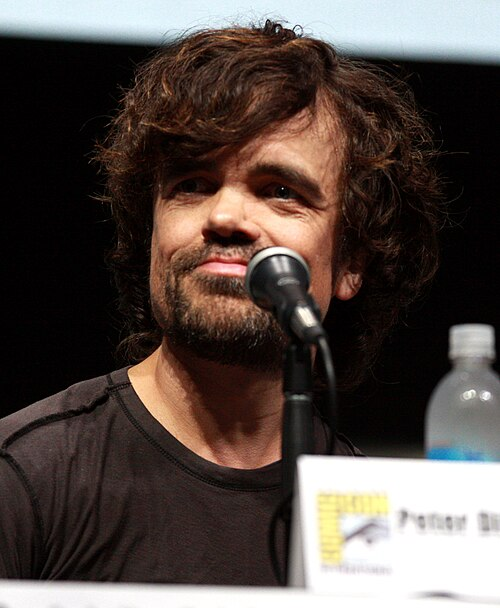
What Is Peter Dinklage’s Religion? Is He a Christian?

Peter Dinklage speaking at San Diego Comic-Con in 2013

Peter Dinklage’s current religious beliefs are not clearly confirmed in the primary interviews reviewed for this profile. It would be unfair to call him a Christian, an atheist, or a follower of another faith without a clear statement from him. His best-known character, Tyrion Lannister in Game of Thrones, has plenty to say about the world around him. Those lines belong to a fictional character, not to the actor’s personal testimony.

That distinction matters because a familiar face can feel like someone we know. We may have watched Dinklage for years, yet a performance cannot tell us what he believes about God, Jesus Christ, or life after death. Respect begins with being honest about that limit.

Peter Dinklage beyond Tyrion Lannister

Dinklage’s work invites viewers to see a person rather than a stereotype. In a 2019 interview with The New Yorker, he discussed refusing roles that reduced people with dwarfism to a narrow idea. He also described Cyrano as a story about the common fear of being unworthy of love. These comments help explain his approach to acting; they do not establish a religious affiliation.

There is a useful challenge here for an audience. Do we listen to a person, or decide who that person must be based on appearance? Do we value skill and thought, or turn someone’s body into a joke? We do not have to agree with every artistic choice to treat the artist and every other person with basic dignity.

Human worth is not a casting decision

The Bible gives human dignity a foundation deeper than fame, success, or public approval. Genesis 1:27 teaches that human beings are made in God’s image. That applies to the person on a screen and the neighbor who never receives applause. Physical appearance, height, income, and social standing do not decide how much a life is worth.

James 2 warns against favoritism. It is easy to admire a famous person while overlooking someone standing beside us. Biblical love asks us to move beyond that habit. We can show patience, speak truthfully, and refuse cruel humor. These are meaningful ways to treat people, but they also raise an uncomfortable question: have we consistently loved our neighbors as we should?

A clever defense cannot make us innocent

Tyrion often survives through words, arguments, and quick thinking. In real life, we also know how to explain ourselves. We remember the pressure we faced, compare ourselves with someone worse, and hope our good intentions settle the matter. Yet God’s standard is not whether we can make a persuasive defense.

The Ten Commandments reveal His holy law. They forbid lying, theft, adultery, coveting, and the worship of anything in God’s place. Jesus also addressed the heart behind outward behavior, including hateful anger and lust (Matthew 5:21–28). We cannot satisfy that standard by looking respectable or by pointing to another person’s failures.

Romans 3:23 says that all have sinned and fall short of God’s glory. This includes the writer, the reader, and every celebrity. Our guilt is real, and a holy God must judge sin justly. We deserve His judgment, not a reward for being interesting, talented, or relatively kind. Recognizing this is not a reason to mock anyone. It is a reason for humility.

The Savior who offers more than acceptance

The Christian message goes beyond telling us to feel better about ourselves. God’s eternal Son, Jesus Christ, became truly human without ceasing to be God. He lived the sinless life we have not lived. He loved the Father perfectly and always did what was right.

Jesus then willingly died on the cross as the substitute for sinners, bearing the judgment we deserve. He was buried, and on the third day He rose bodily from the dead (1 Corinthians 15:3–4). The resurrection is central to the Gospel. Christians are not merely following a memorable teacher; they trust the living Savior who defeated death.

Forgiveness is offered by God’s grace through faith in Christ, not earned by good works, religious effort, or personal achievement (Ephesians 2:8–9). A person cannot purchase peace with God through charity, public approval, or a more impressive life story. Jesus has finished the saving work. Those who trust Him receive forgiveness and eternal life because of what He has done.

An honest question for every reader

We cannot judge Peter Dinklage’s heart from a distance. We can appreciate his talent, describe what he has actually said, and leave unconfirmed beliefs unconfirmed. The question of our own standing before God is more immediate than a label attached to someone famous.

Have you acknowledged your sin before God, or are you relying on your own defense? You can come to Him honestly, admitting your guilt and trusting Jesus Christ alone—His death for sinners and His bodily resurrection. Salvation rests on Christ’s finished work, not on finding the right words or proving that you deserve love. That is good news for people whose lives receive applause and for people who feel unseen.

Sources and photo credit

Peter Dinklage’s 2019 interview with The New Yorker. Biblical references: Genesis 1:27; James 2:1–9; Matthew 5:21–28; Romans 3:23; 1 Corinthians 15:3–4; Ephesians 2:8–9.

Featured photo: Peter Dinklage at San Diego Comic-Con, 2013, by Gage Skidmore / Wikimedia Commons, CC BY-SA 3.0. Resized from the original.

What Is Alicia Silverstone’s Religion? Is She a Christian?

Portrait of Alicia Silverstone

Alicia Silverstone has publicly described a Jewish upbringing and a lasting connection with Jewish identity and spirituality. Those statements support speaking of her Jewish background rather than assigning her a Christian profession. They do not establish every detail of her present religious observance.

Silverstone appears in Bugonia, which began its U.S. theatrical release on October 24, 2025. Focus Features lists her among the cast of Yorgos Lanthimos’s film. That gives the well-known actress a movie credit within the past twelve months and a timely reason to examine her public comments about faith.

Was Alicia Silverstone raised Jewish?

Yes. In an interview preserved by 18Doors from the period of Love’s Labour’s Lost, Silverstone recalled a traditional Jewish household. She described Friday-night candles, Passover seders, Hebrew school, and positive memories of her bat mitzvah. These are her descriptions of childhood, not guesses based on her name or a character she played.

The interview also described her father’s Jewish background and her mother’s conversion to Judaism before their marriage. Silverstone spoke warmly about attending temple with her grandfather. Those family memories help explain the personal meaning of her heritage without requiring a writer to invent a more specific adult affiliation.

How has Alicia Silverstone described her spirituality?

In the same interview, Silverstone said Judaism had shaped who she was and that she lived a spiritual life. The article noted that she had not recently been observant, while also reporting her interest in revisiting temple as an adult. Both parts matter: attachment to a tradition and the extent of formal practice are not identical.

This is an older interview. It should not be turned into a claim that we know her present attendance habits or every belief she holds in 2026. A clear profile can report her words with respect while leaving unanswered questions unanswered. Heritage, practice, and doctrine each require their own evidence.

Is Alicia Silverstone a Christian?

The sources used here do not establish a public profession of faith in Jesus Christ. They document a Jewish upbringing and personal connection with Judaism. Those facts should be reported in their own right rather than treated as indirect evidence of a different religion.

Nor should one screen role decide the issue. Silverstone became widely known through Clueless, and she continues to work in films such as Bugonia. An actress’s relationship with a character is professional and creative. It does not require her to share the character’s religious identity, moral choices, or explanation of the world.

How should Christians discuss her Jewish identity?

With accuracy, gratitude for the Bible’s Jewish setting, and love for the person. Jesus, his apostles, and the earliest Christian community were Jewish. The Old Testament is part of the Christian Bible, and the New Testament describes Jesus in relation to God’s promises to Israel. Ignoring those roots makes Christian discussion less truthful.

Christians and Jewish people nevertheless differ over the identity of Jesus. The New Testament presents him as the Messiah and the risen Lord. Explaining that difference does not require caricaturing Jewish belief or assuming that every Jewish person holds the same views. Romans 11 warns Gentile Christians against pride, a warning that still applies.

Can spiritual identity or good works bring salvation?

The Bible values faithfulness, justice, and mercy. Micah 6:8 calls people to do justice, love kindness, and walk humbly with God. Yet the gospel also explains that good deeds cannot cancel guilt. Ephesians 2:8–10 places salvation by grace before the works that follow it.

This principle applies equally to people from Jewish, Christian, secular, and other backgrounds. No family name, religious ceremony, charitable act, or public reputation can replace a personal response to Christ. Christians should apply that message to themselves rather than use it to feel superior to someone else.

Silverstone’s public memories of family and faith offer a reason to think about what shapes a person’s life. The biblical question goes further: where is our hope of reconciliation with God? The Christian answer rests in Jesus and the grace he gives to sinners.

What is the gospel of Jesus Christ?

The Christian message begins with God, who made us and is holy, loving, and just. Every person has sinned and fallen short of his glory (Romans 3:23). Sin includes our actions, words, desires, and refusal to love God and our neighbors. It brings guilt, separates us from God, and deserves his judgment. Fame, good intentions, religious customs, and kind deeds cannot erase that guilt.

God did not leave sinners without hope. Jesus Christ, the eternal Son of God, became human and lived without sin. He willingly died on the cross for sinners, taking the judgment they deserved. He was buried and rose bodily from the dead on the third day (1 Corinthians 15:3–4). His resurrection shows his victory over sin and death. He is alive, and he calls people to come to him.

Forgiveness and eternal life are gifts of God’s grace, received through faith in Jesus rather than earned by works (Ephesians 2:8–10). To repent is to turn from sin toward God; to believe is to rely on Christ and what he has done. Neither a family background nor a public label can replace that trust. A changed life, including love, honesty, and good works, follows salvation as its fruit. It does not purchase it. This invitation is for ordinary readers and famous people alike.

How should readers understand this profile?

This article separates the person’s public statements from Famous Faith’s Bible commentary. Older interviews tell us what someone said at that time; they cannot settle every question about present beliefs. We do not know anyone’s heart or claim to decide whether a person is saved. Christians can evaluate public ideas by Scripture while speaking truthfully, respecting the person, and praying with humility. The same questions about sin, grace, and faith apply to us.

Photo credit

Featured portrait: LucaFazPhoto, via Wikimedia Commons, CC BY-SA 4.0. Resized and compressed for this page. The photograph does not imply the subject’s or photographer’s endorsement.