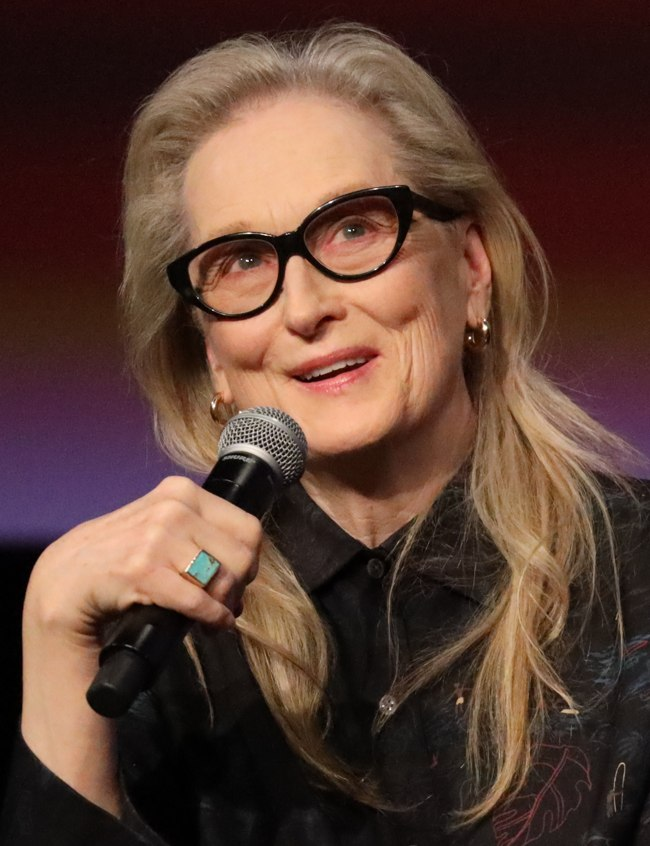
Meryl Streep has publicly said that she follows no religious doctrine and does not belong to a religious institution. That is a statement from an older interview, not a complete description of her beliefs today. It gives a reason to avoid automatically calling her a practicing Christian.
Streep returns as Miranda Priestly in The Devil Wears Prada 2, released May 1, 2026. The studio lists her among the returning lead cast. Her continuing film work makes her a current subject, while the question of faith requires evidence beyond memorable characters.
What has Meryl Streep said about religion?
During publicity for Doubt, Streep was asked directly about religion in an interview preserved by LondonNet. She answered that she followed no doctrine and did not belong to a church, temple, synagogue, or ashram. The answer describes a distance from formal religious affiliation rather than a detailed statement about every spiritual question.
The context matters. She was discussing a film with a Catholic setting. A question about her personal beliefs appears alongside questions about the story and the church. Her answers about a character should not be mixed with her answer about herself.
Is Meryl Streep a Christian or an atheist?
The cited response does not establish a Christian profession. It also does not explain enough to assign a complete atheist philosophy. Not belonging to a religious institution, not following a doctrine, and believing that no God exists are different statements. A writer should not treat them as identical.
Because this is an older interview, the profile also leaves room for later change. People are not frozen at the date of a quotation. If a clear newer statement becomes available, it should be considered. Until then, honest reporting is better than pretending to possess private knowledge.
Can playing a nun prove an actress’s faith?
No. Doubt provides an example of why performance and profession must remain separate. An actress can portray a person with strong religious convictions while holding a different outlook herself. Researching a role seriously is a professional responsibility, not a public declaration of worship.
The same rule applies to The Devil Wears Prada 2. Viewers can discuss ambition, authority, loyalty, and the use of influence without assuming that every character expresses Streep’s own moral beliefs. Fiction can help readers ask useful questions, but those questions should not be converted into unsupported biography.
How does the Bible view religious institutions?
The New Testament does not present Christian life as merely joining an organization. It begins with being reconciled to God through Jesus. At the same time, it does not treat the church as meaningless. Hebrews 10:24–25 calls believers to gather and encourage one another toward love and good works.
A church can offer teaching, accountability, worship, and practical care. It can also fail badly when people ignore the truth they profess. Jesus’ warnings against hypocrisy show that religious titles do not excuse wrongdoing. The standard is God’s character, not the protection of an institution’s image.
Does doctrine matter if a person is kind?
Kindness matters greatly in Scripture. But Christianity also makes claims about reality: God created us, humans have sinned, Jesus died for sinners, and he rose from the dead. These are not optional decorations around a general message to be nice. They explain why the Christian hope is centered on Christ.
First Corinthians 15 treats the resurrection as essential. If Jesus did not rise, the apostles’ message loses its foundation. A reader therefore needs to examine what is true, not only what feels welcoming or useful. Loving conduct and truthful teaching belong together.
Christians should speak about Streep’s public statements with that same combination of truth and love. The goal is not to place a famous person in a convenient category. It is to report fairly and invite every reader to consider the gospel without claiming to know another person’s heart.
What is the gospel of Jesus Christ?
The Christian message begins with God, who made us and is holy, loving, and just. Every person has sinned and fallen short of his glory (Romans 3:23). Sin includes our actions, words, desires, and refusal to love God and our neighbors. It brings guilt, separates us from God, and deserves his judgment. Fame, good intentions, religious customs, and kind deeds cannot erase that guilt.
God did not leave sinners without hope. Jesus Christ, the eternal Son of God, became human and lived without sin. He willingly died on the cross for sinners, taking the judgment they deserved. He was buried and rose bodily from the dead on the third day (1 Corinthians 15:3–4). His resurrection shows his victory over sin and death. He is alive, and he calls people to come to him.
Forgiveness and eternal life are gifts of God’s grace, received through faith in Jesus rather than earned by works (Ephesians 2:8–10). To repent is to turn from sin toward God; to believe is to rely on Christ and what he has done. Neither a family background nor a public label can replace that trust. A changed life, including love, honesty, and good works, follows salvation as its fruit. It does not purchase it. This invitation is for ordinary readers and famous people alike.
How should readers understand this profile?
This article separates the person’s public statements from Famous Faith’s Bible commentary. Older interviews tell us what someone said at that time; they cannot settle every question about present beliefs. We do not know anyone’s heart or claim to decide whether a person is saved. Christians can evaluate public ideas by Scripture while speaking truthfully, respecting the person, and praying with humility. The same questions about sin, grace, and faith apply to us.
Photo credit
Featured portrait: Kevin Payravi, Wikimedia Commons / WikiPortraits, via Wikimedia Commons, CC BY-SA 4.0. Resized and compressed for this page. Use of the photograph does not imply endorsement of this article.
