People · Beliefs
Ursula K. Le Guin
Ursula K. Le Guin drew the islands of Earthsea before she wrote her first novel about them. A book she found on her father’s shelf as a teenager helped shape the questions she asked about that world and her own.
- Born
- October 21, 1929 · Berkeley, California
- Best known for
- Earthsea and The Left Hand of Darkness
- Publicly identified as
- Taoist
- Died
- January 22, 2018 · Portland, Oregon · age 88
The map came before the novel
Before Ursula K. Le Guin wrote A Wizard of Earthsea, she drew a map of its islands. It gave her a place for a gifted young wizard named Ged to make a terrible mistake. He looses a shadow into the world and has to decide what to do about the danger he has made. The book came out in 1968 and began a series that reached millions of readers. Much later, Le Guin redrew the map herself from one of the early editions. Ursula K. Le Guin Foundation · Official biography · Official bibliography
Le Guin grew up in Berkeley, California, in a household where people talked about how other cultures lived. Her father, Alfred Kroeber, was an anthropologist. Her mother, Theodora Kroeber, was a writer. Le Guin recalled that listening to their visitors fed her interest in the way people make sense of the world. She carried that curiosity into stories whose characters often find themselves far from anything they know. Official biography · Public Books interview · Le Guin on her writing
What an unfamiliar world can show us
Le Guin studied at Radcliffe College and Columbia University. She moved to Portland, Oregon, with her husband Charles in 1958. Within a year of publishing A Wizard of Earthsea, she released The Left Hand of Darkness. In that novel, an envoy tries to build an alliance with the inhabitants of an icy planet. Their ideas about gender differ from his, and he has to learn how much his own habits shape what he sees. The novel won both the Hugo and Nebula awards. Official biography · Official bibliography · Penguin Random House
Her work ranged across novels, short stories, poetry, and books for children. In 2014, the National Book Foundation honored her with its medal for her contribution to American letters. She used her acceptance speech to recognize writers in science fiction and fantasy and to defend the freedom to imagine a different way to live. She died at home in Portland on January 22, 2018, at 88. Official biography · National Book Foundation · Publishers Lunch
What Le Guin said about Taoism
“I became a Taoist in my teens,” Le Guin told Public Books. She remembered finding Lao Tzu’s Tao Te Ching on her father’s bookshelf and going back to it in different translations over the years. She published her own English rendering in 1997. She also said that Taoist ideas ran deep in the structure of many of her stories. Public Books interview · Official bibliography · Shambhala Publications · Le Guin on her writing
Taoism has both philosophical and religious traditions. Le Guin explained her own interest in terms of how to make sense of life and how to live it. Later, she found value in Buddhist thinking, especially the idea that facing suffering is part of seeing life clearly. She also spoke about learning to meditate. Her own account points to a lasting Taoist outlook and a later interest in Buddhist ideas. The Paris Review interview · Public Books interview
Beyond the Spotlight
Part of Ged’s story is that the harm he caused is real. Many readers know what it feels like to face something they wish they could undo. The Bible calls our rebellion against God sin, and says every one of us has sinned. Jesus warned that sin brings judgment and that hell is real. He also spoke of the love that moved God to send his Son so people could be saved. Romans 3:23–26, Matthew 10:28 and John 3:16–18
Jesus took our sins upon himself and died on the cross. Then he rose bodily from the grave. Because of what he did, God offers forgiveness and eternal life by grace to those who trust in Christ. Repentance means turning from sin and turning toward God in trust. The hope Christians carry into the hard work of facing the truth is that the Savior who offers mercy is alive. 1 Peter 2:24, 1 Corinthians 15:3–8, and Acts 20:21 · Ephesians 2:4–9
Sources and image credit
- Official biography · Family, education, books, awards, and later life
- Ursula K. Le Guin Foundation · Le Guin’s Earthsea maps and the first novel’s story
- Penguin Random House · The Left Hand of Darkness plot and awards
- National Book Foundation · Le Guin’s 2014 lifetime achievement award and speech
- Public Books interview · Firsthand account of becoming Taoist and reading the Tao Te Ching
- The Paris Review interview · Le Guin on what Taoism and Buddhism contributed to her life
- Shambhala Publications · Le Guin’s English rendering of Lao Tzu
- Publishers Lunch · Le Guin’s death on January 22, 2018 at age 88
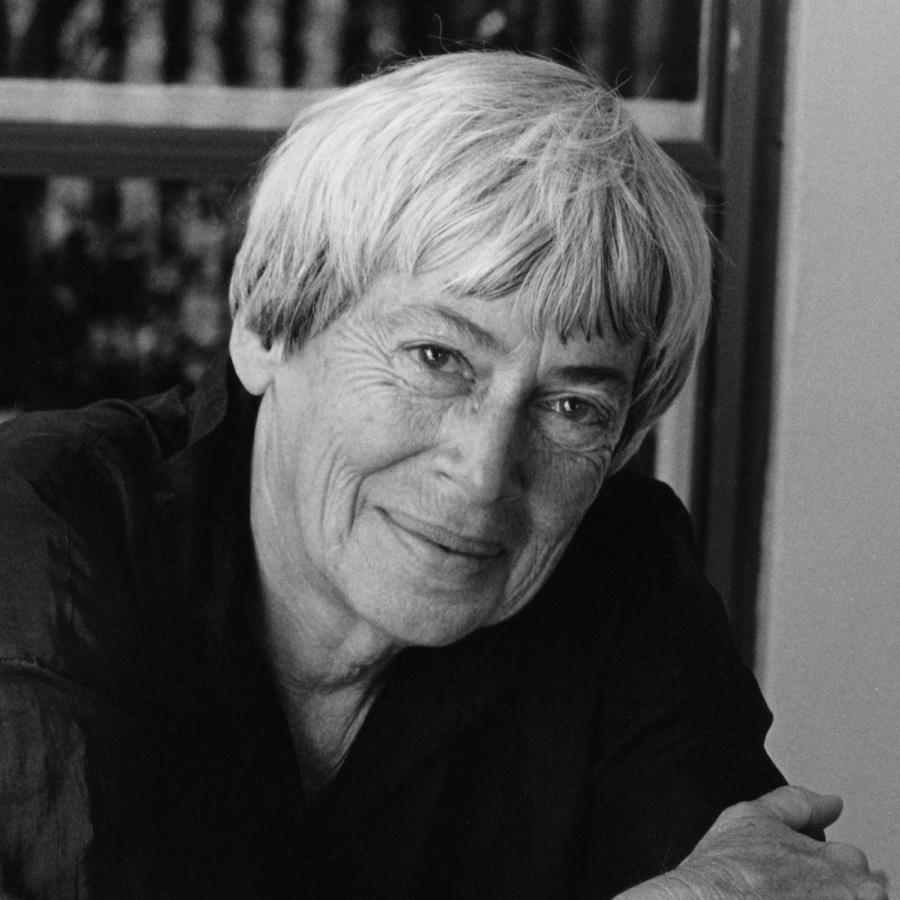
Photograph by Marian Wood Kolisch / Oregon State University Libraries, restored by Adam Cuerden, cropped to a square. Wikimedia Commons source · CC BY-SA 2.0
