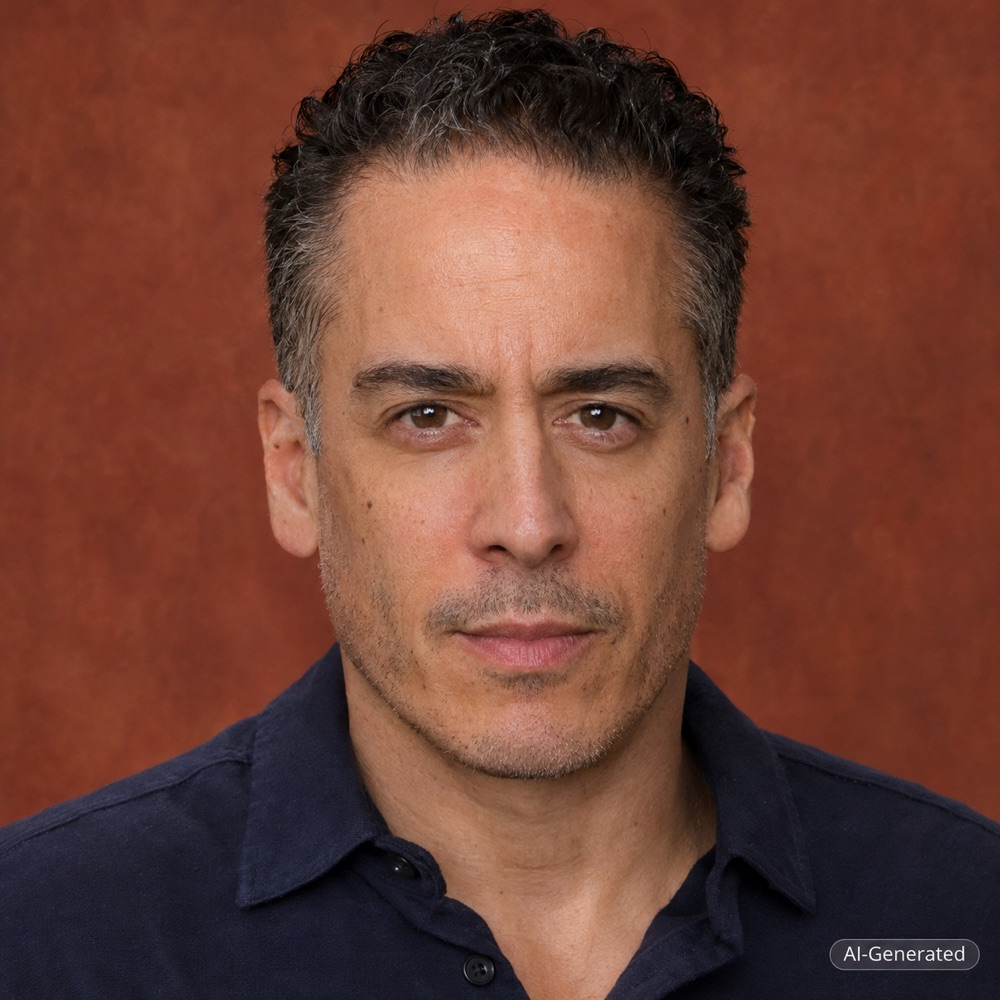
Kirk Acevedo’s current religious affiliation is unconfirmed in the reliable sources reviewed. His extensive dramatic work, including Ricardo Diaz on Arrow, does not establish a personal Christian profession or a rejection of faith.
The person behind the performance
Acevedo is an actor whose credits include Oz, Band of Brothers, Fringe, and 12 Monkeys. His career reference records both training and a body of work in demanding ensemble dramas. Arrow is one part of that wider career.
A performer known for intense roles can become closely associated with a particular kind of character in an audience’s mind. A religion profile needs a more careful distinction. Acting convincingly as a violent or threatening person is not evidence that the performer holds a corresponding worldview in private life.
Their part in Arrow
In Arrow, Acevedo portrays Ricardo Diaz, also known as the Dragon. The character uses criminal power and coercion to threaten the city and the people around Oliver Queen. His influence raises questions about what happens when fear and self-interest overwhelm public responsibility.
These are features of a fictional antagonist. They do not provide a religious biography of Acevedo. Famous Faith can examine what the story shows about power while refusing to turn a villain’s conduct into an accusation about the actor who performs the role.
What the public record says about faith
The sources reviewed have not established a present denomination, church affiliation, or explicit account of faith in Jesus Christ. An ethnic background, surname, or professional association with a religiously themed production would not be enough to make that claim.
The profile therefore reports the current affiliation as unconfirmed. That statement is deliberately narrower than either calling Acevedo Christian or calling him an unbeliever. It describes the evidence available for this article. The biblical observations that follow belong to Famous Faith and are not presented as beliefs the actor has expressed.
Fear can obtain compliance without making authority legitimate
When intimidation works, it can tempt both the person using it and the people watching to confuse effectiveness with rightful authority. A threat may produce obedience. It does not establish that the demand is just or that the person making it deserves trust.
Jesus distinguishes domination from service in Mark 10:42–45. His teaching challenges the desire to measure greatness by how completely other people must submit. Proverbs 29:25 also warns about the trap created by fear of human beings. Together these passages expose the moral weakness beneath an apparently powerful threat.
Famous Faith’s reflection is that courage can include refusing to normalize coercion, while prudence may require seeking help and protection. The question for those with influence is equally serious: do people cooperate because they trust our integrity, or because they fear what we will do to them? Leadership worthy of confidence must offer more than the capacity to impose a cost.
The gospel and the hope of grace
The Bible says that all have sinned and fall short of God’s glory (Romans 3:23). Our need is deeper than an imperfect public image: we have failed to love God and our neighbors as we should. Jesus Christ, God’s Son, lived without sin, died for sinners, and rose bodily from the dead. His death and resurrection are central to the gospel (1 Corinthians 15:3–4). Salvation is God’s gift, received through faith in Christ rather than earned through good deeds, church membership, or personal achievement (Ephesians 2:8–10). Jesus calls us to repent and believe. A changed life follows his grace; it does not purchase forgiveness.
The reflection above expresses Famous Faith’s Christian perspective. It is not attributed to the actor or presented as a claim to know anyone’s heart.
Sources and image credit
Original AI-generated editorial portrait of Kirk Acevedo, created for Famous Faith. Artistic interpretation, not a photograph. No endorsement by the performer or production is implied.