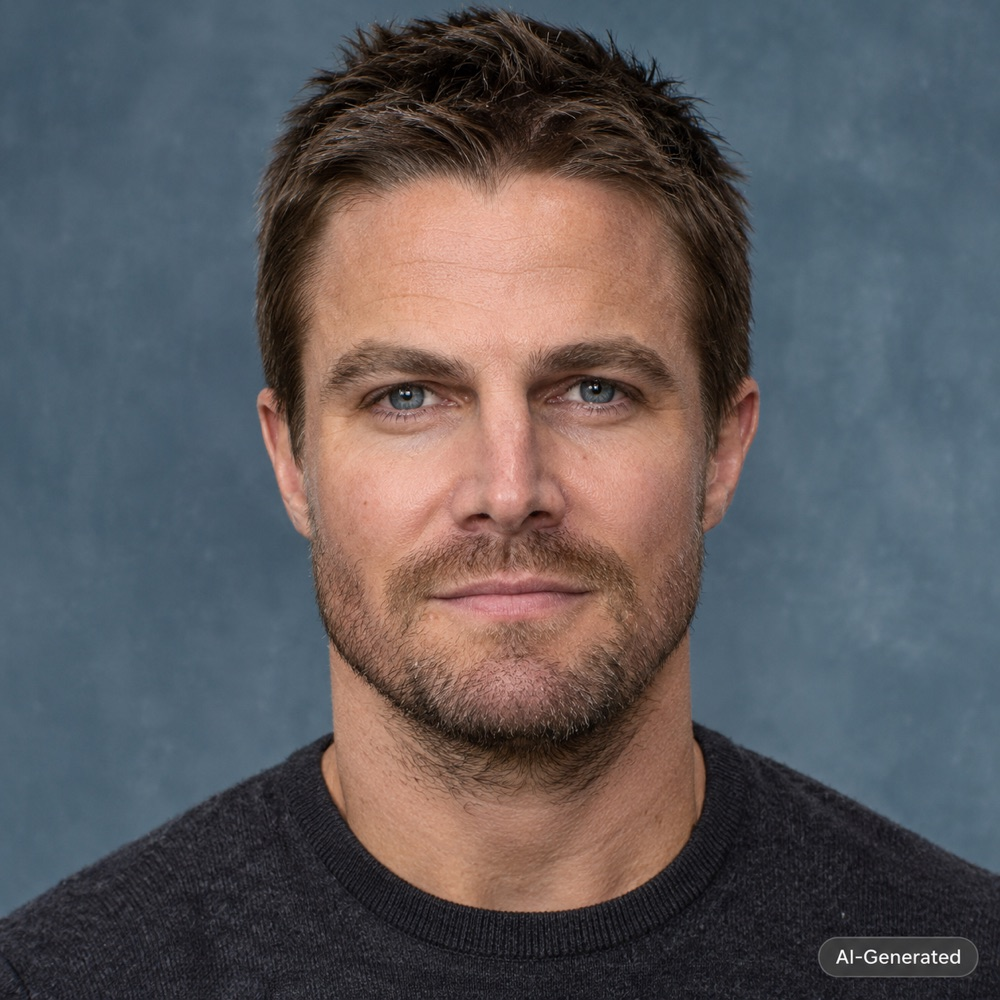
Stephen Amell’s current religious affiliation and a personal profession of Christian faith are unconfirmed in the reliable sources reviewed here. His work as Arrow’s Oliver Queen is documented, but a heroic screen role is not a religious testimony.
The person behind the performance
Amell is a Canadian actor whose work includes Arrow, the wrestling drama Heels, and Suits LA. His career biography records both television work and appearances as Casey Jones in Teenage Mutant Ninja Turtles: Out of the Shadows.
Stephen is the cousin of Robbie Amell, who played Ronnie Raymond on The Flash. They also worked together on the Code 8 films. Their relationship is directly discussed in their Entertainment Tonight interview. They are cousins, not brothers, and their individual beliefs should not be assumed to be identical.
Their part in Arrow
Amell portrays Oliver Queen, the central figure of Arrow. Oliver’s return home begins a difficult attempt to confront corruption and the consequences of his family’s history. The role develops from a secretive vigilante into a leader whose choices affect a wider circle of people.
Those fictional questions about guilt, sacrifice, and responsibility can support a Christian discussion. They do not make Oliver an illustration of Christian doctrine in every detail, nor do they establish Amell’s own religious convictions.
What the public record says about faith
The sources reviewed establish Amell’s career and family relationship more clearly than a present religious identity. Attending a school with a religious history, being charitable, or speaking warmly about family would not by itself establish conversion or a denomination.
Famous Faith therefore leaves his current affiliation unconfirmed. That is a statement about the limits of this profile’s evidence, not a declaration that he has no beliefs. It also leaves room to update the account if a clear, attributable statement becomes available. A character’s willingness to sacrifice cannot fill that evidentiary gap.
Guilt cannot be repaired by controlling everyone else
Oliver’s story raises a question that reaches beyond a fictional city: what do we do after recognizing that something has gone badly wrong? A person may respond by trying to control more circumstances, defeat more enemies, or construct a new identity. Activity can become a way of avoiding a truthful reckoning with the self.
Scripture joins responsibility with humility. Proverbs 28:13 contrasts concealing sin with confessing and forsaking it. First John 1:8–9 warns against denying sin and points to God’s forgiveness. The biblical answer is not that determination makes a person innocent. Neither revenge nor an impressive record of service can erase guilt.
This is Famous Faith’s reflection on the themes of the role, rather than a claim about Amell’s intentions. The useful personal question is whether we are willing to admit wrongdoing and seek mercy, including when doing so costs us the image of being in control.
The gospel and the hope of grace
The Bible says that all have sinned and fall short of God’s glory (Romans 3:23). Our need is deeper than an imperfect public image: we have failed to love God and our neighbors as we should. Jesus Christ, God’s Son, lived without sin, died for sinners, and rose bodily from the dead. His death and resurrection are central to the gospel (1 Corinthians 15:3–4). Salvation is God’s gift, received through faith in Christ rather than earned through good deeds, church membership, or personal achievement (Ephesians 2:8–10). Jesus calls us to repent and believe. A changed life follows his grace; it does not purchase forgiveness.
The reflection above expresses Famous Faith’s Christian perspective. It is not attributed to the actor or presented as a claim to know anyone’s heart.
Sources and image credit
- Biographical and career reference: Stephen Amell
- Entertainment Tonight: Stephen and Robbie Amell interview one another
Original AI-generated editorial portrait of Stephen Amell, created for Famous Faith. Artistic interpretation, not a photograph. No endorsement by the performer or production is implied.