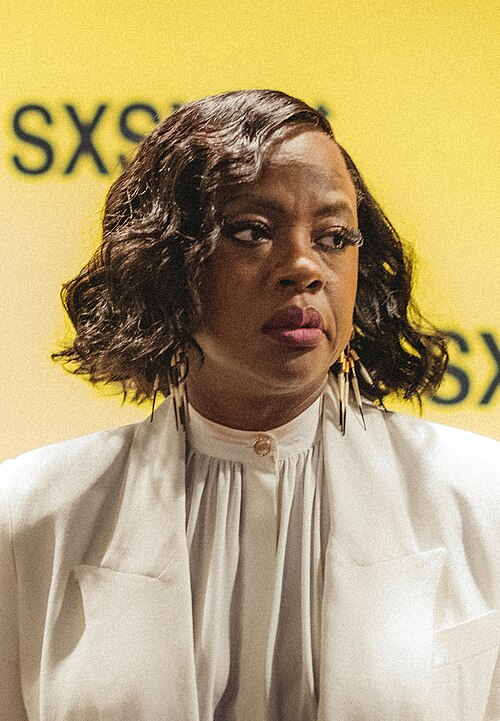
Viola Davis has publicly affirmed belief in God and described prayer as a source of hope. She has spoken about turning things over to a higher power when she does not have answers, and she has shared a personal story about praying before meeting her husband, Julius Tennon. Those are her own statements, rather than conclusions drawn from a character she played.
Her public faith story is closely connected with the need for hope, love, and a life larger than professional success. The available interviews give us meaningful details while leaving some questions about denomination and doctrine unanswered.
What Viola Davis has said about God and prayer
In a 2020 AARP interview, Davis identified herself as a believer in God. She explained that she sometimes needs to hand things over to a higher power because she does not possess every answer. Asked about hope, she connected it both with prayer and with the need to keep going.
She also described living for love, her family, and the chance to share wisdom that might help others. These statements show belief operating in ordinary relationships and difficult moments, rather than only in awards speeches.
Her 2022 conversation with Oprah Winfrey offered another example. Davis recalled praying for a husband with specific qualities, including love for God and a connection to church. She told the story in relation to meeting Tennon. Prayer was part of how she understood that experience.
Oprah Daily used the language of manifestation in describing the conversation. That editorial wording should not automatically become a full religious label for Davis. The direct evidence is that she addressed God in prayer and connected that prayer with her relationship story.
What we can say, and what remains private
Davis’s remarks support a clear statement that she has publicly expressed belief in God, prayer, and the importance of faith. The references to God and church fit a Christian setting. The interviews cited here do not provide a complete statement of her views on every Christian doctrine or establish a current denominational membership.
It is better to keep that distinction than to fill gaps with assumptions. A person can speak openly about prayer while keeping other convictions private. Research should tell readers what has been said and allow the limits of the record to remain visible.
The life and work behind those comments
Davis has built a career across stage, television, and film. Her work includes Doubt, Fences, How to Get Away with Murder, Ma Rainey’s Black Bottom, and The Woman King. She often plays people under pressure, bringing complicated emotions into view without reducing a person to one feeling.
In the AARP profile, Davis discussed an early life marked by poverty and the struggle to feel seen. Her later success did not make questions of worth disappear. Her memoir, Finding Me, also places her career within a wider personal story. Professional recognition is only one part of a human life.
That matters when discussing faith. The belief of an actress is not the belief of every character she portrays. Her public reflections on hope and prayer provide evidence about her outlook; a dramatic performance does not function as a personal creed.
Prayer and hope in the Bible
The Bible encourages people to bring real needs to God. Philippians 4:6–7 calls believers to pray with thanksgiving rather than be ruled by anxiety. First Peter 5:7 describes casting our cares on God because he cares for us. Prayer is not reserved for people who already feel strong.
Davis’s willingness to admit she does not have every answer has a biblical point of connection. Proverbs 3:5–6 calls for trust in the Lord rather than relying only on our own understanding. Humility recognizes the limits of our knowledge without treating truth itself as impossible to find.
Scripture also gives prayer a boundary: God is a Father to trust, not a force to control. First John 5:14 connects confidence in prayer with his will. Jesus himself prayed in Gethsemane with submission to the Father (Luke 22:42). Faith does not promise that writing a detailed request guarantees a particular outcome.
That distinction protects hurting readers. An unanswered prayer does not prove that someone failed to believe hard enough. Christians can ask boldly, grieve honestly, and continue to trust God when his answer differs from what they hoped. Biblical hope rests in his character, not in a method for obtaining the life we want.
The gospel gives hope a lasting foundation
Christianity addresses a need deeper than success or a feeling of worth. Romans 3:23 teaches that all have sinned. We have disobeyed a holy God and cannot remove our guilt by earning praise, caring for others, or speaking religious words. We need forgiveness that we cannot create for ourselves.
God has acted through Jesus Christ, his Son. Jesus lived without sin and willingly died on the cross for our sins, bearing the judgment sinners deserve. He was buried and rose bodily from the dead. First Corinthians 15:3–4 presents those events as the heart of the good news.
Salvation is God’s gift by grace through faith, not a reward for good works (Ephesians 2:8–9). Jesus calls us to repent, turning from sin and self-rule, and trust him as Lord and Savior. His finished work, rather than our record, is the ground of acceptance with God.
If you are searching for hope, you can begin by reading the Gospel of John and considering Jesus’ promises. You do not need a public platform or a polished story to come to him. The gospel offers mercy to real people with real failures, and a hope that reaches beyond the circumstances of this life.
Photo: Viola Davis at SXSW in 2023, by Nomoretitanic, via Wikimedia Commons, CC BY-SA 4.0. Commons cropped version; resized. Image reuse remains under the same license.
