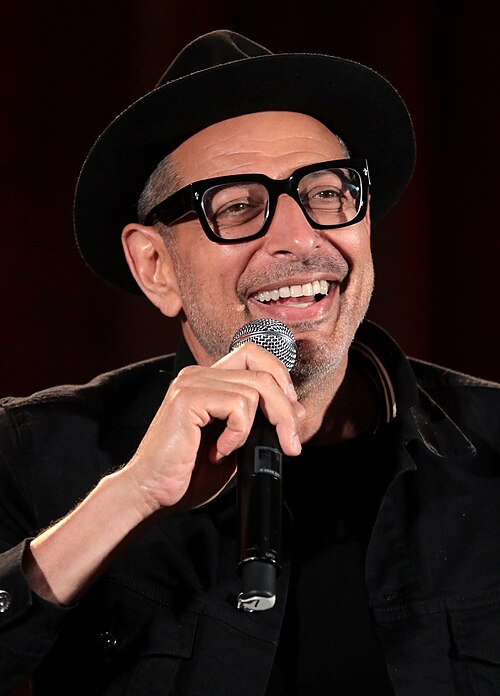
Jeff Goldblum has made a career out of being curious. From Jurassic Park and Independence Day to his role as the Wizard in Wicked, he often plays people who invite audiences to look more closely at the world. His interviews raise another question: What does Jeff Goldblum believe about God?
Goldblum has a Jewish background, but his public comments describe a spiritual outlook that does not fit neatly into a traditional religious label. He has discussed meditation, wonder, and skepticism. The interviews discussed here do not contain a profession of Christian faith.
His Jewish background
In a 2014 Esquire interview with Scott Raab, Goldblum said he had his bar mitzvah in Pittsburgh. He also spoke warmly about Yiddish and described his parents as not particularly observant. His account connects Jewish identity with family and childhood, while leaving room for a more personal search for meaning.
A bar mitzvah is a meaningful part of a Jewish upbringing. It does not, by itself, tell readers how an adult practices religion decades later. Family heritage, religious observance, and personal belief are connected parts of a life, but they are not interchangeable.
What he has said about God
Asked directly about belief in God by Interview magazine in July 2019, Goldblum answered, “Not the traditional man-in-the-sky idea.” That short answer rejects a particular picture of God, but does not explain every part of his beliefs.
In the same conversation, he traced an interest in yoga to his early acting training and said he began Transcendental Meditation in 1973. He also recalled a supposed psychic treatment that he later considered fraudulent. His comments combined openness to mystery with a desire to distinguish imagination from reality, especially as a father.
Those remarks should not be stretched into a detailed statement of faith. Nor should an interview from 2019 be treated as a complete account of his beliefs today. It is fair to describe what he said, while leaving questions he did not answer open.
Playing a powerful figure is not a statement of faith
Goldblum discussed playing the Wizard with Wicked director Jon M. Chu in a 2024 Man About Town interview. Chu praised his continuing curiosity, and Goldblum spoke enthusiastically about the experience of making the film.
An actor can portray a ruler, a religious figure, or a person with very different beliefs from his own. A performance tells a story. It is not a personal creed. Viewers can enjoy Goldblum’s work without assuming that a character speaks for him.
The distinction also matters when a film raises moral questions. A story may help us notice manipulation, courage, or cruelty. Understanding those themes can start a useful conversation, but the actor’s own words are a better guide to his personal views.
Kindness and the desire for a clear conscience
In Vanity Fair’s April 2026 Proust Questionnaire, Goldblum valued kindness, intelligence, and humor in friends. He expressed concern for the safety and nourishment of living creatures and said he hoped to die with a clear conscience.
Wanting a clear conscience is deeply human. Most of us would like to look back on our lives without shame. Yet the Bible asks us to examine ourselves by something more reliable than our own approval.
Have you ever lied, taken something that was not yours, or wanted what belonged to someone else? God’s commandments address those ordinary choices. In Matthew 5, Jesus also confronts anger and lust in the heart. God sees the motives we can hide from other people.
These questions are for the reader and the writer, not an invitation to single out a celebrity. Romans 3:23 teaches that all have sinned and fall short of God’s glory. Whether we grew up in a religious home or questioned religion from childhood, we share the same need.
The Christian answer to guilt
Christianity teaches that God is holy, just, and loving. He is not a man sitting somewhere above the clouds. He is the Creator, and we are accountable to Him. His law exposes our guilt and shows why trying harder cannot erase sins already committed.
The good news is Jesus Christ. He is the divine Son of God, who became human and lived a completely sinless life. He willingly went to the cross and bore the penalty for our sins in our place. He was buried and rose bodily from the dead, victorious over sin and death.
Forgiveness and eternal life are God’s gift by grace through faith, not a reward for good works. Ephesians 2:8–9 makes that clear. Neither kindness, religious heritage, nor personal discipline can purchase salvation. Jesus has done the saving work.
You can acknowledge your sin before God and trust in Jesus Christ and His finished work. The hope of the gospel rests on the Savior who died and rose again, rather than on our ability to create a spotless record.
Goldblum’s public story invites thoughtful questions about wonder, belief, and conscience. Scripture brings those questions home to each of us. We need more than an interesting spiritual conversation. We need forgiveness, and Jesus offers the grace we cannot earn.
Sources
Scott Raab interview with Jeff Goldblum, Esquire, February 27, 2014
Sarah Nechamkin, Straddling Multiple Universes with Jeff Goldblum, Interview, July 30, 2019
Jeff Goldblum in conversation with Jon M. Chu, Man About Town, December 2, 2024
Jeff Goldblum Answers the Proust Questionnaire, Vanity Fair, April 8, 2026
Bible passages: Exodus 20:1–17; Matthew 5:21–28; John 1:1–14; Romans 3:23; 1 Corinthians 15:3–4; 1 Peter 2:24; Ephesians 2:8–9.
Photo: Gage Skidmore, Jeff Goldblum at Phoenix Fan Fusion, May 25, 2019, CC BY-SA 3.0. Resized.
