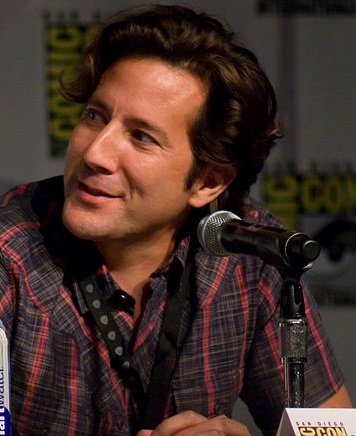
Henry Ian Cusick has a Catholic background and is known to many Christian viewers for portraying Jesus in the 2003 film The Gospel of John. His career also includes Desmond Hume on LOST and Charles Darwin in Darwin’s Darkest Hour. Those roles invite serious questions about faith, but none should be treated as a complete statement of the actor’s current beliefs.
A background connected with Catholicism
Published biographical material describes Cusick’s Catholic upbringing. That background is relevant to understanding how religious subjects entered his life and work. It does not, by itself, establish current church attendance or tell us exactly how he would explain salvation today.
A careful profile distinguishes family influence, familiarity with Scripture, and personal profession. These can be related, but they are not interchangeable. The public sources considered here provide a starting point rather than permission to speak on his behalf about every doctrine.
Portraying Jesus in John’s Gospel
Cusick’s official website highlighted The Gospel of John in an April 2020 Easter post. It described the film as a word-for-word retelling, narrated by Christopher Plummer, with Cusick playing Jesus. The project gives viewers an unusual opportunity to hear an extended biblical account through a dramatic performance.
The distinction between actor and subject remains essential. A film can help a viewer attend to a passage, but the performer is not the person Christians worship. The point of reading John is to consider Jesus Himself, not to transfer devotion to a familiar face.
Another role involving religion and questions
In a September 2009 PBS NOVA interview, Cusick discussed playing Charles Darwin. He described learning more about Darwin as a family man and reassessing the simple image he had held before preparing for the part. He also spoke favorably about examining the ideas behind the film rather than avoiding it because of its subject.
Those remarks concern his response to a historical role and its themes. They do not supply a detailed account of his own present religion. One conversation about science should not be stretched into a complete theological position.
Understanding before disagreeing
Cusick’s account of preparation offers a useful principle: understanding an argument requires hearing it accurately. Christians can hold convictions and still make the effort to learn what another person actually means. Misrepresenting a view is not a faithful defense of truth.
Proverbs 18:13 warns against answering before listening. That applies to religious conversation as much as any other subject. We should be able to explain a disagreement fairly before we respond to it, while also admitting where our own knowledge has limits.
Desmond’s story and the actor’s life
LOST places Desmond within a story of love, uncertainty, sacrifice, and events beyond his control. Those themes can move viewers deeply. The emotional force of the role does not tell us whether Cusick personally endorses every spiritual idea the series explores.
A fictional world can start questions that need answers outside the script. We can ask what love requires, whether our choices matter, or where hope comes from. A Christian response should identify those questions and then turn to Scripture, rather than making the island into a replacement Bible.
What John’s Gospel claims
John begins by describing the Word who was with God and was God, and who became flesh (John 1:1–14). Jesus is presented as more than an inspiring teacher. The Gospel places His identity at the center of its account of salvation.
Its purpose is also explicit: the signs are written so readers may believe that Jesus is the Christ, the Son of God, and have life in His name (John 20:30–31). These are claims to examine. Christian faith does not rest merely on being moved by religious art.
Love that reaches toward another person
A powerful performance can make sacrifice feel concrete. Yet real love is often quieter than a dramatic scene: telling the truth, keeping a promise, or caring for someone when we are tired. Scripture directs that attention toward actual neighbors, not only imagined heroes.
Jesus’s command to love one another in John 13 is grounded in His own love. Christians should let that challenge their conduct without pretending they can save themselves by becoming sufficiently selfless. The Gospel supplies both a call to love and the grace sinners need.
The law exposes our need
Have we lied, stolen, coveted, or allowed hatred to shape our treatment of someone? Jesus also addresses anger and lust in the heart (Matthew 5). God’s law reaches beneath the roles we play for one another and exposes motives we would prefer to keep hidden.
Romans 3:23 says all have sinned. We are accountable to a just God, and familiarity with a biblical story does not erase our guilt. Neither acting in a religious film nor admiring one provides forgiveness. The law shows why every reader and writer needs a Savior.
The living Savior beyond the screen
Jesus Christ is the divine Son of God. He lived without sin and willingly died on the cross, bearing the penalty for our sins in our place. He was buried and rose bodily from the dead. His finished work provides the foundation for forgiveness and eternal life.
Salvation is God’s gift by grace through faith, not a reward for good works (Ephesians 2:8–9). We acknowledge our sin and trust Jesus and what He has done. Cusick’s work can draw attention to important questions; the Christian invitation is to know the Savior whom John’s Gospel proclaims.
Sources
Henry Ian Cusick’s official website: The Gospel of John, April 10, 2020.
PBS NOVA: Being Charles Darwin, interview conducted September 2, 2009.
TV Insider: Henry Ian Cusick biography.
Photo: vagueonthehow, via Wikimedia Commons, CC BY 2.0. Cropped on Commons.
