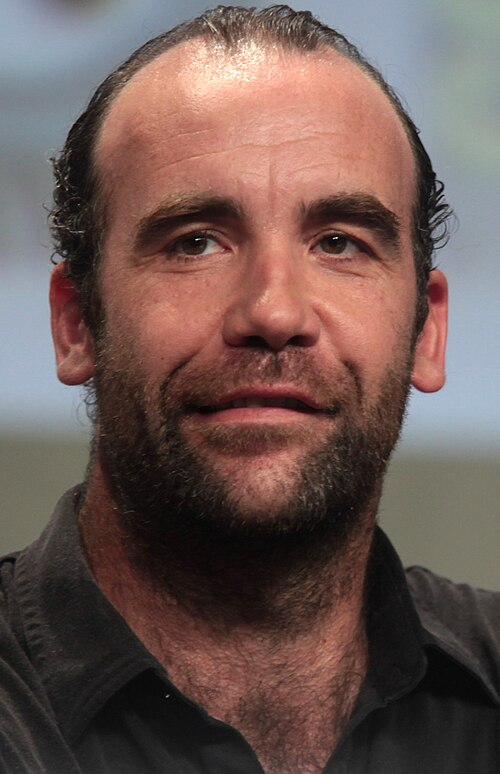
Rory McCann’s current religious beliefs are not clearly confirmed in the primary interview material reviewed for this profile. There is not enough verified evidence here to call him a practicing Christian or assign him another religious affiliation. His character’s words about religion should not be used as a shortcut to describing the actor.
McCann played Sandor “the Hound” Clegane in Game of Thrones. The Hound’s anger, injuries, and opinions belong to the story. A performance can raise difficult questions without supplying a personal confession from the man on screen.
Rory McCann on understanding the Hound
In a 2014 interview with Westeros.org, McCann discussed how the character’s history helped him approach the role. He spoke about the effect of the Hound’s appearance and what his brother had done to him. He also described seeking background information from the writers. Those comments explain acting choices, not McCann’s religious beliefs.
His account is a useful reminder that an angry fictional person can have a history the audience needs to understand. Understanding why someone acts a certain way is different from declaring every action justified. That distinction matters in stories and in ordinary relationships.
Pain deserves care, and wrongdoing deserves honesty
The Bible does not ask people to pretend that suffering has no effect. Psalm 34:18 speaks of God’s nearness to the brokenhearted. Christians should respond to wounded people with patience rather than assume that a difficult manner tells the whole story.
At the same time, hurt does not make every response right. We can recognize pain while taking cruelty and violence seriously. A person who has suffered may need help and protection; other people also need protection from harmful behavior. Compassion does not require abandoning truth.
These are biblical reflections on a theme in the character’s story. They are not a diagnosis of McCann or a claim about experiences he has not shared. We should allow the actor and the role to remain separate.
The temptation to keep a record of revenge
Revenge can seem like a way to regain control after being wronged. Yet continually rehearsing another person’s guilt can become a burden of its own. The Bible directs us away from personal vengeance and toward God’s justice (Romans 12:19). That does not mean avoiding lawful protection or pretending a wrong never happened.
It also brings us to our own need for mercy. God’s Ten Commandments reveal His holy law. They forbid lying, theft, adultery, coveting, murder, and worshiping anything in His place. Jesus addresses hateful anger and lust in the heart as well (Matthew 5:21–28). We may condemn obvious brutality while excusing wrong within ourselves.
Romans 3:23 says all have sinned and fall short of God’s glory. We deserve His just judgment. Our pain, good intentions, or comparison with someone worse cannot erase guilt. This is the shared condition of the writer and reader, not a special judgment against an actor.
The Savior who bore what sinners deserve
The Gospel offers more than advice about controlling anger. Jesus Christ is God’s eternal Son. He became truly human while remaining truly God and lived a completely sinless life. He perfectly obeyed the Father and never used His suffering as a reason to do evil.
Jesus willingly died on the cross as the substitute for sinners, bearing the judgment we deserve. He was buried and rose bodily from the dead on the third day (1 Corinthians 15:3–4). His resurrection is central to the Christian hope. It announces the victory of the living Savior, not merely the endurance of an inspiring example.
God offers forgiveness and eternal life by grace through faith in Christ, not as rewards for works (Ephesians 2:8–9). We cannot purchase salvation through courage, religious effort, kindness, or suffering enough. Jesus has finished the saving work. Those who trust Him receive mercy because of His sacrifice and righteousness rather than their own ability to make everything right.
A question beyond a powerful performance
McCann’s portrayal can lead viewers to consider pain, revenge, and the possibility of mercy. It does not establish his personal faith. The sources reviewed here leave his current religion unconfirmed, and we cannot judge his heart from a fictional character.
For each reader, the need for Christ is personal. Have you acknowledged your sin before God and trusted Jesus Christ alone? His death for sinners and His bodily resurrection provide the basis for forgiveness and eternal life. Come relying on His finished work. The Gospel gives hope that neither revenge nor a heroic reputation can supply: reconciliation with the God whose mercy is offered through His Son.
Sources and photo credit
Interview with Rory McCann and Maisie Williams, Westeros.org, March 24, 2014. Scripture: Psalm 34:18; Romans 12:19; Matthew 5:21–28; Romans 3:23; 1 Corinthians 15:3–4; Ephesians 2:8–9.
Featured photo: Rory McCann at San Diego Comic-Con, 2014, by Gage Skidmore / Wikimedia Commons, CC BY 2.0. Existing cropped version, resized.
