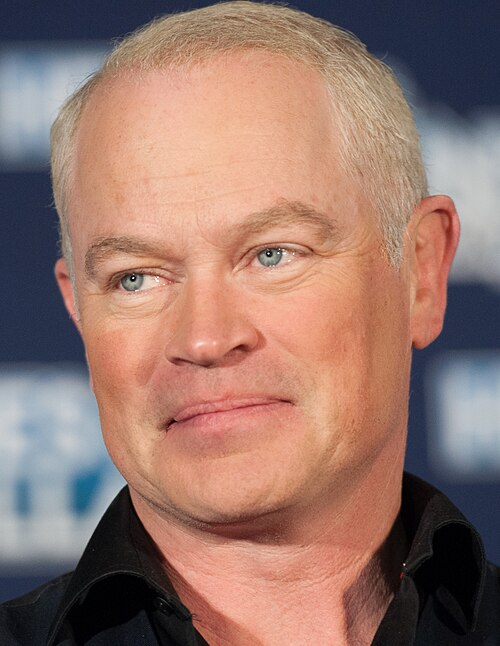
Neal McDonough openly identifies with the Catholic faith. In a 2023 interview reported by Faithwire, he spoke about gratitude to God, his marriage, his children, and the boundaries he sets in his acting work. Unlike a religion label guessed from a surname or a screen role, this is based on his own public discussion of faith.
Desperate Housewives viewers know him as Dave Williams. The darkness of that fictional storyline should not be confused with the actor’s personal convictions. McDonough has often played villains while speaking positively about God and his family away from the camera.
Faith, marriage, and a professional boundary
McDonough has explained that he declines sex scenes and on-screen kissing with other performers. In the Faithwire interview, he linked his outlook to appreciation for his wife, Ruve, and the life God has given him. He also discussed teaching his children to work hard. These are public statements about his priorities, not merely assumptions drawn from his work in religious films.
Is Neal McDonough a Christian? He publicly professes Catholic Christianity. We can report that clearly while remembering that no writer can see another person’s heart or issue God’s verdict about his salvation.
Why a conscience matters when a career is at stake
Many people never face a Hollywood casting decision, but nearly everyone faces pressure to cross a line. A supervisor may reward dishonesty. Friends may make faithfulness look foolish. The temptation is to say that one compromise will buy enough security to make everything easier later.
The Bible treats faithfulness in marriage as good and serious. Hebrews 13:4 honors marriage, and Jesus speaks about the heart’s desires as well as outward behavior. Loving a spouse involves more than avoiding a headline. It includes truthfulness, patience, sacrifice, and attention when nobody is applauding.
A person may reasonably appreciate McDonough’s willingness to state his boundaries without assuming that every Christian must make identical professional decisions in every situation. A conscience should be trained by Scripture. It should not become a tool for boasting that we are better than our neighbors.
A good boundary cannot erase a guilty past
Here is where a conversation about values must reach a deeper question. Can a strong marriage, a firm conscience, or a courageous decision make us right with God? Those things can be good gifts, but they cannot pay for sin. God is holy. He does not measure us only against the worst behavior we can find in someone else.
The Ten Commandments address our worship, speech, honesty, desires, and relationships. Have we always loved God above everything? Have we lied, coveted, stolen, or misused His name? Have we honored others with our thoughts as well as our actions? Jesus’ teaching in Matthew 5 exposes anger and lust beneath a respectable surface.
Romans 3:23 says all have sinned and fall short of God’s glory. That truth includes religious people and people who have never entered a church. Our failures are not balanced away by a later accomplishment. God’s justice is real, and we need forgiveness that rests on something stronger than our record.
Jesus is the foundation of Christian hope
The good news is that God has acted for sinners. Jesus Christ is the eternal Son of God who became truly human. He lived without sin, perfectly loving the Father and fulfilling the law we have broken. His obedience was complete, not a polished public image covering private rebellion.
Jesus willingly died on the cross for our sins. He bore the judgment sinners deserve, was buried, and rose bodily from the dead on the third day. His victory is the foundation of the Gospel. Christianity centers on this living Savior, not simply on admirable family values or encouragement to try harder.
Ephesians 2:8–9 teaches that we are saved by grace through faith, not by works. Titus 3:5 also points away from our righteous deeds as the cause of salvation and toward God’s mercy. Religious identity, generous giving, moral boundaries, and years of effort cannot replace Christ’s finished work. Forgiveness is a gift received through faith in Him.
Faithfulness grows from grace
This does not make obedience unimportant. Ephesians 2:10 describes believers as created in Christ for good works. The order matters: good works are the fruit of salvation, not the price of admission. We can honor a marriage and work honestly from gratitude instead of trying to assemble enough evidence to force God to accept us.
McDonough’s public faith invites a useful personal question: am I resting in Jesus, or am I resting in the strength of my principles? Acknowledge your sin before God and trust the crucified and risen Christ as your only Savior. His finished work is sufficient. Then let His Word shape your choices, including the quiet commitments at home that may never make an entertainment headline.
Sources
Featured image: Neal McDonough, 2016, by Heroes & Villains, via Wikimedia Commons, CC BY-SA 2.0. Existing Commons crop, 500-pixel version; no additional changes.
