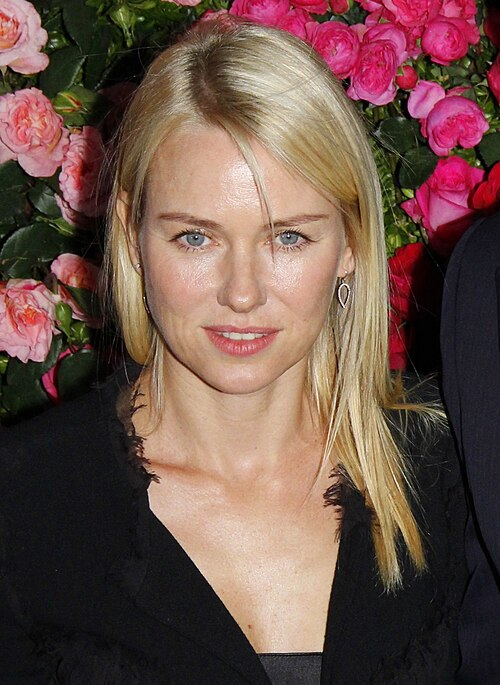
Naomi Watts has been linked in public reporting with an interest in Buddhism, and she has personally discussed meditation. Those are worth including in a profile of what Hollywood believes. An honest account should also explain the limits of the evidence, rather than turning a reported interest into a definite current religious identity.
The sources below include an older report quoting her on Buddhism and a later interview about her daily practices. They do not establish a complete statement of her faith. We will describe what they do support, then consider the differences between spiritual practices and the Bible’s message of salvation.
From film breakthrough to television drama
Watts became widely known through her work in David Lynch’s Mulholland Drive. Her film career includes The Ring and Peter Jackson’s King Kong. She received Academy Award nominations for 21 Grams and The Impossible, two performances that brought her major attention.
Her work also includes Penguin Bloom and Birdman. On television, she appeared in The Watcher, The Loudest Voice, and Twin Peaks: The Return. She has worked as a producer as well as an actress. These credits show the variety of stories and formats in her career.
Many viewers first become curious about an actor through a moving performance. That can be the start of learning more about the person, but it cannot settle a question of religion. A character’s grief, prayer, or view of life after death is part of a story. The performer’s personal outlook needs separate evidence.
What was reported about her interest in Buddhism?
A February 2006 report in The Himalayan Times, citing Contactmusic, linked Watts’ interest in Buddhism to filming The Painted Veil. It quoted her saying, “I have some belief but I am not a strict Buddhist or anything yet.” That qualifying statement matters. The report’s stronger description of conversion should not replace the uncertainty in the words attributed to her.
This is a secondary report, not a full original interview transcript reviewed here. It is evidence of a reported interest at that time, with clear limits. It does not establish that she accepts every Buddhist teaching, belongs to a particular Buddhist community today, or has made a permanent choice that can never change.
A responsible profile can include this history without using it to make claims about beliefs she has not explained. It would be equally careless to label her Christian because of a role or to label her a committed Buddhist only because an old headline did so.
Her later comments about meditation
In a June 2024 Wall Street Journal interview with Lane Florsheim, Watts said that she meditates. She described using different approaches, including yoga classes and meditation recordings, when she could not keep her former twice-daily routine. This is a direct public statement about a practice, rather than a guess based on the people around her.
That statement does not supply a complete religion. Meditation can be discussed as a personal practice without assuming what the person believes about God, death, or salvation. The interviews cited here do not establish a clear profession of Christian faith, but lack of that evidence is not proof that we know everything she believes.
What does the Bible mean by meditation?
The Bible itself uses the idea of meditation. Psalm 1 describes a person reflecting on God’s instruction. Joshua 1:8 connects meditation on God’s word with learning to obey it. Biblical meditation involves attending to what God has revealed, thinking about its meaning, and responding in faith.
That is more specific than simply becoming quiet or following a wellness routine. A Christian may value rest and careful attention, but the center of biblical meditation is God and his word. The purpose is not merely a calmer feeling. It includes knowing the Lord and living in response to him.
This comparison does not claim that Watts has rejected the Bible or explain which ideas she attaches to her own practice. She has not provided that detail in the sources used here. It simply gives the reader a clear distinction: describing a spiritual activity is different from explaining the truth on which a faith rests.
Spiritual interest and the question of forgiveness
Interest in another tradition can raise real questions about suffering, purpose, and how to live. Christians should listen respectfully to those questions. First Peter 3:15 calls believers to explain their hope with gentleness and respect, not mockery or contempt.
Yet the Bible’s answer is specific. God is personal, holy, and the Creator of all things. Our deepest problem is sin: we have failed to love and obey him. Romans 3:23 places every person under that same need. Celebrity status does not make the problem greater, and a religious label does not make it disappear.
Peaceful moments and meaningful habits cannot, by themselves, remove guilt before God. Christianity points to Jesus Christ. John 14:6 identifies him as the way to the Father. That claim differs from a general message that any spiritual practice will lead to the same destination.
The gospel is an invitation to trust Jesus
Jesus Christ is the Son of God. He lived a sinless life, died on the cross for sinners, and rose bodily from the dead. First Corinthians 15:3–4 presents his death and resurrection as central to the gospel. He did what we could not do: he bore the judgment sinners deserve and offers forgiveness.
Salvation is by God’s grace through faith, not earned by works. Ephesians 2:8–9 makes that clear. A disciplined routine, a kind reputation, or years of spiritual searching cannot purchase it. Good works matter as the fruit of a changed life, but they are not the price of God’s mercy.
The response is to repent and trust Christ. Repentance means turning from sin toward God. Faith means relying on Jesus and what he has done rather than on your ability to make yourself worthy. You can pray honestly, ask for mercy, and read a Gospel such as John to consider his claims.
Watts’ reported interest in Buddhism and stated meditation practice belong in a careful account of her spiritual life. The unknown details should remain unknown. For the reader, the Christian invitation remains clear: seek the truth about Jesus and the forgiveness he offers by grace.
Sources
- The Himalayan Times: Report quoting Naomi Watts on Buddhism, February 4, 2006 (secondary source)
- Wall Street Journal: Naomi Watts interview, June 24, 2024
- Golden Globes: Naomi Watts career profile
Photo: Joella Marano / Wikimedia Commons, CC BY-SA 2.0. Cropped and resized.
