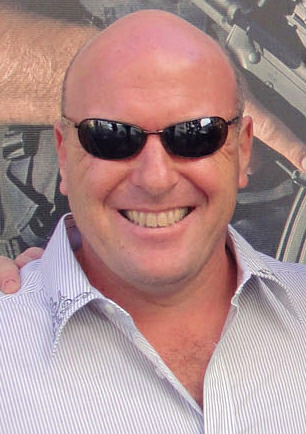
Dean Norris is best known to many viewers as Hank Schrader in Breaking Bad. Some searches about his religion also turn up his role in Claws, where he plays a Catholic crime boss. That character’s religion should not be confused with Norris’s own beliefs. The sources reviewed here provide a childhood connection with church and detailed comments about acting, but no clear statement establishing his present religious identity.
What has Dean Norris actually said?
In a 2013 Fresh Air interview carried by North Country Public Radio, Norris said he had acted in church plays from about age five. He also recalled performing music with his father and later studying at Harvard. Church plays were part of his early experience. That memory does not tell us his denomination, what he believed then, or what he believes now.
In a 2017 TVLine interview about Claws, Norris discussed the contradictions in Uncle Daddy, a fictional character who claims religious devotion while committing serious violence. Norris was explaining how he played that role. The interview’s references to Catholicism describe the character, not a personal announcement by the actor. It would be inaccurate to turn them into proof that Norris is Catholic or to treat the character’s behavior as a statement about all Catholics.
Why a religious label is not enough
Those distinctions matter beyond celebrity profiles. A person can know religious language, attend events, or portray a believer without having made a personal commitment to Christ. Conversely, the absence of a clear public label does not prove someone is an atheist. We should avoid filling gaps in the evidence with assumptions that happen to fit our expectations.
The Bible also distinguishes outward claims from inward faith. Jesus warned that religious words can be spoken without a heart submitted to Him (Matthew 7:21–23). That warning is a reason for personal examination, not permission to pronounce judgment on an actor whose heart we cannot see. Scripture calls each reader to ask whether we are trusting Christ or merely relying on a name, memory, or family connection.
Justice, contradiction, and our own hearts
Stories about law enforcement and crime often raise questions about justice. Scripture says authorities have a responsibility to restrain wrongdoing (Romans 13:3–4). It also condemns favoritism and dishonesty. A badge does not make every action right, and religious language cannot excuse cruelty. Those are biblical principles we can apply to a story without claiming the performer agrees with them.
It is easy to notice moral contradiction in a fictional criminal. It is harder to notice our own excuses. James 1:22 calls us to act on the truth rather than merely hear it. The Christian response begins with humility: we too need forgiveness, and we cannot make ourselves right with God simply by identifying someone else’s failure.
Norris’s early church experience is a documented part of his story. His present convictions remain unconfirmed in the interviews considered here. That is a fair place to leave the biographical question while taking the Bible’s larger invitation seriously: turn from appearances and self-justification to the Savior who offers grace.
A personal question for the reader
There is nothing wrong with being interested in Dean Norris’s faith. Learning what another person actually believes can lead to thoughtful, respectful conversations. But our first concern should be our own standing before God and where we will spend eternity. A celebrity’s confidence, uncertainty, religious background, or kindness cannot answer that question for us.
The gospel: forgiveness through Jesus Christ
The Bible says God created us and is perfectly holy. All of us have sinned against Him in our thoughts, words, and actions (Romans 3:23). We cannot erase that guilt by being more successful, joining a religious group, or doing enough good things. Sin deserves judgment, and its wages are death (Romans 6:23).
God loved sinners enough to send His Son. Jesus Christ, fully God and fully man, lived a sinless life, died on the cross for our sins, and rose bodily from the dead. His death and resurrection are the heart of the gospel (1 Corinthians 15:3–4). He alone can reconcile us to God.
Salvation is a gift of grace received through faith, not a reward for our works (Ephesians 2:8–9). Jesus calls us to repent and believe—to turn from sin and self-rule and trust Him as Savior and Lord (Mark 1:15). You can speak honestly to God today, confess your sin, and ask for His mercy through Christ. A prayer is not a magic formula; the hope is Jesus Himself. Read the Gospel of John and find a church that faithfully teaches Scripture as you consider and respond to His invitation.
Image: popculturegeek.com; crop by Karppinen, Wikimedia Commons. Attribution 2.0 Generic. Cropped and/or resized for display.
