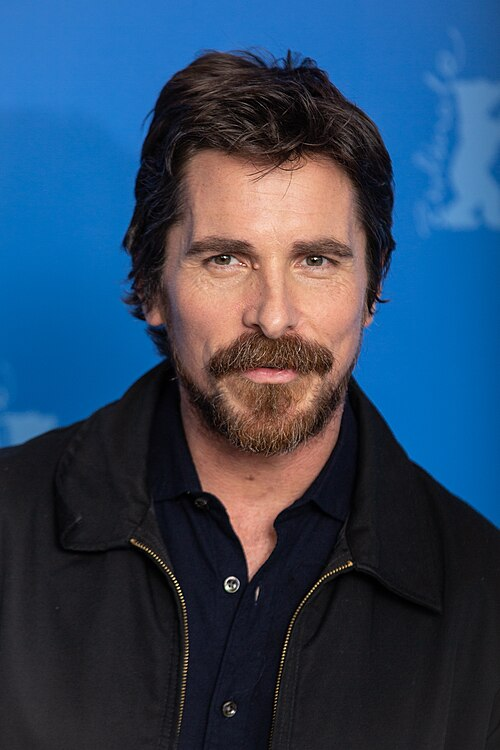
Christian Bale has described himself as not religious while expressing interest in the questions religion raises. His public comments include respect for people of faith, criticism of religious violence, and a willingness to discuss different views. His first name and his portrayals of biblical figures do not establish his religion.
The most useful starting point is his own description of himself. The interviews reviewed here support a nonreligious self-description at the time he gave them. They do not supply a recent, detailed statement of everything he believes about God or an afterlife.
What Christian Bale has said about his beliefs
In Johnny Davis’s interview for the January 2015 issue of Esquire, preserved in an archived copy of the magazine, Bale said, “I’m not religious.” He described exploring things during difficult times and remembering kind religious people who had helped his family.
He also explained that a period living in a Jehovah’s Witness’s home did not mean the family adopted that faith. That is an important distinction: contact with a religious community is not the same as membership. Bale spoke of understanding that religion could help people while also objecting to violence carried out in its name.
In that conversation, he favored open discussion of beliefs. He questioned why strong faith should make someone afraid to hear another person’s view. This suggests an interest in debate and understanding, rather than a reason to shut religious questions down.
These remarks came during promotion for Exodus: Gods and Kings. They should be dated honestly. A statement from that period is evidence of what Bale said then, not a license to invent a more recent conversion or a permanent position he has never explained.
Reading religious texts without assuming religious commitment
In a 2014 Religion News Service interview, Bale described reading the Torah and finding Moses a strikingly complex figure. He discussed the need to portray the story with seriousness so the people would feel human rather than distant fairy-tale characters.
A National Catholic Register interview from the same period records his conversations with Jewish and Christian contacts about Moses. He encountered sharply different expectations about how the role should be played. The discussion shows research and engagement, not a declaration that he accepted a particular faith.
It is especially important to keep speakers separate in these interviews. Director Ridley Scott also discussed his own religious outlook. Scott’s words cannot be assigned to Bale simply because they appear in an article carrying both names.
The person behind the performances
Bale’s screen career includes Empire of the Sun, American Psycho, The Dark Knight trilogy, The Fighter, and Ford v Ferrari. These films place him in very different moral worlds. A role may explore sacrifice, obsession, courage, or corruption without telling us which worldview the actor holds.
That is part of why his own statements matter. Appreciating a performance is one thing; reporting a person’s religion is another. Fans can admire the work while leaving unanswered questions unanswered. A confident label is not more truthful simply because it makes a shorter headline.
How the Bible approaches questions and religious failure
The Bible does not ask us to confuse honest questions with hostility. Acts 17:11 commends people who examine what they are taught. The Psalms contain grief, doubt, and searching prayer. Christianity invites thoughtful examination of its claims, including the claim that Jesus rose from the dead.
Bale’s concern about violence in religion also deserves a serious response. Jesus rebuked the use of a sword to defend him at his arrest (Matthew 26:52). His command to love enemies in Matthew 5:44 rules out treating cruelty as spiritual strength. A person can use God’s name and still act against God’s commands.
At the same time, Scripture’s accounts of judgment require careful reading in their historical and literary setting. They should not be reduced to a movie’s presentation or turned into permission for private violence today. Reading the biblical text itself is a necessary step before accepting or rejecting its message.
Christians must bring humility to that conversation. First Peter 3:15 calls for gentleness and respect when explaining hope. Those words are not optional manners added after the argument; they shape how a faithful answer is given.
The gospel concerns every reader
The Bible’s central diagnosis includes all of us. Romans 3:23 says all have sinned and fallen short of God’s glory. We have disobeyed God through pride, dishonesty, selfish desires, and failures of love. Religious affiliation cannot erase that guilt, and rejecting religious hypocrisy does not erase our own need for forgiveness.
God’s good news is Jesus Christ. The Son of God became man, lived without sin, and willingly died on the cross for our sins. He bore the judgment sinners deserve. He was buried and rose bodily from the dead, as First Corinthians 15:3–4 declares. His resurrection grounds Christian hope in an event, not a mood.
Salvation comes by grace through faith, apart from works (Ephesians 2:8–9). Jesus calls us to repent, turning from sin and self-rule, and trust him as Lord and Savior. We do not earn acceptance by being cultured, charitable, famous, or good at religious debate.
You can consider that invitation without pretending your questions have disappeared. Read one of the Gospels and examine Jesus for yourself. Christianity asks for trust in a real Savior who knows our failures and offers mercy, not a performance of certainty for an audience.
Photo: Christian Bale at Berlinale 2019, by Harald Krichel, via Wikimedia Commons, CC BY-SA 4.0. Resized; image reuse remains under the same license.
