People · Beliefs
McLean Stevenson
McLean Stevenson made Henry Blake an approachable, imperfect leader on MASH. His route through Northwestern, comedy writing, and later sitcoms reveals a career wider than one famous departure.
- Born
- November 14, 1927
- Died
- February 15, 1996
- M*A*S*H role
- Lieutenant Colonel Henry Blake
- Also known for
- Comedy writing; The McLean Stevenson Show; Hello, Larry
Henry Blake often looked as though command had found him before he had quite prepared for it. McLean Stevenson made that uncertainty funny without stripping the character of warmth. His work helped give the early seasons of M*A*S*H a distinctive kind of leadership: fallible, human, and surrounded by people who were rarely easy to manage.
Stevenson’s later career is frequently discussed through his decision to leave the series. A fuller view includes his education, writing, and years of television work. His personal religion, however, is not clearly established by the sources reviewed for this profile.
The road to Henry Blake
Stevenson came from Bloomington, Illinois. Northwestern University’s archival biography records that he entered its School of Speech in 1949 and graduated in 1952. Student productions already gave him a chance to perform, including roles as military officers that long preceded Henry Blake.
The university’s records describe varied jobs before he established himself as an actor. A professional life can look tidy in retrospect, but the route into comedy was less direct than the familiar television image suggests. He eventually worked both as a performer and as a writer, skills that supported one another rather than belonging to completely separate careers.
On M*A*S*H, he played the commanding officer for the first three seasons, from 1972 to 1975. The humor came partly from the difference between the formal requirements of command and Henry’s ordinary desires and limitations. Stevenson could make an uncertain response feel like a particular man trying to cope, instead of merely a pause before the next joke.
There was a writer behind the performer
The Television Academy’s record includes Stevenson among comedy-writing nominees as well as recognizing his acting. That distinction matters because it broadens the familiar story: he contributed to making television comedy, not only to delivering it in front of the camera.
After leaving M*A*S*H, he appeared in several series, including The McLean Stevenson Show, In the Beginning, Hello, Larry, and Condo. His later programs did not displace Henry Blake in the public imagination. That outcome can be discussed without treating the actor’s life as a punch line or pretending we can reconstruct every reason behind a career decision.
Stevenson died on February 15, 1996. His papers at Northwestern preserve a longer professional record than the shorthand version in which he is remembered only as the man who left a hit show. Scripts and working material show the continuing effort that exists behind even the most recognizable screen persona.
What can be established about his beliefs?
The institutional biography, awards record, and obituary material cited here document Stevenson’s career but do not provide a clear personal statement identifying his religious beliefs. A confident Christian or non-Christian label would go beyond that evidence.
He played a priest in In the Beginning, but a role is not a profession of faith. The same distinction applies to Henry Blake: the character’s choices, fears, and jokes came from a fictional story. Viewers can discuss what that story says about human nature without assigning its theology to the actor.
The careful answer to questions about McLean Stevenson’s religion is that his personal faith is not clearly established in these sources. That boundary respects both the evidence and the person. It leaves room for real convictions that he may not have made part of his public work.
Beyond the Spotlight
A familiar character can make the fragility of life feel unexpectedly close. Famous Faith’s Christian perspective is that this fragility is a reason to seek a lasting hope, not a reason to make claims about an actor’s eternal destination. The God described in Scripture is holy and loving, and people matter to him beyond their usefulness or public success.
His moral law also tells the truth about our lives. The Ten Commandments expose sin in lies, envy, theft, dishonor, and the things we put ahead of God. The writer stands in the same need of mercy as the reader. Being well liked, doing a responsible job, or recovering from mistakes does not erase that need.
The Bible warns of judgment and hell, but it announces rescue through Jesus Christ. The sinless Son of God died for sinners and rose bodily from the dead. Forgiveness is offered by grace through faith in him, not as a reward for a flawless record or enough religious activity.
Repentance means turning from sin toward God with a changed mind and heart, learning to trust the love he has demonstrated through Jesus. That turning normally changes our conduct, but conduct does not buy forgiveness. Honest questions and struggles can be brought to him. This is Famous Faith’s message to the reader, clearly separate from any unrecorded beliefs Stevenson may have held. The Good Person Test offers further reflection.
M*A*S*H collection
McLean Stevenson played Henry Blake in M*A*S*H. Explore the M*A*S*H cast profiles for the people behind the series.
Sources
- McLean Stevenson — Northwestern University archival biography
- McLean Stevenson — Television Academy awards record
- McLean Stevenson authority record — Library of Congress
- McLean Stevenson obituary — UPI, February 1996
- McLean Stevenson alumni recognition — Bloomington High School
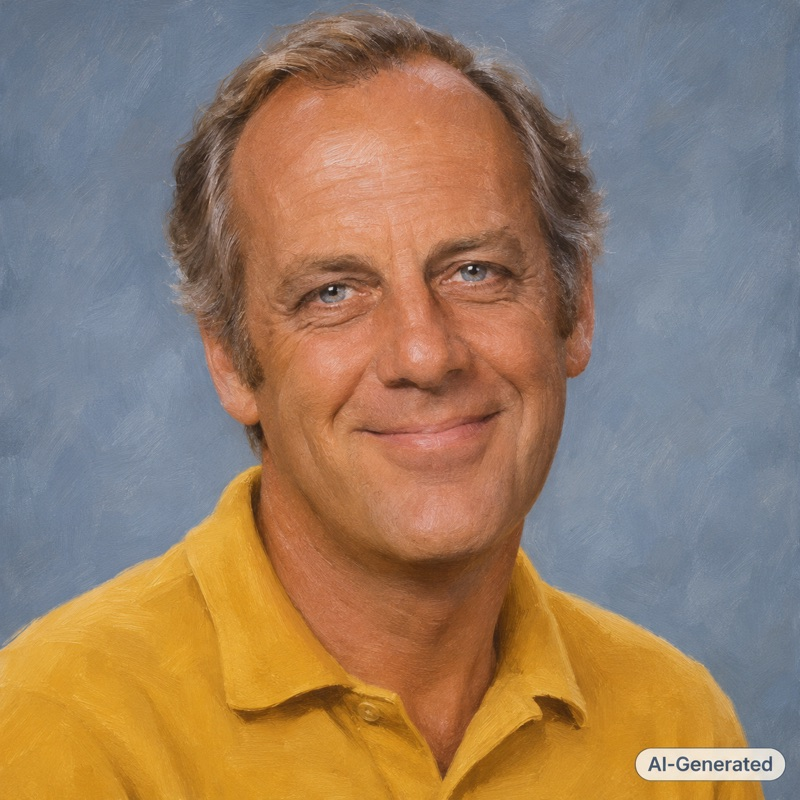
Artwork: Original AI-generated portrait of McLean Stevenson created for Famous Faith; an illustration, not a photograph. No endorsement is implied.