People · Beliefs
Harry Morgan
Long before he became Colonel Potter, Harry Morgan had worked on Broadway, appeared in scores of films, and brought a different kind of authority to Dragnet.
- Known for
- Col. Sherman T. Potter in M*A*S*H
- Other signature role
- Officer Bill Gannon in Dragnet
- Recognition
- 1980 Emmy for supporting actor in a comedy
- Life dates
- April 10, 1915 – December 7, 2011
Harry Morgan made Colonel Sherman T. Potter seem like someone who had lived a full life before he arrived at the 4077th. That was partly the strength of a veteran actor who already had decades of experience. He could make a dry remark land, take command of a chaotic room, and then let worry show beneath the uniform.
Morgan joined M*A*S*H in 1975 and stayed through its 1983 conclusion. His career had begun long before the television hospital, and it continued beyond it. He died on December 7, 2011, at 96. For viewers asking what Harry Morgan believed, it helps to separate the affection inspired by Potter from what the actor actually put on the public record.
From Broadway to Two Television Landmarks
Morgan was born in Detroit in 1915 and grew up in Michigan. Stage work led him toward a profession he would practice across much of the twentieth century. In 1937 he appeared on Broadway in Golden Boy; in the early 1940s he moved into Hollywood films. His screen work eventually included more than 100 movies.
He was equally comfortable becoming a familiar presence in a weekly television cast. December Bride and its spinoff, Pete and Gladys, showed his comic abilities. As Bill Gannon on the later version of Dragnet, he worked alongside Jack Webb in a very different, tightly controlled style. These were substantial parts of his career, rather than merely a waiting room before M*A*S*H.
Potter brought those skills together. He could be blunt without turning every scene into a confrontation and funny without making military responsibility disappear. Morgan won an Emmy for the performance in 1980. He also directed television and later returned as Potter in AfterMASH. His Television Academy oral history preserves his own memories of working with the ensemble, developing characters, and learning across many productions.
What Was Harry Morgan’s Religion?
The career interviews and biographical sources reviewed for this profile do not establish a clear public account of Morgan’s personal religion or Christian commitment. Famous Faith therefore cannot responsibly label him a Christian, an atheist, or a member of a particular denomination. The honest answer is that his beliefs are not clearly documented in these sources.
Colonel Potter’s conversations, values, and expressions of faith belong to a scripted character. They can be discussed as part of the series, but they are not a confession of faith from Morgan. Likewise, the steadiness viewers found in his performances tells us something about his acting; it cannot reveal everything about his life or his relationship with God.
A Legacy Built Through Steady Work
Morgan’s career is a reminder of how much television depends on people who support an ensemble. A scene does not always need the loudest voice or the largest gesture. Sometimes it needs an actor who makes the room believable and gives another performer space to work.
Remembering that contribution does not require treating a public figure as flawless. An actor’s work, a family’s memories, and the full moral history of a human life are different things. We can value the performances while remaining modest about matters we cannot know. Morgan’s long career offers plenty to appreciate without filling the gaps in his personal beliefs with guesses.
Beyond the Spotlight
The following is Famous Faith’s Christian perspective, not a statement of Harry Morgan’s beliefs. Potter often had to carry responsibility for people who were tired, frightened, or hurting. That can point us toward a question larger than any television role: where do imperfect people find mercy when they cannot put everything right?
The Bible presents God as both loving and holy. His moral law is good. The Ten Commandments expose familiar wrongs such as lying, stealing, and coveting, and Jesus teaches that our motives matter as well as our outward actions. We all fall short, including the people writing and reading this page. Being admired or useful does not erase our guilt.
God’s judgment is therefore a serious reality, and Jesus spoke honestly about hell. Yet the Christian message does not end with condemnation. Jesus Christ, God’s sinless Son, died for sinners and bodily rose from the dead. Forgiveness is offered through him by grace, received through faith, rather than purchased by years of good conduct or religious effort. Ephesians 2:8–9 makes that distinction clear.
The invitation is to repent and trust Christ: to turn from sin toward God with a changed mind and heart, learning to trust his character and the love shown through Jesus. A changed life follows that trust; it does not buy salvation. Honest questions can be brought to him. Christian hope rests in a living Savior who offers forgiveness, not in the reputation any of us manages to leave behind.
M*A*S*H collection
Harry Morgan played Col. Sherman T. Potter in M*A*S*H. Explore the M*A*S*H cast profiles for the people behind the series.
Sources
- Television Academy: Harry Morgan obituary and career remembrance
- Television Academy Foundation: Harry Morgan oral-history interview
- TV Insider: Harry Morgan biography and filmography
- Television Academy: Emmy nominations and 1980 win
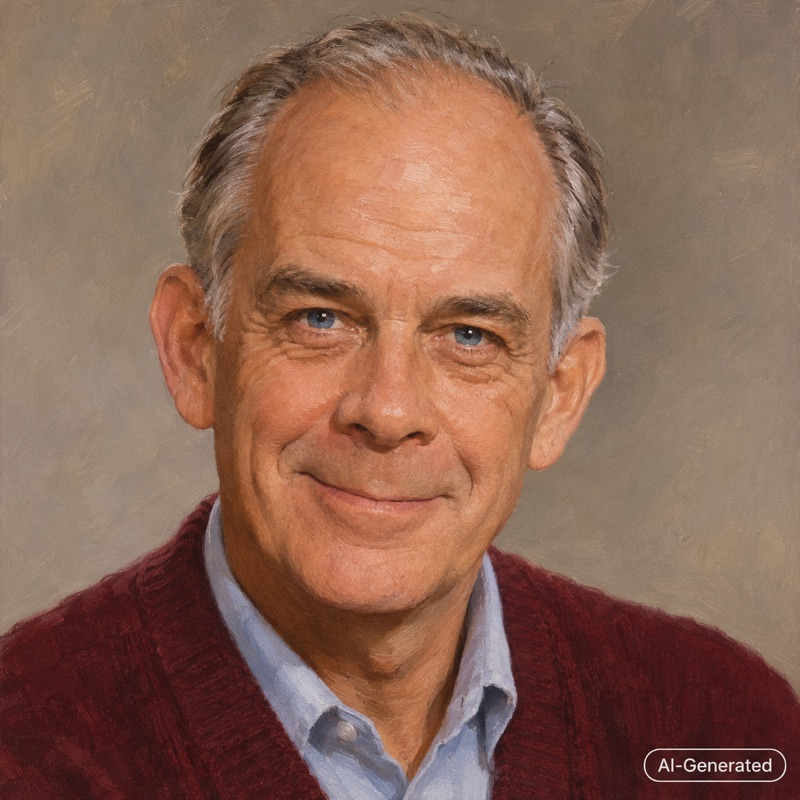
Artwork: Original AI-generated portrait of Harry Morgan created for Famous Faith; an illustration, not a photograph. No endorsement is implied.