People · Beliefs
Gary Burghoff
Gary Burghoff played Radar on both the MASH film and television series. His later interviews describe the strain of fame on family life and a personal turn toward Jesus Christ and the Bible.
- Born
- May 24, 1943
- M*A*S*H role
- Corporal Walter “Radar” O’Reilly
- Emmy win
- Supporting actor in a comedy series, 1977
- Public faith account
- Has spoken about Christian faith and a turn toward Jesus Christ
Gary Burghoff gave Radar O’Reilly a combination of innocence, comic timing, and surprising competence. He played the company clerk in the 1970 M*A*S*H film and again in the television series, making him an especially direct link between two versions of the story.
His life after that familiar role also included questions about what success was costing him. Burghoff’s public discussions of religion are more specific than a general reference to spirituality: recorded interviews and published accounts describe a search that led him toward Jesus Christ and a serious engagement with Scripture.
Before and beyond Radar
Burghoff was born in Bristol, Connecticut, in 1943. Before the army cap and company clerk’s desk became his signature image, he created the title role in the original 1967 off-Broadway production of You’re a Good Man, Charlie Brown. The Broadway League’s IBDB record notes that early achievement, which used a different kind of vulnerability and comic rhythm.
The move from Charlie Brown to Radar linked two characters who can appear easily overlooked until a scene reveals what they contribute. Radar’s ability to anticipate what officers needed helped make the character more than a collection of nervous reactions. Burghoff’s work on the television series received an Emmy in 1977, as recorded by the Television Academy.
Other parts of his creative life included music and visual art. The host’s archive for his 2005 Drew Marshall interview introduces him not only as an actor but as a musician, artist, and naturalist. His public image therefore represents only a portion of his interests. An audience may know a performer through one role while missing the talents and ordinary responsibilities outside it.
A public account of Christian faith
The Drew Marshall Show archive identifies a February 2005 conversation about Burghoff’s spiritual journey toward Jesus Christ. Its description also makes family strain and his experiences as a single parent part of the discussion. That primary interview record provides a firmer basis for describing a public Christian profession than a celebrity-religion list without sources.
A 2006 report by Scott Harrup and Aimee Herd, drawing on an interview with Marshall, described Burghoff reconsidering an earlier agnostic outlook. He connected that change with grief, family difficulties, and sustained reading of the Bible. He presented Scripture as something he had begun to understand in a different way, rather than merely a book inherited from his father.
These accounts support saying that Burghoff has publicly discussed Christian faith and a turn toward Christ. They do not give a complete current denominational affiliation or authorize claims about every belief he holds today. Their dates matter. They also let readers hear his account as his own testimony rather than treating Radar’s fictional innocence as religious evidence.
When attention comes at a cost
Burghoff’s interview descriptions make clear that celebrity brought pressures as well as opportunities. A person can leave the set yet remain publicly recognizable, and attention from strangers can intrude on time meant for family. His account of those tensions adds weight to the question of what a successful life actually requires.
Later work also touched explicitly Christian material. Christianity Today reported his role as Pastor William Mahoney in Daniel’s Lot, a film built around faith and redemption. Playing a pastor would not establish anyone’s beliefs by itself. In Burghoff’s case, it sits alongside separate personal testimony, and those two kinds of evidence should remain distinct.
Beyond the Spotlight
Fame can make a person visible while leaving the deepest needs unchanged. Famous Faith’s Christian perspective begins with the God who sees the person behind the performance. He is holy and loving, and his moral law applies to every one of us. The Ten Commandments expose familiar sins such as dishonesty, envy, stealing, and giving the first place in our hearts to something other than God.
That is a shared problem, not an accusation made from a position of superiority. The writer and reader both need mercy. The Bible warns of judgment and hell, but its message does not end with the guilt that we cannot remove ourselves. Jesus Christ, the sinless Son of God, died for sinners and rose bodily from the grave. In him, forgiveness and new life are offered as grace.
We receive salvation through faith, not by collecting enough good deeds, improving our image, or succeeding at religious behavior. Repentance means turning from sin toward God with a changed mind and heart, learning to trust the love he has shown in Christ. A changed life follows that faith rather than buying it.
Burghoff’s published testimony describes his own search. Famous Faith invites readers to consider the gospel for themselves, with honest questions welcome. The hope being offered is greater than a restored career or an easier season: reconciliation with God through Jesus Christ.
M*A*S*H collection
Gary Burghoff played Radar O’Reilly in M*A*S*H. Explore the M*A*S*H cast profiles for the people behind the series.
Sources
- Gary Burghoff — Broadway League IBDB career record
- Gary Burghoff — Television Academy Emmy record
- Gary Burghoff biography — Fandango
- Gary Burghoff interview archive — The Drew Marshall Show, February 2005
- Life after MASH: Gary Burghoff’s pursuit of truth — Scott Harrup and Aimee Herd, May 2006
- Radar Love — Christianity Today, December 2009
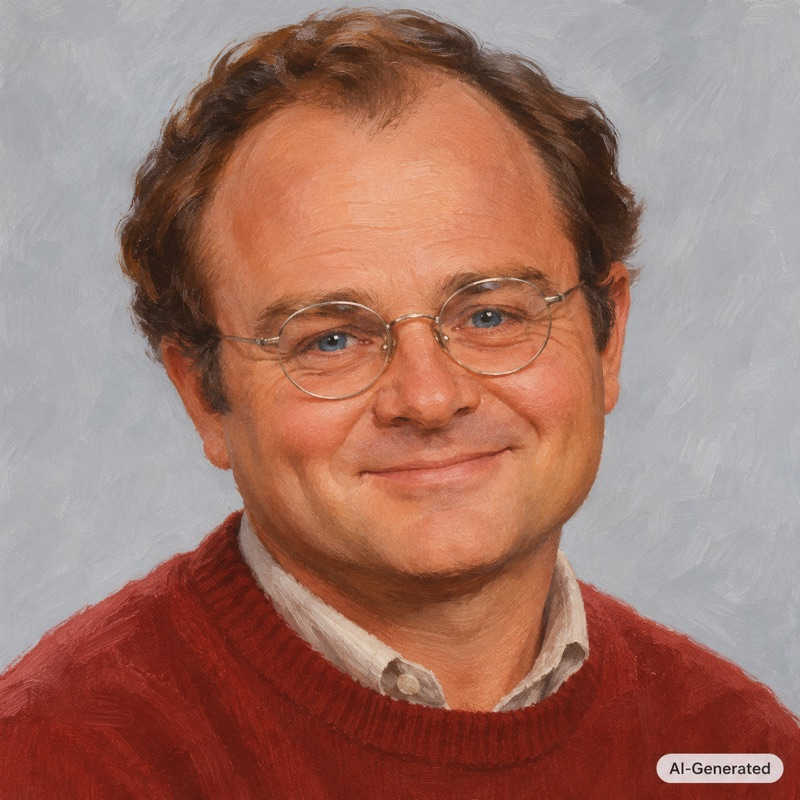
Artwork: Original AI-generated portrait of Gary Burghoff created for Famous Faith; an illustration, not a photograph. No endorsement is implied.