What Is Marcia Cross’s Religion? Is She a Christian?

Marcia Cross at the White House Correspondents’ Dinner in 2008

Marcia Cross’s current religion is not clearly established by the public interview reviewed here. In a September 2026 conversation with L’Officiel Monaco, she discussed perfection, aging, work, and compassion. Those comments explain something about her outlook, but they do not amount to a profession of Christian faith or identify a present denomination.

Cross is known for playing Bree Van de Kamp on Desperate Housewives. Bree’s religious language and carefully maintained image can make viewers curious about the actress. Yet a role is not a personal confession. Cross’s own words are the appropriate starting point.

What has she said about perfection?

In the L’Officiel interview, Cross described becoming more at peace with being unable to achieve perfection. Discussing Bree, she connected the character’s perfect exterior with hidden vulnerability and a fear of being unlovable. Her explanation shows empathy for people who feel unseen or judged.

This is a useful theme for a Bible conversation. It should not be stretched into a claim about Cross’s private faith. Nor should an everyday expression that mentions God be treated as a complete statement of belief.

Does God ask us to keep up appearances?

Jesus repeatedly challenged religious performance that hides the truth. In Matthew 6, He warned against giving and praying merely to be seen by other people. The problem was not generosity or prayer. The problem was a heart that wanted applause more than fellowship with God.

That temptation is familiar beyond television. We can arrange our homes, conversations, and online photos so that nobody sees our struggles. We can even use religious words to protect an image. Yet being admired is not the same as being honest, and a polished reputation cannot give us peace with God.

Our value is deeper than appearance

Genesis 1 teaches that people are made in God’s image. Human worth does not depend on youth, beauty, professional success, or the ability to look confident. This gives Christians a reason to treat every person with dignity, including someone whose life looks untidy or whose opinions differ from ours.

First Samuel 16:7 also reminds us that God sees the heart. That truth is comforting when people misjudge us, but it is searching too. God sees motives we would rather hide. The answer is not to create a better mask. It is to come honestly before Him.

Is accepting imperfection enough?

Recognizing our limits can be healthy. We cannot control every outcome, and ordinary mistakes do not make a person worthless. However, the Bible distinguishes human limits from moral guilt. Forgetting an appointment is different from deliberately lying. Needing help is different from refusing to love a neighbor.

Calling ourselves imperfect can become a way of avoiding the word sin. God’s law makes the issue more concrete. Have we told lies, taken what was not ours, or used God’s name carelessly? Have we allowed envy to rule our hearts? Jesus also confronted anger and lust in Matthew 5. These are matters of right and wrong, not merely unrealistic expectations.

The point is not to accuse Cross or guess what happens in her private life. The same examination belongs to the reader and writer. Romans 3:23 says that all have sinned and fall short of God’s glory. We need more than permission to relax our image. We need forgiveness for real guilt.

Grace brings a better foundation

God is holy, just, and loving. His justice means that our sin deserves judgment. His love means He has provided a Savior rather than leaving us to repair ourselves. Christianity offers more than a program for becoming impressive enough to be accepted.

Jesus Christ is the divine Son of God. He became human and lived a completely sinless life. He willingly died on the cross, bearing the penalty for our sins in our place. He was buried and rose bodily from the dead, defeating sin and death. His finished work is the foundation of Christian hope.

Ephesians 2:8–9 explains that salvation comes by grace through faith, not by works. We cannot earn it with a flawless public image or years of religious effort. You can acknowledge your sin before God and trust in Jesus Christ and what He has done. The Savior’s sufficiency matters more than our ability to appear strong.

Cross’s reflections on perfection invite readers to think about what they hide and why. Scripture takes that question beyond appearance to the heart. The grace of Christ offers a reason to be truthful, to love others patiently, and to rest our hope in Him.

Sources and photo credit

L’Officiel Monaco, Marcia Cross: An American Icon in Paris, September 5, 2026. Bible: Genesis 1:26–27; 1 Samuel 16:7; Matthew 5–6; Romans 3:23; 1 Corinthians 15:3–4; Ephesians 2:8–9.

Photo: Kirk Weaver, Marcia Cross, April 2008, CC BY 3.0. Wikimedia Commons web-sized version.

What Is Eva Longoria’s Religion? Is She a Christian?

Eva Longoria at a book signing in New York City in 2011

Eva Longoria has publicly identified as Catholic and described a childhood shaped by Catholic worship, family traditions, and service. In her March 2014 interview with Parade, she remembered a church community that offered structure and included people who were poor, disabled, or overlooked. Her account gives a clearer picture of her religious background than assumptions based on her television characters.

Longoria is familiar to Desperate Housewives viewers as Gabrielle Solis. She has also built a career beyond acting, including directing and producing. Gabrielle’s choices belong to a fictional story. Understanding Longoria’s faith means listening to her own words rather than treating the behavior of a character as her testimony.

How did Catholic faith shape her childhood?

Speaking with Dotson Rader for Parade in 2014, Longoria described a family whose gatherings followed the Catholic calendar. She remembered saints’ days and Christmas Eve worship as part of a predictable rhythm. For a child, that meant knowing where the family would gather and what occasions they would mark together.

She also described the church as a place that included people with different needs and backgrounds. This is meaningful evidence about the community she experienced. It does not answer every question about her present theology or church attendance, and an older interview should keep its date attached.

What did she learn about helping people?

In the same conversation, Longoria recalled serving food to people without homes with her aunt. Getting up early on Saturday was not something she always wanted to do as a child. Yet those experiences connected religious family life with practical help for other people. Service was something to do, rather than only an idea to praise.

Christians can appreciate that example. James 2:15–17 challenges believers who speak kindly to someone in need but offer no practical help. Loving a neighbor includes noticing hunger, loneliness, and hardship. The Bible does not invite us to admire compassion from a comfortable distance while refusing opportunities to serve.

Is Eva Longoria a Christian?

Some people regard Catholicism as a branch of Christianity. Longoria has publicly identified as Catholic, which does not by itself tell us what she personally trusts for salvation. The available statements support reporting that identity. They do not give readers permission to decide the condition of her heart or fill in every belief she has not explained. Faith is more personal than a label in a celebrity biography.

For Famous Faith, the next step is to explain what Scripture says about the Christian message itself. That comparison applies to every reader, whatever church background we have. The question is not simply whether we recognize a calendar, attend a service, or belong to a religious family. It is whether our hope rests in Jesus Christ.

Can a good religious background save us?

Family traditions can teach valuable things and connect us with people who love us. But no one inherits forgiveness in the way they inherit a surname. Nor can service become a payment that makes God ignore sin. Good works matter, but they cannot erase a guilty record before a just Judge.

God’s Ten Commandments help us examine that record honestly. Have you lied, stolen something, or used God’s name carelessly? Have you wanted what belongs to someone else? Jesus also confronted anger and lust in the heart in Matthew 5. We may hide those things from neighbors, but we cannot hide them from God.

These are not questions designed to single out Longoria. They are questions for the writer and reader as well. Romans 3:23 says that all have sinned and fall short of God’s glory. Religious knowledge, kindness, and public success do not make any of us an exception.

Jesus offers the forgiveness we cannot earn

God is holy and just, so our sin deserves judgment. He is also rich in mercy. Jesus Christ, the divine Son of God, became human and lived a completely sinless life. He willingly died on the cross and bore the penalty for our sins in our place. He was buried and rose bodily from the dead, victorious over sin and death.

First Corinthians 15:3–4 puts Christ’s death and resurrection at the heart of the gospel. Ephesians 2:8–9 explains that salvation is a gift of grace received through faith, not a reward for works. You can acknowledge your sin before God and trust in Jesus and His finished work. He is the Savior; our efforts cannot take His place.

Serving people can then become an expression of gratitude rather than an attempt to buy acceptance. Longoria’s account of faith and family opens a conversation about belonging and compassion. Scripture brings that conversation to the grace of Christ, offered freely to ordinary people and famous people alike.

Sources and photo credit

Dotson Rader, Parade interview with Eva Longoria, March 29, 2014. Bible: Exodus 20; Matthew 5; James 2:15–17; Romans 3:23; 1 Corinthians 15:3–4; Ephesians 2:8–9.

Photo: Joella Marano, Eva Longoria at a book signing, April 4, 2011, CC BY 2.0. Used as supplied.

What Is Teri Hatcher’s Religion? Is She a Christian?

Teri Hatcher at the World of Color premiere in 2010

Teri Hatcher has publicly described gratitude and meditation as part of her daily routine, but the interviews reviewed here do not establish a current religious affiliation or a clear profession of Christian faith. Her own comments offer a useful starting point: she values reflection, growth, and the ordinary gifts of life. Those themes deserve attention without turning them into a church membership or a statement about salvation.

Many viewers know Hatcher as Susan Mayer on Desperate Housewives or Lois Lane on Lois & Clark. She has also worked in film and voice acting. Playing people with different hopes, fears, and moral choices is part of her profession. A character’s story does not answer the question of what the actress believes about God.

What has Teri Hatcher said about her spiritual life?

In her Thrive Global questionnaire, Hatcher described beginning her morning with a gratitude meditation before getting out of bed. That is a specific practice she chose to share. It suggests that she makes room for reflection before the demands of the day begin.

However, meditation can mean different things to different people. It may involve prayer, quiet attention, or simply thinking about what matters. Hatcher’s brief answer does not name a denomination or explain her beliefs about Jesus. It would go beyond the evidence to label the practice Christian, Buddhist, or part of another religion.

Gratitude gives us a useful question

The Bible encourages thankfulness. First Thessalonians 5:18 calls believers to give thanks in all circumstances. That does not mean pretending pain is good or denying disappointment. It means recognizing God’s care even when life is difficult. Gratitude can make us more aware that life is received rather than earned.

Christian gratitude also has a direction. James 1:17 teaches that good gifts come from God. A beautiful morning, a friendship, or the chance to help someone can become a reason to thank the Giver. Noticing blessings is valuable, but the Bible invites us to know the God from whom those blessings come.

A career includes more than the public image

In a conversation with Erica Diamond, Hatcher discussed her Hatching Change project, motherhood, and purposeful living. That setting helps readers understand why questions about daily habits and personal growth appear in her interviews. She is speaking about life beyond a familiar television role.

Fame can make it tempting to reduce someone to a few memorable scenes. Yet a performer is also a person whose life continues away from the camera. Christians should remember this when discussing public figures. Our words should be accurate and kind, and our interest should include concern for the person rather than only curiosity about a label.

Can personal growth give us peace with God?

Learning patience, practicing gratitude, and caring for others are worthwhile. The Bible does not ask us to despise those efforts. But it does distinguish growing as a person from being forgiven by God. Improving tomorrow cannot undo something wrong that we did yesterday.

Imagine someone who has lied to a friend. Becoming more thoughtful afterward may help repair the friendship, but it does not make the lie true. In the same way, a list of good habits cannot remove our guilt before a holy God. We need more than a better routine. We need mercy.

God’s law brings the question home

This is not a special problem for celebrities. God’s commandments speak to every one of us. Have we told lies? Taken something that was not ours? Used God’s name carelessly? Wanted what belongs to another person? The Ten Commandments reveal how easily we place our own desires above love for God and our neighbors.

Jesus also addressed what happens in the heart. In Matthew 5, He showed the seriousness of anger and lust. We may look respectable while hiding selfish motives. Romans 3:23 says that all have sinned and fall short of God’s glory. The writer and the reader stand under that same truth.

The hope Christianity offers

God is loving, and He is also just. He does not pretend that evil does not matter. Our sin deserves His judgment, and we cannot purchase forgiveness with kindness, success, spiritual exercises, or religious activity. That is why the gospel is such good news.

Jesus Christ is the divine Son of God who became human and lived a completely sinless life. He willingly died on the cross, bearing the penalty for our sins in our place. He was buried and rose bodily from the dead. First Corinthians 15:3–4 places His death and resurrection at the center of the Christian message.

Salvation is God’s gift by grace through faith, not a reward for good works (Ephesians 2:8–9). You can acknowledge your sin before God and trust in Jesus Christ and His finished work. The foundation of that hope is what the Savior has done, rather than how impressive your life appears.

Hatcher’s comments about reflection can encourage a thoughtful conversation. Scripture takes that conversation further: Who gives us life, what do we do with our guilt, and where can lasting hope be found? Christianity answers by pointing to Jesus, whose grace is offered to famous people and ordinary readers alike.

Sources

Bible passages: Exodus 20:1–17; Matthew 5:21–28; James 1:17; 1 Thessalonians 5:18; Romans 3:23; 1 Corinthians 15:3–4; Ephesians 2:8–9.

Photo: hyku, Teri Hatcher at the World of Color premiere, June 10, 2010, CC BY-SA 2.0. Used as supplied.

What Is Jason Momoa’s Religion? Is He a Christian?

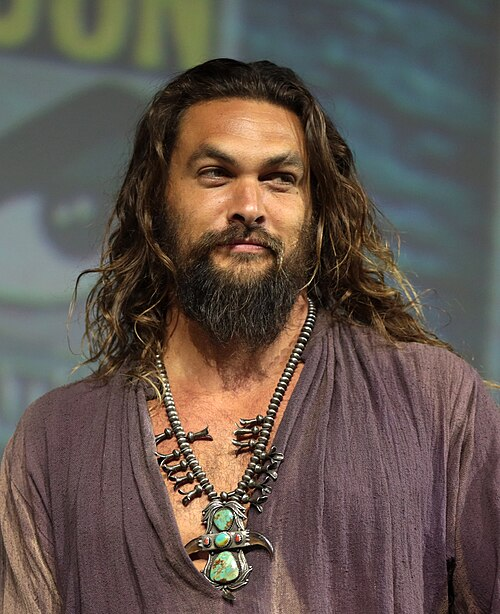
Portrait of Jason Momoa at San Diego Comic-Con in 2018

Jason Momoa has publicly described spiritual meaning in his Hawaiian family traditions, including the guardian symbolism of his tattoos. Those comments give us direct evidence of beliefs and practices that matter to him. They offer a firmer starting point than assuming his religion from Aquaman or from a celebrity database.

His interviews do not provide a complete religious creed. What we can report is a visible connection between family, ancestry, protection, and Hawaiian culture, alongside a strong commitment to the natural world.

His own explanation of spiritual symbols

In a December 2023 GQ tattoo interview, Momoa explained that his first tattoo represents an ʻaumakua, a guardian associated with a shark. He connected it with his family and described receiving it before his daughter was born. He also spoke about the personal importance of traditional Hawaiian tattooing.

In a 2022 WIRED interview, Momoa likewise discussed guardian and protection meanings in his tattoos. He explained that some designs relate to family, while others remember people he loved. These are his own explanations of personal markings, not guesses based on how they look.

Hawaiian spiritual traditions have histories and meanings that deserve respectful treatment. A tattoo can carry cultural, family, and spiritual importance at the same time. We should report what Momoa says without turning one symbol into an exhaustive account of his entire faith.

Some online profiles label him Buddhist. The firsthand material verified for this article does not establish how he would currently describe that affiliation. It also does not establish a personal Christian profession. The careful answer is to name the spiritual connections he has explained and leave unsupported labels aside.

Family roots and a public love of the ocean

Momoa was born in Hawaii and spent much of his childhood in Iowa. In a 2025 National Geographic interview, he described an early interest in marine biology. After moving to Hawaii, he learned to surf with his father’s family before acting changed his plans.

Television audiences came to know him through Baywatch, Stargate Atlantis, and Game of Thrones. Film audiences know him as Aquaman and Duncan Idaho in Dune. The official Dune: Part Three site lists him in its returning cast.

His environmental work also reaches beyond a screen role. National Geographic reported on his ocean advocacy, his work with the UN Environment Programme, and efforts to reduce plastic waste. He spoke about using his platform to help people hear from scientists. His public concern for water and marine life is a meaningful part of his story.

Creation, gratitude, and the Creator

There is much for Christians to appreciate in caring for the world. Genesis 2:15 places human work within the task of tending what God has made. Psalm 24:1 teaches that the earth belongs to the Lord. Waste and careless harm are poor ways to treat a world entrusted to us.

The Bible also honors family responsibility. Remembering those who helped us and caring for children are worthy concerns. Christian faith does not require someone to despise their ancestry or pretend that their family story has no value.

There is, however, a clear difference between honoring creation and placing spiritual trust in created things or guardian spirits. Scripture calls people to worship the Creator. Acts 17:24–28 presents God as the maker and sustainer of life. Christians look to Him for their deepest security, rather than treating a symbol as the source of protection.

This comparison does not claim that every person uses a tattoo in the same way. Nor does it judge Momoa’s motives. It identifies a difference between the spiritual language he has used and the Bible’s teaching about the One in whom we place our trust.

A hope deeper than physical protection

We all want the people we love to be safe. Yet no amount of strength, wealth, or planning can remove every danger. The Bible speaks to a deeper need as well: being reconciled to God.

God is holy and just. We have sinned against Him through pride, dishonesty, selfish desires, and failures to love. Romans 3:23 says that all have sinned. Caring for creation and loving our families are good responsibilities, but they cannot erase guilt or make us righteous before God. We need forgiveness that we cannot earn.

Jesus Christ, God’s Son, lived without sin. He willingly died on the cross for sinners, bearing the judgment we deserve. He was buried and rose bodily from the dead. As 1 Corinthians 15:3–4 explains, His death and resurrection stand at the center of the gospel.

God offers salvation by grace through faith, not as a reward for our achievements. Turn from sin and trust Jesus as Lord and Savior. His mercy does not depend on your fame, family line, or ability to protect yourself. He calls people from every nation and background to come to Him.

Momoa’s public story opens a conversation about roots, responsibility, and spiritual trust. For the reader, the next question is personal: who can deal with your sin and bring you into peace with God? The Christian answer is Jesus Christ.

Sources

Photo: Gage Skidmore, Jason Momoa at Comic-Con, 2018, via Wikimedia Commons, CC BY-SA 2.0. Cropped by BartocX; resized to 500 pixels wide.

What Is Salma Hayek’s Religion? Is She a Christian?

Portrait of Salma Hayek

Salma Hayek has described herself as spiritual rather than religious. Raised Catholic in Mexico, she has spoken about a personal relationship with God, a respect for different traditions, and finding meaning through art. Her public comments point to a spiritual outlook that reaches beyond the religion of her childhood.

That is the most useful place to begin when asking about her religion: with what she has actually said. Hayek’s work includes stories about faith, identity, death, and hope. Those projects can help explain her interests, but her own words provide a clearer picture of her beliefs than any character she has played.

What has Salma Hayek said about her beliefs?

In comments collected by Beliefnet, Hayek distinguished being spiritual from being religious. She said she did not want other people making rules for her relationship with God. She also described art and science as places where she could explore spiritual questions, including questions about human origins and creation.

These statements describe a personal approach to faith. God and spiritual discovery matter in that account, while organized religious authority receives less trust. It would be misleading to reduce her position to either a simple rejection of all belief or an unqualified description of current Catholic practice.

In an interview with Madame Figaro, Hayek discussed her Catholic upbringing and said she wanted her daughter to learn about different religions and discover her own spiritual path. She also spoke of the body as a gift that allows people to experience the world through their senses. These comments connect her spiritual interests with everyday life, family, and the physical world.

The interview also discussed questions of death and eternity through The Prophet. A discussion of a book’s ideas, however, should not automatically become a list of beliefs attributed to its producer. In particular, a film’s treatment of the soul does not settle every question about Hayek’s personal view of the afterlife.

A career with room for deeper questions

Hayek’s career spans Mexican television and films, Hollywood action, comedy, animation, and drama. Her credits include Desperado, Frida, Puss in Boots, and Eternals. She also produced Frida, taking an active role in bringing a Mexican artist’s story to a wider audience.

Her involvement in The Prophet offers another example of storytelling with personal meaning. In a 2015 TIME interview, she connected Kahlil Gibran’s book with memories of her grandfather. Encountering it as a young adult helped her feel a connection with his wisdom. She described the project as a way art could connect people across differences.

Readers may appreciate that interest without assuming that admiration for a spiritual book answers every question about a person’s religion. The clearest summary remains her own distinction: spiritual, with Catholic roots, and open to exploration beyond a single religious framework.

How does that compare with the Bible?

Hayek’s comments raise a question many readers share: can a relationship with God remain personal while also being guided by truth beyond ourselves? The Bible answers yes. Prayer is personal. The Psalms include joy, grief, doubt, and honest cries for help. God does not ask people to hide their questions behind a polished religious image.

Scripture also treats the created world as meaningful. Genesis 1 describes creation as good, and Psalm 19 points to the heavens as a witness to God’s glory. Beauty, the body, and the ability to create can awaken gratitude. Christians can recognize these gifts without treating every spiritual explanation of them as equally true.

The difference concerns where final authority belongs. A spiritual feeling can be powerful, yet feelings can lead different people to opposite conclusions. In 2 Timothy 3:16–17, Scripture is presented as God’s instruction for teaching and correcting us. Biblical faith invites us to bring our experiences before God’s Word, including experiences we treasure.

The Bible also presents God as more than a mystery that art helps us explore. He is the Creator who speaks, acts, loves, and judges justly. According to John 1:14–18, he makes himself known through Jesus Christ. That claim gives Christianity a specific center, while leaving ample room for wonder and learning.

The good news for the reader

Christianity’s central message is not that religious people are better than spiritual seekers. Romans 3:23 says all have sinned. Our pride, dishonesty, selfishness, and failure to love separate us from the holy God who made us. Neither artistic insight nor a record of good deeds can erase that guilt.

God’s answer is Jesus Christ, his Son. Jesus lived without sin, died on the cross for sinners, and bore the judgment we deserve. He was buried and rose bodily from the dead. His resurrection means that forgiveness and life with God rest on what he accomplished, rather than on our ability to invent a satisfying spiritual path.

Ephesians 2:8–9 teaches that salvation comes by grace through faith, not by works. The invitation is to repent—to turn from sin and self-rule—and trust Jesus as Lord and Savior. That trust is more than enjoying religious ideas. It is receiving mercy and following the One who gave his life for us.

Hayek’s comments invite thoughtful questions about beauty, freedom, and the search for meaning. For the reader asking those same questions, the gospel offers a personal relationship grounded in God’s revealed love. You can come honestly, admit your need, and ask Christ for the forgiveness you cannot earn.

Photo credit: John Sears / WikiPortraits, Wikimedia Commons, CC BY-SA 4.0. Image resized.

What Is Robert Pattinson’s Religion? Is He a Christian?

Portrait of Robert Pattinson

Robert Pattinson’s current religion is not clearly established by the reliable public statements reviewed for this profile. We do not have enough evidence here to call him a practicing Christian, a committed atheist, or a member of another faith. An honest unanswered question is better than a confident religious label without a direct source.

Pattinson appears in Christopher Nolan’s The Odyssey, released July 17, 2026. That is a recent film credit within the past twelve months. His high public profile makes questions about his beliefs understandable, but popularity does not make speculation more reliable.

What is publicly known about Robert Pattinson’s religion?

The sources linked here establish his acting work and some of his comments about public attention. They do not establish a current religious affiliation. A useful faith profile must say when its evidence stops. It should not fill that gap with assumptions about his nationality, schooling, appearance, relationships, or the characters he portrays.

In a 2014 Time Out interview, Pattinson discussed acting after Twilight and the pressure of being photographed. He described wanting more control over his life and work amid intense attention. That interview gives context about his experience of fame. It is not a testimony about Jesus and should not be represented as one.

Is Robert Pattinson a Christian?

This profile cannot confirm that from the evidence reviewed. That is different from claiming he has rejected Christianity. The absence of a clear public profession in a limited source review is not proof about everything someone privately believes. It is a limit on what a writer can responsibly say.

The same caution applies to the opposite label. A person who has not publicly explained his faith should not automatically be called an atheist. Silence can have many reasons, and we should not invent one. Direct, dated statements are the best starting point for a question this personal.

Can his movie characters reveal his beliefs?

No. Pattinson’s acting career includes fictional worlds and very different characters. The Time Out interview discusses his work in Twilight and The Rover, while his recent credit places him in The Odyssey. Those projects are evidence of professional activity, not proof of worship or doctrine.

It is possible to discuss a story’s treatment of good and evil without treating the actor as the author of every belief it contains. An actor can portray fear, violence, hope, or sacrifice without giving the public an autobiography. Keeping that distinction clear makes film discussion more thoughtful and personal reporting more fair.

What does the Bible say about judging another person’s faith?

First Samuel 16:7 teaches that the Lord sees the heart. Human observers have limited knowledge. That does not mean Christians can never examine public teaching or conduct. It does mean they should avoid pretending to possess God’s knowledge of someone’s inner life.

The Bible also commands truthfulness and warns against false witness. Those duties apply to online writing as much as ordinary conversation. A claim can be harmful even when it sounds positive. Inventing a celebrity conversion may encourage readers for a moment, but it gives them a false story and puts words in another person’s mouth.

For a Christian, respecting that boundary does not make the gospel less clear. We can state what Scripture teaches about Jesus while acknowledging uncertainty about what a celebrity believes. The truth of Christianity rests on Christ and his resurrection, not on whether a famous performer endorses it.

What question should readers ask for themselves?

Curiosity about a public figure can become a useful starting point for personal reflection. Do I understand the Christian message, or only the labels attached to it? Have I considered Jesus’ claims directly? Reading the Gospel of John is one way to explore those questions.

We do not need to settle Pattinson’s private beliefs before considering our own response to Christ. The same invitation to repent, believe, and receive God’s grace stands before every reader, whatever our background or level of public recognition.

What is the gospel of Jesus Christ?

The Christian message begins with God, who made us and is holy, loving, and just. Every person has sinned and fallen short of his glory (Romans 3:23). Sin includes our actions, words, desires, and refusal to love God and our neighbors. It brings guilt, separates us from God, and deserves his judgment. Fame, good intentions, religious customs, and kind deeds cannot erase that guilt.

God did not leave sinners without hope. Jesus Christ, the eternal Son of God, became human and lived without sin. He willingly died on the cross for sinners, taking the judgment they deserved. He was buried and rose bodily from the dead on the third day (1 Corinthians 15:3–4). His resurrection shows his victory over sin and death. He is alive, and he calls people to come to him.

Forgiveness and eternal life are gifts of God’s grace, received through faith in Jesus rather than earned by works (Ephesians 2:8–10). To repent is to turn from sin toward God; to believe is to rely on Christ and what he has done. Neither a family background nor a public label can replace that trust. A changed life, including love, honesty, and good works, follows salvation as its fruit. It does not purchase it. This invitation is for ordinary readers and famous people alike.

How should readers understand this profile?

This article separates the person’s public statements from Famous Faith’s Bible commentary. Older interviews tell us what someone said at that time; they cannot settle every question about present beliefs. We do not know anyone’s heart or claim to decide whether a person is saved. Christians can evaluate public ideas by Scripture while speaking truthfully, respecting the person, and praying with humility. The same questions about sin, grace, and faith apply to us.

Photo credit

Featured portrait: Elena Ternovaja, via Wikimedia Commons, CC BY-SA 3.0. Resized and compressed for this page. The photograph does not imply the subject’s or photographer’s endorsement.

What Is Sydney Sweeney’s Religion? Is She a Christian?

Sydney Sweeney wearing a cream collared outfit at the 2024 Toronto International Film Festival

Sydney Sweeney has described a religious family background, but she said in a 2024 interview that she had no personal interest in religion. That distinction matters. A family’s beliefs should not automatically become a label for an adult, and an actress’s religious roles should not be confused with her own convictions.

Sweeney stars with Amanda Seyfried in The Housemaid, released December 19, 2025. The thriller is a recent movie credit. Her work in that film and in other fictional stories can be discussed without making assumptions about her private worship.

What has Sydney Sweeney said about religion?

In a 2018 Dread Central interview, Sweeney said she came from a religious family and was open to different religions. She was discussing acting in a horror film. That gives evidence about how she described her background at the time, not proof of a specific present affiliation.

In an August 27, 2024 Remix interview, she was asked whether religion interested her personally and answered no. In the same conversation, she discussed relating to her character’s search for purpose while acknowledging that she did not know the meaning of life herself.

Is Sydney Sweeney a Christian?

The cited interviews do not establish a public profession of Christian faith. They show a difference between a religious upbringing and her later description of personal interest. They should be read with their dates, rather than treated as a complete account of every belief she holds today.

It is also unwise to fill gaps with rumors about relationships, ceremonies, or a possible conversion. A clear statement from the person is stronger evidence than speculation about what someone nearby believes. This profile stays with the public comments linked above.

Does playing a nun show that an actress is religious?

No. Sweeney’s discussion of Immaculate in the Remix interview concerns a fictional character and the process of making a film. Understanding a character’s search for meaning is not the same as sharing the character’s religious commitments. Acting requires imagination, study, and performance.

Christian viewers can still examine a film’s ideas carefully. A story may use religious imagery in ways that differ sharply from biblical teaching. The right response is to identify those differences accurately, rather than assume that a movie is a source of doctrine or that its star endorses every idea it presents.

How does the Bible address the search for purpose?

The Bible begins with people made in God’s image and given responsibilities within his creation. Human life therefore has value before success, attention, or personal certainty. A person does not need to become famous to matter, and public recognition cannot create a secure foundation for worth.

Ecclesiastes examines the frustration of trying to find final satisfaction in achievement, pleasure, and possessions. Those things cannot carry the full weight of human hope. The New Testament directs readers toward knowing God through Jesus Christ. Purpose includes love of God and neighbor, not simply finding the career that feels most exciting.

Can someone ask questions before having all the answers?

Yes. The Gospels contain people who approach Jesus with confusion, fear, and incomplete understanding. Honest questions are better than a public religious performance that hides unbelief. The important issue is whether we are willing to consider what Jesus says and who he claims to be.

Christians should answer questions with patience and respect. They should also remember that they need grace themselves. A faith profile is not a way to stand above another person. It is an opportunity to speak truthfully about the available evidence and explain the same gospel every reader needs.

What is the gospel of Jesus Christ?

The Christian message begins with God, who made us and is holy, loving, and just. Every person has sinned and fallen short of his glory (Romans 3:23). Sin includes our actions, words, desires, and refusal to love God and our neighbors. It brings guilt, separates us from God, and deserves his judgment. Fame, good intentions, religious customs, and kind deeds cannot erase that guilt.

God did not leave sinners without hope. Jesus Christ, the eternal Son of God, became human and lived without sin. He willingly died on the cross for sinners, taking the judgment they deserved. He was buried and rose bodily from the dead on the third day (1 Corinthians 15:3–4). His resurrection shows his victory over sin and death. He is alive, and he calls people to come to him.

Forgiveness and eternal life are gifts of God’s grace, received through faith in Jesus rather than earned by works (Ephesians 2:8–10). To repent is to turn from sin toward God; to believe is to rely on Christ and what he has done. Neither a family background nor a public label can replace that trust. A changed life, including love, honesty, and good works, follows salvation as its fruit. It does not purchase it. This invitation is for ordinary readers and famous people alike.

How should readers understand this profile?

This article separates the person’s public statements from Famous Faith’s Bible commentary. Older interviews tell us what someone said at that time; they cannot settle every question about present beliefs. We do not know anyone’s heart or claim to decide whether a person is saved. Christians can evaluate public ideas by Scripture while speaking truthfully, respecting the person, and praying with humility. The same questions about sin, grace, and faith apply to us.

Photo credit

Featured portrait: Jay Dixit / WikiPortraits, via Wikimedia Commons, CC BY-SA 4.0. Portrait crop supplied by Wikimedia Commons. Use of the photograph does not imply endorsement of this article.

What Is Florence Pugh’s Religion? Is She a Christian?

Portrait of Florence Pugh at the 2024 Toronto International Film Festival

Florence Pugh has spoken openly about kindness, love, identity, and the emotional meaning of her work. A clear personal statement identifying her religion was not found in the reliable interviews reviewed for this article. Her public comments reveal values she cares about, while leaving questions about her beliefs concerning God unanswered.

That distinction matters because her films often deal with religion. An actress can explore faith, doubt, or a cult on screen without sharing the beliefs of the person she plays. The best answer starts with Pugh’s own words.

What Florence Pugh has said publicly

In her 2024 British Vogue interview, Pugh said that what mattered most was being a good person and helping people feel good around her. She also talked warmly about caring for others and wanting a life with love, family, and security. These are real personal priorities. They are not a statement of membership in a church or another faith community.

The same interview included a comment about the meaning hair holds in different religions, made while discussing shaving her head for a role. That observation should not be turned into a claim that she practices any of those religions. Discussing a spiritual idea and adopting it are different things.

A 2026 Town & Country conversation about East of Eden also needs careful reading. Pugh spoke about growth, changing perspective, and what playing Cathy Ames meant to her work. Some of the longer comments about Cain and Abel and human nature came from writer Zoe Kazan. They should not be attributed to Pugh.

The sources reviewed do not establish a clear personal profession of Christian faith. They also do not justify calling her an atheist. When the evidence does not settle a question, leaving it open is more honest than supplying a confident label.

A career built on demanding roles

Pugh made her film debut in The Falling in 2014. Her performance in Lady Macbeth brought wider attention, and 2019 showed her range in three very different films. She played a wrestler in Fighting with My Family, a grieving young woman in Midsommar, and Amy March in Little Women. The last role earned her an Academy Award nomination.

She later became familiar to Marvel audiences as Yelena Belova and joined the Dune films as Princess Irulan. Her work also includes The Wonder, Oppenheimer, and We Live in Time. Moving between large productions and intimate dramas has made her one of her generation’s most recognizable performers.

Both Marvel’s Avengers: Doomsday and Dune: Part Three list Pugh in their casts. Those upcoming films give fans new reasons to search for her, but a promotional role does not answer a personal religious question.

Kindness and goodness in Scripture

Pugh’s wish to treat people well gives us a thoughtful place to begin a biblical comparison. Kindness is worth appreciating. Ephesians 4:32 calls Christians to be kind and tenderhearted. Jesus teaches love for our neighbors, including people who cannot repay us. Looking beyond appearances to care about another person’s needs reflects a serious moral concern.

The Bible also asks us to examine what we mean by being good. We can compare ourselves with people who seem worse and feel satisfied. God’s standard reaches deeper. He sees the motives behind our actions, the words we hide, and the love we fail to give. Romans 3:23 says that everyone has sinned and fallen short of His glory.

This is not a judgment aimed at Pugh. It includes the writer and the reader. We can value kindness without asking it to do something it cannot do: erase our guilt before God. Good deeds matter, but they cannot undo the wrong we have already done.

The Christian message therefore offers more than advice to become nicer. It announces forgiveness and a new relationship with God through Jesus Christ. That is the point at which a discussion of human goodness becomes a question of grace.

The gospel for the interested reader

God is holy, just, and loving. He created us to know Him, but we have turned toward our own ways. Sin includes dishonesty, pride, greed, lust, and the refusal to love God and others as we should. Because God is just, sin brings judgment. We cannot solve that problem by gaining fame, making art, or building a better public image.

Jesus Christ is God’s Son. He lived a sinless life and willingly died on the cross for sinners. He bore the judgment we deserve, was buried, and rose bodily from the dead. His resurrection is central to the gospel described in 1 Corinthians 15:3–4. Our hope is in a living Savior.

Ephesians 2:8–10 explains the relationship between grace and good works. Salvation is a gift received through faith, not something we earn. Good works follow as the fruit of a changed life; they are not the price of forgiveness.

Turn from sin and trust Jesus as Lord and Savior. You do not have to hide behind a religious label or pretend to have made yourself worthy. Bring your questions honestly, read the Gospels, and consider His claim on your life.

Pugh’s public interviews tell us about her work and some of her values. They leave her personal religion less clear. For the reader, the invitation remains clear: discover who Jesus is and the mercy He offers.

Sources

Photo: Frank Sun / WikiPortraits, Florence Pugh at TIFF 2024, CC BY-SA 4.0. Cropped by Mithoron, color adjusted by Hohum; resized to 500 pixels wide.

What Is Daniel Radcliffe’s Religion? Is He a Christian?

Portrait of Daniel Radcliffe

Daniel Radcliffe has publicly described himself as an atheist and has also spoken of Jewish identity as part of his heritage. His interviews distinguish cultural belonging from belief in God. He has been clear about his own unbelief while defending other people’s freedom to believe.

That is a better starting point than anything suggested by Harry Potter or by a religious character he has played. His personal statements give readers a direct answer, with important differences in wording across the years.

What Daniel Radcliffe has said about religion

In a 2012 Parade interview, Radcliffe said religious faith had not been part of his home life. He spoke of identifying with both Jewish and Irish heritage, while explaining that he did not believe in God. He also objected to religious claims that seemed to him to leave no room for human complexity.

In a 2013 Jewish Journal interview, he described becoming an atheist around age fourteen while studying world religions. At the same time, he expressed pride in being Jewish. He talked about family humor and cultural connections as parts of that identity.

These statements do not require a contradiction. Jewish identity can include family, culture, and peoplehood as well as religious practice. Radcliffe described how he understood himself; we should not replace his explanation with an assumption that ancestry automatically establishes belief.

Unbelief alongside respect for believers

When ShortList interviewed him in 2016, Radcliffe again said he did not believe in God. He also emphasized support for people who did. He rejected the idea that religion was responsible for every evil and acknowledged that it helps many people.

His 2019 description was more qualified: agnostic, leaning toward atheism.

The dates and wording matter. Atheism generally concerns not believing in God; agnosticism concerns uncertainty or limits of knowledge. People sometimes use both descriptions together. Reporting the words Radcliffe chose is more useful than forcing him into a sharper category than he offered.

The record reviewed here does not establish a later conversion or a current church affiliation. It does establish that he has discussed unbelief openly and has recognized that others find real value in faith.

A career beyond the boy wizard

Radcliffe became known around the world through the Harry Potter films. His later work includes The Woman in Black, Swiss Army Man, Miracle Workers, and Weird: The Al Yankovic Story. His career has also included demanding stage work. The range itself shows why a role is a poor measure of an actor’s personal worldview.

A fantasy hero, a comic angel, and a horror-film protagonist live within different fictional settings. Their lines are written for a story. None should override the actor’s account of his own beliefs. That principle applies whether a performance seems friendly or hostile to religion.

Questions, complexity, and the Bible

Radcliffe’s concern about easy answers creates a thoughtful place for comparison with Scripture. The Bible does not flatten human life into simple slogans. Job wrestles with suffering. Ecclesiastes examines frustration and mortality. The Psalms include questions that do not receive immediate explanations.

Christian faith does make truth claims, but believing that truth exists is different from claiming to understand everything. First Corinthians 13:12 speaks of present knowledge as partial. Christians should be honest about what they know, what they do not know, and what a passage actually teaches.

The Bible also presents reasons to examine the claim that God has made himself known. Acts 17 describes Paul speaking with people who did not share his faith. He appealed to God as Creator and called attention to the resurrection of Jesus. The conversation involved claims about reality, not merely whether religion made someone feel better.

Respect for unbelievers is equally necessary. Every person bears God’s image (Genesis 1:27). First Peter 3:15 calls believers to explain their hope with gentleness and respect. Mockery does not become faithful witness because the target happens to be an atheist.

Where the Christian message differs

Christianity teaches that God is personal, that he created us, and that we are accountable to him. John 1:14 presents Jesus as God’s Word made flesh. First Corinthians 15 argues that the resurrection is essential: if Christ has not been raised, Christian faith fails. This is a claim readers can investigate rather than a vague appeal to spirituality.

The Bible’s message also challenges religious pride. Romans 3:23 says all have sinned. Believers and unbelievers alike have failed to love God and neighbor. Neither belonging to a religious group nor standing outside one can remove guilt.

The gospel invitation for the reader

God’s answer to sin is Jesus Christ, his Son. Jesus lived without sin and willingly died on the cross for our sins, bearing the judgment we deserve. He was buried and rose bodily from the dead, as First Corinthians 15:3–4 teaches. The Christian hope is anchored in this living Savior.

Ephesians 2:8–9 teaches that salvation comes by grace through faith, not through works. Jesus calls us to repent, turning from sin and self-rule, and trust him as Lord and Savior. Forgiveness is a gift grounded in his sacrifice rather than our achievements or religious credentials.

If you share Radcliffe’s questions, you do not need to hide them. Read a Gospel and consider who Jesus claimed to be. Ask serious questions about his life and resurrection. The invitation is to come honestly to him, receiving mercy rather than pretending you already have every answer.

Photo: Daniel Radcliffe at New York Comic Con in 2022, by Philip Romano, via Wikimedia Commons, CC BY-SA 4.0. Resized; image reuse remains under the same license.

What Is Charlize Theron’s Religion? Is She a Christian?

Portrait of Charlize Theron

Charlize Theron has described herself as pagan at heart in an older interview. That statement does not establish membership in a particular pagan tradition, and it should not be treated as a complete description of her beliefs today. The sources reviewed here do not provide a clear public Christian profession.

Theron appears in Christopher Nolan’s The Odyssey, released July 17, 2026. Her work in that recent film makes her a current movie subject. Its ancient Greek setting also makes it especially important to distinguish an actor’s role from her own beliefs about God.

What has Charlize Theron said about religion?

In a January 23, 2008 Female First interview, Theron was asked whether she had ever been religious. She recalled that her mother encouraged her to reach her own conclusions. She had attended church as a child and then stopped. When someone from the church raised her absence with her mother, her mother directed the conversation back to Charlize herself.

Theron ended that answer by describing herself as pagan at heart. Her phrasing is worth preserving without embellishment. The interview did not supply a list of deities she worshipped, rituals she practiced, or a formal group she had joined. Inventing those details would make the account less accurate, even if it sounded more definite.

Is Charlize Theron a Christian?

The cited interview does not describe her as a Christian. Childhood church attendance alone cannot establish adult Christian faith, especially when the person herself explains that she stopped attending. Still, one older interview cannot tell us everything about her present spiritual life. This profile does not claim to know her heart.

Nor should a reader interpret the word pagan as proof of every practice sometimes associated with that term. People use spiritual language in broad, personal, and sometimes informal ways. A writer’s responsibility is to report the actual statement, attach its date, and be clear about the limits of the evidence.

Does The Odyssey show what Charlize Theron worships?

No. A film based on an ancient story may include gods, supernatural events, and different ideas about fate. Participating in that story is an acting choice. It is not a declaration that the performer worships the figures presented on screen. The same principle applies whether an actor portrays a biblical person, an atheist, or a character from mythology.

That distinction allows readers to discuss the film thoughtfully without turning entertainment into gossip about a real person’s soul. A story can raise questions about loyalty, temptation, home, and hope. The answers its characters give should not automatically be attributed to the people performing them.

How does the Bible compare with a personal spiritual path?

The Bible calls people to consider truth rather than accept a belief only because their family holds it. Acts 17 presents Paul speaking with people from different religious backgrounds and directing them toward the Creator. He does not treat every spiritual claim as interchangeable. He points to the God who made the world and to the resurrection of Jesus.

Scripture also teaches one God, distinct from his creation. The earth displays his handiwork, but creation itself is not the object of worship. Romans 1 makes that distinction important. A sense of wonder at nature can begin a conversation about God; it does not by itself answer who God is or how sinners can know him.

Christians should explain these differences without contempt. A person’s freedom to ask questions deserves respect, and so does the responsibility to answer carefully. Faithfulness to Scripture does not require pretending that an old celebrity interview contains more evidence than it actually does.

The central Christian claim is specific: God has made himself known through his Son. The response the gospel calls for is repentance and faith in Jesus, not simply a religious label, a strong feeling, or conformity to a parent’s wishes.

What is the gospel of Jesus Christ?

The Christian message begins with God, who made us and is holy, loving, and just. Every person has sinned and fallen short of his glory (Romans 3:23). Sin includes our actions, words, desires, and refusal to love God and our neighbors. It brings guilt, separates us from God, and deserves his judgment. Fame, good intentions, religious customs, and kind deeds cannot erase that guilt.

God did not leave sinners without hope. Jesus Christ, the eternal Son of God, became human and lived without sin. He willingly died on the cross for sinners, taking the judgment they deserved. He was buried and rose bodily from the dead on the third day (1 Corinthians 15:3–4). His resurrection shows his victory over sin and death. He is alive, and he calls people to come to him.

Forgiveness and eternal life are gifts of God’s grace, received through faith in Jesus rather than earned by works (Ephesians 2:8–10). To repent is to turn from sin toward God; to believe is to rely on Christ and what he has done. Neither a family background nor a public label can replace that trust. A changed life, including love, honesty, and good works, follows salvation as its fruit. It does not purchase it. This invitation is for ordinary readers and famous people alike.

How should readers understand this profile?

This article separates the person’s public statements from Famous Faith’s Bible commentary. Older interviews tell us what someone said at that time; they cannot settle every question about present beliefs. We do not know anyone’s heart or claim to decide whether a person is saved. Christians can evaluate public ideas by Scripture while speaking truthfully, respecting the person, and praying with humility. The same questions about sin, grace, and faith apply to us.

Photo credit

Featured portrait: PhilipRomano; crop by Danyele, via Wikimedia Commons, CC BY-SA 4.0. Resized and compressed for this page. The photograph does not imply the subject’s or photographer’s endorsement.