The profile · Actor, voice performer, and producer
Ashley Johnson
Ashley Johnson’s voice has traveled through animation, games, and stories made around a table with friends. Her career connects a childhood on television with Ellie in The Last of Us, Critical Role, and work supporting other people.

- Early screen role
- Chrissy Seaver in Growing Pains[1]
- Game performance
- Ellie in The Last of Us[1]
- Recognition
- BAFTA performer wins in 2014 and 2015[2]
- Community role
- President of the Critical Role Foundation[1]
The person behind the work
From a television childhood to a world of voices
Ashley Johnson began acting as a child and grew into a career across live-action television, animation, and games. Critical Role’s official biography lists work ranging from Growing Pains and Blindspot to Recess, Teen Titans, and The Last of Us. Some viewers recognize her face; others have known her voice for years without making the connection.[1]
The variety is part of what makes the career interesting. In live action, a viewer sees a person in a room. In animation and games, the audience meets a character built with artists, writers, sound teams, and other performers. Johnson’s work moves between those forms while still depending on the same basic task: make the response feel specific and alive.
The Last of Us brought major recognition. BAFTA awarded her its games performer prize in 2014 for Ellie and again in 2015 for the Left Behind expansion. Those are two separate wins, not a single award for the entire series. The distinction helps show the attention given to the character across more than one part of the story.[2]
A career in range
Selected work, at a glance
Play, work, and giving
A hobby that became a shared world
In a 2016 interview with The Mary Sue, Johnson said games had long been part of life with her family. She also described how Liam O’Brien invited her to join an early session of the game that became Critical Role. The show grew from a group playing together into a public storytelling project.[3]
Her account of playing games was refreshingly ordinary. She described them as a way to relax after work, not just another professional credit. That detail helps explain the appeal of watching performers make something together: a hobby can keep its personal meaning even when other people begin paying attention.[3]
Critical Role’s biography also identifies Johnson as president of its charitable foundation and an executive producer of The Legend of Vox Machina. Those jobs put her on more than one side of the work. Performing means building a moment; producing and foundation leadership also involve helping sustain a larger effort.[1]
A closer look
Three ways into the work
Listen for a person, not just a voice
The Last of Us asks for more than a recognizable sound. Listen to how Ellie jokes, defends herself, and reaches toward another person. The game includes graphic violence and other mature content.[2]
Try an episode built around a group
Critical Role’s appeal includes the act of making choices together. Notice how a player listens, lets someone else have a moment, or changes a plan because of another person’s idea. That kind of teamwork is part of the performance.[3]
Belief in context
What she chooses to talk about
The interviews used here do not give a clear account of Johnson’s personal religion. Her comments are more detailed about family, games, and working with friends. Those are worthwhile parts of a person’s story, and they give readers plenty to explore without adding a belief she has not stated.
Listen to the person
In their own words
March 2016
“Playing video games is my glass of wine at the end of the night.”
Famous Faith’s Christian perspective
Beyond the Spotlight
Shared stories can give friends a place to listen, laugh, and make room for one another. Johnson’s work around a game table makes that kind of belonging easy to notice. The Christian message also concerns belonging, though it begins with a relationship God offers through Jesus rather than a role someone must learn to perform.
The Bible says that relationship has been damaged by sin: breaking God’s law (1 John 3:4). The Ten Commandments speak plainly about lying, stealing, adultery, coveting, and honoring God. They reach the private choices behind our public lives. All of us need forgiveness. Jesus’ warnings about judgment and hell call for an honest response, and Christians should share them with love rather than use them to frighten or control.
Jesus Christ is God’s Son, who lived without sin, died on the cross for sinners, and rose bodily from the dead. He offers forgiveness and life with God by grace through faith. Good works and religious habits cannot earn that rescue (1 Corinthians 15:3–4; Ephesians 2:8–10).
Repentance changes our direction, turning us from sin and our rejection of God toward him in mind and heart. We learn to trust the love God has made known to us in Jesus Christ. It normally changes behavior as we learn to tell the truth, seek help, and care for people. Those are results of grace, not its price. The invitation is to trust Christ honestly and receive his mercy, with room to ask questions and grow.
This section shares Famous Faith’s Christian beliefs. It does not speak for Ashley Johnson.
People connected to the story
Follow the connections
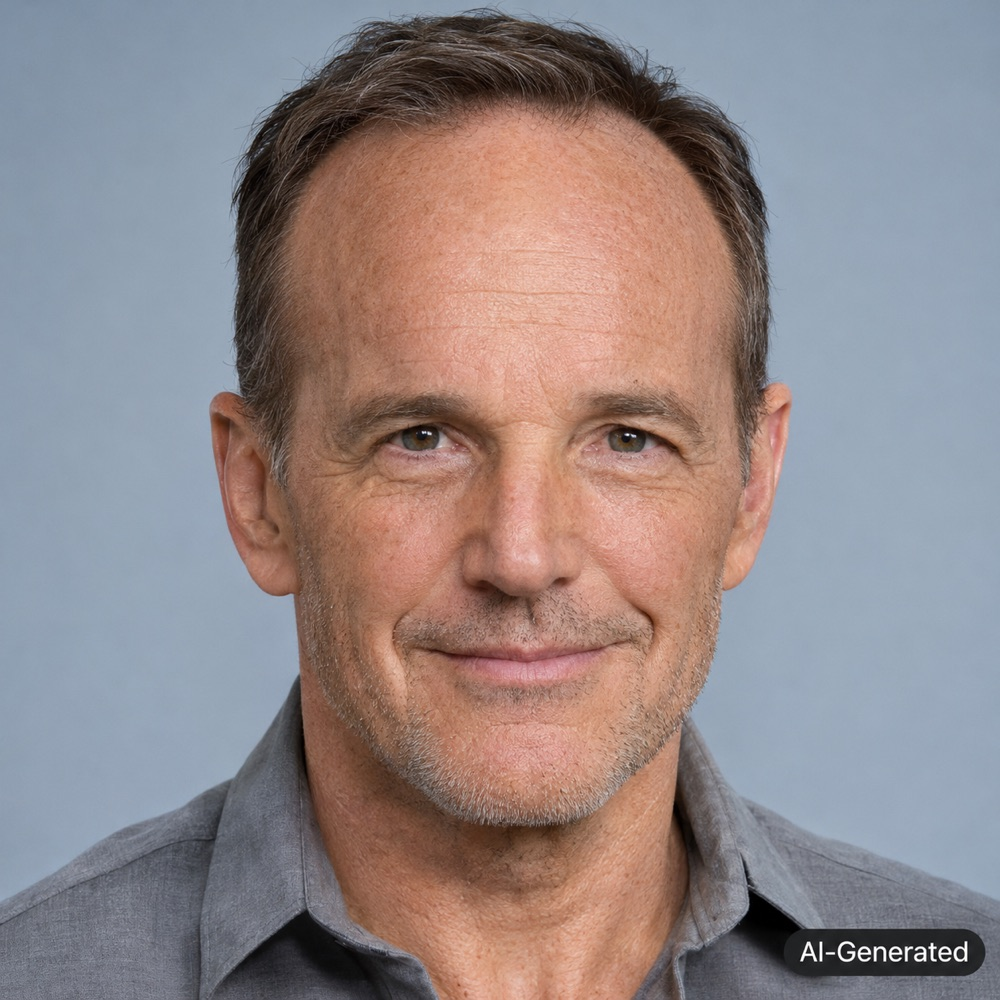
Clark Gregg
The Avengers includes Johnson’s Beth and Gregg’s Phil Coulson. Their roles show different parts of the story’s world.
Read the profile →
Jeremy Renner
They share an Avengers credit, though Johnson’s broader career is especially rich in games and animation.
Read the profile →
Alexis Denisof
Denisof also has a brief role in The Avengers and a wide television career. His profile opens another route into ensemble work.
Read the profile →Watch in context
Why an acting award mattered
Published by BAFTA. Watch on YouTube ↗
Sources and further reading
- Critical Role — Ashley Johnson official biography
- BAFTA — Games performer award history
- The Mary Sue — Critical Role interview with Ashley Johnson (2016)
Artwork: Original AI-generated portrait of Ashley Johnson, created for Famous Faith; not a photograph. The other AI-generated portraits shown here were also created for Famous Faith. No endorsement is implied.
Film and book titles identify the works discussed. A career credit is not a recommendation that every reader watch or read that work.