The profile · Actor
Alexis Denisof
Alexis Denisof can make an awkward arrival turn into a long character journey. From Wesley Wyndam-Pryce to Shakespeare’s Benedick, his work rewards viewers who notice how confidence, humor, and vulnerability change over time.
- Known for
- Wesley in Buffy the Vampire Slayer and Angel[1]
- Comedy connection
- Sandy Rivers in How I Met Your Mother[1]
- Shakespeare role
- Benedick in Much Ado About Nothing[2]
- Family
- Married Alyson Hannigan in 2003[1]
The person behind the work
The long view of a character
Alexis Denisof became familiar to many viewers as Wesley Wyndam-Pryce. The character arrived on Buffy the Vampire Slayer and grew into a central part of Angel. That longer run let the actor build changes that a single film might not have time to show.[1]
His career also has a comic side. He played newsman Sandy Rivers in How I Met Your Mother, which starred Cobie Smulders and his wife, Alyson Hannigan. Denisof and Hannigan married in 2003 after meeting through Buffy. They have two daughters.[1]
Wesley’s long story, Sandy Rivers’s comic vanity, and Benedick’s wordplay use different sides of Denisof’s timing. The interest is in the contrasts: a pause that reveals hurt in one scene can make a character seem hopelessly full of himself in another.
A career in range
Selected work, at a glance
1999
Buffy the Vampire Slayer
Wesley Wyndam-Pryce
An awkward new Watcher made an entrance that led to a much longer story.[1]
2006–2014 appearances
How I Met Your Mother
Sandy Rivers
Newsroom vanity and dry comic timing sit far from his darker genre work.[1]
2012 / 2013 release
Much Ado About Nothing
Benedick
Shakespeare’s sparring lovers meet a small contemporary film setting.[2]
2014–2015
Finding Carter
David Wilson
A family drama added another kind of long-form television role.[1]
Language and collaboration
Returning to Shakespeare with friends
In a 2013 interview with That Shelf, Denisof described his pleasure in returning to Shakespeare for Much Ado About Nothing. He played Benedick opposite Amy Acker’s Beatrice. Joss Whedon’s small-scale adaptation used a contemporary setting and a cast with many shared working relationships. Denisof talked about how naturally that low-key atmosphere fitted the project.[2]
The film asks its actors to make old language feel like something a person might say now. Benedick’s verbal sparring is funny, but the jokes depend on someone who has feelings to protect. That makes the performance a useful companion to his television work: a quick line can hide doubt just as easily as it can display confidence.
In a 2013 Total Film interview, Denisof explained how the camera changed his approach to Shakespeare. The cast learned whole scenes and rehearsed before filming. Longer takes helped preserve a live feeling, while close-ups let them use smaller reactions. It is a concrete example of stage skills being adjusted for a different medium.[3]
A closer look
Three ways into the work
The character that grows with the audience
Angel is the place to follow a long performance rather than a single scene. Pay attention to how Denisof adjusts posture, certainty, and restraint. The story is dark, but its slow changes show what a television ensemble can make possible.
A lighter kind of discomfort
Sandy Rivers uses social awkwardness for comedy. It is a useful contrast with Wesley: the same control of timing can make a person seem insecure, overconfident, or both.
A conversation across centuries
Much Ado About Nothing offers a clear view of his way with language. The familiar setting can help a viewer hear the feeling underneath Shakespeare’s words. Expect romance, sharp teasing, and a story where listening badly has consequences.[2]
Belief in context
What is public, and what is personal
Denisof’s interviews here focus on acting and working with friends. They leave his personal religion unclear. His comments about trust, listening, and collaboration still give readers a way to understand what he values in the work.[2]
Listen to the person
In their own words
June 2013
“I always wanted to come back to it.”
Famous Faith’s Christian perspective
Beyond the Spotlight
Much Ado About Nothing turns on what people hear, believe, and say about one another. Words can wound before anyone checks whether they are true. The story makes room for a question that reaches beyond Shakespeare: how do we face the harm our own words have caused?
The Bible treats truth as a matter of love and justice. The Ten Commandments forbid bearing false witness, stealing, adultery, and coveting what belongs to someone else (Exodus 20). Sin is the breaking of God’s law, not simply a mistake that makes us unpopular (1 John 3:4). All of us need mercy. Jesus spoke about judgment and hell because evil matters; Christians should speak of them with humility and concern.
The good news centers on Jesus himself. God’s Son lived a sinless human life, died on the cross for our sins, and rose bodily from the dead. God offers forgiveness and peace with him by grace, received through faith in Christ. A kind reputation or a history of religious effort cannot purchase that gift (1 Corinthians 15:3–4; Ephesians 2:8–9).
Repentance means leaving sin and rebellion behind as we turn toward God with a changed mind and heart. We learn to trust the God whose love for us is shown through Jesus Christ. It normally leads to different choices: admitting a lie, repairing harm, or learning to listen with care. Those changes grow from grace; they do not earn it. The invitation is to trust Jesus, bring him the truth about ourselves, and receive the mercy we need.
This section shares Famous Faith’s Christian beliefs. It does not speak for Alexis Denisof.
People connected to the story
Follow the connections
Cobie Smulders
Sandy Rivers works in the newsroom world around Robin Scherbatsky in How I Met Your Mother.[1]
Read the profile →
Clark Gregg
Both are in The Avengers. Their very different screen roles are a reminder that a film ensemble can contain several kinds of acting work.[3]
Read the profile →
Kevin Feige
The Avengers connects Denisof’s film credits with Feige’s producing work. The related profile follows the larger production story.[3]
Read the profile →Watch in context
Talking about Much Ado About Nothing
Published by The GATE. Watch on YouTube ↗
Sources and further reading
- Us Weekly — Alexis Denisof biography and credits
- That Shelf — Interview with Alexis Denisof (2013)
- Total Film / GamesRadar+ — Alexis Denisof answers readers (2013)
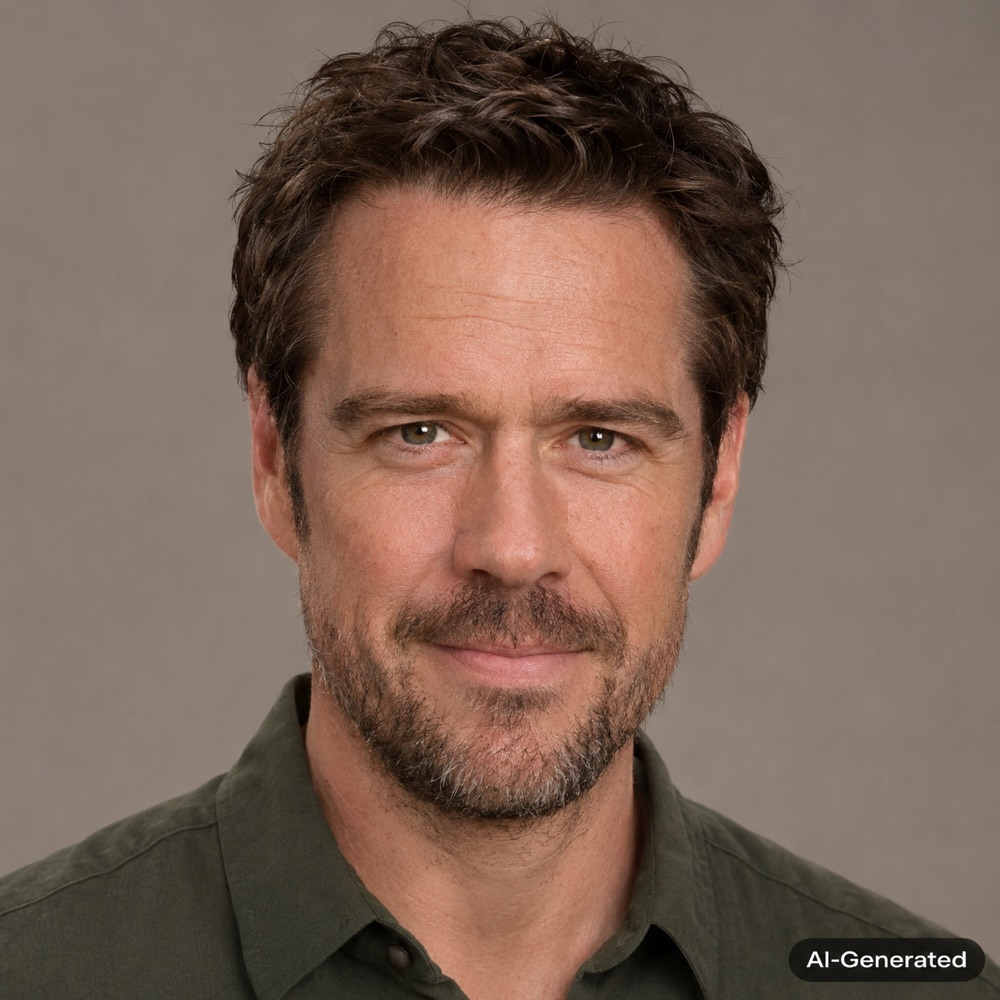
Artwork: Original AI-generated portrait of Alexis Denisof, created for Famous Faith; not a photograph. The other AI-generated portraits shown here were also created for Famous Faith. No endorsement is implied.
Film and book titles identify the works discussed. A career credit is not a recommendation that every reader watch or read that work.