The profile · Composer and conductor
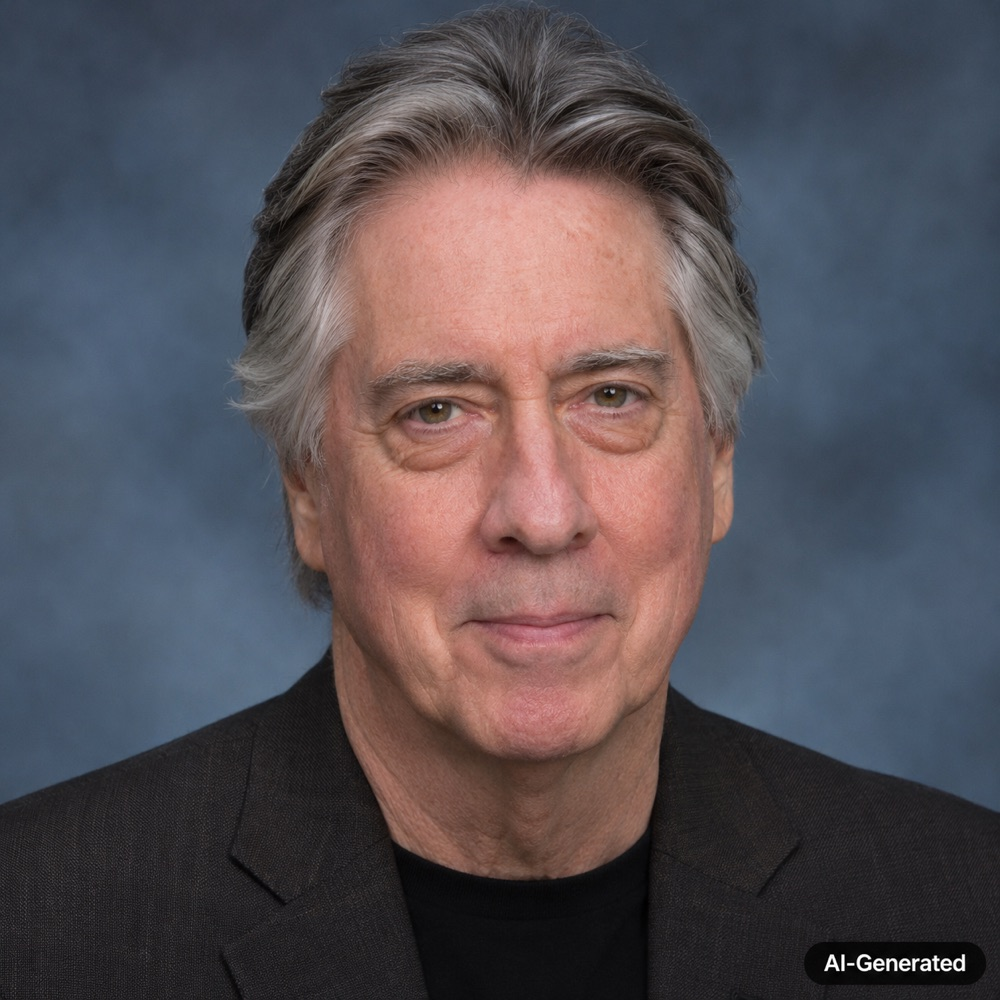
Alan Silvestri
Alan Silvestri planned to be a jazz guitarist. A surprising first film assignment grew into a career whose melodies now help audiences recognize a time-travel adventure, a lonely journey, or a team assembling before a word is spoken.
- Early musical aim
- Jazz guitar[1]
- First film score
- The Doberman Gang (1972)[1]
- Long collaboration
- Director Robert Zemeckis[2]
- Songwriting partner
- Glen Ballard[2]
The person behind the work
The guitarist who had to learn film scoring quickly
Alan Silvestri grew up in New Jersey and attended a Berklee summer program while still in high school. He wanted to become a jazz guitarist. His later time at the college placed him around musicians whose work, he said, taught him through everyday exposure as well as formal lessons.[1]
Berklee’s account describes an unexpected opportunity after he left school and moved west. A mix-up led someone to ask him to score The Doberman Gang. He studied a book on scoring overnight and took on the job. The 1972 film became the beginning of a profession he had not originally set out to enter.[1]
Television work on CHiPs followed. His official biography connects that energetic scoring with the next important partnership: Robert Zemeckis and Romancing the Stone in 1984. The relationship continued through films with very different moods, including Back to the Future, Forrest Gump, Contact, and Cast Away.[2]
A career in range
Selected work, at a glance
2004
The Polar Express
Composer; songs with Glen Ballard
Film scoring and songwriting meet in a Christmas adventure.[2]
The person behind the work
A melody can carry a memory through the story
Silvestri’s filmography reaches across comedy, suspense, family films, and large action pictures. Who Framed Roger Rabbit and Lilo & Stitch sit beside Predator and The Abyss. The list is useful because recognizable music does not come from applying one emotional setting to every film.[3]
In Back to the Future, the music helps give a young person’s adventure a much larger horizon. Forrest Gump asks for another kind of attention. A theme can hold a feeling in the audience’s memory, then change in weight when it returns. A familiar melody may sound hopeful in one scene and painful in another.
His partnership with songwriter Glen Ballard includes Believe from The Polar Express and the stage musical Back to the Future. Those projects extend beyond writing an instrumental score. A song must also carry words clearly, while a stage production has to work through live performers and repeated performances.[2]
His official filmography also lists Avengers: Doomsday. It continues a film-scoring connection that began with Captain America: The First Avenger and included The Avengers, Infinity War, and Endgame. These are current work credits, rather than evidence of a particular religious outlook.[4][2]
A closer look
Three ways into the work
Back to the Future: let the theme change scale
The score helps an ordinary-looking neighborhood open into a much bigger adventure. Listen to when the main idea arrives and when it is held back. Waiting can make a familiar melody feel newly earned.
Forrest Gump: memory does not always need a speech
A quieter musical idea can carry feeling across changes in time and place. The score offers a different way to notice a composer’s work than measuring only how loudly a scene announces its importance.
Contact: wonder and uncertainty can share a scene
A story about discovery creates room for awe without removing doubt or loss. Discussing those themes does not require assuming that the composer shares every belief spoken by a character.
The person behind the work
Art, science, and the things we cannot reduce to technique
Silvestri and his family established a vineyard in 1997. In his official biography, he compares music and winemaking as combinations of art and science. The comparison is practical: knowledge matters, but so do judgment, attention, and the decisions that turn materials into a finished whole.[2]
The sources here do not clearly explain his personal faith. Writing a Christmas song, scoring a film about belief, or making moving music does not supply a label he has not given. His work can still help people discuss hope, grief, and wonder without being treated as a private testimony.
Music sometimes gives words to a feeling before we can name it ourselves. That is a valuable artistic gift. The Christian message makes a further claim about hope: it rests on who Jesus is and what he has done, rather than on the strength of a moment’s feeling.
Listen to the person
In their own words
Official biography, reviewed November 2026
“Both music making and wine making involve the blending of art and science.”
Famous Faith’s Christian perspective
Beyond the Spotlight
A piece of music can make hope feel close, but a feeling cannot by itself settle what is true or make us right with God. Christianity points beyond an emotional lift to a real person and events it asks us to consider: Jesus Christ, his cross, and his resurrection.
The Ten Commandments ask us to tell the truth, respect what belongs to others, remain faithful, and refuse envy. We can appreciate beautiful things while still failing in these ordinary duties. God’s moral law exposes a need that neither talent nor a moving experience can cure.
According to 1 John 3:4, sin is the violation of God’s law. An inspired or moving life still needs an answer for wrongdoing. Jesus warned about hell and final judgment. Christians should let that warning deepen their concern for others, never use it to guess at a composer’s private standing before God.
God has given more than an idea to lift our spirits. Jesus Christ, his Son, became human, lived without sin, died for our sins on the cross, and rose physically from the grave. Forgiveness is received through faith in him. It is grace, not something earned by creativity, generosity, or religious observance (Romans 5:8; Ephesians 2:8–9).
Repentance is a change of direction: we turn from sin and rebellion toward God in mind and heart. Our trust rests on who God is, with his love made clear in Jesus Christ. It normally leads to concrete change: an honest apology, a refusal to repeat a dishonest act, and more patient love. The new conduct grows from being forgiven. We do not have to create a beautiful enough life before we can ask for mercy.
If this hope is unfamiliar, begin with Jesus’ own words in a Gospel. Ask him for mercy and seek a church where the message is taught clearly, with room for questions and practical care.
Explore the Good Person Test and the promise of forgiveness →
This section shares Famous Faith’s Christian beliefs. It does not speak for Alan Silvestri.
People connected to the story
Follow the connections

Anthony Russo
One of the directors of Infinity War and Endgame, which Silvestri scored.[5]
Read the profile →
Joe Russo
Their film collaboration continued through the large Avengers ensemble.[5]
Read the profile →
Robert Downey Jr.
His Tony Stark is part of the stories accompanied by Silvestri’s Avengers music.[5]
Read the profile →Sources and further reading
- Berklee College of Music — Alan Silvestri profile
- Alan Silvestri — Official biography
- Alan Silvestri — Official filmography
- Alan Silvestri — Avengers: Doomsday score credit
- Disney — Avengers: Endgame
Artwork: Original AI-generated portrait of Alan Silvestri, created for Famous Faith; not a photograph. The other AI-generated portraits shown here were also created for Famous Faith. No endorsement is implied.
Photograph: Robert Downey Jr. by Gage Skidmore, via Wikimedia Commons, CC BY-SA 2.0. Cropped to a square card for display.

Film and book titles identify the works discussed. A career credit is not a recommendation that every reader watch or read that work.