People · Beliefs
Larry Linville
Larry Linville made Frank Burns one of MASH’s most exasperating characters. His training and stage work reveal the craft behind that performance, while his own religious beliefs remain less clearly documented.
- Born
- September 29, 1939
- Died
- April 10, 2000
- M*A*S*H role
- Major Frank Burns
- Training
- Royal Academy of Dramatic Art, London
Making an audience enjoy a character is one kind of acting achievement. Making viewers groan the moment he opens his mouth is another. Larry Linville supplied M*A*S*H with a memorable comic opponent in Major Frank Burns, whose need for authority so often exceeded his ability to handle it wisely.
Frank was a performance, not a biography. Linville’s life included serious theatrical training and stage work as well as the television part. That distinction matters especially when readers ask about Larry Linville’s religion: a character’s moral language and behavior do not establish the actor’s personal beliefs.
A trained actor behind a familiar uniform
Linville was born in 1939 and trained at London’s Royal Academy of Dramatic Art. RADA includes him among its graduates. His career therefore reached beyond the idea that playing a broadly comic character requires little more than a recognizable face or an amusing voice.
Playbill’s remembrance records Broadway work in Eugene O’Neill’s More Stately Mansions, John Osborne’s Inadmissible Evidence, and Neil Simon’s Rumors. These plays belong to different theatrical worlds, and the credits show a working actor whose experience cannot be measured only by the personality of Frank Burns.
He joined television’s M*A*S*H in its original cast and played Frank through the first five seasons. Within that ensemble, his character’s vanity and insecurity gave other performers something to react against. A comedy needs more than likable people trading jokes; a difficult presence can reveal the qualities, contradictions, and weaknesses of everybody around him.
Why the actor and the character are different
Frank frequently wanted the dignity of authority without displaying the judgment that would earn it. Linville’s performance made that mismatch clear in small reactions as well as large comic outbursts. Viewers could recognize the problem immediately, which helped the ensemble’s scenes move quickly.
It is easy for a long-running role to become the entire public image of a performer. In Linville’s case, remembering the difference is particularly important. The fact that Frank could be petty or self-satisfied tells us about the writing and acting of a fictional man. It does not justify treating Linville as if he behaved that way in daily life.
Linville died in New York on April 10, 2000. His stage and television credits remain part of his professional record, and colleagues remembered him as a person rather than merely an irritating character. Jamie Farr’s public remembrance was warm.
What was Larry Linville’s religion?
The sources reviewed for this profile do not establish a clear personal declaration of Christian faith or another religious identity from Linville. That is the limit of the evidence, rather than an invitation to fill the gap with a guess.
Neither religious-sounding dialogue nor a character’s hypocrisy can settle the question. Acting can portray a conviction sincerely without the actor sharing it, and it can expose a character’s false confidence without revealing the actor’s own theology. Readers should therefore keep Frank Burns and Larry Linville separate.
For now, the honest answer is that Linville’s personal religion is not clearly established by the cited material. His work is public; a detailed account of his beliefs would require stronger evidence than this profile has found.
Beyond the Spotlight
A character who is certain that he is right can make viewers laugh while exposing an uncomfortable human habit. From Famous Faith’s Christian perspective, moral confidence is not the same as being right with God. The question is not whether we can find someone less admirable than ourselves. It is whether our lives meet the standard of the holy and loving God who made us.
The Ten Commandments bring that question close to home. Lies, envy, theft, hatred, and giving something other than God first place expose the sin shared by the writer and the reader. A respectable image cannot erase it. Scripture warns that sin brings judgment and hell, which is why the message of mercy matters so much.
Jesus Christ, the sinless Son of God, died for sinners and rose bodily from the dead. His death and resurrection, rather than our ability to look good, are the basis of forgiveness. Salvation comes by grace through faith, not through enough good behavior or religious performance.
Repentance is turning from sin toward God with a changed mind and heart, learning to trust the love he has shown through Christ. A changed life follows that trust; it cannot purchase forgiveness. The gospel offers hope to people willing to put down their defenses and receive mercy. This is Famous Faith’s Christian reflection for the reader, not a statement of Linville’s private beliefs or a verdict on his eternal destiny.
M*A*S*H collection
Larry Linville played Frank Burns in M*A*S*H. Explore the M*A*S*H cast profiles for the people behind the series.
Sources
- Larry Linville stage and television obituary — Playbill, April 2000
- Royal Academy of Dramatic Art graduate listings — Larry Linville
- Larry Linville biography — TV Guide
- MASH actor dies — CBS News, April 2000
- Larry Linville — Television Academy Interviews index
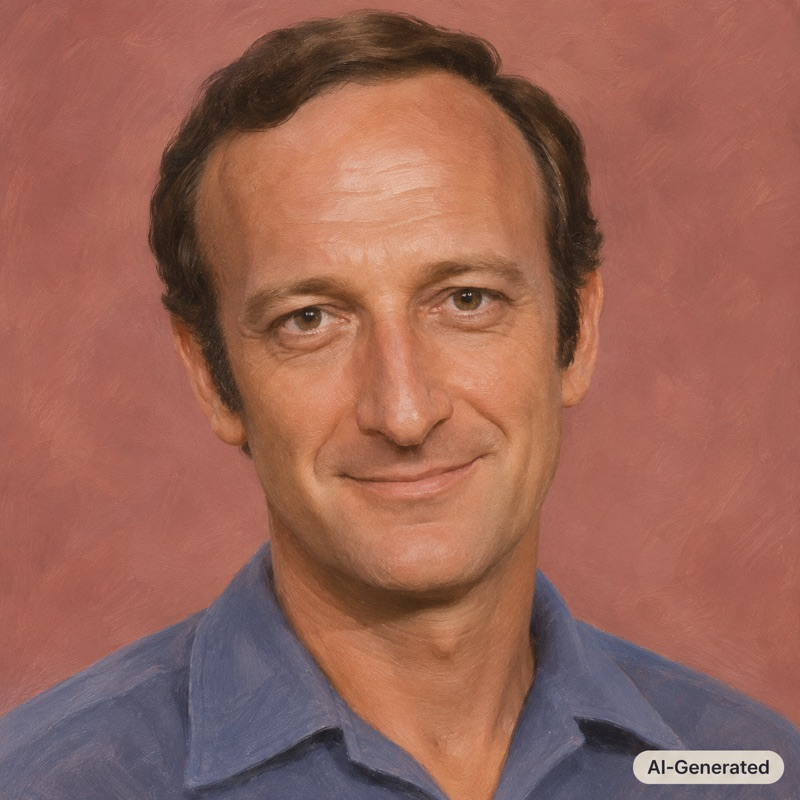
Artwork: Original AI-generated portrait of Larry Linville created for Famous Faith; an illustration, not a photograph. No endorsement is implied.