People · Beliefs
Jamie Farr
Jamie Farr brought his Toledo roots into MASH’s Maxwell Klinger. In a firsthand account of his early career, he also described an Orthodox Christian upbringing and the prayer story behind a very different screen role.
- Born
- July 1, 1934
- M*A*S*H role
- Maxwell Q. Klinger
- Hometown
- Toledo, Ohio
- Faith background
- Antiochian Orthodox Christian upbringing; published personal account of prayer
Before Maxwell Klinger made Toledo part of M*A*S*H lore, Jamie Farr was a young man from that city trying to get a foothold in show business. The performer who would become familiar to millions knew years when work was uncertain and the telephone did not ring often enough.
Farr later told a personal story about that struggle, prayer, and landing a role in The Greatest Story Ever Told. It provides actual evidence about his religious background, rather than requiring viewers to guess from Klinger’s jokes or from the faith of another character.
A long road to a familiar face
Born in Toledo in 1934, Farr grew up as Jameel Farah. The University of Toledo’s archival collection preserves material from a career that began well before his most famous television part. After high school he went west to pursue acting, studying at the Pasadena Playhouse and finding early film opportunities. Establishing a steady career still took time.
His work also included service in the U.S. Army and many television appearances. In his Television Academy oral history, he discussed the route through programs such as My Three Sons, The Dick Van Dyke Show, and I Dream of Jeannie. Those earlier jobs help explain the timing and adaptability that viewers later saw in Klinger.
The character became much more than an occasional comic interruption. His elaborate efforts to leave the army were one part of the joke; his loyalty and usefulness to other people gave the performance staying power. Farr later continued the role in AfterMASH. Klinger remains fictional, but the affection for Toledo had a genuine connection with the man playing him.
Farr’s account of faith and prayer
In a first-person Guideposts story originally published in January 1985, Farr recalled serving as an altar boy in an Antiochian Orthodox Christian church. He described an early-1960s period of discouragement when he began visiting a church to pray while struggling to find acting work.
He connected those visits with prayers involving Saint Jude. The turn in the story came when he was hired for The Greatest Story Ever Told and eventually learned that his character, the apostle Thaddeus, was associated with the name Jude. Farr presented the experience as personally meaningful and as a lesson about his own lack of trust. His Television Academy interview also includes discussion of the role and its connection with Saint Jude.
This supports describing an Orthodox Christian upbringing and a public testimony involving prayer. It does not establish every doctrinal position Farr has held over the following decades. Christians also differ over invoking saints, so his account should be reported accurately without making that practice a test of Christian identity or presenting the casting outcome as a promise that prayer always brings a desired job.
Keeping a connection with home
Toledo was not merely a place named in a script. Local archives have collected Farr’s working papers, while the city has honored his connection with the community. The Boys & Girls Clubs of America also includes him in its alumni Hall of Fame and remembers the activities he enjoyed at the downtown club as a child.
These details make his story more concrete than a simple rise-to-fame tale. Training, military service, years of small jobs, and a lasting hometown connection all came before or alongside the television image. They also remind us that an actor’s life includes communities and responsibilities that exist when the camera is switched off.
Beyond the Spotlight
Farr’s account of discouragement and prayer raises a question that reaches beyond getting the next opportunity: where can a person find a hope that does not depend on a career going well? Famous Faith’s answer begins with God’s character. He is holy and loving, and his concern for people is greater than the value the entertainment business places on them.
His law also tells the truth about us. The Ten Commandments expose lying, stealing, envy, and the habit of making something other than God our highest good. The writer and reader need mercy together. The Bible warns that sin brings judgment and separation from God in hell; it never says that a successful career or a kind reputation cancels that problem.
The gospel is that Jesus Christ, God’s sinless Son, was crucified for sinners and rose bodily from the dead. Forgiveness comes by grace through faith in him, not by earning enough favors or performing enough religious acts. Repentance means turning from sin toward God with a changed mind and heart, learning to trust the love shown through Christ. A renewed life is the fruit of that trust rather than its purchase price.
This is Famous Faith’s Christian perspective, not an attempt to put a fuller theology into Farr’s mouth. His testimony can be heard respectfully while readers consider the central question for themselves: will we place our hope in Jesus, whose mercy is not limited to the fortunate, the employed, or the famous?
M*A*S*H collection
Jamie Farr played Maxwell Klinger in M*A*S*H. Explore the M*A*S*H cast profiles for the people behind the series.
Sources
- Jamie Farr on the Power of Prayer — first-person Guideposts account, January 1985
- Jamie Farr — Television Academy oral-history interview
- Jamie Farr Scripts — University of Toledo archival biography
- Jamie Farr — Boys & Girls Clubs of America alumni Hall of Fame
- City of Toledo proclamation for Jamie Farr’s 90th birthday
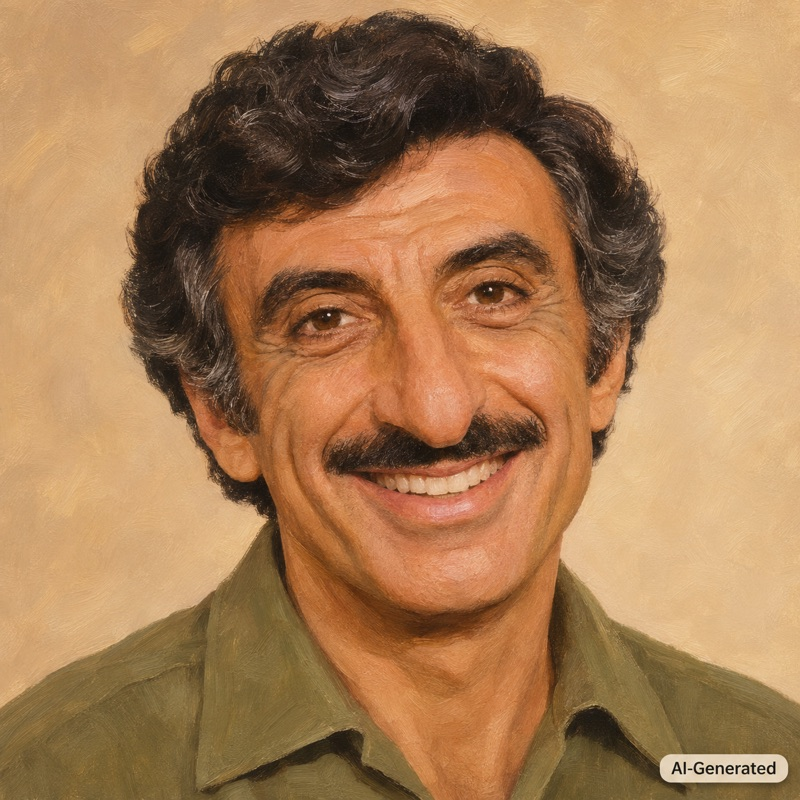
Artwork: Original AI-generated portrait of Jamie Farr created for Famous Faith; an illustration, not a photograph. No endorsement is implied.