People · Beliefs
Diana Ross
Diana Ross helped take Motown from Detroit to the world. Behind the stage gowns and unmistakable voice, she has described prayer and a religious upbringing as lasting influences on her work, family, and sense of purpose.
- Work
- Singer, performer, and actress
- Early group
- The Supremes
- Memoir
- Secrets of a Sparrow, published in 1993
- Religious background
- Baptist upbringing; public statements about God and prayer
Diana Ross’s story begins well before the glamorous gowns and the solo spotlight. The Motown Museum traces the Supremes to the Primettes, a young Detroit group whose early records did not immediately bring success. Their eventual breakthrough became part of music history. Ross’s voice was central to that change, and her later career reached into films, television, and international concert stages.
Faith is also part of the story she has chosen to tell. Ross has spoken about a religious family, prayer, and the connection between belief and daily life. Those statements deserve attention without being stretched into a complete account of her present religious practice.
From Detroit to a world stage
The Supremes signed with Motown in 1961, according to the Motown Museum. After a slow start, they became one of the label’s best-known acts. In 1967, the group’s name became Diana Ross and the Supremes. The Rock & Roll Hall of Fame honors the group’s place in popular music and lists their 1988 induction.
Ross later built a major solo career. Her official biography also highlights her work in Lady Sings the Blues, which brought an Oscar nomination, and Mahogany. She received Kennedy Center Honors in 2007 and a Grammy Lifetime Achievement Award in 2012. These achievements show how far her career traveled beyond a single group or musical moment. They also help explain why generations of listeners bring different memories to the same name.
Prayer, family, and an older public statement
Ross’s Baptist background is described in accounts of her Secrets of a Sparrow memoir, including the biographical reference summary of her early church experiences. It is important to identify that as upbringing rather than assume a current church affiliation.
A more direct source is a 1993 interview by Sheila Rule of The New York Times, preserved in the Roanoke Times archive. Discussing the memoir, Ross said faith shaped how she lived and raised her family. She described prayer as a constant part of life and connected her work with a sense of ministry. The interview shows that spirituality mattered to her beyond a public performance.
The date matters. This is strong evidence of what she said in 1993, not proof of every belief she holds today. She also said, I didn’t have to be born again
. That is her account, not Famous Faith’s explanation of Christian salvation. The most careful answer is that Ross has Baptist roots and has publicly spoken of God, faith, and prayer. A precise current denomination or detailed Christian profession is not established by these sources.
Beyond the Spotlight
The following is Famous Faith’s Christian reflection, rather than a statement attributed to Ross. A voice can connect people across borders, generations, and memories. Christianity asks a further question: how can people who are separated from God be reconciled to him?
The Bible describes God as holy and loving. His Ten Commandments are not a popularity contest or a list only for notorious people. They tell us not to lie, steal, commit adultery, or worship other gods. We have all broken God’s law in what we do and what we desire. That includes the writer. Good intentions and beautiful gifts cannot make us morally perfect before him.
God will judge sin justly. Scripture speaks of judgment and hell with a seriousness that should humble us, never make us cruel toward others. Yet God’s love is shown in what he has done for sinners. Jesus Christ, his sinless Son, died on the cross and rose bodily from the dead. First Corinthians 15:3–4 places his death for sins and resurrection at the center of the gospel.
Jesus’ call to be born again (John 3:3) points to a new life God gives, beyond family heritage. Salvation is not a prize for talent, a reward for good works, or something secured by a religious upbringing. It is a gift of grace received through faith in Jesus Christ (Ephesians 2:8–9). God calls us to repent: to turn from sin and rebellion toward him, with a changed mind and heart, trusting the love demonstrated in Christ. That new trust normally changes how we live, but the changed life does not buy forgiveness.
Honest questions and doubts can be brought into that search. The invitation is to look to Jesus for mercy and hope, not to borrow certainty from a beloved performer. You can explore those questions further through the Good Person Test.
Sources
- Motown Museum — The Supremes
- Rock & Roll Hall of Fame — The Supremes
- Diana Ross — official story
- Sheila Rule/New York Times — Ross interview, November 26, 1993 reprint
- Diana Ross — religious-background reference summary
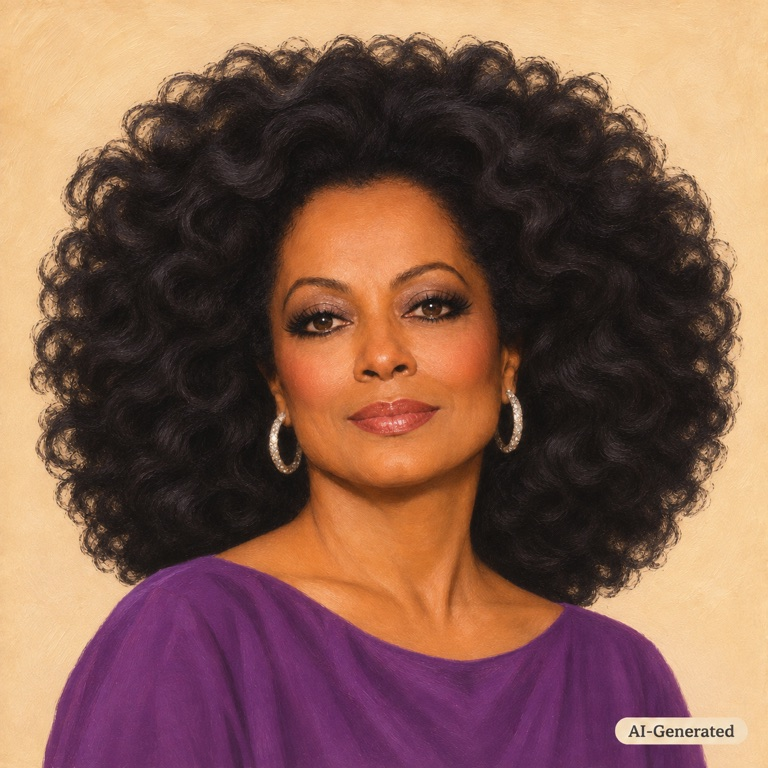
Artwork: Original AI-generated portrait created for Famous Faith; not a photograph. No endorsement is implied.